REVIEW · AO NANG
Krabi: Ya’s Cookery Late Afternoon Thai Cooking Class
Book on GetYourGuide →Operated by Ya Thai Cookery School · Bookable on GetYourGuide
Curry paste happens fast in Krabi. This late-afternoon Thai cooking class at Ya Thai Cookery School gives you a practical, step-by-step way to make real curry flavors, not just follow a recipe. I especially like the focus on curry paste (the flavor engine of Thai cooking) and the fact you leave with English recipes you can actually use later.
You’ll start with fresh ingredients and learn how Thai cooks balance sour, sweet, salty, and heat. There’s also a downside: the pace can feel quick, and you may need to ask for extra clarification if you like everything explained slowly and step-by-step.
Still, for most people, this is a fun, high-value way to spend a few hours in Ao Nang while learning skills you can repeat at home.
In This Review
- Key points to know before you go
- A 3.5-hour class that fits Krabi’s rhythm
- Starting with fresh ingredients in Ao Nang
- The curry paste lesson: stone mortar to flavor
- What you cook: your 4-dish menu decision
- Papaya salad and the spicy Thai salad style
- Noodles, stir-fries, and getting the wok technique right
- What happens at the end: you eat your work
- Price and value: why $48 can make sense
- Getting there: pickup, where it’s included, and where it costs extra
- Practical tips: what to bring and how to prep
- Who this cooking class suits best
- Should you book Ya’s Cookery Late Afternoon Thai Cooking Class?
- FAQ
- How long is the Ya’s Cookery late afternoon cooking class?
- Where is pickup included?
- What time does pickup happen?
- What dishes can I choose from?
- Are instructions available in English?
- Is vegetarian food available?
- What’s included in the price?
- What should I bring?
- Can I bring luggage or a large bag?
- Are transfers available from areas outside Ao Nang?
Key points to know before you go
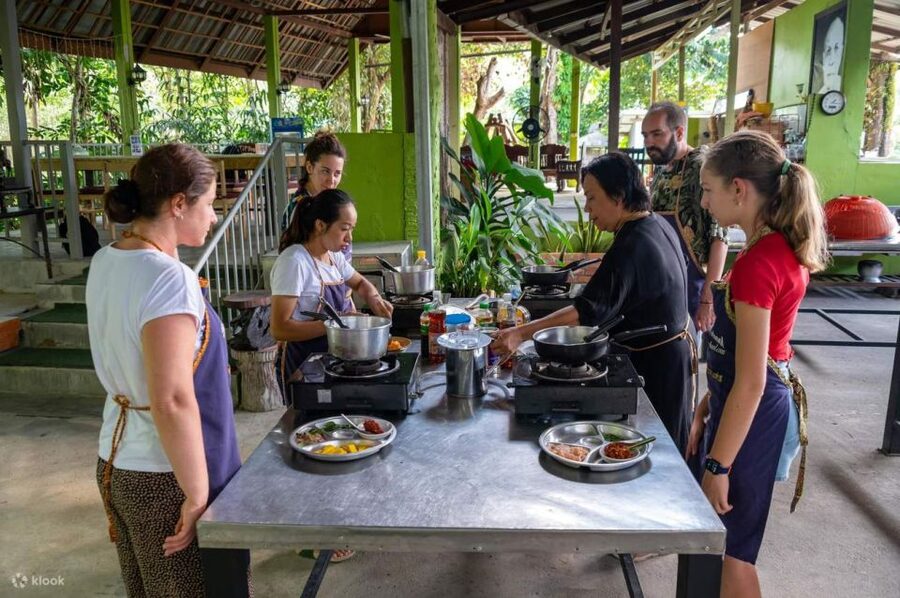
- Curry paste is the core lesson: you grind herbs and spices together in a stone mortar.
- You choose 4 dishes from a clear menu that covers curry, noodles, salads, and stir-fries.
- English support is built in: ingredients, recipes, and instruction are provided in English.
- Pickup is included for hotels in Ao Nang and Ao Nam Mao.
- You eat what you cook, so the class ends with a satisfying payoff.
- Vegetarian-friendly options exist, since dishes can be adapted to preference.
A 3.5-hour class that fits Krabi’s rhythm
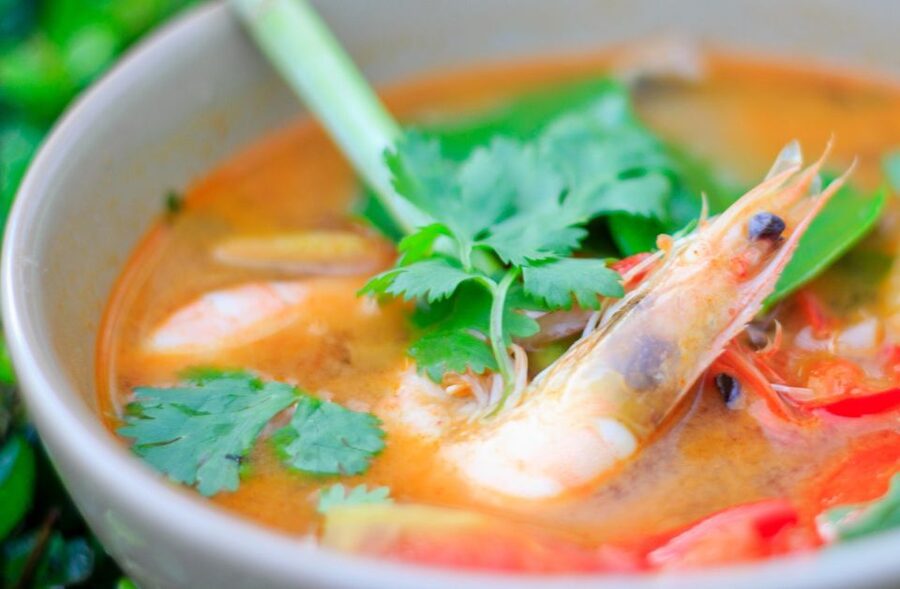
Ya Thai Cookery School runs a 3.5-hour late-afternoon session, which is a smart fit for Krabi. Late afternoon usually means you’re past the harshest sun and you’ve still got energy for one last activity before dinner.
This timing also changes how the class feels. Instead of “all day” heat, you’re cooking as the day cools down. You also end right where you want to end: with the food you made. It’s not a demo-and-leave situation.
The class is described as not suitable for people with mobility impairments, and that matters. You’ll be moving around a kitchen setup and working with utensils and prep stations, so plan accordingly.
You can also read our reviews of more tours and experiences in Ao Nang.
Starting with fresh ingredients in Ao Nang
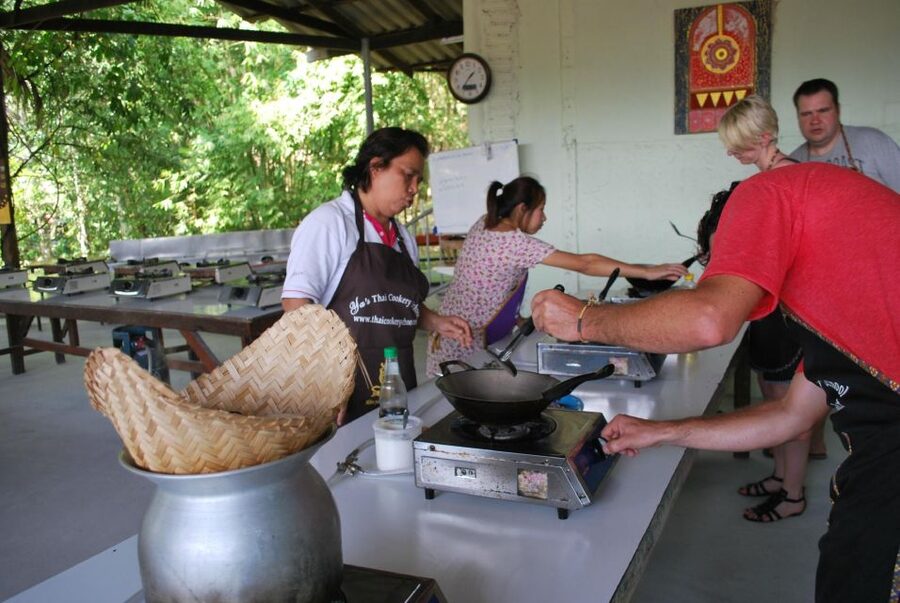
The experience begins at Ya’s cookery school in Ao Nang. The first real lesson isn’t a technique—it’s picking ingredients that taste good even before the stove turns on.
You’ll start by choosing fresh items for your meal and learning how Thai cooking relies on produce, herbs, and aromatics. That matters because so many “Thai cooking” attempts at home fail at the ingredient stage. If you start with bland basics, no amount of stirring fixes it.
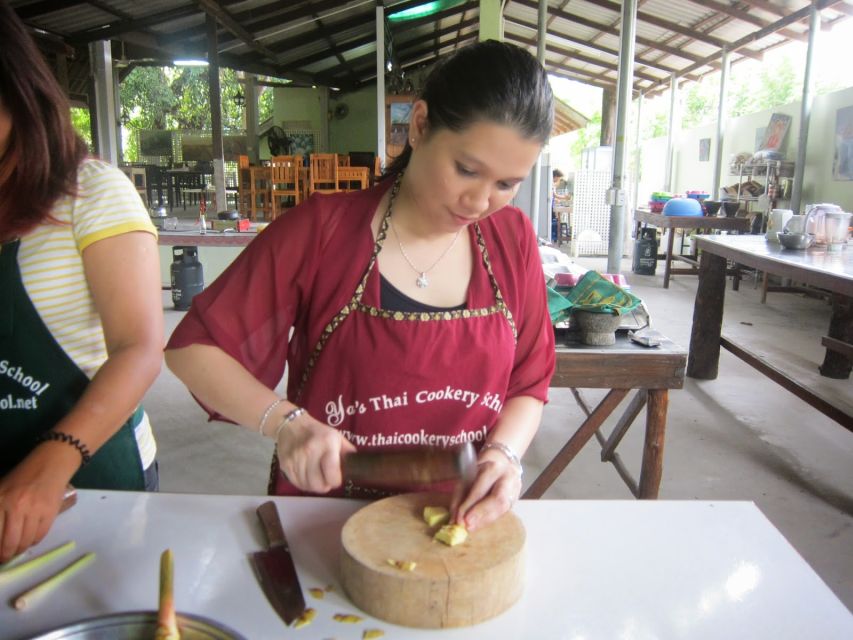
From there, you’ll combine fragrant spices with fresh produce and learn how to build complete dishes from scratch. You’ll use traditional utensils and techniques, which helps the cooking make sense instead of feeling like a shortcut.
The curry paste lesson: stone mortar to flavor
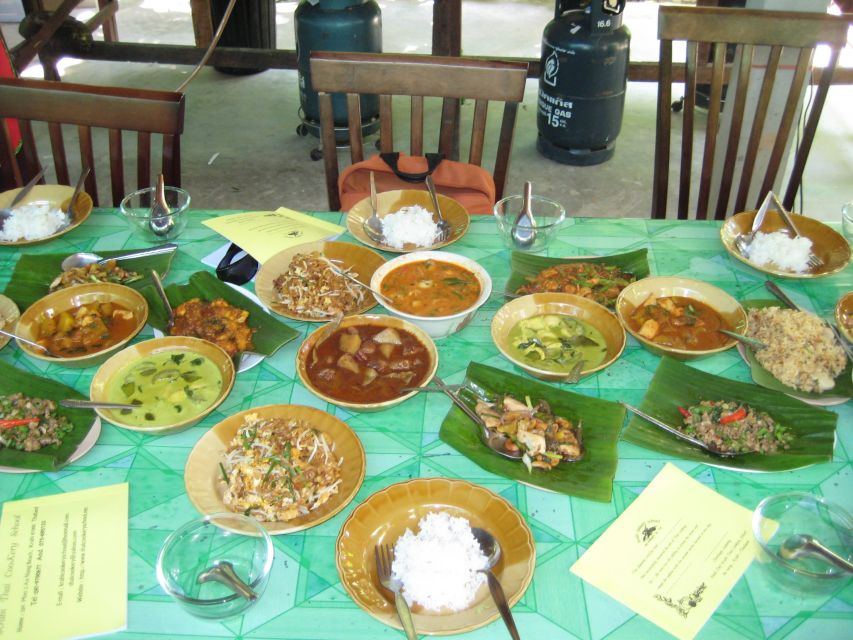
If you want one reason this class gets consistently strong marks, it’s this: curry paste isn’t treated like a magic powder. It’s taught as a process.
You’ll learn how to grind herbs and spices together using a stone mortar, and you’ll get the idea of why Thai cooks treat curry paste as the flavor foundation. This is where the class becomes more than “making dishes.” It becomes an education in balance—how heat, aroma, sourness, and salt show up in the final curry.
And because the class covers multiple curry styles (including green curry and panang curry), you’re not just learning one paste trick—you’re learning how paste leads to different outcomes. That’s useful at home when you want to recreate a style without copying a single recipe word-for-word.
What you cook: your 4-dish menu decision
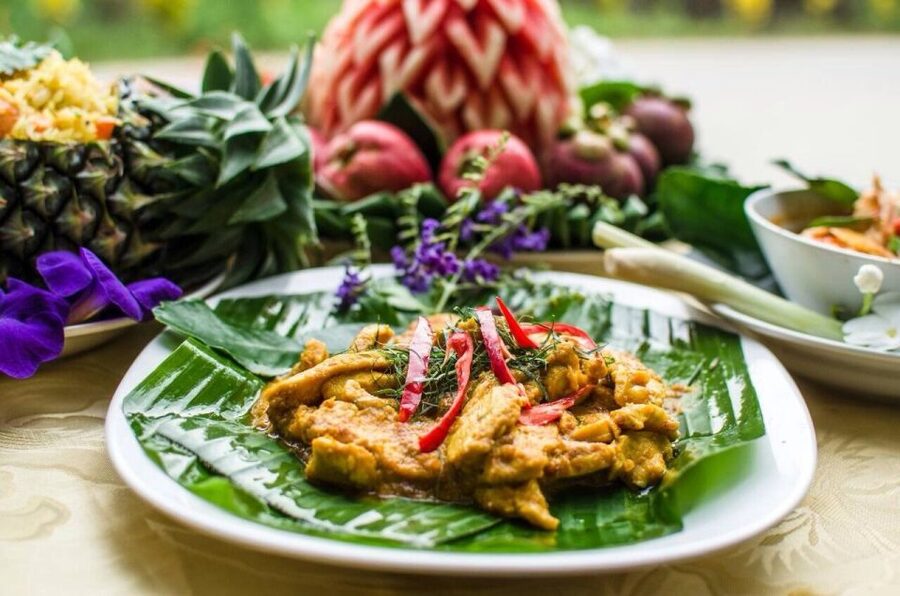
You’ll cook and practice by preparing four dishes chosen from a set menu. That’s one of the best ways to keep the experience feeling personal—especially if you’re coming with specific cravings (noodles, salads, curry, stir-fries) or dietary limits.
Here are the dishes you can choose from:
- Curry pastes (you’ll learn paste foundations)
- Green curry
- Panang curry
- Fried noodle Thai style
- Papaya salad
- Chicken in coconut milk
- Stir-fried chicken with holy basil
- Stir-fried morning glory
A key point for planning: all dishes can be adapted to taste or vegetarian preferences. So if you want to go meat-free, you can usually shape the dishes rather than being stuck with a separate menu.
If you’re deciding what to pick, I’d lean toward the mix that gives you a “Thai meal” picture: one curry, one salad, one stir-fry or noodle dish, and one extra item that matches your comfort level. That way you leave with a balanced set of skills, not just a stack of single-dish techniques.
Papaya salad and the spicy Thai salad style
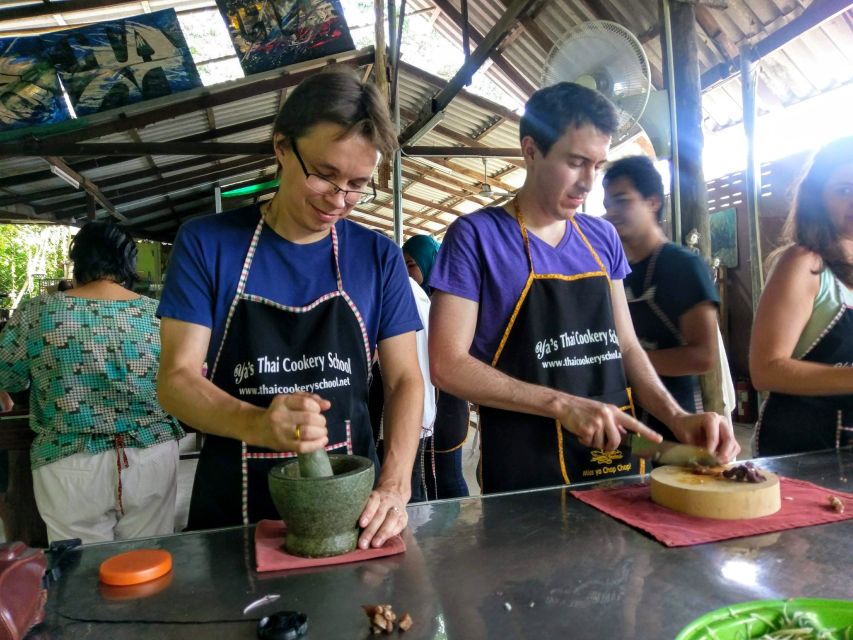
Papaya salad is one of those dishes where people either love it instantly or struggle with it at home. Here, it’s handled in a way that fits real Thai cooking: using fruits and preparing spicy Thai salads as part of your work in class.
You’ll get hands-on practice, and since the course includes ingredients and instruction in English, you’re not stuck guessing what “that” flavor is supposed to be. The biggest advantage is learning how the balance works—sweet, sour, salty, and heat—so you can adjust later instead of relying on exact measurements.
Also, salad prep can be a good “pace anchor” in a class that otherwise feels like a cooking sprint. You get tactile prep time, then you step back into the stove work with a clearer head.
Noodles, stir-fries, and getting the wok technique right

Thai stir-fries and noodle dishes often look easy until you try them. The learning value here is in practicing the workflow: getting heat control, timing, and seasoning in the right order so food doesn’t go bland or overcook.
Your available choices include fried noodle Thai style, plus stir-fries like stir-fried chicken with holy basil and stir-fried morning glory. Holy basil is one of those flavors that screams Thai. Even if you never make it at home, you’ll better understand why it tastes like it does.
Morning glory also teaches you a simple truth: greens cook fast. When you learn that rhythm in class, you’ll know how much time you can give yourself later if you recreate it.
The pace can be quick, though. If you like slow instruction, plan to ask questions while you’re cooking rather than waiting until the end.
What happens at the end: you eat your work
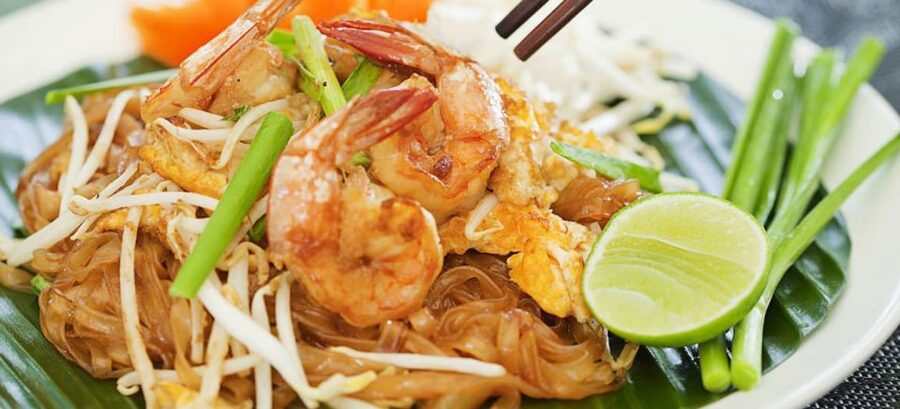
The class ends with you enjoying the Thai specialties you’ve prepared. That’s not just a feel-good finish—it’s practical. Tasting what you made right away helps you connect technique to flavor, and it also lets you understand what you nailed and what you’d adjust at home.
You also receive fruits and preparation of spicy Thai salads during the experience, plus food and water included. In other words, you’re not leaving hungry with the skills and no payoff.
There’s also an extra treat noted by past participants: the teacher made sticky mango rice for everyone. Even if you don’t choose it, it’s a nice reminder that Thai cooking is also about finishing with something sweet.
Price and value: why $48 can make sense
At around $48 per person, this class isn’t a “budget only” activity, but it can be excellent value because the inclusions are real.
You get:
- Round-trip hotel transfer from Ao Nang and Ao Nam Mao (included)
- Ingredients and instructions
- A free cook book with recipes in English
- Food and water
When cooking classes only include instruction, they can feel pricey. Here, the ingredient work and the recipes you take home do a lot to justify the cost. You’re paying for professional guidance, hands-on practice, and a usable takeaway.
If you’re already paying separately for a nice dinner, this can also be a better trade. Instead of buying one meal, you’re buying multiple dishes and the technique to recreate them.
Getting there: pickup, where it’s included, and where it costs extra
Pickup is part of what makes this class easy. It’s included for hotels in Ao Nang and Ao Nam Mao, with the exact pickup time confirmed by email after booking.
If you’re staying farther away—like Klong Muang, Tubkaek Beach, or Krabi Town—round-trip transfers are available as add-ons during checkout. Those add-on fees are listed as:
- 250 THB per person for Klong Muang
- 300 THB per person for Tubkaek Beach
- 250 THB per person for Krabi Town
The transfers have a minimum of 2 and maximum of 6 people, and those fees are paid directly to the staff of the day of cooking class.
If you’re traveling with a friend or two, those add-ons can be painless. If you’re solo and you’re staying outside Ao Nang, your cost and timing depend more on how pickup is arranged.
Practical tips: what to bring and how to prep
This one is simple, but it’s worth doing right.
Bring closed-toe shoes. This isn’t a “nice sandals” event. You’ll be in a cooking environment with prep and movement.
Also, avoid luggage or large bags. The class setting isn’t built for heavy carrying during the session.
Finally, come hungry-but-not-too-hungry. The class includes food, water, and at the end you’ll eat what you made. If you arrive stuffed from a late snack, the tasting part will feel less rewarding.
Who this cooking class suits best
This class is ideal if you want Thai cooking that feels grounded in method, not just memorizing steps.
It’s especially good for:
- People who want to understand curry paste as a technique
- Anyone who likes eating what they cook (the class ends with your meal)
- Vegetarians or mixed groups, since dishes can be adapted
- Travelers who want an activity that’s more hands-on than sightseeing
It may be less ideal if you need long, slow explanations. One drawback you might run into is that everything can move quickly, with not much time for extra verbal breakdown. If that’s your style, go in ready to ask questions during prep.
Should you book Ya’s Cookery Late Afternoon Thai Cooking Class?
I’d book it if you want a practical Thai cooking experience in Krabi—one that teaches you how flavors are built, not just what to cook. The strongest reasons are the curry paste focus, the English recipes you take home, and the fact that you end by eating your own dishes.
Skip it (or go with your expectations set) if you’re the type who needs slow pacing and lots of extended explanation before touching ingredients. The setup sounds hands-on and time-efficient.
If you’re staying in Ao Nang or Ao Nam Mao, the included pickup is another big plus. For many visitors, that alone turns the class into an easy win: you cook, you learn, you eat, and you leave with skills you can use again.
FAQ
How long is the Ya’s Cookery late afternoon cooking class?
The class lasts about 3.5 hours.
Where is pickup included?
Pickup is included from hotels in Ao Nang and Ao Nam Mao.
What time does pickup happen?
The exact pickup time is confirmed by email after you book.
What dishes can I choose from?
You choose 4 dishes from this list: curry pastes, green curry, panang curry, fried noodle Thai style, papaya salad, chicken in coconut milk, stir-fried chicken with holy basil, and stir-fried morning glory.
Are instructions available in English?
Yes. Ingredients, recipes, and instruction are provided in English (and Thai is also used).
Is vegetarian food available?
Yes. All dishes can be adapted to taste or vegetarian preferences.
What’s included in the price?
Round-trip transfers (from Ao Nang and Ao Nam Mao), ingredients, recipes and instructions (in English), fruits and preparation of spicy Thai salads, and food and water.
What should I bring?
Wear closed-toe shoes.
Can I bring luggage or a large bag?
No. Luggage or large bags are not allowed.
Are transfers available from areas outside Ao Nang?
Yes. Round-trip transfers can be added for Klong Muang, Tubkaek Beach, and Krabi Town (with stated per-person fees) and are paid directly to the staff of the day of the cooking class.