REVIEW · MEXICO CITY
Medellín Market Tour, Cooking Class and 3-course Mexican Feast
Book on Viator →Operated by Martaja - Market tours and cooking classes in Mexico City · Bookable on Viator
A market stop can change how you eat forever. This 6-hour experience pairs a guided walk through Mercado de Medellín with a small-group cooking class at Jim and Vicente’s Condesa home, so you learn the why behind the flavor and then make it with your hands. I love the up-close market shopping and the way you cook classics from scratch, including tamales and mole. One consideration: the kitchen building doesn’t have an elevator, so wheelchair access may be limited despite previous attendance.
You’ll spend about an hour at the market (max eight people) learning how ingredients and old techniques shape modern Mexican food. Back in Condesa, you’ll cook for roughly 3.5 hours with all ingredients and equipment provided, and you get recipes by email afterward, so you don’t have to scribble notes all afternoon. I also like that the day includes drinks with your meal, from Mexican beer to wine and mezcal for those over 18.
If you have allergies, plan ahead. This home has two cats, and the class can accommodate many dietary needs, but the animal factor is worth flagging early.
In This Review
- Key things that make this tour worth your time
- Mercado de Medellín and Roma Sur: the first hour that sets the rules
- Why mole and tamales taste the way they do
- Condesa kitchen time: hands-on cooking in a real home
- The menu choices that shape your meal
- Tamal starter: green tomatillo or fresh corn
- Main: choose your mole style
- Tortillas and salsas
- Drinks and that long, satisfying sit-down
- Price and logistics: does $155.23 make sense?
- Who should book this, and who should think twice
- Practical tips so you get the most from the day
- Should you book the Medellín market tour and Mexican feast?
- FAQ
- What is the duration of the Medellín Market Tour and cooking class?
- How many people are in each group?
- What dishes will I help cook?
- Are drinks included with the meal?
- Can dietary requirements be accommodated?
- Will I get recipes to use at home?
Key things that make this tour worth your time
- Maximum eight people means you actually get answers while you cook, not just a rushed demo
- Mercado Medellín with story connects Mesoamerican ingredients and Spanish-era changes to what’s on your plate
- Hands-on cooking of tamales, mole, and tortillas (plus salsas) with guidance and equipment included
- Included drinks with dinner: Mexican beer, wine, and mezcal for adults, soft drinks for others
- Recipes emailed after class so you can re-create dishes at home without carrying paper
- Condensed, doable pacing: about 1 hour shopping + about 3.5 hours cooking + a proper seated meal
Mercado de Medellín and Roma Sur: the first hour that sets the rules
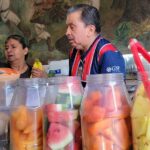
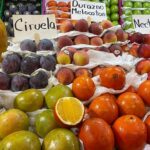
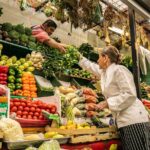
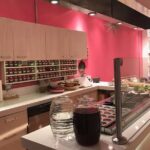
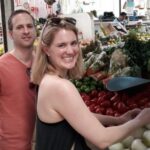
Most food tours start with a line and end with photos. This one starts with your senses and a clear plan: you meet at Mercado de Medellín in Roma Sur, then you head into the market for about an hour. The group stays small (up to eight), which matters because market questions aren’t just trivia. When you ask about a spice, you’re also learning how to recognize it later in a tortilla shop or in your local grocery store.
You’ll also get a sense of how Mexican cuisine is built from layered influences. In the market, the guide connects older Mesoamerican ingredients and techniques to the Spanish conquest era, which changed what people ate and how food traveled. It’s not a lecture you have to survive. It’s more like getting your bearings fast, so when you later cook a mole or choose toppings for tamales, you know what the ingredients are meant to do.
Practical note: the tour runs in English, and you’ll receive a mobile ticket after booking. Being near public transportation also helps if you’re building a day around other sights in Roma and Condesa.
You can also read our reviews of more tours and experiences in Mexico City.
Why mole and tamales taste the way they do
The best part of the market visit isn’t just seeing ingredients. It’s learning the logic behind them. You get to understand how flavors come from specific products and specific steps, not just from a finished sauce sitting on a shelf.
Expect a few ingredient names and technique concepts to stick. The cooking portion later gives you hands-on practice, but the market part is where those ingredients become real. In particular, you’ll hear about herbs like papalo and epazote, plus food terms that sound mysterious until you handle them in the kitchen. One that stood out in the experience is tequesquité, which you’ll come across as part of how recipes are balanced and built.
You might also notice how the guide talks about tradition with a personal touch. In the evening, Jim and Vicente share stories connected to family traditions, often described through the idea of las abuelitas (grandmothers) and the ways recipes traveled through households. That matters because mole and tamales aren’t just dishes. They’re formats for remembering, adapting, and making do with what’s available.
If you’re the type who likes to understand why a recipe works, this portion will feel like the foundation. If you’re not, it still works because it sets you up to enjoy the cooking section instead of getting lost.
Condesa kitchen time: hands-on cooking in a real home
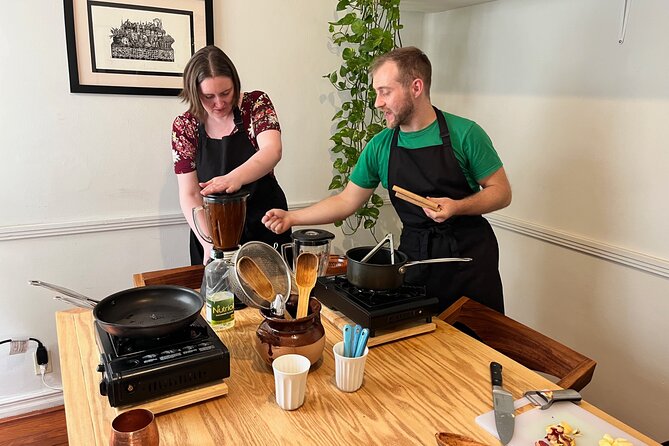
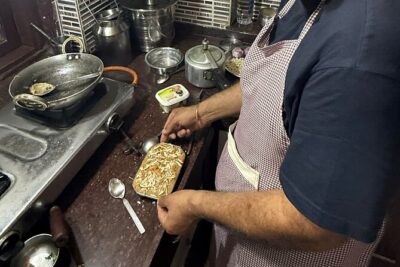
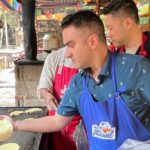
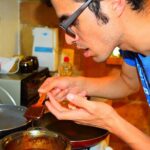
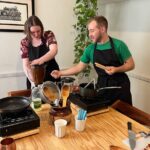
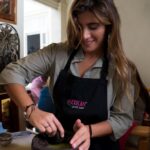
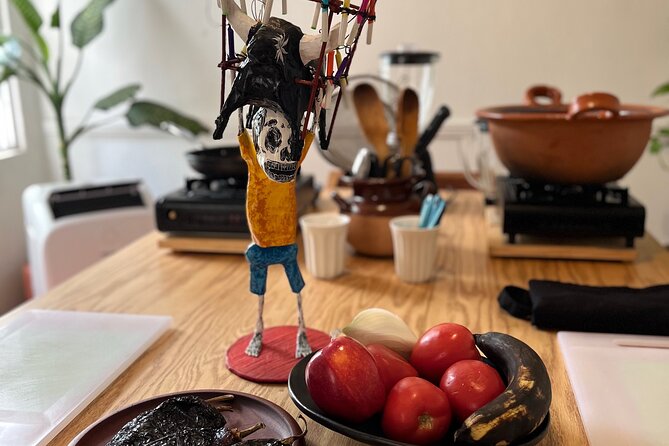
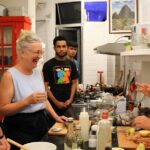
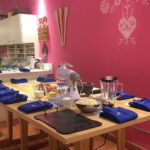
When you head back to Condesa, the mood shifts from street-level shopping to kitchen work. This is hosted at the chef/guide’s home, which is part of why it feels different from a big cooking studio. You’re not just watching someone do it. You’ll be actively preparing elements of the meal.
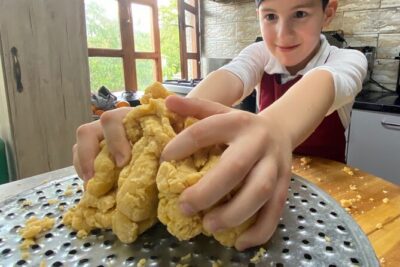
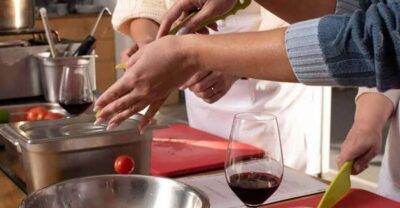
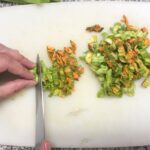
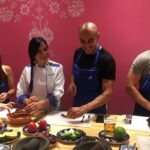
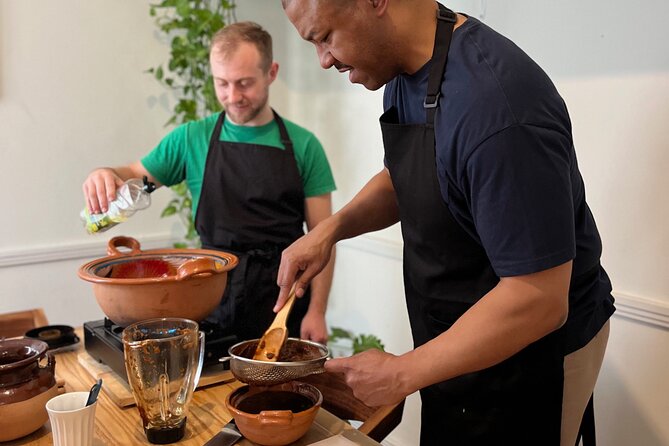
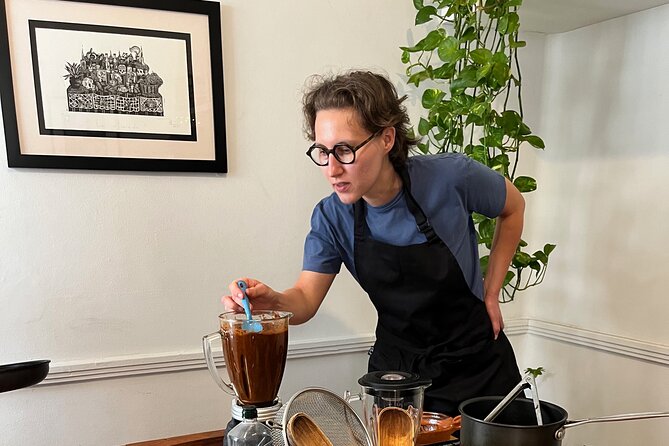
The class runs about 3.5 hours, and the menu is built around a few core Mexican staples. You’ll make tamales, mole, salsas, and tortillas. Not all the work is the same, either. Some steps are hands-on shaping and assembling. Others are about grinding, stirring, seasoning, or building sauces. The guides give clear instructions and you have everything you need: ingredients, equipment, and guidance.
Two things I appreciate here:
First, the experience is designed so you can participate without already knowing how Mexican cooking works. Second, recipes are emailed afterward, so you can focus on doing, not on taking perfect notes.
One more consideration: the building does not have an elevator. Wheelchair users have attended before, but you should treat it as something to plan for, not something guaranteed to be effortless.
The menu choices that shape your meal
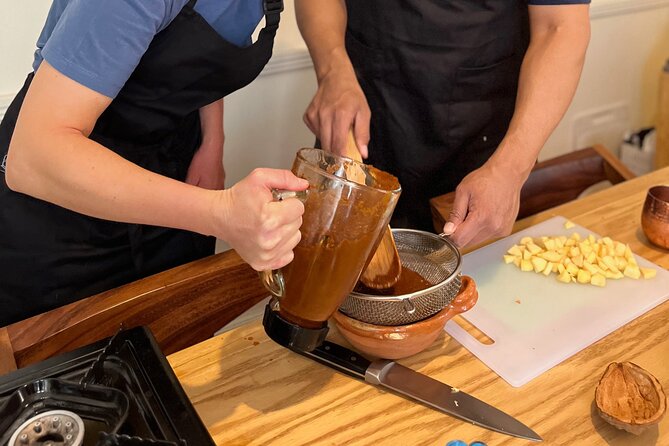
The day has a guided menu structure with options for your preferences. Before you start cooking, you’ll choose what you want for the first course and main course from a short list. That choice matters because tamales and mole vary a lot, even though they share the same overall identity as classic Mexican food.
Here’s how the menu is set up:
Tamal starter: green tomatillo or fresh corn
Your starter is either tamal verde (green tomatillo filling) or tamal de elote (fresh corn tamal with a more smoky red chipotle topping). If you’ve only had sweet tamales before, the tomatillo and chipotle paths will be a fun reality check. You’ll learn how savory tamal styles can be bright and tangy, not just rich and sweet.
Main: choose your mole style
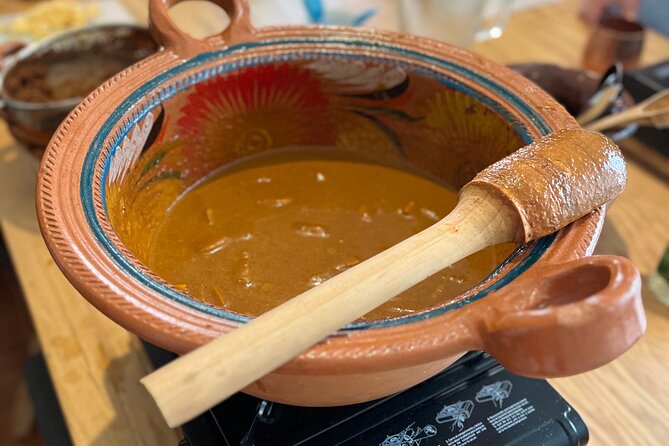
For the main course, you’ll choose one of three moles: mole poblano, mole verde, or manchamanteles. These styles reflect different ways mole can show up on the table:
- mole poblano: the classic spicy-but-sweet profile with chocolate
- mole verde: lighter and greener, often with crisp-leaf textures
- manchamanteles: darker and decadent, with a fruit-forward twist
This is one of the most valuable parts of the whole experience. Instead of being stuck with a single version of mole, you get to cook the one that matches your taste. And because it’s prepared from scratch, you’ll understand what changes when the base is different.
Tortillas and salsas
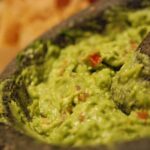
Fresh corn tortillas are part of the cooking, along with salsas. Even if you think you already know tortillas, making them with guidance helps you learn the texture and handling that store-bought versions can’t always replicate.
Dessert is included too. It’s prepared before you arrive, which keeps the class flow smooth. That means you spend less time waiting around and more time focused on the meal you’re actively building.
Drinks and that long, satisfying sit-down
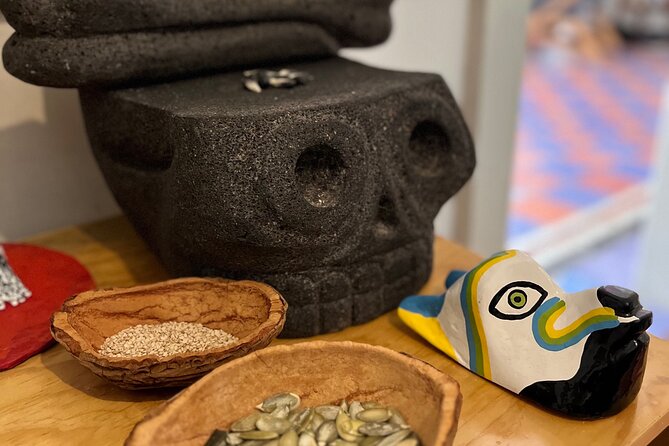
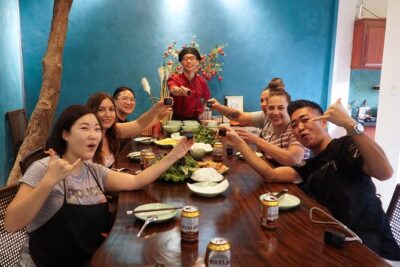
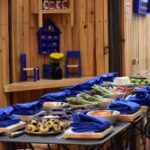
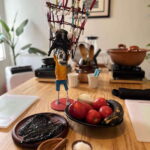
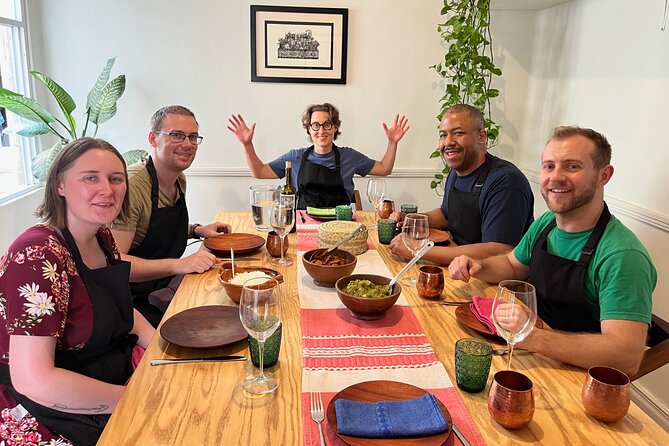
This isn’t just cooking and leaving. You eat what you made. After the work, you sit down at a table with local linens and artisanal tableware, so it feels like a real meal, not cafeteria-style food service.
The experience includes alcoholic drinks with the meal. Adults over 18 may be offered Mexican beer, wine, and mezcal. If you’re not drinking alcohol, you’ll get traditional local soft drinks. That added pairing makes sense in this setting because mole, tamales, and salsas all do different things to your palate, and the drinks help keep you comfortable as you go from starter to main to dessert.
You’ll also get fruit as part of the meal. It’s a common rhythm in Mexican food—cooling, fresh notes after rich sauce—so it works with the structure of mole and tamales instead of competing with it.
And yes, you’ll finish with Mexican wine and/or mezcal, depending on what you’re offered for your session. It’s a nice close that turns the whole day into something you can remember, not just something you ate and forgot.
Price and logistics: does $155.23 make sense?
At $155.23 per person for an experience that runs about 6 hours, you’re paying for three things at once:
1) a market tour with guide time
2) a hands-on cooking class where ingredients and equipment are provided
3) an included 3-course meal plus alcohol for those who are 18+
In practice, the value shows up because you’re not buying all the separate pieces yourself. You don’t need to source ingredients for tamales and mole, and you’re not paying for a separate market guide and separate cooking instruction. Also, you get recipes emailed afterward, which is a bonus you don’t always get on food experiences.
It’s also booked fairly in advance on average, which suggests it’s a solid option when you want a structured food-focused half-day. The small group size (max eight) helps keep quality high, and that’s part of what you’re paying for.
Is it “cheap”? No. But if you want a meal that teaches you how Mexican dishes actually come together, the cost feels easier to justify. You’re leaving with a better understanding of flavor and technique, plus food to take home as knowledge, not just as a memory.
Who should book this, and who should think twice
This is a great match if you:
- want a small-group food experience instead of a big crowd
- like hands-on cooking and learning practical steps
- want to understand Mexican cuisine in a way that goes beyond tasting
- are traveling solo and still want an easy, friendly format
Most dietary requirements can be accommodated, which is a big plus if you’re eating with restrictions. At the same time, if you have a serious allergy, pay attention to the fact that there are two cats in the house. This isn’t a reason to avoid the tour automatically, but it is something you should mention early so expectations are clear.
For wheelchair users: the building has no elevator. Wheelchair attendees have gone before, so it’s possible, but you should ask questions about access during booking.
If you hate cooking or you’re only in town for a quick snack, you might find the hands-on nature doesn’t match your vibe. This is an active class. You’ll get your hands dirty, and you’ll want enough energy for it.
Practical tips so you get the most from the day
A few habits will make this experience smoother:
- Wear comfortable shoes for the market part. Even though the market stop is only about an hour, you’ll be on your feet.
- Come with an appetite. The meal isn’t tiny, and the drinks pair naturally with mole and tamales.
- Don’t stress about note-taking. Recipes are emailed afterward, so you can focus on learning the steps in real time.
- If you’re sensitive to cats, communicate ahead. The home setting is part of the charm, but allergies need planning.
- Ask the guides about herbs and balancing flavors. Names like papalo and epazote can feel abstract until you connect them to what you taste.
And one more small thing: you’ll be making multiple dishes in a single session. If you’re someone who gets overwhelmed easily, slow down mentally. Let the process happen in stages: tamales first, mole second, tortillas and salsas throughout, then dessert and drinks.
Should you book the Medellín market tour and Mexican feast?
I’d book this if you want the kind of food day that changes how you cook or order Mexican food later. The combo of market context, hands-on class time, and a proper sit-down meal is a strong value, especially with the small group limit and included drinks.
Skip it if your priority is quick sightseeing snacks, or if mobility inside a building without an elevator is a concern you can’t plan around. Also be cautious if allergies are severe, since the home has cats.
If you’re ready to trade your afternoon scroll for real food lessons, this one fits. You’ll leave with a fuller understanding of Mexican flavors and a menu you can actually recreate back home.
FAQ
What is the duration of the Medellín Market Tour and cooking class?
It’s about 6 hours total, including roughly a one-hour market visit and about 3.5 hours for the cooking class and meal.
How many people are in each group?
The experience has a maximum of eight travelers, which keeps the class more personal.
What dishes will I help cook?
You’ll cook from scratch several classic items: tamales (either tamal verde or tamal de elote), mole (you choose from mole poblano, mole verde, or manchamanteles), plus fresh corn tortillas and salsas. Dessert is also included.
Are drinks included with the meal?
Yes. Adults over 18 may be offered Mexican beer, wine, and mezcal, while others enjoy traditional local soft drinks.
Can dietary requirements be accommodated?
Most dietary requirements can be accommodated. If you have allergies, note that there are two cats in the house.
Will I get recipes to use at home?
Yes. Recipes are sent by email after the class, so there’s no need to take notes during cooking.