REVIEW · ROME
Authentic Pasta and Tiramisù cooking class at spanish steps
Book on Viator →Operated by cheforaday · Bookable on Viator
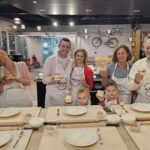
Flour on your hands in Piazza di Spagna. This 2-hour, English-taught small-group class turns a few simple ingredients into restaurant-worthy pasta and a classic tiramisù you can actually re-create later. You’ll learn the dish and its story, then cook it the old-school way, step by step.
I love that you don’t just watch. You make your own pasta (fettuccine) and pair it with an Italian wine, and you finish with homemade tiramisù plus a limoncello taste. The one drawback to consider: time to eat isn’t included, and some parts (like tiramisù cooking) happen together in the group, so plan for a shared kitchen rhythm rather than a super-custom pace.
In This Review
- Key Points to Know Before You Go
- Why This Pasta-and-Tiramisù Class Feels Like Real Rome
- Arriving at Spanish Steps (Piazza di Spagna) and Getting Ready
- Hand-Made Fettuccine: The Technique You’ll Use Again
- Choosing Your Sauce and Pairing It With Wine
- Cooking Together, Eating, and the Limoncello Finish
- Tiramisù in One Big Kitchen Session
- Certificate and the Real Value of a Food Class
- Price and Logistics: Is $53.53 Worth It?
- Who Should Book This (and Who Might Skip It)
- Should You Book This Pasta-and-Tiramisù Class at Spanish Steps?
- FAQ
- How long is the cooking class?
- Is the class taught in English?
- Where do I meet for the class?
- What do I get to cook and eat?
- Are wine and limoncello included?
- What sauce options are available?
- Is there a group size limit?
- Is free cancellation available?
Key Points to Know Before You Go
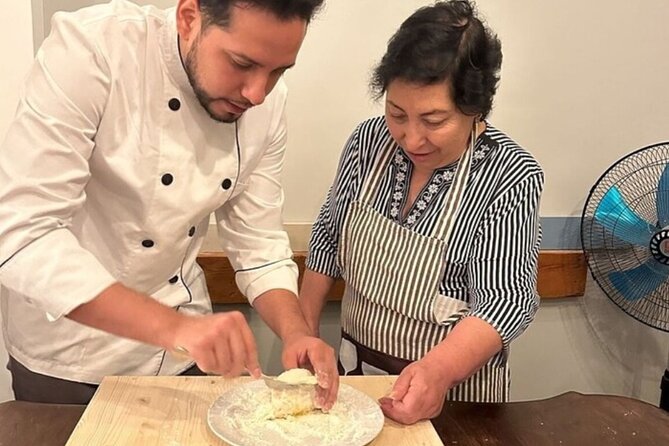
- Hands-on pasta making instead of a sit-and-watch demo
- Sauce choice with fettuccine: amatriciana, cacio e pepe, or tomato with basil
- Wine and limoncello included (with alcohol limited to +18)
- Small group size up to 20, with a setup designed for interaction
- You take home a certificate, so this becomes more than a meal
Why This Pasta-and-Tiramisù Class Feels Like Real Rome
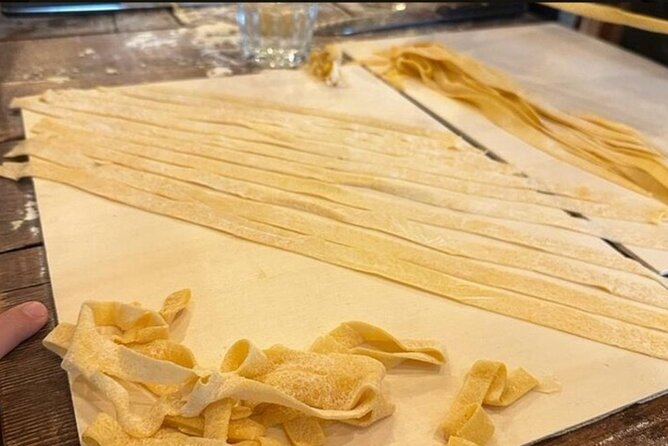
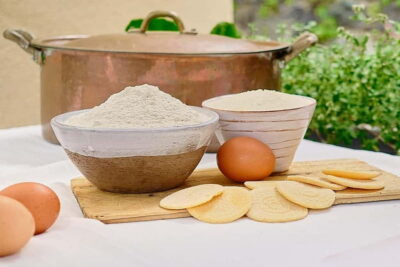
Rome has plenty of ways to eat. This is a way to make it—fast, friendly, and practical. You start with flour and eggs, then learn the simplest technique for pasta that’s been around for ages. That matters because you’re not only tasting Italian comfort food; you’re understanding what makes the dough work.
I also like the balance here: pasta first, then dessert. And both are done with a clear structure. You’ll get guidance while you work with your hands, then sit down with what you produced (plus wine). It’s a good format if you want a fun evening that still teaches something solid.
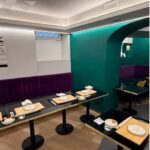
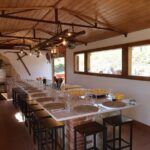
One more plus: the location is in the Piazza di Spagna area, in a historic restaurant. Even if your focus is the kitchen, you’re stepping into a very Rome kind of setting—central, classic, and easy to pair with a walking day.
You can also read our reviews of more tours and experiences in Rome.
Arriving at Spanish Steps (Piazza di Spagna) and Getting Ready
You meet at V. della Croce, 34, 00187 Roma RM. The activity ends back at the meeting point, so you’re not left wandering afterward with pasta on your breath and no plan.
This class includes the necessary equipment for the course. That’s a big deal in Rome, where it’s easy to show up with the wrong shoes or no way to handle a cooking station. Here, you can arrive more relaxed and just focus on learning.
A couple practical things to keep in mind:
- Wear comfortable clothes. You’ll be working with dough.
- Since alcohol is served only to +18, plan to choose wine or a soft drink if you’re under that limit.
- Confirmation comes at booking, and you’ll have a mobile ticket to show.
Hand-Made Fettuccine: The Technique You’ll Use Again
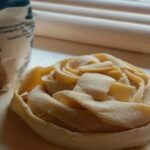
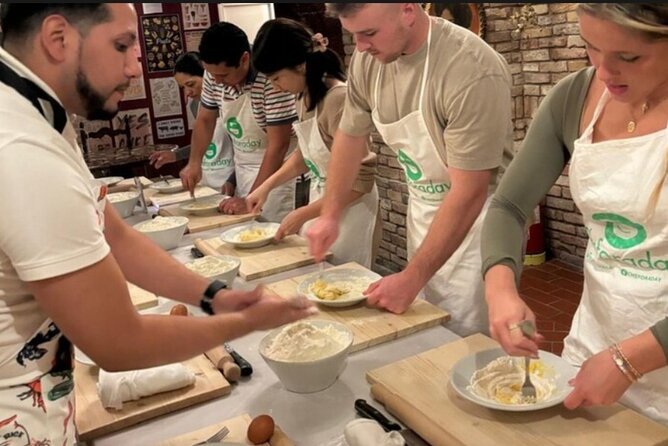
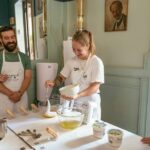
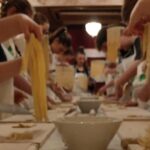
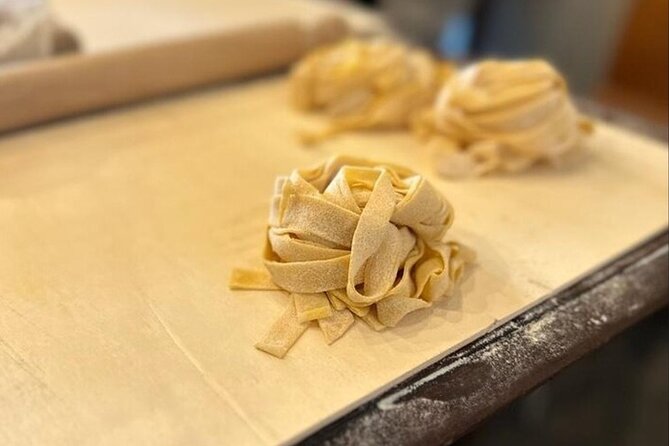
The heart of this experience is the pasta itself: turning egg and flour into pasta dough using your hands. You’ll go step by step, learning the “how,” not just the “what.” That’s what makes it worth your time if you want a real takeaway for home cooking.
You’ll also hear about the dish and the history of a famous Italian staple, plus the forms it can take. Even if you’re not memorizing every detail, those little context pieces help you cook with intention. Pasta stops being random carbs and starts being a technique you can repeat.
Here’s what you’re really training:
- The feel of dough as it comes together (not something a recipe alone teaches)
- How to shape fettuccine so it holds up for sauce
- The basics of the workflow so it’s repeatable at home
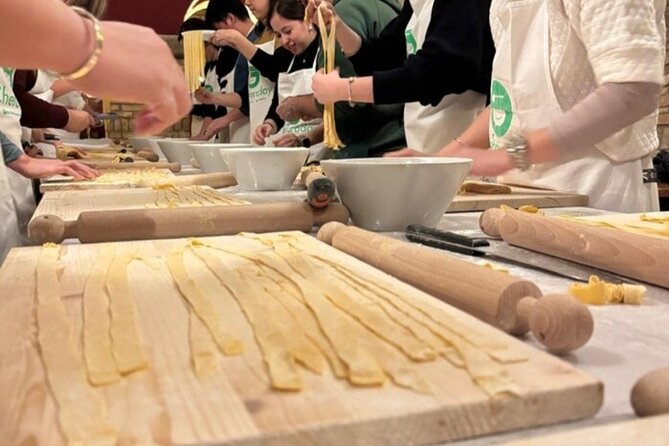
One detail that helps manage expectations: pastas get cooked all together, divided by sauce. That means you’re part of a working group in the kitchen, but you’re still the one doing the hands-on shaping and prep.
Choosing Your Sauce and Pairing It With Wine
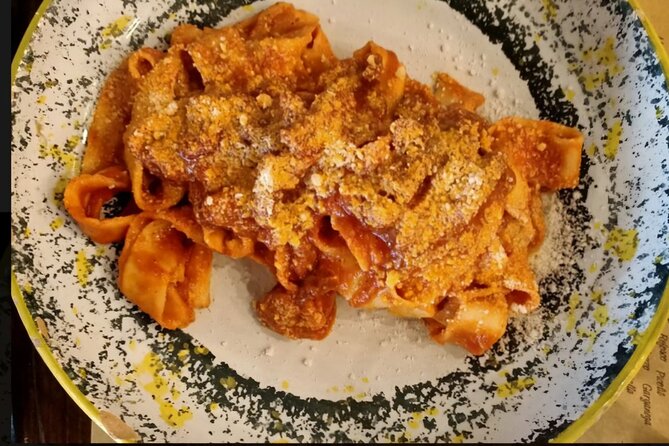
Once you’ve got the pasta going, you move into the sauce choices. You can pick from three classic options:
- Amatriciana
- Cacio e pepe
- Tomato with basil
This part is practical because it connects your work to a finished plate. You’re not making dough in a vacuum. You’ll see how pasta and sauce fit together in a real serving style.
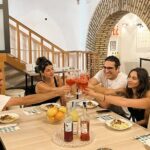
Wine is included as part of the meal experience. You get a starter glass of red or white (your choice), and you also have a wine choice at the included meal stage. There’s also an option for a soft drink instead. You’re not limited to one flavor profile, which matters if you don’t love red or you’re sensitive to alcohol.
Small caution: the information includes a note saying sauces are not included, even though you choose a sauce for your pasta. That can be a confusing mismatch. If sauce coverage matters to you, check what exactly is included for the sauce components when you book—especially if you’re comparing prices across Rome classes.
Cooking Together, Eating, and the Limoncello Finish
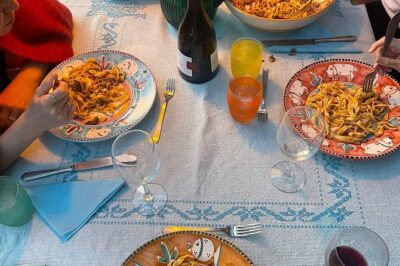
After cooking, you eat what you made. The included meal runs from pasta through dessert. Bottled water is included too. And at the end, you get a limoncello taste, which is a fun way to cap off the class with something distinctly Italian.
Two things to plan around:
- Time to eat isn’t included in the stated 2-hour duration (so don’t schedule a strict next appointment right after).
- Some sessions are done together as a group, so it’s more of a shared kitchen experience than a private lesson.
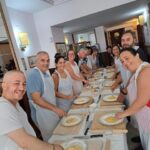
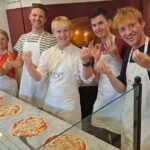
If you like the idea of cooking with real people in a relaxed setup, this works well. It’s also why the class size matters. The group is capped at 20 travelers, and the format is designed so you can participate rather than sit back.
A small extra you might encounter: there can be an offer to buy additional limoncello with a souvenir picture. It’s not something you should plan on as a guarantee, but it’s the kind of optional add-on that shows up in some Rome food experiences.

Tiramisù in One Big Kitchen Session
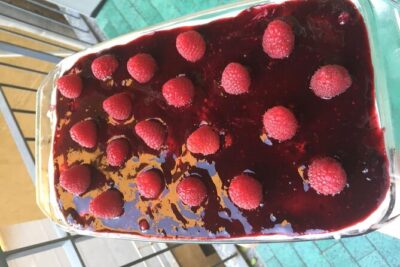
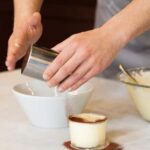
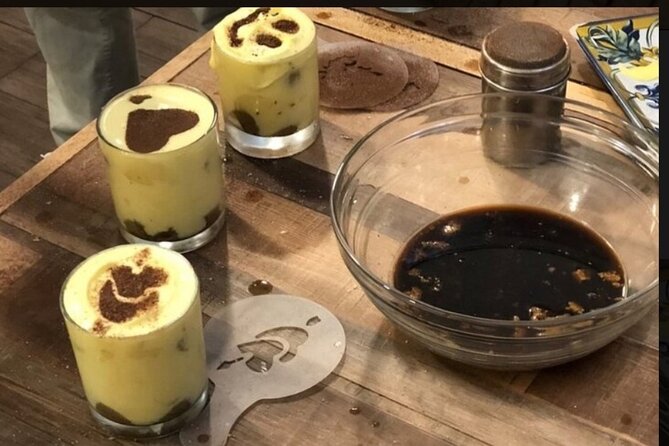
Tiramisu gets its own dedicated focus. It’s also cooked all together, meaning the pacing is more coordinated than the pasta portion. That’s not a bad thing; it’s often the smartest way to teach dessert because tiramisù depends on timing and assembly.
The takeaway here isn’t just eating tiramisù—it’s learning the sequence: what goes first, how things should come together, and how to recognize the point where it’s ready to serve.
Even better, you’re not getting an assembled dessert handed to you. You’ll cook the tiramisù as part of the group process, and you end with what you made, not just a tasting.
Certificate and the Real Value of a Food Class
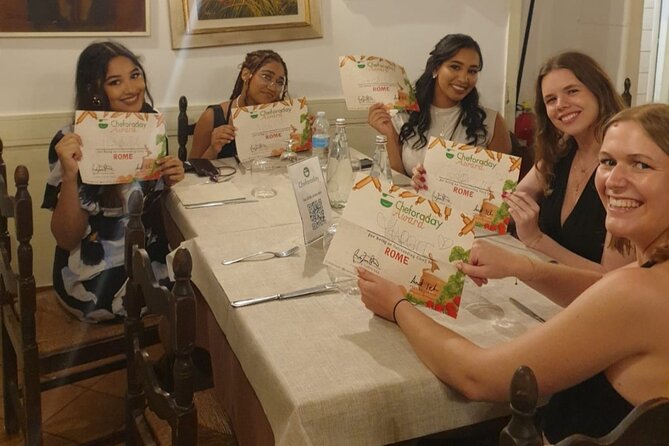
This isn’t only about the meal. You take home a certificate at the end (listed as a certificate of awareness). It sounds small, but it helps you remember the experience beyond the photos. For me, that’s part of the value: you’re buying a story you can bring home.
Also, the class teaches technique you can repeat. Pasta-making is the kind of skill where a good lesson saves you from kitchen frustration later. You learn not only the ingredients, but the feel and the steps—exactly what’s missing when you try to “wing it” from a printed recipe.
And with a rating of 4.7 and 93% recommended, it’s clear people mostly feel they got their money’s worth. The best sign is repeatable satisfaction: this kind of class doesn’t work if you’re stuck doing nothing.
Price and Logistics: Is $53.53 Worth It?
Let’s talk value, because Rome food classes vary wildly in quality. At $53.53 per person for an English-taught, hands-on 2-hour class, you’re not paying for a long evening experience. You’re paying for instruction + ingredients + included drinks.
What’s covered:
- Cooking class
- Pasta cooking with a sauce choice (with the earlier note to confirm sauce specifics)
- Tiramisù cooking
- Wine (choice of red/white, or soft drink alternative)
- Limoncello taste at the end
- Bottled water
- Necessary equipment
- Certificate
What isn’t included:
- Personal purchases
- Tips
What that adds up to: for a single, focused experience, it’s strong value if you want to leave with both a full stomach and a practical skill. It’s also often a good price point for a central Rome food activity where you’d otherwise pay extra for a guided meal.
The main “logistics” trade-off is timing: since time to eat isn’t included, you may still need a little buffer after the 2 hours if your schedule is tight. Other than that, it’s straightforward—meet, cook, eat, go.
Who Should Book This (and Who Might Skip It)
This class is ideal if you:
- Want something hands-on instead of a standard walking-food tour
- Like Italian comfort food and want the basics of pasta dough
- Prefer small-group interaction (group limit is 20)
- Want a fun, social experience that still gives you a repeatable skill
- Enjoy pairing food with wine in a simple, included way
You might choose something else if you:
- Want a fully private cooking lesson (this is a group format)
- Need a tightly timed schedule with zero buffer (time to eat isn’t included)
- Are very specific about sauce coverage and what’s included, given the note mismatch about sauces
Should You Book This Pasta-and-Tiramisù Class at Spanish Steps?
Yes, if you want a short Rome experience that feels hands-on and memorable. The combination of learning the pasta technique, choosing a sauce, cooking tiramisù, and getting included drinks hits the sweet spot for many visitors: practical skill + classic flavors + a central setting.
I’d book it especially if you like the idea of learning with other people and actually forming the dough yourself. If you can be flexible about shared kitchen timing and give yourself a little buffer after the class, this is the kind of activity that turns one evening into a story you’ll remember.
If you want extra reassurance before you book, do this: confirm how the sauce choice is handled (since there’s a note saying sauces are not included) and make sure you’re comfortable with a group cooking setup.
FAQ
How long is the cooking class?
It runs for about 2 hours.
Is the class taught in English?
Yes, it’s offered in English.
Where do I meet for the class?
You meet at V. della Croce, 34, 00187 Roma RM, Italy, and the activity ends back at the meeting point.
What do I get to cook and eat?
You’ll make and eat fresh pasta (fettuccine) with a sauce of your choice, and you’ll also cook and eat tiramisù.
Are wine and limoncello included?
Yes. You get a glass of wine of your choice (or alternatively a soft drink), and you also receive a limoncello taste at the end. Alcohol is served only to +18.
What sauce options are available?
You can choose between amatriciana, cacio e pepe, and tomato with basil.
Is there a group size limit?
Yes. The experience has a maximum of 20 travelers.
Is free cancellation available?
Yes. You can cancel up to 24 hours in advance for a full refund, and it can also be canceled due to poor weather with an alternate date or a full refund offered.