REVIEW · OAXACA CITY
Oaxacan cooking class
Book on Viator →Operated by Oaxaca by locals · Bookable on Viator
Food is more fun when you make it yourself. This Oaxacan cooking class pairs a trip to the Etla traditional market with a hands-on menu taught by Tita, a traditional Mixe cook. Two things I really like: you learn technique at workstations (not just watch), and you leave with a mole you can recreate later. One thing to consider is that the menu includes items like grasshoppers and huitlacoche, so it may not match every comfort level.
The class runs about 5 hours starting at 8:30 am, and it stays small: limited to six people for personal service, with a maximum of eight. You’ll be in English throughout, and you’ll eat while listening to legends and stories tied to the recipes. If you hate walking a bit in the morning or prefer a slower pace, plan accordingly.
In This Review
- Key takeaways before you go
- A market-to-mole morning in Oaxaca City
- Etla Traditional Market: ingredients you can name (and buy again)
- Meet Tita and learn technique, not just recipes
- Memelitas, empanadas, and the menu you’ll actually remember
- Starters and sauces in the molcajete
- Two mole options: what cooking it teaches you
- Food and stories: why the meal feels more personal
- What $140 buys you, really (and how to judge value)
- Timing, group size, and getting the most out of your morning
- Who should book this Oaxacan cooking class
- Should you book it
- FAQ
- How long is the Oaxacan cooking class?
- What time does it start?
- Where does the class meet?
- Is the class in English?
- How big is the group?
- Where do you shop for ingredients?
- What dishes are included?
- Can you cancel for a refund?
Key takeaways before you go
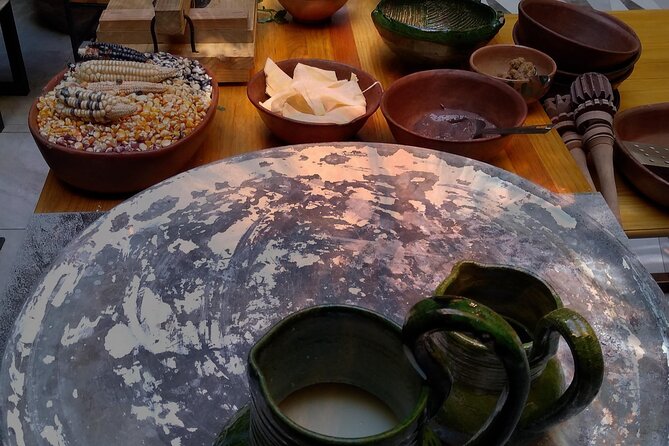
- Etla market shopping with purpose: you pick ingredients you’ll actually use in your dishes
- Tita teaches the why, not just the steps: Mixe tradition with practical cooking method
- Multiple memelitas and empanadas: corn and filling styles that show how Oaxacan food builds flavor
- Choose between two mole types: you actively cook the mole instead of just tasting it
- Stories while you eat: legends and recipe background told in Mixe language, translated into English
- Small group = real attention: limited seating keeps questions from getting lost
A market-to-mole morning in Oaxaca City
If you like food that feels rooted in a place, this class is a strong fit. You start in the Centro area at Oaxaca by locals (Cosijoeza 110A, Ruta Independencia, Centro). From there, the day is built around two ideas: go to where the ingredients are sourced, and then learn how they turn into Oaxacan dishes.
The pace is not rushed, but it is active. Expect chopping, grinding, mixing, and tasting in the moment. The best part is that it’s not just a “cook a recipe” worksheet. The menu moves across corn, chilies, seeds, cocoa, herbs, and the flavors that bind them into sauces.
The day also uses food as a story vehicle. You’ll hear legends and tales connected to Tita and the recipes as the meal unfolds. That keeps the time from feeling like a school assignment.
You can also read our reviews of more tours and experiences in Oaxaca City.

Etla Traditional Market: ingredients you can name (and buy again)
The tour begins with a trip to the Etla traditional market, where you’ll gather what you need for the class recipes. This is one of the most useful parts for you, because it changes how you shop later. Instead of buying ingredients that sound exotic, you learn what to look for and why those ingredients matter in the final dish.
A market stop also helps with the “home cooking” goal. If you want to repeat the results at home, you need ingredient familiarity: what you’re buying, what it’s used for, and how it affects flavor. Even if you never cook exactly the same way twice, you’ll come away with a clearer sense of the Oaxacan flavor logic.
One small practical note: market mornings can be lively and busy on foot. Comfortable shoes help, especially if you’re hopping between stalls to find specific items.
Meet Tita and learn technique, not just recipes
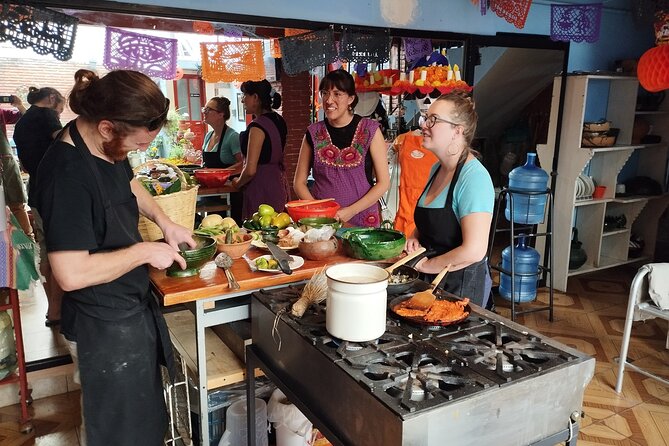
The class is taught by Tita, described as a traditional cook of Mixe origin with recipes passed down from previous generations. That matters because mole isn’t just a spice mix. It’s a process—layers of ingredients transformed into something thick, complex, and deeply flavored.
In a good hands-on class, you shouldn’t just stand near a station and hope for the best. Here, the structure is set up so everyone participates. The small group size (up to six for personal service, never more than eight) means you can ask questions and get real feedback while you cook.
You’ll also learn how traditional Oaxacan ingredients behave together. Corn, chilies, seeds, cocoa, herbs, and the method of combining them are what you’re learning. The menu is varied, but the thread is consistent: the same building blocks show up again and again in different formats.
Memelitas, empanadas, and the menu you’ll actually remember
The class menu is built around classic Oaxacan staples and a few ingredients that feel adventurous if you haven’t tried them before.
You’ll make and eat dishes including:
- Grasshopper memelitas
- Huitlacoche memelitas
- Egg memelitas with holy grass
- Empanadas
- Mole
- Water chocolate
- Mezcal
- Yolk bread
- Fresh flavored water
Here’s what I think makes this lineup valuable for you. It’s not random. Memelitas show how corn becomes a base for toppings and sauces. Huitlacoche and holy grass highlight that Oaxacan cuisine isn’t only about what’s imported or adapted from elsewhere—it uses ingredients grown, harvested, and used locally.
And yes, some items may feel unusual at first. But the cooking class format helps: you see how ingredients are handled, how flavors balance, and how the dishes are meant to be eaten.
Starters and sauces in the molcajete
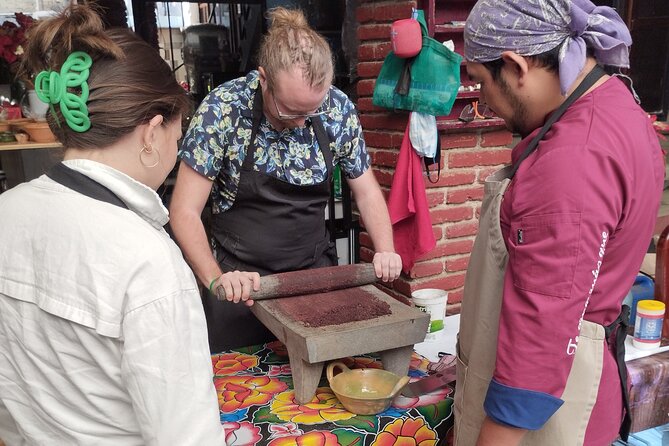
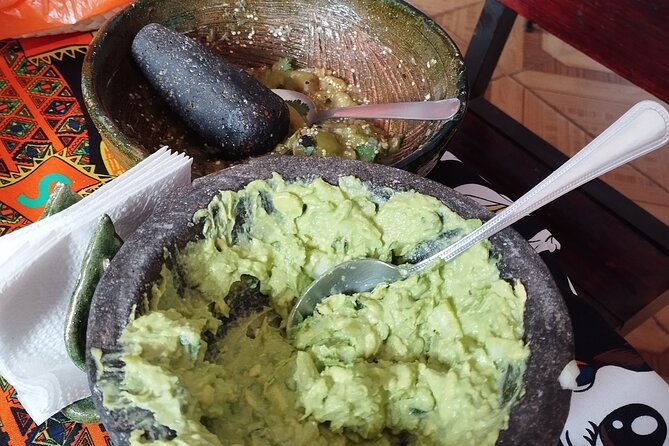
You’ll start with a sauce in molcajete, which is a traditional stone mortar and pestle style of working. This is a technique worth learning because grinding changes texture and helps release flavor. You’ll also make memelitas (memes) seasoned with asiento, plus cheese, beans, and salsa.
That starter sets the tone: you’re not just assembling. You’re building flavor step by step with traditional tools.
Two mole options: what cooking it teaches you
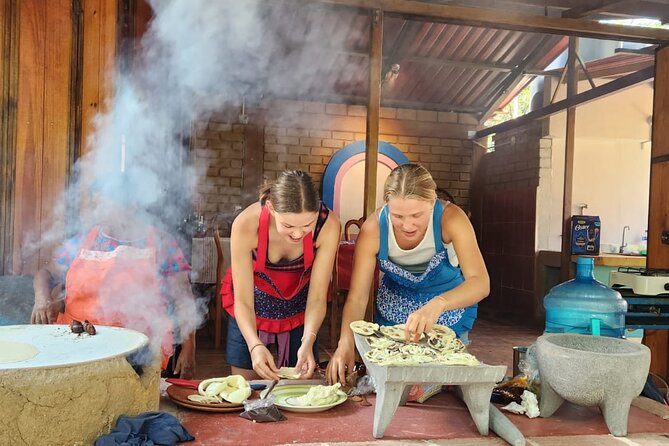
Mole is the headline here, and you’re not just tasting it. You get to choose between two types of moles for cooking, then you make it as part of the class.
Mole is also where the class earns its price. A mole recipe isn’t only about ingredients; it’s about timing and how the mixture changes as it reduces and thickens. When you cook it yourself, you start to understand why people obsess over it.
In one of the class experiences described, the mole was paired with chicken at the end, which gives you a real-world serving context. That kind of finish is helpful if your goal is to reproduce the dish later instead of just collecting a list of components.
One more practical detail: if you end up with leftover mole, there’s at least one reported case where the chef froze extra mole so it could be taken home. I can’t promise it will happen every time, but it’s the sort of care that shows up when a class expects leftovers.
Food and stories: why the meal feels more personal
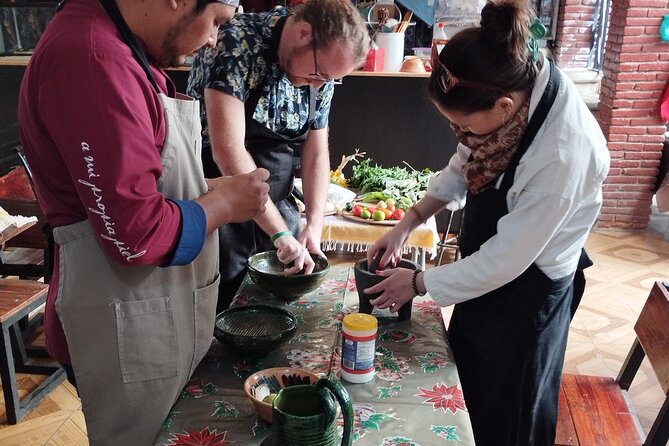
After the cooking, you eat while listening to legends, tales, or stories of Tita, told in Mixe language and translated into English. This part is more than entertainment. It gives context for why the dishes exist in the first place.
If you’ve ever had mole somewhere and wondered why it tastes the way it does, story context helps you connect flavor to origin. You’re learning the cultural logic behind the recipe, not just memorizing steps.
You’ll also get a small drink lineup as part of the meal: mezcal and water chocolate. Mezcal shows up as a cultural companion to dishes, while water chocolate is a nod to cacao-based drinks. You’re not expected to become a sommelier; you’re expected to notice how flavors work together.
For you, this is one of the best ways to make the class stick. People remember food better when it’s tied to a narrative, even a simple one.
What $140 buys you, really (and how to judge value)
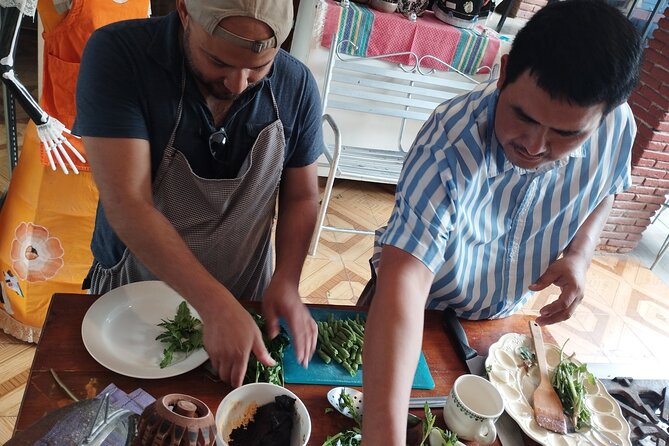
At $140 per person for about 5 hours, this isn’t a bargain-basement cooking class. But it can be good value because the cost covers several things at once:
- A market visit to source ingredients (not just a pantry walk-through)
- A hands-on format with active participation
- A mole-focused experience where you choose between two mole types
- A full eating experience with multiple dishes
- English instruction and small-group attention
For comparison, a lot of cooking classes at this level either feel too “watch-y” or end after a single dish. Here, the day has multiple outputs: memelitas, empanadas, mole, and the cacao-meets-drink portions.
Where it can feel pricey is if you want only a quick sampler, or if your goal is mostly learning one technique. If mole isn’t a priority, the value drops a bit.
Timing, group size, and getting the most out of your morning
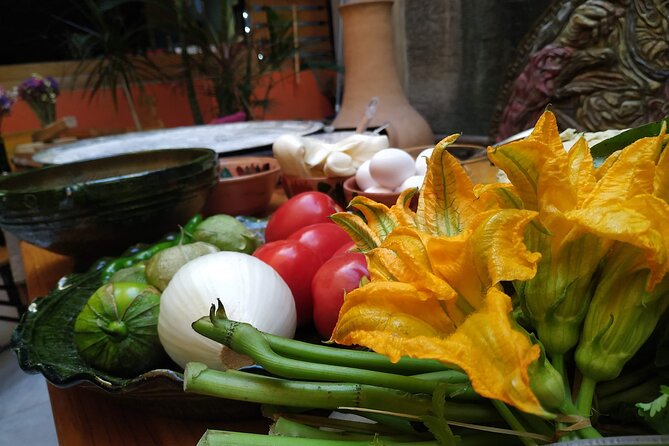
This class starts at 8:30 am. That’s early enough to beat the later-day crush, and it also helps you stay focused. You’ll be shopping, cooking, and eating without dragging your day into the afternoon.
Group size is a big deal here. Limited to six for personal service, with a maximum of eight, you’re more likely to get direct answers as you work. That matters for techniques like grinding in a molcajete and managing mole textures.
A couple of practical tips to get better results from the experience:
- Come hungry, because you’re eating what you make.
- If you have dietary limits or strong preferences, tell the operator when booking. The menu includes grasshopper and other non-standard ingredients.
- Wear shoes you can stand in. Market walking plus kitchen time adds up.
Who should book this Oaxacan cooking class
You’ll likely love this class if you:
- Want hands-on cooking in Oaxaca City instead of a short tasting
- Care about mole as a real skill, not just a flavor
- Like food experiences with cultural context and story
- Prefer small groups where questions get answered while you cook
It may be less ideal if you:
- Want a low-adventure menu with zero unusual ingredients
- Prefer a purely observational experience
- Have a very limited schedule and can’t start at 8:30 am
Should you book it
Yes, book this if you want a practical way to learn Oaxacan cooking with a small-group setup and a mole-centered payoff. The market ingredient step plus hands-on participation is the combo that makes it more than a meal.
Before you commit, check whether the menu ingredients match your comfort level—especially the dishes featuring grasshopper and huitlacoche. If that part sounds fun, you’re in the right place. If not, ask questions before booking so you don’t show up hoping for a different menu.
FAQ
How long is the Oaxacan cooking class?
It runs for about 5 hours (approx.).
What time does it start?
It starts at 8:30 am.
Where does the class meet?
The meeting point is Oaxaca by LocalsCosijoeza 110A, Ruta Independencia, Centro, 68000 Oaxaca de Juárez.
Is the class in English?
Yes, it is offered in English.
How big is the group?
Group size is limited to six people for personal service, and the maximum is listed as 8 travelers.
Where do you shop for ingredients?
You go to the Etla traditional market to obtain ingredients for the recipes.
What dishes are included?
The menu includes grasshopper memelitas, huitlacoche memelitas, egg memelitas with holy grass, empanadas, mole, water chocolate, mezcal, yolk bread, and fresh flavored water, plus starters like sauce in molcajete and memes.
Can you cancel for a refund?
Yes. You can cancel for free up to 24 hours in advance for a full refund.