REVIEW · FUJIKAWAGUCHIKO MACHI
Ramen Cooking Class at Lake Kawaguchiko (Short Course)
Book on Viator →Operated by Japan food entertainment Ltd · Bookable on Viator
Ramen starts with your own hands. This short course at Lake Kawaguchiko turns you into the cook, with handmade noodles and a Mt. Fuji backdrop that makes the meal feel like a moment worth remembering.
I like how hands-on it is: you knead, roll, and cut your noodles using a noodle-making machine, then you’re cooking them right in a real noodle setup. I also love that you pick your flavor direction by choosing tare and customizing toppings, including chasiu, with help from an English-speaking instructor such as Kimmy, Hiro, or Mae (names that come up in feedback).
The main consideration is simple: it’s only about 1 hour, so you’ll want to keep an easy pace and focus on the steps as they come. Also, drinks are not included, so plan for that.
In This Review
- Key highlights you’ll feel right away
- Why this short ramen class fits perfectly at Lake Kawaguchiko
- Meeting at Fuji Activity Reservation Center and getting started quickly
- Step 1: Kneading, rolling, and cutting ramen noodles for real
- Step 2: Choosing your tare so your ramen doesn’t taste like everyone else’s
- Step 3: Boiling your handmade noodles in a real noodle cooker
- Step 4: Toppings, chasiu, and eating with a Mt. Fuji view
- Certificate and bandana souvenir: what you take home
- Price and value: what you get for $39.14
- Who should book this ramen class (and who might skip)
- Tips to enjoy the class even if your schedule is tight
- Should you book this short ramen class near Lake Kawaguchiko?
- FAQ
- How long is the ramen cooking class?
- Where do I meet for the class?
- Do I use a mobile ticket?
- Will I make ramen noodles from scratch?
- Is there an English-speaking instructor?
- Do I get a certificate or souvenir?
- What is included in the price?
- What is not included?
- What is the maximum group size?
- What is the cancellation policy?
Key highlights you’ll feel right away
- 1-hour format that’s long enough to make noodles and eat, without dragging
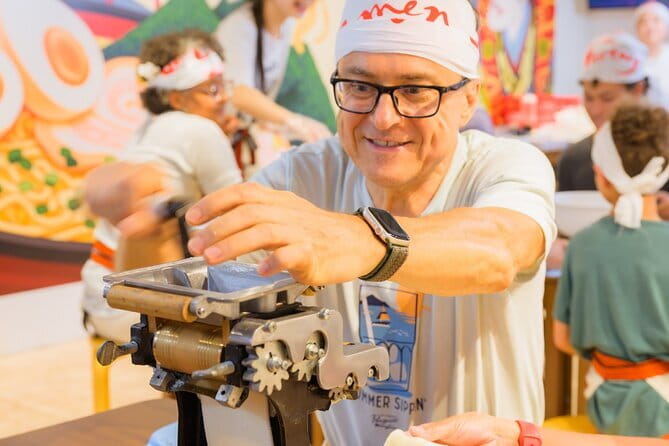
- Noodle-making machine time (knead, roll, cut) instead of just watching
- Tare selection so you’re not stuck with one flavor profile
- Chasiu topping included, plus other customization for your bowl
- Official completion certificate for your group
- Bandana souvenir at the end, plus Mt. Fuji views during the meal
Why this short ramen class fits perfectly at Lake Kawaguchiko
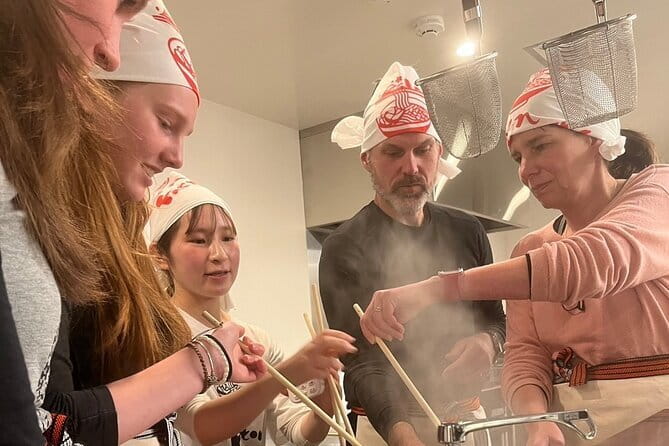
Lake Kawaguchiko is famous for Mt. Fuji views, but what I like about this class is that it uses that setting for something active. In about an hour, you go from dough to bowl. That matters because a lot of sightseeing time can feel passive, especially when you’re just trying to catch the best light on Fuji.
The class is also priced to feel reachable for a full cooking activity. At $39.14 per person, you’re paying for instruction, ingredients, and the cooking setup, not just a show. And since it runs with a maximum of 20 people, it stays workshop-style rather than turning into a big lecture.
One more practical point: the schedule is short, so it works as a buffer between train times and Fuji-area viewpoints. If your day is already packed, this is the kind of activity that adds something real without stealing half your itinerary.
You can also read our reviews of more tours and experiences in Fujikawaguchiko machi.

Meeting at Fuji Activity Reservation Center and getting started quickly
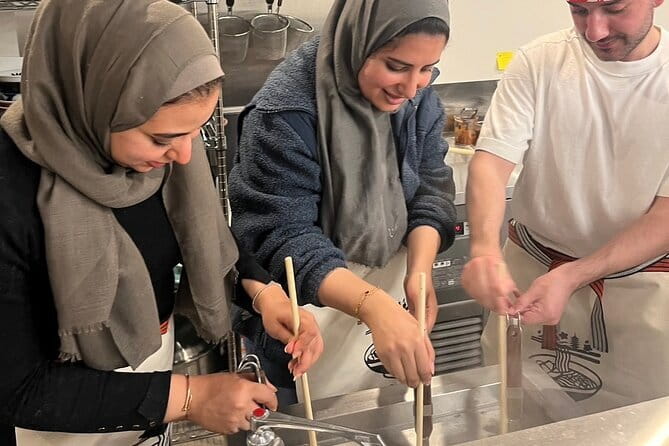
You meet at Fuji Activity Reservation Center, 3487-15 Funatsu, Fujikawaguchiko, Minamitsuru District, Yamanashi 401-0301, Japan. The good news is that it’s listed as near public transportation, so you’re not forced into a private transfer just to start the class.
Bring your mobile ticket, since that’s what you use for entry. Confirmation happens at booking time, so you should be able to plan with confidence once your session is set.
Group size is capped at 20 travelers, which usually keeps the room from getting chaotic. It also means the instructor can keep checking that everyone is following the noodle steps. If your session happens to be smaller, the style can turn more personal; feedback includes examples of people getting very attentive help when only a couple joined.
Step 1: Kneading, rolling, and cutting ramen noodles for real
This is where the class becomes more than just dinner with good scenery. You’ll make your own noodles from scratch, starting with kneading the dough. Kneading is the stage where ramen texture is decided in the simplest way: it helps the dough become elastic enough to roll thin without turning into a mess.
Then you roll the dough out and cut it using a noodle-making machine. That’s a sweet spot for beginners. You get the satisfaction of doing it yourself, but you’re not left alone with a hand tool and a vague explanation.
Why this step matters for you:
- You’ll learn the sequence, not just the result. That makes it easier to recreate at home later.
- It’s physically engaging, which helps the day feel less rushed.
- It turns ingredients into something tangible. When you later eat your ramen, you know what each part felt like.
A small tip: pay attention during the cutting stage. Even if the dough isn’t perfect, your noodles will still cook well. But the better the cut thickness you achieve, the more even the boil tends to be.
Step 2: Choosing your tare so your ramen doesn’t taste like everyone else’s
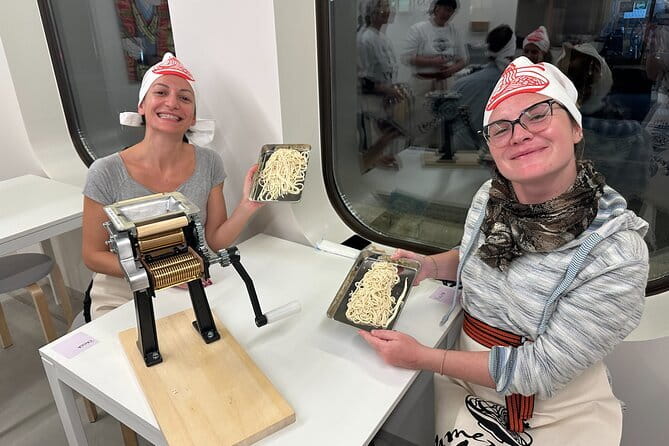
After the noodles, you choose your preferred tare, which is the seasoning base used to build your ramen flavor. If you’ve never wrapped your head around tare before, don’t worry. The class is structured so you get to make that decision in the moment.
What I like about this setup is that it gives you control without requiring you to be a chef. You’re not expected to design a full broth from scratch. Instead, you select the seasoning direction, then the rest of the process stays guided.
This means your bowl has your fingerprints on it. One person might go for a sharper, bolder direction while another prefers a more mellow profile, and both choices still make sense in a ramen context. It’s personalization that stays grounded in what ramen actually is.
If you have allergies or dietary restrictions, the class asks you to let them know in advance. That’s a good move because it gives the provider a chance to guide you appropriately before you arrive.
Step 3: Boiling your handmade noodles in a real noodle cooker
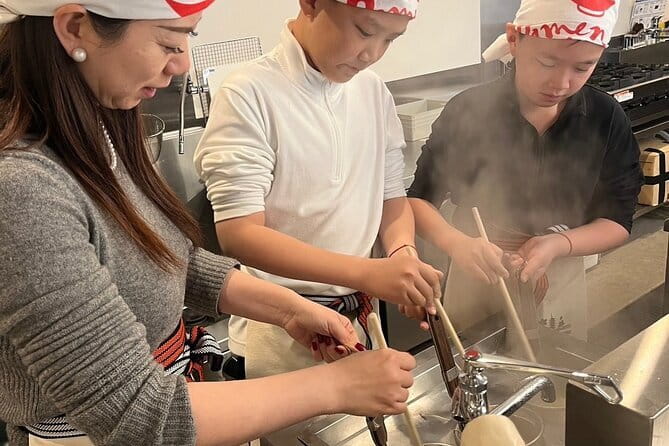
Once your noodles are ready, you boil them in a real noodle cooker. This is a practical advantage. Homemade noodles cook differently than dried store noodles, and a specialized setup helps keep timing consistent.
Here’s what you should focus on during this step:
- Watch the process instead of rushing ahead in your head. Handmade noodles can turn from perfect to overdone quickly.
- Stay ready for the moment your noodles are done, because this is when your bowl comes together.
This is also where the class pacing makes sense. You don’t spend two hours waiting. You do a hands-on noodle step, then move right into cooking. That keeps momentum high and helps the final meal feel like the reward it’s supposed to be.
Step 4: Toppings, chasiu, and eating with a Mt. Fuji view

After boiling, you top your ramen and then enjoy it. Toppings are part of the fun here, and chasiu is included. Even if you’ve had chasiu before, it hits differently when you made the noodles that are holding it.
The class structure supports customization without turning into decision fatigue. You’re not picking from 30 options. You select toppings that suit your taste, and you get to experience how toppings change the whole bowl.
The Mt. Fuji piece is the emotional payoff. The class overview highlights breathtaking views of Mt. Fuji, and eating your own ramen in that setting is exactly the kind of travel memory that sticks. It’s a cooking class, but it’s also a scene.
Quick mindset shift for this part: treat the meal like a tasting of your choices. Taste your tare, notice how the noodle texture holds up in the broth, and then evaluate the chasiu and toppings as a group. That makes the class feel educational, not just fun.
Certificate and bandana souvenir: what you take home

At the end, each group receives one official certificate of completion. That’s a nice touch if you’re traveling as a couple or small group, because it’s proof you actually did the work, not just watched it.
You also get a bandana souvenir. This is specifically listed as part of the experience, and it’s one of those small things that’s easy to carry home and easy to actually use.
If you like collecting travel items that relate to an activity you did, this is a good one. It’s not just a store-bought souvenir; it connects directly to the class you completed.
Price and value: what you get for $39.14
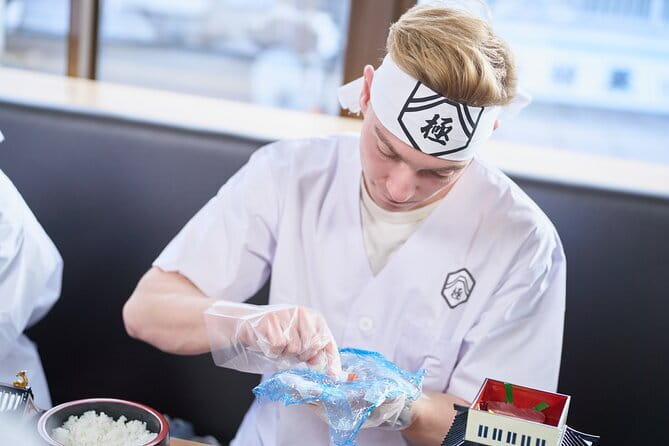
Let’s talk value, because $39.14 can either be a steal or just a number, depending on what’s included. Here, it’s a real cooking package.
Included:
- Local taxes
- Food tasting
- Everything necessary to make your own ramen
- English-speaking instructor
- Original bandana souvenir
Not included:
- Drinks
- Private transportation fee
So you’re basically paying for the ingredients, tools, instruction, and the end meal experience. That’s why the price feels reasonable for what you do. It’s not just eating ramen somewhere; you’re making the noodles, selecting your seasoning base, boiling the noodles, and assembling the bowl.
One practical budgeting tip: since drinks are not included, plan to grab water or whatever you prefer before or after the class. If you’re the kind of person who likes a soda with meals, factor that into your day cost.
Also note the booking pattern: it’s on average booked about 34 days in advance. That doesn’t mean you can’t book last minute, but it does suggest popular time slots can fill. If you have a specific time you want, it’s smart to lock it in early.
Who should book this ramen class (and who might skip)
This class is a strong fit if you:
- Want a hands-on activity near Lake Kawaguchiko without committing to a full-day cooking program
- Like tasting and learning by doing
- Appreciate English instruction so you can follow each step clearly
- Enjoy ramen enough that you want to understand the building blocks (noodle-making plus tare choices)
It’s also great for couples and small groups. The certificate is per group, and the max group size helps keep things controlled.
You might skip it if:
- You’re only looking for a quick photo stop. This one has you working with dough and cooking.
- You dislike time-boxed activities. It’s about an hour, so there’s not much hanging around.
- You want drinks included in the price. You’ll handle those separately.
Tips to enjoy the class even if your schedule is tight
Since this is a short course, your best strategy is to show up with a calm plan.
- Arrive a few minutes early so check-in with the mobile ticket doesn’t stress you out.
- Let the provider know about allergies or dietary restrictions in advance. It’s the only way to keep the process smooth.
- Wear something you can move in. You’ll be working with dough, so comfort matters.
- Think of the hour as a single cooking arc: noodles first, then seasoning choice, then cooking, then toppings and eating.
And if you’re hoping for extra attention, pick a session that has room for fewer people. Feedback includes examples of more one-on-one-style help when the class is small.
Should you book this short ramen class near Lake Kawaguchiko?
I’d book it if you want a meaningful activity that matches the setting. You’re not just eating ramen; you’re making it, choosing your flavor base, and sitting down with your own handiwork in front of Mt. Fuji views. For $39.14, with instruction, taxes, food tasting, and a bandana included, the value is solid.
Skip it if you’re tired from travel and want something purely passive. This class gives you a finished bowl, but it asks for participation.
If your day needs one memorable, practical activity near Lake Kawaguchiko, this short ramen class is a very safe bet.
FAQ
How long is the ramen cooking class?
The class runs for about 1 hour.
Where do I meet for the class?
Meet at Fuji Activity Reservation Center, 3487-15 Funatsu, Fujikawaguchiko, Minamitsuru District, Yamanashi 401-0301, Japan.
Do I use a mobile ticket?
Yes. This experience uses a mobile ticket.
Will I make ramen noodles from scratch?
Yes. You’ll knead the dough, roll it out, and cut it using a noodle-making machine, then boil your handmade noodles.
Is there an English-speaking instructor?
Yes. The class includes an English-speaking instructor.
Do I get a certificate or souvenir?
Yes. Each group receives one official certificate of completion, and all participants receive a bandana souvenir.
What is included in the price?
Included are local taxes, food tasting, everything necessary to make your own ramen, an English-speaking instructor, and the bandana souvenir.
What is not included?
Drinks are not included, and private transportation fees are also not included.
What is the maximum group size?
The experience has a maximum of 20 travelers.
What is the cancellation policy?
You can cancel for a full refund up to 24 hours before the experience starts. If you cancel less than 24 hours before start time, no refund is provided.