REVIEW · SINGAPORE
Singapore: Hands-on Cooking Class with Cultural Immersion
Book on GetYourGuide →Operated by Food Playground Pte Ltd · Bookable on GetYourGuide
Your hands learn the city’s flavors. In a 3-hour Chinatown studio, you cook Singaporean family recipes with instructors who explain where the dishes come from and how local ingredients shape each step. I love the hands-on setup at fully equipped workstations, and I love that you sit down for a full meal you made yourself. One drawback to plan around: the studio is on level 2 of a conservation shophouse with no lift access.
After arrival near the Buddha Tooth Relic Temple and Museum, you’ll start with coffee or tea and nostalgic snacks, then kick things off with an ice-breaker game tied to Singapore food culture. Classes run in English, and you’ll share the table with other classmates while you also pick up practical ideas for where to eat and what to do next.
In This Review
- Key highlights you’ll feel fast
- Why This Singapore Cooking Class Works in Chinatown
- Finding the Studio by Buddha Tooth Relic Temple (and the one real catch)
- Before the Wok: Coffee, Tea, Snacks, and an Icebreaker Game
- The Weekly Menu Schedule: Choose Your Day Like a Food Map
- Hands-on Cooking Stations: Aprons On, Then Real Technique
- What You’ll Cook and Eat: A Real 3-Dish Singapore Meal
- The Human Side of the Recipes (and Why It Changes the Meal)
- Price and Value: What $94 Gets You in Real Terms
- Who Should Book This Class (and who might want to skip)
- Should You Book Food Playground’s Singapore Cooking Class?
- FAQ
- How long is the cooking class?
- What is the price per person?
- Where do I meet the group?
- Is hotel pickup and drop-off included?
- What dishes will I cook?
- Are chef hats and aprons provided?
- Does the class include coffee, tea, or water?
- Is Wi-Fi available?
- Can I record video during the class?
- Is the class suitable for limited mobility?
Key highlights you’ll feel fast
- Family recipes with real origins: You learn the story behind each dish, not just the steps.
- A fixed weekly menu: Pick your day to match what you want to cook (and what dessert you’ll end with).
- Step-by-step coaching: Instructors guide your technique so you can repeat it at home.
- You eat what you cook: A 3-dish meal ends the class, with time to chat afterward.
- Human stories along the way: You hear how instructors overcame life challenges, plus how the work supports women’s livelihoods.
Why This Singapore Cooking Class Works in Chinatown
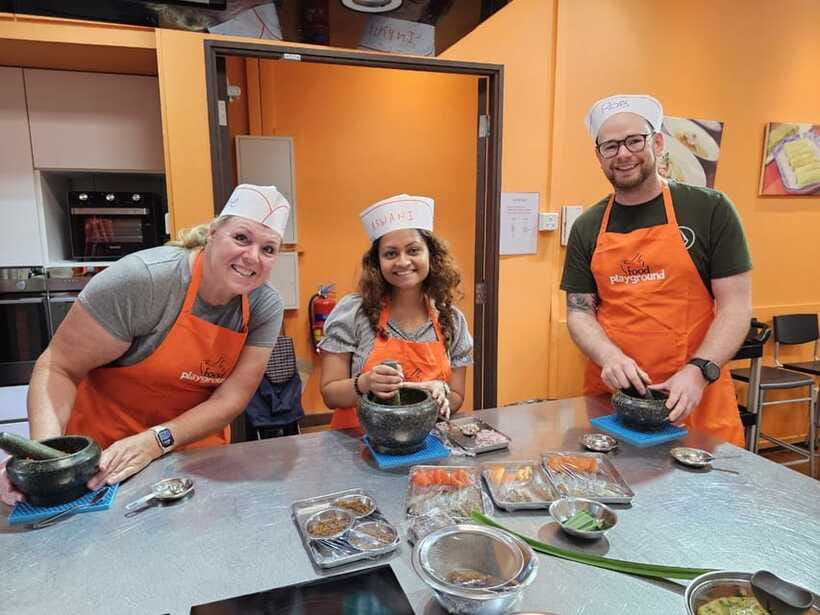
Singapore food is layered. It’s not just spicy, sweet, or savory. It’s migration, trade routes, neighborhood habits, and family “we’ve always done it this way” methods. This class leans into that truth. You cook three signature dishes in one sitting, but you also get the cultural threads that connect them.
What I like most is that the class isn’t trying to impress you with showy technique. It’s practical. You get a workstation, ingredients are ready, and the instructors walk you through the process so the dish makes sense as you cook it. You end with the payoff too: you eat a 3-dish Singaporean meal you made yourself, not a plate that was finished without you.
The reviews also highlight the personal side. People repeatedly mention instructors like Nur, Sara, Helen, and hosts such as Mrs Lee and Lur sharing stories, including overcoming life challenges. That makes the class feel more like a local lesson than a scripted performance.
You can also read our reviews of more tours and experiences in Singapore.
Finding the Studio by Buddha Tooth Relic Temple (and the one real catch)
The meeting point is straightforward: the studio sits next to the Buddha Tooth Relic Temple and Museum in Chinatown. When you’re near the landmark, look for an orange sign with the local partner’s name.
Two practical notes matter here:
- No hotel pickup/drop-off: You’ll need to make your own way to Chinatown.
- Level 2, no lift: The studio is on level 2 of a conservation shophouse without elevator access. It’s not recommended for limited mobility. If you use a wheelchair or need step-free access, this may not be your best option.
If you can comfortably use stairs, you’re fine. And Chinatown is already an easy base for walking around after class.
Before the Wok: Coffee, Tea, Snacks, and an Icebreaker Game
The start is designed to get everyone relaxed and on the same page. When you arrive, instructors greet you and you settle in with coffee or tea plus nostalgic snacks/bites. It’s a small touch, but it helps you slow down and enjoy the morning rather than rush into cooking mode.
Then comes a fun ice-breaker game meant to pull you into Singapore’s heritage, food, and culture early. Expect it to set the tone: you’ll be thinking about ingredients and food stories, not just chopping and stirring.
After that, you’ll go over what you’re cooking that day. You get the dish origins and the local ingredients that matter. That’s helpful because Singapore dishes often taste like a blend, not a single flavor. Knowing the “why” makes it easier to judge if your sambal, curry, or sauce is moving in the right direction while you cook.
The Weekly Menu Schedule: Choose Your Day Like a Food Map
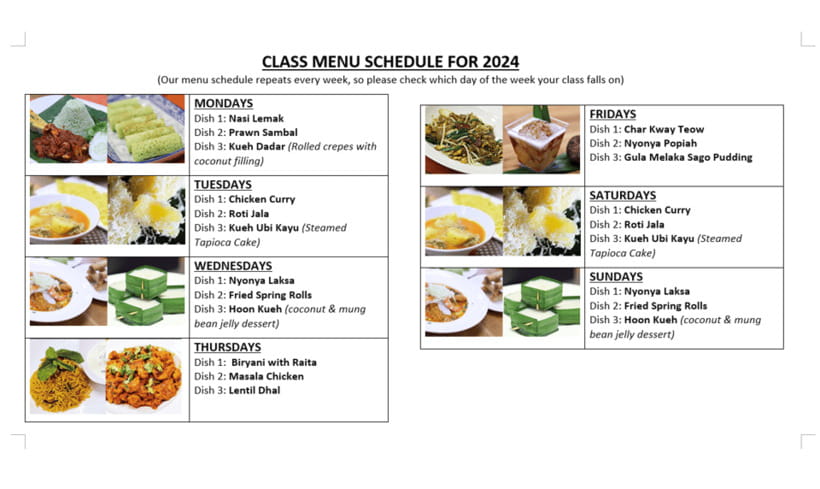
This class runs on a fixed menu schedule every week. That’s great for planning—just make sure the day you book matches what you want to cook and eat.
Here’s the schedule:
- Monday: Nasi Lemak, Sambal Prawns, Kueh Dadar
- Tuesday: Curry Chicken, Roti Jala, Ondeh Ondeh
- Wednesday: Laksa, Fried Spring Rolls, Hoon Kueh
- Thursday: Nasi Biryani, Masala Chicken, Lentil Dhal
- Friday: Char Kway Teow, Nyonya Popiah, Sago Gula Melaka
- Saturday: Curry Chicken, Roti Jala, Ondeh Ondeh
- Sunday: Laksa, Fried Spring Rolls, Hoon Kueh
Why this matters: it turns the class into a mini Singapore food itinerary. If you love curries and breads, Tuesday/Saturday hits the best combo with roti jala and ondeh ondeh. If noodles and street-food classics pull you in, Friday’s char kway teow and nyonya popiah can be a fun path. And if you want a “variety plate” feel, Wednesday’s laksa plus crispy spring rolls plus hoon kueh can hit a wide range of textures.
Tip: desserts here are part of the lesson. Several days include sweet bites like ondeh ondeh or kueh dadar, and Friday includes sago gula melaka. If you think you’re only coming for savory cooking, you’ll likely be surprised by how much the class lets you learn about local sweets too.
Hands-on Cooking Stations: Aprons On, Then Real Technique
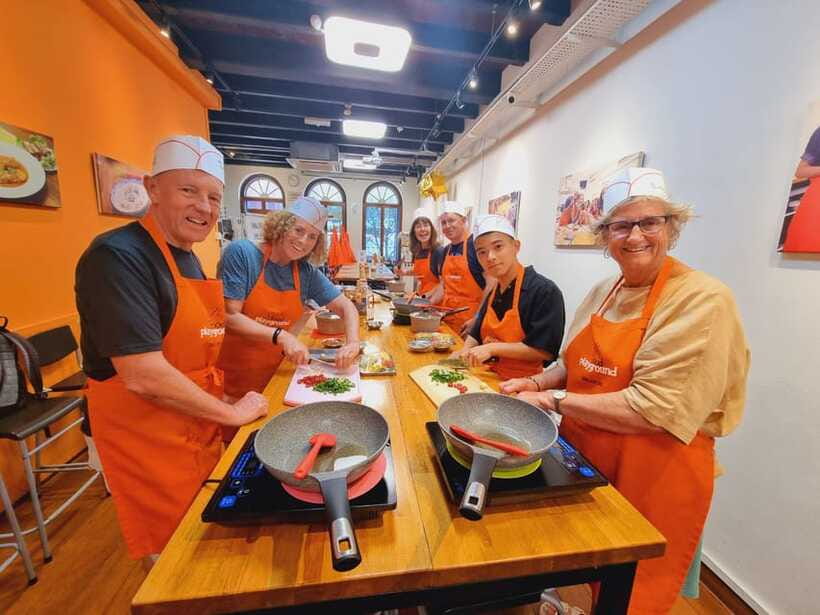
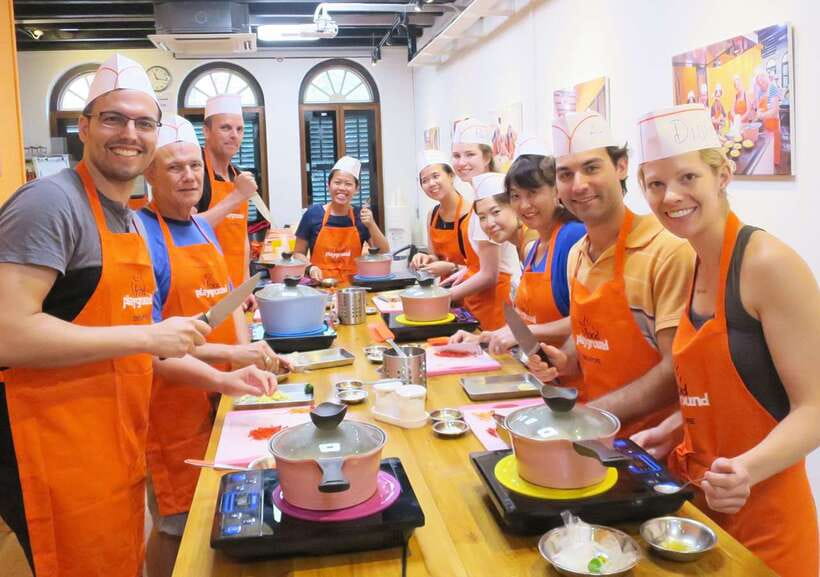
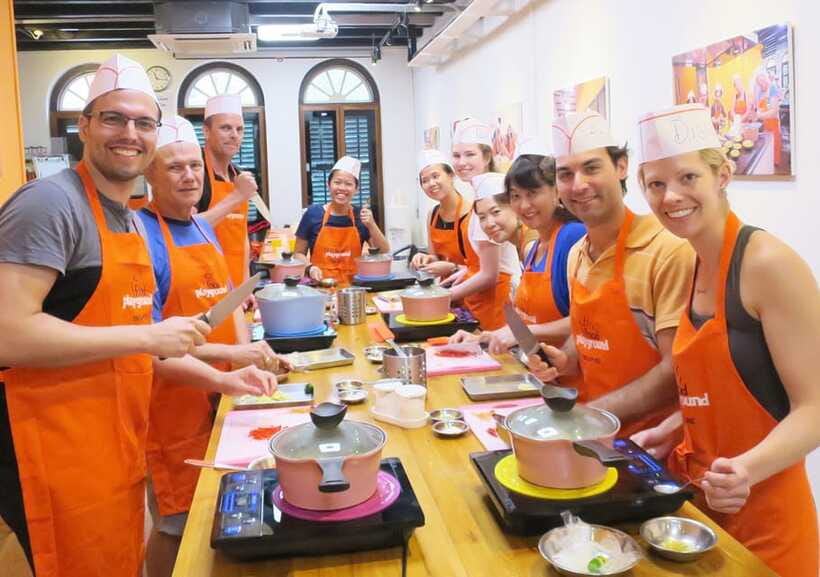
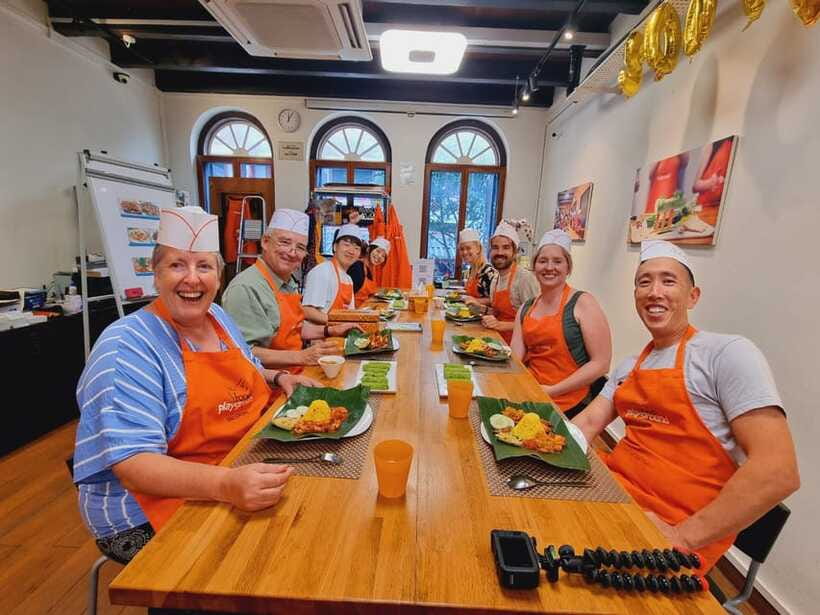
Once you’re briefed, it’s apron and chef hat time. You move into the kitchen and work at fully equipped cooking workstations. This is where the class earns its value. You’re not just watching; you’re making.
In the reviews, people keep pointing out how prepared everything is—ingredients ready, stations set up, and the room kept clean. You also get close guidance while you cook, so even if you’re not confident in the kitchen, the workflow becomes manageable.
A few specific things worth knowing from what instructors teach:
- You’ll learn how local spice blends come together. One review highlights grinding fresh spices for chicken curry, which is exactly the kind of step that helps home cooks later.
- You’ll get help at different skill levels. Several comments mention instructors being patient with all types of learners.
- Cleanup is handled for you. One review says the setup lets you cook, eat, and leave the cleanup to the team. That makes the whole experience feel less exhausting than a DIY cooking day.
Also, there’s a clear equipment baseline included for you: chef hats and aprons plus all cooking ingredients required for the class.
What You’ll Cook and Eat: A Real 3-Dish Singapore Meal
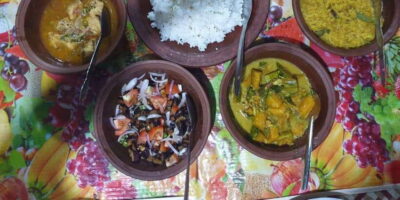
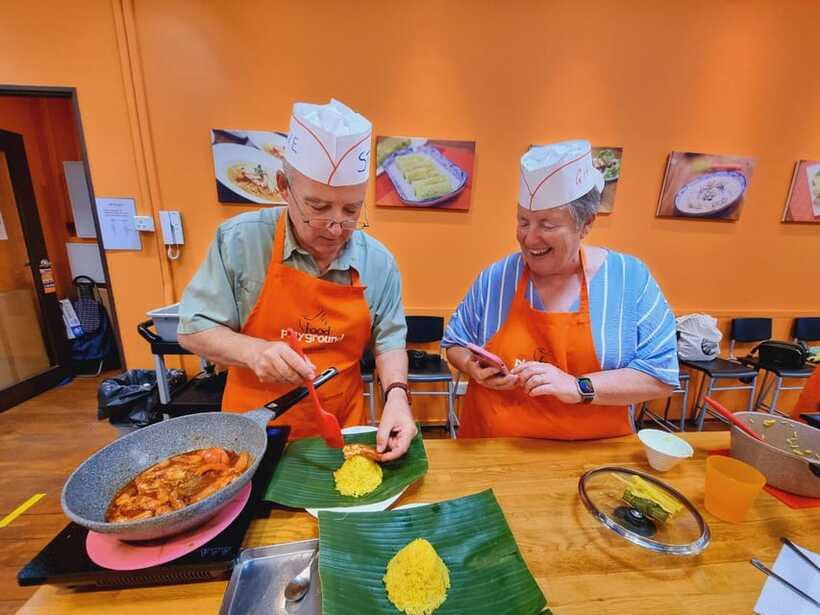
The big end goal is simple: you eat what you cooked. The class wraps up with a 3-course Singaporean meal—in other words, you’ll sit down to enjoy the dishes you made yourself.
Because the menu changes by day, the exact plates vary. But you can expect a mix of:
- Main dishes that reflect Singapore’s flavor style—curry, noodle, rice, or fried
- Add-on components that show technique—like breads (roti jala) or crunchy snacks (fried spring rolls)
- A dessert or sweet element depending on the day, such as kueh dadar, ondeh ondeh, hoon kueh, or sago gula melaka
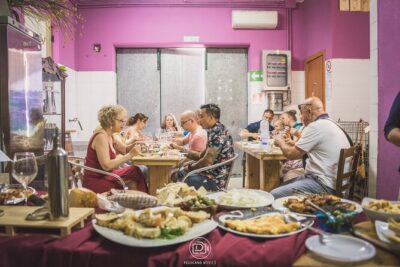
You don’t just taste once and run. There’s time to mingle with the rest of the group while you eat. And this is also when you can ask for local advice. Multiple reviews point out that instructors offer tips on where to eat and what to do during the rest of your stay.
One practical note: video recording isn’t allowed. If you love filming every step, plan to take notes instead.
The Human Side of the Recipes (and Why It Changes the Meal)
This class doesn’t treat food as trivia. It frames each dish as a story that someone carried through change. Reviews repeatedly mention instructors sharing intricate stories of how they overcame life challenges, and you feel that in the teaching style—patient, encouraging, and focused on why details matter.
You’ll hear from different hosts depending on the day. Names that appear in the feedback include Nur, Sara, Helen, Annie, and Wy Wy, plus mentions of Mrs Lee and assistants such as Yih Yoh and Sobna. You don’t need to memorize names, but it’s a clue that the program leans on people with genuine personal investment in the work.
There’s also a broader social thread you might pick up. One review specifically mentions the class connecting to supporting women by bringing stay-at-home moms back into the workforce. Even if you only catch parts of that in conversation, it adds weight to your meal. You’re paying for ingredients and a lesson, yes—but you’re also participating in something that creates opportunity.
Price and Value: What $94 Gets You in Real Terms
At $94 per person for 3 hours, you’re paying for more than “a cooking demo.” Here’s what’s covered:
- Ingredients for the day
- Chef hat and apron
- Coffee, tea, and drinking water
- Complimentary high-speed Wi-Fi
- A full 3-course meal created by you
- Instructor-led guidance through the process
No hotel pickup means you control your own route, but the trade-off is that you aren’t stuck coordinating a pickup window. For a food-first activity in Singapore, a few hours with a guided kitchen session and a meal at the end can be a strong value—especially if you’d otherwise spend that time piecing together multiple restaurant stops.
If you’re the type who likes to bring flavors home, this class also has a hidden value: you’ll learn recipes you can repeat. Several reviews specifically mention people wanting to recreate the dishes at home.
Who Should Book This Class (and who might want to skip)
This is a great fit if you:
- Want to cook real Singapore dishes instead of just eating them
- Enjoy learning the meaning behind ingredients and techniques
- Prefer structured guidance with close help
- Like the social side of cooking with others, then eating together
It may be a poor fit if you:
- Have limited mobility, since it’s on level 2 without lift access
- Strongly want to record video during class (it isn’t allowed)
- Expect a completely hands-off experience (you’ll be cooking, not just watching)
If you come as a solo traveler, it can also work well because the icebreaker and shared meal give you natural conversation. If you come as a couple or a group of friends, it’s also a fun “together we made this” experience.
Should You Book Food Playground’s Singapore Cooking Class?
Book it if you want a single activity that gives you three things at once: hands-on cooking, a proper meal, and the cultural stories that make Singapore food click. The high rating (4.9 from 107 reviews) lines up with what matters most here—friendly instructors, clean organization, and teaching that sticks.
Don’t book it if stairs and level access are an issue for you, or if you’re hoping for a low-effort show instead of real cooking. And do make sure your chosen day matches the menu you want, since the dishes change by weekday.
If you’re in Chinatown anyway, this is an efficient way to turn a few hours into a lived-in food lesson rather than just another meal.
FAQ
How long is the cooking class?
The class lasts 3 hours.
What is the price per person?
It’s $94 per person.
Where do I meet the group?
The studio is located next to the Buddha Tooth Relic Temple and Museum in Chinatown. Look for an orange sign with the local partner’s name near the landmark.
Is hotel pickup and drop-off included?
No. Hotel pickup and drop-off are not included.
What dishes will I cook?
The dishes follow a fixed weekly schedule. For example, Monday includes nasi lemak, sambal prawns, and kueh dadar, while Friday includes char kway teow, nyonya popiah, and sago gula melaka.
Are chef hats and aprons provided?
Yes. Chef hats and aprons are included.
Does the class include coffee, tea, or water?
Yes. Coffee, tea, and drinking water are included.
Is Wi-Fi available?
Yes. Complimentary high-speed Wi-Fi is included.
Can I record video during the class?
No. Video recording is not allowed.
Is the class suitable for limited mobility?
It’s not recommended for people with limited mobility, since the studio is on level 2 of a conservation shophouse with no lift access.