REVIEW · GOA
Traditional Indian Cooking Class in Goa, Anjuna [vegetarian]
Book on Viator →Operated by Project Tres · Bookable on Viator
Spices, stories, and a shared dinner in Goa. Project Tres runs a traditional vegetarian cooking class in a small village near Anjuna, with local women guiding you through southern Indian flavors and the spice logic behind them. It’s the kind of class where the meal feels like the point, not an afterthought.
I like that you cook a full 5-dish menu using local ingredients, and you learn about Indian food culture and the ayurvedic properties of spices as you go. I also like the small group size (max 6), which makes it easier to ask questions and jump in when you want to. One caution: this workshop is prepared quite traditionally, so expect more floor seating and a pace where the hosts may do a big chunk of the work.
In This Review
- Key things that make this class special
- Goa’s Anjuna, but in a quieter village setting
- Women-led cooking at Project Tres (and why it matters)
- Your 3-hour flow: spices, chopping, and a 5-dish vegetarian meal
- How hands-on is it, really?
- Ayurvedic spice talk you can actually use
- Price and value: $39.27 for a women-led, full meal class
- Seating, comfort, and the floor-sit reality
- Language, teaching style, and getting the most out of it
- Who this vegetarian Goa cooking class fits best
- Should you book this Anjuna cooking class?
- FAQ
- How long is the cooking class in Goa?
- Is the cooking class vegetarian?
- How many people are in each group?
- Where do I meet for the class in Anjuna?
- What time does it start?
- Do I have to sit on the floor?
- Is mineral water used during the class?
- Can I request changes for dietary restrictions or allergies?
- What if the weather is bad or I need to cancel?
Key things that make this class special
![Traditional Indian Cooking Class in Goa, Anjuna [vegetarian] - Key things that make this class special](https://5.iwantcookingclasses.com/wp-content/uploads/traditional-indian-cooking-class-in-goa-anjuna-vegetarian-1.jpg)
- Women-led project with direct community impact: each class supports Project Tres and the women involved in the program.
- A quiet Anjuna-side setting: it’s behind the hustle, in a small village community.
- A full 5-dish vegetarian menu: you’re not just tasting, you’re cooking.
- Ayurvedic spice talk built into the process: you learn why spices are used, not only how to cook them.
- Traditional seating style: plan for floor seating, with chairs/benches available if needed.
- Mineral water for preparation and service: you’ll be served mineral water during the experience.
Goa’s Anjuna, but in a quieter village setting
![Traditional Indian Cooking Class in Goa, Anjuna [vegetarian] - Goa’s Anjuna, but in a quieter village setting](https://5.iwantcookingclasses.com/wp-content/uploads/traditional-indian-cooking-class-in-goa-anjuna-vegetarian-2.jpg)
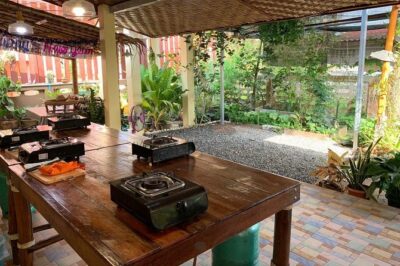
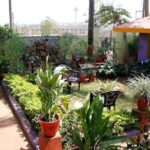
Anjuna is famous for action—music, markets, people moving fast. This class takes you a short step away from that energy and into a smaller, village-style setting where cooking happens at home speed. The vibe tends to feel relaxed and welcoming, with time for questions and laughter rather than a strict classroom format.
You’ll meet at the Project Tres Centre in Dmello Vaddo, Anjuna (the class ends back at the same meeting point). The timing is also friendly: it starts at 3:30 pm and runs about 3 hours, which works nicely if you’re doing beach time earlier in the day.
Also worth knowing: the setting is described as traditional, and it can be a floor-sit experience. If you need a chair, you should speak up so they can help.
You can also read our reviews of more tours and experiences in Goa.
Women-led cooking at Project Tres (and why it matters)
![Traditional Indian Cooking Class in Goa, Anjuna [vegetarian] - Women-led cooking at Project Tres (and why it matters)](https://5.iwantcookingclasses.com/wp-content/uploads/traditional-indian-cooking-class-in-goa-anjuna-vegetarian.jpg)
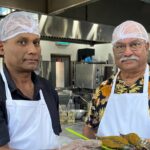
Project Tres isn’t just a cooking demo business. It’s an initiative to amplify and promote economic development of women in India and Kenya, and the cooking classes are part of that mission. The practical benefit for you is simple: the money you pay supports real people working on real food in a community project.
In a class like this, you’ll likely hear more than just spice tips. People involved in the program share the project story and personal context, which helps the meal land differently. Instead of eating a dish and forgetting it five minutes later, you understand what’s behind it: why this food is cooked this way, and why it supports livelihoods.
This also explains the “home setting” feel. The kitchen isn’t designed for maximum stage lighting or perfect choreography. You’re learning in a working household environment, and that authenticity is a big part of the value.
Your 3-hour flow: spices, chopping, and a 5-dish vegetarian meal
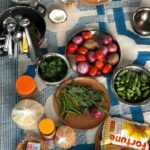
The class is built around a 5-dish vegetarian menu. The emphasis is on southern Indian flavors, plus the idea that spices have roles beyond taste—often explained through Ayurvedic properties. You’ll also learn about Indian food culture, not only the recipe list.
Here’s what the experience generally feels like from start to finish:
First, you settle into the space and get introduced to the project and cooking approach. Expect conversation and orientation so you understand how the day works. You’ll learn what ingredients and spices are coming up, and you’ll get the “why” behind some choices.
Then comes the cooking sequence in stages. You’ll help with prep tasks such as chopping and preparing vegetables. Depending on the flow of the day, you may do more hands-on cooking than others. Some people find they’re encouraged to join in fully, including preparing dishes themselves. Others get more “help and watch” time. Either way, the goal is to learn what’s happening as cooking moves from raw ingredients to finished food.
Finally, you eat what you cooked. The best part of a food class is always the meal, and in this one it’s taken seriously. You’ll sit down together and enjoy a shared vegetarian spread at the end, turning the lessons into real flavor memory.
One more detail that makes the class easier to trust: mineral water is used for preparations and served to guests. That’s a small thing, but it matters when you’re cooking and eating in the same session.
How hands-on is it, really?
![Traditional Indian Cooking Class in Goa, Anjuna [vegetarian] - How hands-on is it, really?](https://5.iwantcookingclasses.com/wp-content/uploads/traditional-indian-cooking-class-in-goa-anjuna-vegetarian-4.jpg)
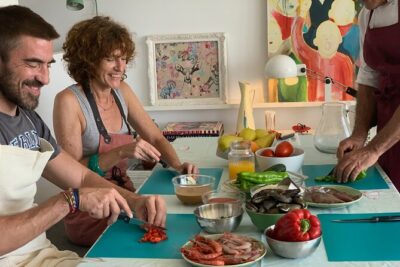
This is the part where you should calibrate your expectations. A traditional cooking class isn’t always a “you do every step” experience. Here, the hosts do a lot—especially when timing matters and multiple dishes are cooking.
That said, you’re not stuck on the sidelines. The class is described as encouraging participation, and some participants end up preparing a lot of the food themselves when they want to. So the difference usually comes down to how clearly you ask to be involved and how the day’s cooking schedule is running.
If you want maximum hands-on time, use a simple strategy:
- jump in during chopping and prep,
- ask what step is next,
- and say directly if you want to cook more than prep.
If you’re more of a watch-and-learn person, you’ll still get value. Seeing the process matters with Indian home cooking—the way spices bloom, how textures change, and how flavors build from one dish to another.
Ayurvedic spice talk you can actually use
One thing I like about this class is that it treats spices as more than just heat and color. You’ll learn about the Ayurvedic properties of spices as part of the meal-making process, and you’ll connect that talk to what you’re tasting and smelling.
You won’t just receive a list of ingredients. The learning is tied to the cooking actions: when a spice goes into oil, when it’s added to vegetables, and how different spices show up across a 5-dish menu. That kind of learning sticks, because it’s anchored in real results.
Also, Indian home cooking often reflects practical experience. Even when the explanations are cultural or spiritual, the outcome is concrete: balanced flavors, warming spice profiles, and dishes that feel like they belong to everyday life. This is the kind of class that helps you cook Indian food at home without turning it into a complicated science project.
Price and value: $39.27 for a women-led, full meal class
At $39.27 per person, this isn’t a bargain “sprinkle-and-taste” workshop. You’re paying for a proper session—about 3 hours—and a 5-dish vegetarian menu that ends with a shared meal. For many visitors, that turns into good value because you get both learning time and a full dinner outcome.
The other value piece is responsible tourism. Each cooking class contributes directly to the local community and supports the women involved in Project Tres. That doesn’t replace the need for a quality experience, but it does make your payment feel more grounded in real impact.
Group size also affects value. With a maximum of 6 travelers, you’re less likely to feel lost in a crowd. And if you’re booking with friends, the class offers group discounts, which can make the price even easier to justify.
Seating, comfort, and the floor-sit reality
This workshop is prepared traditionally, and you should be ready to sit on the floor. That’s not just a cultural detail—it shapes how the kitchen space works and how the session moves.
If floor seating is hard for you, you should plan ahead:
- ask for a chair if you need one,
- and know that some seating support may be available (chairs and bench seating have been noted as available).
Even if you can sit on the floor, it’s smart to wear something comfortable and breathable. You’re cooking, moving slightly, and spending a few hours in one general area.
Language, teaching style, and getting the most out of it
This class can be more visual than lecture. Since the cooking is tied to local home methods, explanations may come in ways that feel quick or sometimes limited depending on language. That can be a little frustrating if you’re expecting step-by-step translation for every action.
The fix is simple: come with curiosity and a flexible mindset. Watch carefully, ask questions when you can, and focus on the steps you can reproduce later—prep method, spice timing, and texture cues.
If you want deeper instruction, your best move is to communicate early in the class. Tell them what you want: more hands-on cooking, more explanation, or more help choosing ingredients. The class is described as encouraging participation, so your approach helps shape your experience.
Who this vegetarian Goa cooking class fits best
This is a great pick if you want:
- a traditional vegetarian cooking experience in Goa,
- a class that teaches the role of spices and food culture rather than only copying recipes,
- and a small group setting (max 6) where you can interact instead of being rushed.
It’s also a strong choice for people who care about responsible tourism and want their food experience to support a community project.
It may be less ideal if you’re expecting a highly structured, classroom-style lesson with constant translation and a guaranteed “everyone cooks every step” format. Still, even then, you can leave with useful skills—especially if you lean into chopping, asking questions, and cooking the parts you can handle.
Should you book this Anjuna cooking class?
Book it if you want a true home-style experience in Goa: 5 vegetarian dishes, a shared meal, and a spice-focused lesson tied to Ayurvedic ideas and everyday Indian cooking. The price is reasonable for the duration and the fact that you’re getting a full menu you can eat.
Think twice only if you strongly prefer classroom-style instruction, very even participation for every person, or comfortable seating with zero floor-sit time. If you’re open to traditional methods and you communicate your needs (especially around seating and how hands-on you want to be), this class is likely to hit the right notes.
FAQ
How long is the cooking class in Goa?
The experience runs for about 3 hours.
Is the cooking class vegetarian?
Yes. The menu is a 5-dish vegetarian lineup made with local ingredients.
How many people are in each group?
The class has a maximum of 6 travelers.
Where do I meet for the class in Anjuna?
You meet at Project Tres Centre (HPPW+MM, Dmello Vaddo, Anjuna, Goa 403509, India).
What time does it start?
The start time is 3:30 pm.
Do I have to sit on the floor?
The class is prepared traditionally, so floor seating is expected. If you need a chair, let one of the ladies know.
Is mineral water used during the class?
Yes. Mineral water is used for the preparations and served to the guests.
Can I request changes for dietary restrictions or allergies?
Yes. If you have dietary requirements or allergies, you should advise the organizers.
What if the weather is bad or I need to cancel?
The class requires good weather. If it’s canceled due to poor weather, you’ll be offered a different date or a full refund. You can cancel for a full refund up to 24 hours in advance.