REVIEW · GOA
Private Market Visit and Cooking Class in Goa with a Local Family
Book on Viator →Operated by Traveling Spoon · Bookable on Viator
Goa tastes better with real hands. This private market visit and cookery class with Rita in Goa Velha turns a morning walk into a do-it-yourself meal plan, with market finds and hands-on cooking of classic Goan dishes in about four hours. I especially liked that you’re not just watching food happen—you’re learning the steps that make it taste like home cooking.
My second favorite part: you finish by sitting down to eat what you cooked, often starting with things like rissois de camarao (prawn puffs) and moving into curries such as vindalo or xacuti, plus sides like cabbage foogath—and then dessert. The only real drawback to plan around is logistics: there’s no hotel pickup or drop-off, so you’ll want to be comfortable getting yourself to the start point.
In This Review
- Key Points You’ll Care About
- A Morning Market With Rita: What Makes It Feel Local
- Masala Chai and Spice Basics: Training Your Nose and Hands
- Cooking in the Outdoor Kitchen Studio: Hands-On, Not Just Hands-Off
- From Prawn Puffs to Coconut Desserts: What You’ll Likely Eat
- Price and Logistics: Is $110 Worth It for 4 Hours?
- Vegetarian Option and Dietary Notes: How to Make It Work for You
- Who This Class Fits Best (and When to Skip)
- Should You Book This Private Goa Market and Cooking Class?
- FAQ
- What time does the experience start?
- How long is the private market visit and cooking class?
- Is this tour private?
- Where do we meet, and where does it end?
- Is hotel pickup or drop-off included?
- Can I choose a vegetarian option?
- What dishes might we cook and eat?
- When will I receive confirmation after booking?
- Can I cancel for a full refund?
Key Points You’ll Care About
- Private market shopping with your host, Rita so you can see what actually goes into the dishes.
- A chai warm-up plus a quick guide to spices and herbs, before you touch the stove.
- Hands-on cooking of 2–3 Goan specialties in a colorful outdoor kitchen setup.
- Your meal is built around what you learned, with options for seafood curries and more.
- Vegetarian option available if you tell them when you book.
- 4 hours, morning start, and a mobile ticket, which makes it easier to slot into a Goa day.
A Morning Market With Rita: What Makes It Feel Local
The experience starts the way real food days start in Goa: with a market stop. You meet Rita in Goa Velha area and then head out to discover local and regional Goan produce. This part matters because Goa cooking is all about timing and ingredients. If you only ever eat Goan food at restaurants, you miss the “why” behind the flavor—what’s in season, what’s used fresh, and what becomes the base of multiple dishes.
You’ll also get a welcome beverage and snack right up front. It’s a small touch, but it sets the tone: relaxed, social, and food-first, not formal and stiff. Think of it as the bridge between travel day and kitchen day.
One more thing I like: the pace is practical. You’re not forced through a giant grocery tour. Instead, you’re gathering the ingredients you’ll actually cook later, so the market walk feels like a recipe you can taste.
You can also read our reviews of more tours and experiences in Goa.

Masala Chai and Spice Basics: Training Your Nose and Hands
Before cooking begins, Rita introduces you to a range of spices and herbs used in Indian cuisine. It’s not just a lecture. You’re preparing to cook, so the spice intro is tied to what will show up in your dishes and how you’ll work with them.
You’ll start by making masala chai with spices and herbs. This is more than a warm-up drink. It trains your senses for what comes next. You start to notice the role of aroma—spices don’t just add taste; they change the smell of the whole dish as it cooks.
After that, you’ll get guidance on the spice approach—what to use, and how to think about proportions in a typical Goan kitchen style. Even if you’re not a confident cook at home, this part helps you understand the “logic” behind the flavor instead of relying on memorized steps.
Cooking in the Outdoor Kitchen Studio: Hands-On, Not Just Hands-Off
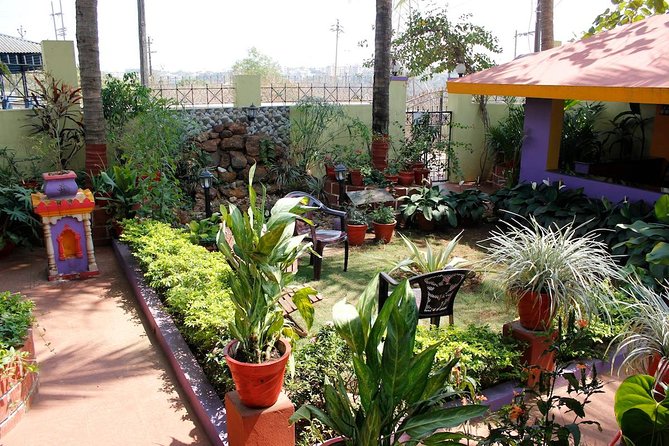
The cooking class itself happens in Rita’s outdoor kitchen studio. That setting is part of why the day feels real—there’s something about cooking in an open, everyday workspace that makes the process easier to follow. You’re surrounded by the ingredients and tools you’ll use, and you’re not competing with a commercial kitchen’s speed.
You’ll learn to cook 2–3 traditional Goan dishes. The dishes are classic and specific to the region, not vague “Indian curry” instructions. Based on what you might make and what the menu often includes, you could end up working with combinations like:
- Goan pumpkin soup
- Vegetable curry
- Chicken vindaloo
…and then eat related specialties depending on what’s prepared for the group that day.
Rita’s teaching style is set up for real beginners. From the way the class is described, the steps are explained as you go—so you’re not left guessing. And the experience is private, which means you can ask questions without feeling rushed.
A practical note: since it’s hands-on, your best bet is to come ready to stand, stir, taste, and adjust. If you’re the type who wants everything pre-portioned and done for you, this won’t feel as relaxing. But if you like learning how to cook, this is the whole point.
From Prawn Puffs to Coconut Desserts: What You’ll Likely Eat
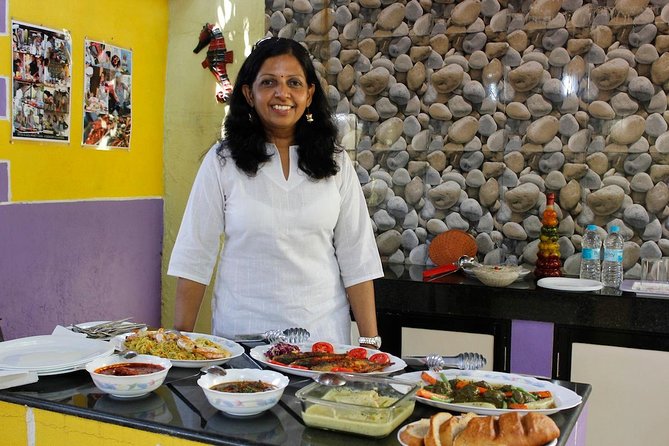
After cooking, you sit down together to enjoy the meal. This is one of the biggest value moments of the day: you’re not just paying for lessons, you’re eating a structured spread that includes both seafood and Goan staples.
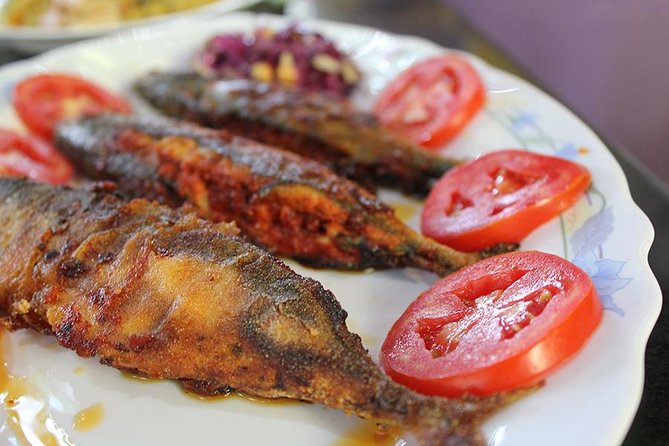
Your meal might begin with rissois de camarao (prawn puffs). These are a classic coastal bite—fried and crisp, with that satisfying savory filling that makes you feel like the day is already a win.
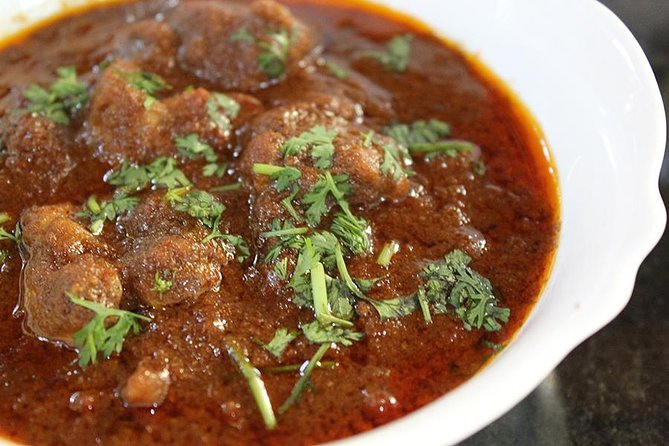
Then you’ll likely move into a curry course. Depending on what you cook and what’s prepared, you might see:
- vindalo or xacuti (Goan curries)
- cabbage foogath (cabbage stir fry)
- caldin (prawn curry with coconut milk) or khatkhatem (mixed vegetable stew)
Dessert often includes one of these:
- bolo mimosa (coconut pie)
- manganem (a traditional sweet dessert made with coconut milk)
What I like about this kind of meal plan is that it’s not random. The flavors you learned are echoed in what you eat. That makes it easier to remember what you did correctly (and what you’d do differently next time).
It’s also a good way to sample more than just the one dish you made. Even if you only cook two dishes, the table can still give you a broader feel for Goan cooking—coconut richness, curry depth, and coastal seafood influence.
Price and Logistics: Is $110 Worth It for 4 Hours?
At $110 per person, this is not the cheapest food activity in Goa—but it’s also not trying to be. You’re paying for a private setup plus real instruction plus an ingredient-focused market walk.
Here’s how the value usually shakes out:
- You get a private market tour and cooking class with your host Rita.
- You eat the home-cooked meal after you finish cooking.
- All fees and taxes are included, and gratuities are included too.
The one cost-related thing to plan for is the lack of pickup and drop-off. You’ll meet at Material Organisation9VR3+M44, Holy Cross Colony, Dabolim, Ijorshi, Goa 403711, India and the experience ends back at that same point. If you’re staying far away, you’ll need to budget for transport.
If you like cooking classes, the price starts to make sense fast. A private market visit alone can be worth it if it’s guided well, and here it’s paired with hands-on cooking and a meal. If you’re only interested in eating, you could spend less elsewhere. But if you want the skill and the story, this is solid value.
Also, it’s commonly booked about 27 days in advance. If you’re traveling during a busier season or you have a tight schedule, I’d treat that as a sign to lock it in early rather than waiting.
Vegetarian Option and Dietary Notes: How to Make It Work for You
If you’re vegetarian, you’re in luck: a vegetarian option is available. You need to advise at booking, and you should share any specific dietary requirements ahead of time.
That’s important because curries and spice blends in Goa can still rely on meat or seafood flavor in some kitchens. The lesson here isn’t that every dish can be automatically swapped—it’s that telling them your needs early helps the class be planned properly.
If you’re eating with dietary restrictions, ask yourself what you want most:
- Do you want to learn the Goan technique even if the exact protein changes?
- Or do you need a fully strict vegetarian menu style?
Either way, communicating your needs when you book keeps the experience smooth.
Who This Class Fits Best (and When to Skip)
This is a great fit if:
- You’re a food lover who enjoys learning steps, not just tasting food
- You want to see and understand Goan ingredients at a local market
- You like the idea of ending with a meal you made yourself
- You’d rather spend a short time doing something hands-on instead of only sightseeing
It’s less ideal if:
- You hate logistics and don’t want to manage getting to a meeting point
- You don’t like standing around while cooking and tasting
- You’re looking for a very long day trip or multiple stops beyond the market and kitchen
It’s also worth knowing it’s private. That’s great for couples, friends, and small groups who want the attention and pacing to match their comfort level.
Should You Book This Private Goa Market and Cooking Class?
If you want an authentic food experience that actually teaches you something, I’d book this. The combination of a local market with Rita, a chai-and-spice warm-up, and then learning 2–3 dishes in a hands-on kitchen studio makes it more than an expensive meal. You leave with both a full stomach and the mental map of how Goan flavors come together.
Book it especially if you’re the kind of traveler who loves learning local technique and wants to eat dishes like vindalo/xacuti, cabbage foogath, and coconut-based desserts without guessing what’s going on behind the scenes.
Skip it only if you absolutely need hotel pickup, or if you’d rather just eat than cook. For everyone else, this is a smart way to spend a Goa morning: practical, personal, and delicious in a way you can repeat.
FAQ
What time does the experience start?
It starts at 9:30 am.
How long is the private market visit and cooking class?
The duration is about 4 hours.
Is this tour private?
Yes. It’s a private tour/activity, meaning only your group participates.
Where do we meet, and where does it end?
You meet at Material Organisation9VR3+M44, Holy Cross Colony, Dabolim, Ijorshi, Goa 403711, India, and the experience ends back at that same meeting point.
Is hotel pickup or drop-off included?
No. Hotel pickup and drop-off are not included.
Can I choose a vegetarian option?
Yes. A vegetarian option is available, but you need to advise at the time of booking.
What dishes might we cook and eat?
You’ll learn 2–3 traditional Goan dishes. Options mentioned include pumpkin soup, vegetable curry, and chicken vindaloo. Your meal might include items like rissois de camarao, vindalo or xacuti, cabbage foogath, caldin or khatkhatem, and desserts like bolo mimosa or manganem.
When will I receive confirmation after booking?
Confirmation is received within 48 hours of booking, subject to availability.
Can I cancel for a full refund?
Yes, you can cancel for a full refund up to 24 hours before the experience’s start time.