REVIEW · DA NANG
5 Dishes Cooking Class with Market Trip in Da Nang
Book on Viator →Operated by DaNang Apron Up Cooking Class · Bookable on Viator
Cooking class plus a market stop sounds simple, but it’s smarter than most. The format is built for real decision-making: you see ingredients first, then cook five classic dishes at a steady pace. I love the market trip approach because it helps you understand what goes into each dish (and how to swap ingredients later). I also love the hands-on menu—you’re not just tasting, you’re making banh xeo, bun bo hue, and more. One consideration: if the day runs late because of a prior class, the schedule can tighten, and English clarity can vary a bit by instructor.
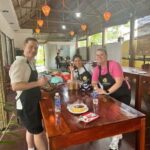
In practice, this is the kind of tour that turns food curiosity into kitchen confidence. You start at the market, learn what to buy and why, then return to cook together and eat what you made, with homemade rice vodka on the side. If you’re sensitive to timing or you need very clear English instruction, plan to be flexible and ask questions early so you don’t miss key steps.
In This Review
- Key highlights you’ll feel right away
- A market-first cooking class in Da Nang makes better sense
- Finding Nguyen Bá Lân Street without stress
- Chợ Bắc Mỹ An: how local ingredients teach you substitutions
- Cooking five dishes in about four hours: the pace reality check
- The menu: what you’ll make and why it fits Da Nang
- Bánh xèo: the satisfying sizzle lesson
- Bún bò Huế: a soup that teaches flavor balance
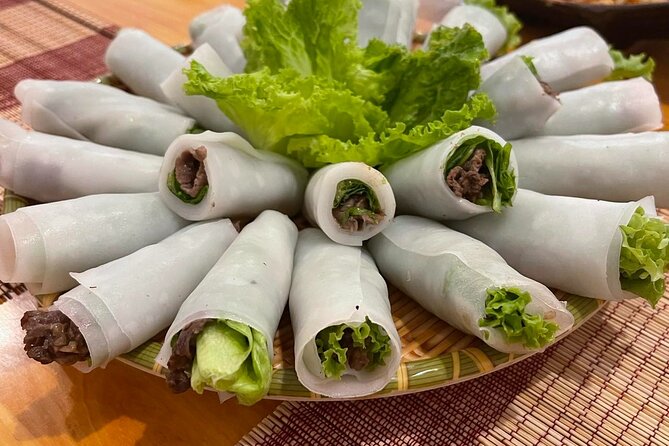
- Hoi An fresh roll: hands-on assembly you can repeat
- Young jackfruit salad: crunchy, tangy, and more than a side
- Avocado ice-cream: a sweet finish that seals the experience
- Eating together with homemade rice vodka
- What you take home: cookbook, certificate, and lasting value
- Price and value: why $39 can work when it fits you
- Who should book this Da Nang cooking class
- Practical tips to get the most out of your class
- Should you book 5 Dishes Cooking Class with Market Trip?
- FAQ
- What time do I need to arrive for the meeting point?
- Where does the tour start in Da Nang?
- How long is the cooking class?
- Do I get to shop at a market?
- What dishes will I learn to cook?
- Is the meal included?
- Can the class accommodate dietary needs or allergies?
- How big are the groups?
- What’s included besides the food?
- Is there free cancellation?
Key highlights you’ll feel right away
- Chợ Bắc Mỹ An market shopping gives you ingredient context, not just a photo stop
- Five dishes in one session so you leave with a practical cooking checklist
- Banh xeo and bun bo hue bring two very recognizable central Vietnamese flavors
- Rice vodka included pairs with your meal and makes the group dinner feel special
- Cookbook and certificate give you something to use after the trip
- Small-group setting (max 30) helps keep the class hands-on and interactive
A market-first cooking class in Da Nang makes better sense
A lot of cooking classes jump straight to the chopping board. This one starts in the market, and that changes how you cook back home. When you learn the dish only after the ingredients are already picked for you, the recipe stays fragile. When you learn the ingredients first, you understand the logic: textures, freshness, aromatics, and what substitutions actually keep the dish on track.
I like that you get a clear flow. You meet, you shop nearby, you learn about local ingredients and possible replacements, and then you cook the dishes you just planned for. It’s a great way to connect the dots between what you see in the market and what ends up in your bowl. That makes the class feel less like a performance and more like a skill you can repeat.
One more small but meaningful point: the class is designed around questions. The structure is built for you to ask why something is used, not just how to do it. If you’ve ever looked at a Vietnamese recipe online and wondered what something should taste or smell like, this is the kind of session that answers that instinctively.
You can also read our reviews of more tours and experiences in Da Nang.
Finding Nguyen Bá Lân Street without stress
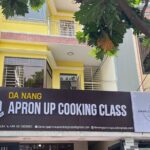
You start at 07 Nguyễn Bá Lân, Bắc Mỹ An, Ngũ Hành Sơn, Đà Nẵng. The guidance is to arrive 15 minutes early at the meeting point. That timing matters because you want a smooth start for the market stop. If you show up right as things begin, you risk missing the first wave of instructions.
The pickup area is also close to public transportation. That’s helpful if you’re staying somewhere central and don’t want to spend your morning negotiating a taxi. In Da Nang, that small convenience adds up, especially when you’re also trying to fit in beach time and dinner plans later.
And because this tour uses a mobile ticket, you don’t have to hunt for paper confirmations. It’s one less thing to keep track of during your trip.
Chợ Bắc Mỹ An: how local ingredients teach you substitutions
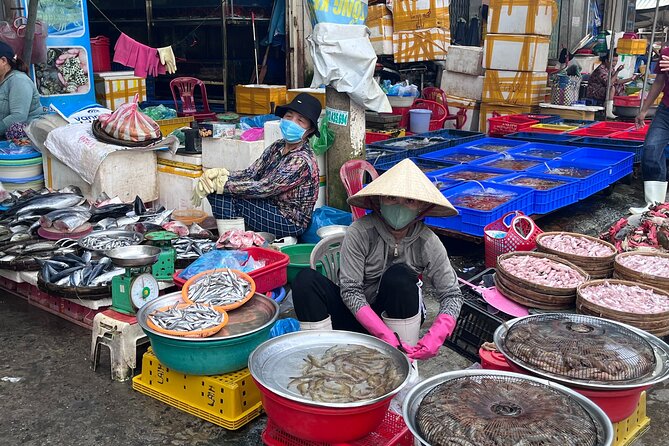
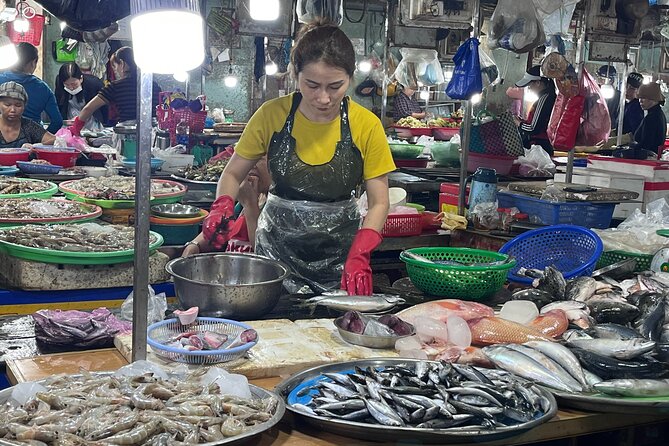
The market stop is the opening act, and it’s a practical one. You visit Chợ Bắc Mỹ An to shop and learn about local ingredients, which is where the class earns its value. Markets in Vietnam are not just about buying. They’re where you learn what’s considered fresh, what flavors are standard, and how common pantry items change by region.
What you’ll want to pay attention to at the stalls:
- What herbs and greens look like when they’re in good condition
- How ingredients are packaged and sold (fresh vs. dried, whole vs. pre-cut)
- Which items are replaceable when you’re cooking abroad
This is also where you get a feel for flavor layering. Vietnamese cooking often depends on the balance between herbs, acids, aromatics, and that extra savory depth. Seeing the ingredients before cooking helps you build that balance instead of memorizing a list.
You may notice that the market lesson comes with flexibility. The class is described as covering ingredient replacements you can do back home. That’s the part many cooking classes skip. You’ll leave with more confidence about what you can swap without ruining the dish.
Cooking five dishes in about four hours: the pace reality check
The total time is around four hours. That’s a sweet spot: long enough to cook and eat together, short enough not to wreck your day. The trade-off is pace. Five dishes means you’re working in steps, not spending an hour perfecting one plate.
Here’s what that means for you:
- Expect a guided workflow, with prep and cooking happening in a sequence
- If you want to ask a lot of questions, do it early so you don’t slow down your group
- If you’re a slower cutter or easily overwhelmed, tell your instructor at the start so they can steer you
The class size also matters. With a maximum of 30 travelers, you’re not stuck in a tiny private session, but it’s small enough for an actual class dynamic. You should be able to watch, participate, and get clarification.
The menu: what you’ll make and why it fits Da Nang
This is a five-dish program with a very clear central Vietnamese focus. You’ll cook:
- Bánh xèo
- Bún bò Huế
- Hội An fresh roll
- Young jackfruit salad
- Avocado ice-cream
Each dish teaches a different type of cooking. That makes the set feel more useful than a random assortment. You’re covering savory sizzling comfort, soup with depth, fresh roll assembly, a crunchy-sour salad, and a sweet frozen finish.
Let’s break down what these dishes usually demand, and why they’re a smart mix for a first serious cooking class.

Bánh xèo: the satisfying sizzle lesson
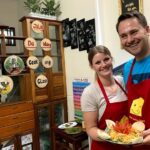
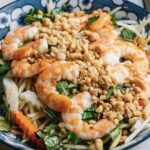
Bánh xèo is the dish people recognize instantly once it hits the table: a thin, pan-cooked pancake that gets crisp edges and a tender center. In a class format, it’s a great early anchor because you learn how batter behaves and how heat affects texture.
If you’ve only eaten bánh xèo but never cooked it, this is where you understand the key moment: when the pan is hot enough and how the batter spreads. It’s also a dish where you learn timing—too slow and it loses the crisp; too fast and it can become tough.
Bún bò Huế: a soup that teaches flavor balance
Bún bò Huế brings the comfort level and the complexity. The class setting gives you a chance to learn how the soup’s flavor profile is built—savory, aromatic, and deeply satisfying. As a cooking experience, it’s valuable because soup is where people often fail at home. You can’t just copy measurements; you have to understand how the flavors come together.
This dish also tends to be a good test of the instructor’s explanation style. If the teacher is clear, you’ll pick up practical cues like aroma changes and how broth should taste at key steps.
Hoi An fresh roll: hands-on assembly you can repeat
Fresh rolls are deceptively simple. The challenge is assembly. You need the right balance of fillings, rolling technique, and freshness so everything stays clean and not soggy.
This is the kind of dish you’ll enjoy if you like making food look neat and eat it right away. It’s also ideal for people who want immediate feedback: if you roll well, the bites work instantly.
Young jackfruit salad: crunchy, tangy, and more than a side
Young jackfruit salad is where the class shows you a different Vietnamese flavor direction. It’s not just a “vegetable salad.” The jackfruit brings a crunchy texture, and the dressing brings tang and savory notes that make the whole dish feel alive.
You’ll likely learn how to season so it tastes balanced, not one-note sour. That balance is exactly what you want to take home for meals beyond Vietnamese cooking days.
Avocado ice-cream: a sweet finish that seals the experience
Having avocado ice-cream as the last dish is a smart move. It gives you a dessert that’s tied to real ingredients you can find or approximate back home. It also makes the class feel complete, because you don’t end on a savory overload.
This final dish helps you remember the experience as more than just lunch or dinner. It’s a full meal arc: savory, fresh, crunchy, then sweet and cool.
Eating together with homemade rice vodka
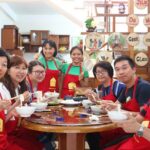
After cooking, you eat what you made. This matters more than it sounds. When you taste your own cooking right away, you get a real understanding of whether your textures and seasoning choices worked.
The class also includes some homemade rice vodka. That turns the meal into a shared celebration. If you’re cautious with alcohol, you can take a small sip and focus on the flavors, but the inclusion still adds to the group atmosphere.
If you’re the type who likes to learn by tasting, this part is where the lesson sticks. You can compare what you expected with what you actually got, then ask how the instructor would adjust things next time.
What you take home: cookbook, certificate, and lasting value
At the end, you receive a cook book and a certificate. That’s not just paper feel-good stuff. It gives you a way to rebuild the steps after your memories start fading. For cooking classes, that follow-up is crucial. A great class shouldn’t end when the cooking stops.
The cookbook matters especially if you want to cook again. It turns your memory of the market items and cooking steps into something usable. The certificate is a nice bonus, but the real win is the ability to replicate the experience in your own kitchen.
Price and value: why $39 can work when it fits you
At $39 per person for about four hours, this class can be a solid value if you want a structured introduction to central Vietnamese cooking. You’re paying for more than instruction—you’re paying for the full arc: market learning, guided cooking, shared meal, and take-home materials.
The value becomes even clearer when you consider what you’re getting:
- Multiple dishes, not just a single recipe
- A market stop that supports ingredient understanding
- Food you cook and eat, rather than only tasting
- Cookbook and certificate
Could you find cooking lessons cheaper in other places? Maybe. But if your goal is to leave with practical confidence—especially ingredient replacement knowledge—this price point can feel fair. It’s the kind of class that’s easiest to justify when you know you’ll actually cook again.
Who should book this Da Nang cooking class
This tour fits best if you:
- Want a clear, guided way to learn Vietnamese cooking fundamentals
- Love the idea of learning ingredients at a market before cooking
- Like doing multiple dishes in one trip instead of focusing on one
- Want a hands-on activity that ends with a meal, not just a demonstration
It’s also a good match for couples or solo travelers. The class dynamic is friendly when you’re cooking and eating together, and the group limit helps keep the experience from feeling huge.
If you’re very strict about timing, go in with the expectation that a tight schedule is still possible. If one class runs late, yours could be impacted. Build in a buffer afterward so your dinner plans don’t become stressful.
Practical tips to get the most out of your class
A few things that will help you enjoy the full experience:
- Arrive early so you can settle in before the market shopping begins
- Tell the instructor about vegetarian/vegan needs or allergies when booking
- Ask about ingredient replacements during the market stop so it’s fresh
- Go hungry. You’ll be cooking and then eating what you make
- If you’re unsure about an ingredient, ask right away instead of guessing later
Also, keep your expectations aligned with the duration. Five dishes means you learn the flow and fundamentals, not perfection at a microscopic level.
Should you book 5 Dishes Cooking Class with Market Trip?
I’d book it if you want an efficient, structured food experience in Da Nang that teaches both cooking and ingredient sense. The market-first setup is the key advantage. It’s what helps you move from eating Vietnamese food to cooking Vietnamese food with confidence.
I would think twice if you need ultra-precise timing or if you require very strong English instruction with no chance of variation. In that case, you can still enjoy it, but I’d plan to be patient and use simple questions early.
If your dream is to leave with five recipes you can actually repeat—plus a cookbook and a certificate—this is an easy yes for food-focused travelers.
FAQ
What time do I need to arrive for the meeting point?
You should meet at 07 Nguyễn Bá Lân about 15 minutes before the start time so the market trip and class can begin smoothly.
Where does the tour start in Da Nang?
The meeting point is 07 Nguyễn Bá Lân, Bắc Mỹ An, Ngũ Hành Sơn, Đà Nẵng 550000, Vietnam.
How long is the cooking class?
The duration is about 4 hours.
Do I get to shop at a market?
Yes. The class includes a market visit at Chợ Bắc Mỹ An at the beginning.
What dishes will I learn to cook?
You’ll cook five dishes: Bánh Xèo, Bún Bò Huế, Hoi An fresh roll, young jackfruit salad, and avocado ice-cream.
Is the meal included?
Yes. After cooking, you eat together, and the meal includes some homemade rice vodka.
Can the class accommodate dietary needs or allergies?
Yes. The provider says they can cater for vegetarian, vegan, and allergies if you mention it as a special request when booking.
How big are the groups?
The maximum group size is 30 travelers.
What’s included besides the food?
You receive a cook book and a certificate.
Is there free cancellation?
Yes. You can cancel up to 24 hours in advance for a full refund.
You Might Also Enjoy
 Visit of the Ortigia market and cooking class of typical dishes
 Flavors of Fez: Market visit, and a hands-on cooking class.
 Hands-On Cooking Class in the Heart of Les Batignolles, Paris
 Xiao Long Bao, Chicken vermicelli with mushroom and sesame oil, Tofu strips salad, Bubble milk tea. Taiwan Traditional Delicacies Experience-A (Taipei Cooking Class)