REVIEW · DA NANG
DaNang Farm-to-Table Cooking Class with Market and Coffee Tasting
Book on Viator →Operated by Jolie Danang Cooking Class · Bookable on Viator
Want Vietnamese cooking you can repeat at home? This Da Nang class connects the dots from fresh herbs to a real market shop, then hands you the knife, pan, and confidence to cook lunch yourself. I especially like the hands-on pacing and the fact that your guide speaks both English and French, so you can ask why each step works. One consideration: there’s no hotel pickup, so you’ll need to get to the meeting point on your own.
The format is relaxed but purposeful: you start with a short walk through a nearby vegetable village, then move into coffee and market time before ending at a welcoming home for a step-by-step cook. You’ll eat what you make in a family-style setting, which means you’re not just watching—you’re participating.
At $60 per person for about 4 hours 30 minutes, this is strong value because the price covers more than the cooking class: transport during the experience, ingredients, equipment, coffee tasting, and the meal are included, with a small-group limit of 10.
In This Review
- Key things to know before you go
- Vegetable village first: why the morning changes your cooking
- Vietnamese coffee tasting: a quick flavor reset before the market
- Market shopping with a local approach (and real ingredient questions)
- Cooking Vietnamese lunch step by step at a local home
- Guides who speak English and French, and actually help you cook
- Price and logistics: is $60 really worth it?
- Who should book this Da Nang class (and who might skip it)
- Should you book this Da Nang farm-to-table cooking class?
- FAQ
- How long is the Da Nang farm-to-table cooking class?
- Where does the tour start?
- What is the price per person?
- How many people are in the group?
- Is Vietnamese coffee included?
- Is the cooking class hands-on?
- Does the tour include transportation?
- What language will the guide speak?
- What is included in the price, and what is not?
Key things to know before you go
- Vegetable village walk: You see how herbs and produce are grown before you buy anything.
- Vietnamese coffee tasting: You get a quick sensory intro that helps you understand local flavor habits.
- Market shopping with guidance: You learn what to look for in everyday ingredients, not just what to buy.
- Hands-on cooking at a local home: You follow steps and cook a traditional homemade dish.
- Bilingual Q&A (English/French): You can ask specifics and get clear answers.
- Small-group limit (max 10): Easier to get individual help while you cook.
Vegetable village first: why the morning changes your cooking
The experience starts with a short walk to a nearby vegetable village. This matters more than it sounds. In Vietnamese cooking, herbs and leafy greens aren’t garnish; they’re structure. Seeing how produce is grown helps you understand why the freshest leaves taste different and how farmers think about quality.
As you walk, you’re not just sightseeing. You’re gathering mental notes for later: which herbs are common, what fresh produce looks like at harvest-time, and how local farming life ties into everyday meals. It also sets expectations for the cooking class. When you later handle those ingredients at the market, it feels less random and more intentional.
Practical tip: wear shoes you’re comfortable walking in. The tour includes walking (even if it’s “short”), plus market time where your feet will do most of the work.
You can also read our reviews of more tours and experiences in Da Nang.
Vietnamese coffee tasting: a quick flavor reset before the market
After the village visit, you’ll enjoy a Vietnamese coffee tasting. This is one of those “small” inclusions that can make the whole day feel more connected. Vietnamese coffee culture often centers on specific flavor profiles and brewing styles, and tasting it before you shop can help you tune in to how locals think about sweet, bitter, and aromatic notes.
You’re not just sipping for fun, either. It’s part of the intro rhythm: feel the local flavor context, then head to the market for ingredients that show up again in real home cooking.
If you’re someone who avoids coffee, plan to go in knowing you’ll at least taste it as part of the experience. It’s included, so don’t assume you can skip it without asking.
Market shopping with a local approach (and real ingredient questions)
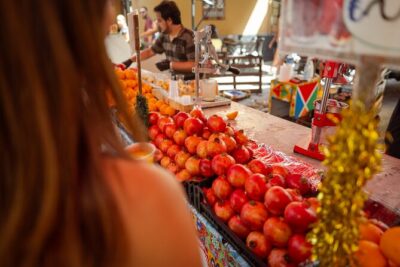
Then comes the market. This is where you learn how to shop like a cook, not like a tourist with a shopping list. Your guide helps you discover essential ingredients used in everyday Vietnamese cooking, and you’re encouraged to ask lots of questions throughout.
In a good cooking class, the market stop is the difference between learning recipes and learning judgment. You’ll likely notice how people choose items based on freshness, texture, and aroma. Even if you’re only shopping for a few things, the skill you’re building is bigger: you’re learning how ingredient quality changes the finished dish.
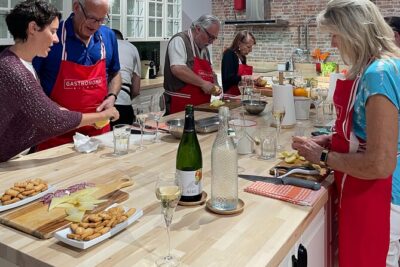
Also, the tour is capped at a maximum of 10 people. That small group size makes it more practical to ask follow-ups. When your guide can actually see what’s in your hands, you get better guidance than in larger classes where questions get rushed.
Cooking Vietnamese lunch step by step at a local home
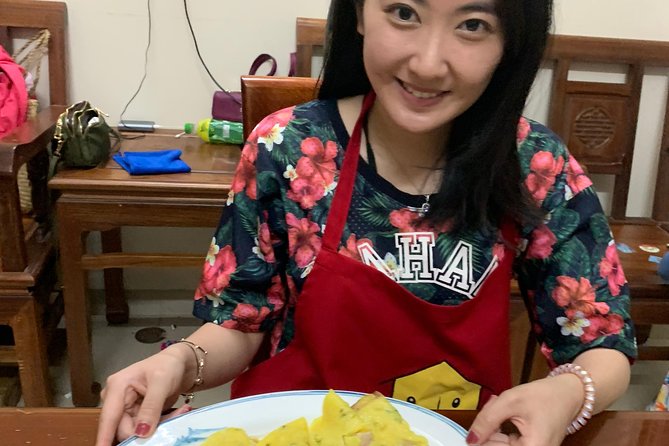
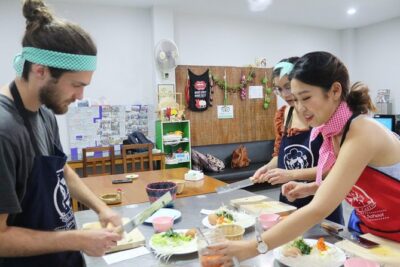
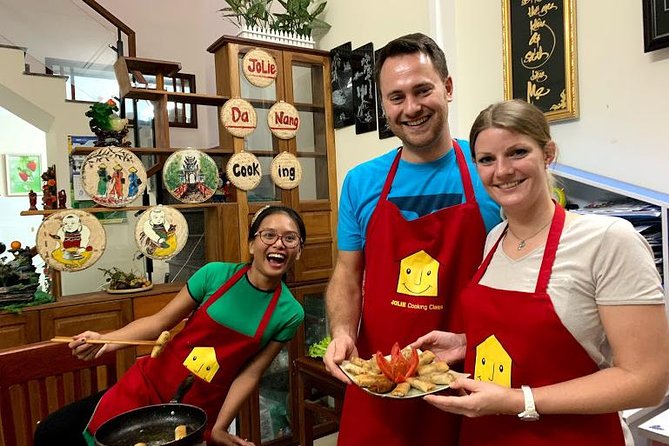
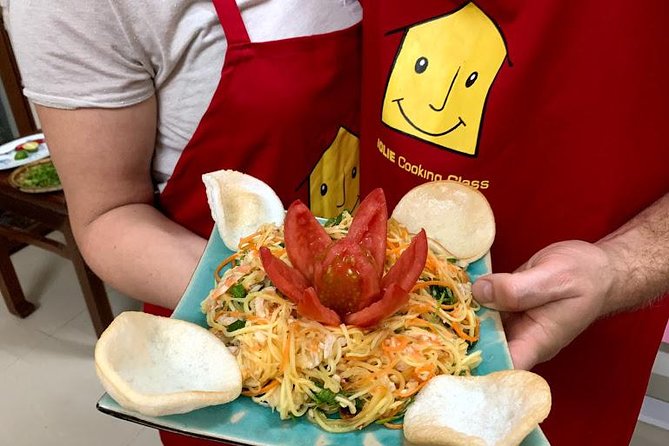
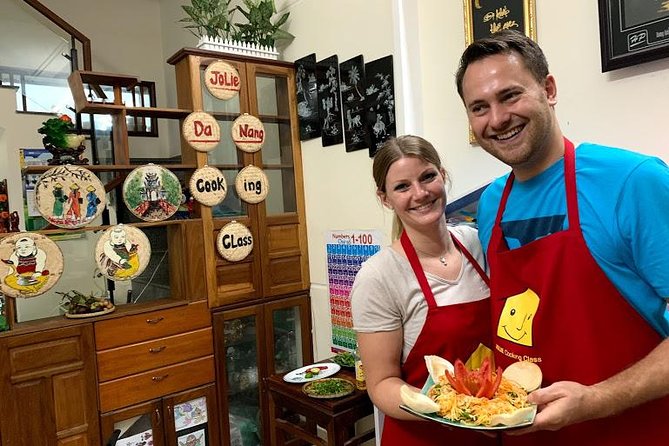
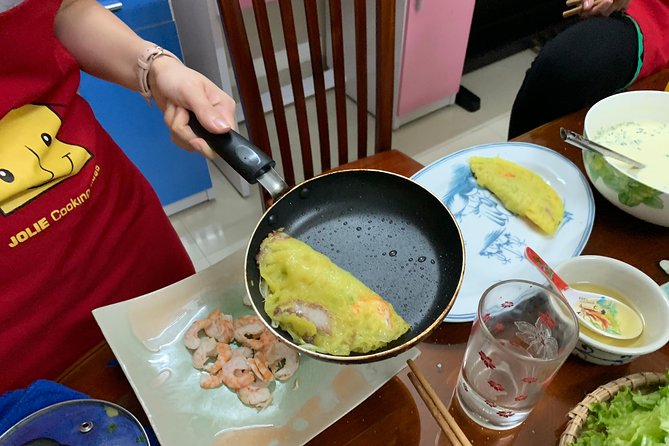
The final stretch is the cooking class at a welcoming local home. This is the core experience: you prepare traditional Vietnamese dishes step by step, then sit down to enjoy the meal you cooked in a relaxed, family-style setting.
The step-by-step approach is what you want if your goal is to cook at home afterward. Vietnamese recipes can look intimidating in videos, but when you’re taught in a sequence—prep, timing, heat control, assembly—you start to understand the “why,” not just the “what.”
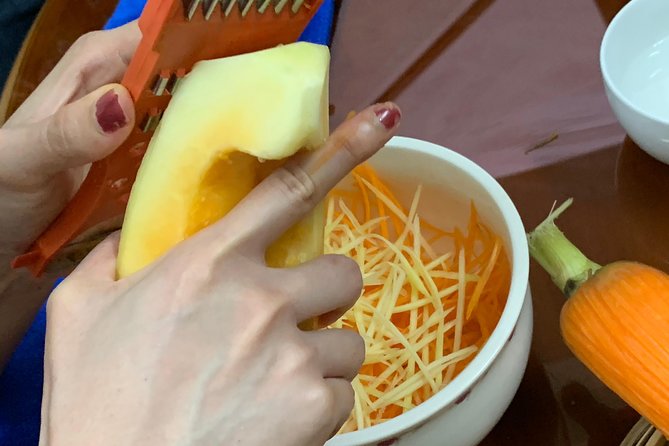
Based on what’s been cooked in past sessions, your menu may include dishes like Pho Bo, papaya salad, pancake rolls, and an aubergine hot pot. That range is useful because it covers different Vietnamese cooking skills: noodle broth (timing and balance), fresh salad (cutting and seasoning), rolled items (texture and shaping), and hot pot (building depth with hearty ingredients).
What I like about this kind of menu is that it teaches variety without overwhelming you. You’re not just making one dish; you’re sampling a mini-course of Vietnamese home-cooking techniques.
Practical tip: expect to do real cooking, not just light chopping. The value here is the active work, plus the chance to get correction while you’re still at the stove.
Guides who speak English and French, and actually help you cook
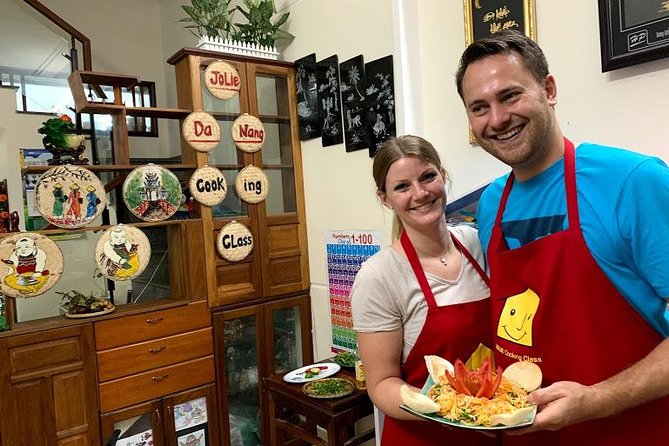
This tour stands out because you can ask questions freely—and the guide speaks both English and French. That bilingual setup matters. Sometimes, language gaps turn cooking classes into vague instructions. Here, you have more ways to clarify what you’re doing, especially for things like seasoning choices, ingredient substitutions, and what the dish is supposed to taste like at each step.
The instructors are known for high energy and attentiveness, which helps keep a busy cooking day from turning stressful. When you’re learning multiple steps, momentum is everything. A lively guide also makes it easier to stay focused during the shift from market ingredients to kitchen prep.
If you enjoy interacting and learning through conversation, this is the sweet spot. If you’re quiet and prefer to observe, you can still participate at your own pace—but the structure is built for active questions.

Price and logistics: is $60 really worth it?
For $60 per person, you’re getting a full half-day experience that includes:
- vegetable village and market visit
- Vietnamese coffee tasting
- hands-on cooking class
- all ingredients and equipment
- transportation during the experience
- the meal you prepare
When you break it down, this price is less about paying for “a cooking lesson” and more about paying for an entire food-focused route—fresh produce viewing, ingredient sourcing, and a chef-led home meal. If you tried to recreate this at home, you’d spend time shopping, figuring out quantities, and then sourcing ingredients you might not know how to pick.
The main logistics trade-off is simple: no hotel pickup or drop-off. The tour starts at 9 Hàm Tử, Bắc Mỹ Phú, Ngũ Hành Sơn, Đà Nẵng, and you return to the same meeting point. The meeting location is near public transportation, so getting there is usually straightforward if you use local transit or a short ride.
Another small thing: the tour runs about 4 hours 30 minutes. Plan your day with buffer time before and after. You’ll be walking a bit, shopping, cooking, and eating—so it’s not a quick in-and-out activity.
Who should book this Da Nang class (and who might skip it)
I think this tour is a great match if you want:
- to learn how to choose ingredients, not just follow a recipe
- a fun, social cooking format (small group, Q&A encouraged)
- a Vietnamese meal you can recreate at home, with techniques that make sense
It’s also ideal if you like the story behind food—how farms and markets feed into what ends up on a family table.
You might look for something else if:
- you strongly prefer a private class rather than a small-group format
- you don’t want to handle your own getting-to-the-meeting-point logistics
- you don’t like coffee at all (since tasting is included)
Should you book this Da Nang farm-to-table cooking class?
Yes—if your goal is practical learning and a meal that feels real. This isn’t just a hands-on cooking session; it’s a “from ingredient to plate” day. The village walk and market stop help you understand freshness and selection, and the cooking class turns that knowledge into repeatable steps.
If you’re the kind of traveler who comes home and cooks from memory, this format is built for you: you get the ingredients, you handle them, and then you eat the result without guesswork. Just make sure you’re comfortable meeting at a fixed location and spending a solid half-day doing real cooking.
If that sounds like your idea of a great food day in Da Nang, book it.
FAQ
How long is the Da Nang farm-to-table cooking class?
It’s approximately 4 hours 30 minutes.
Where does the tour start?
The start point is 9 Hàm Tử, Bắc Mỹ Phú, Ngũ Hành Sơn, Đà Nẵng 550000, Vietnam, and it ends back at the meeting point.
What is the price per person?
The price is $60.00 per person.
How many people are in the group?
The experience has a maximum of 10 travelers.
Is Vietnamese coffee included?
Yes. Vietnamese coffee tasting is included.
Is the cooking class hands-on?
Yes. You take part in a hands-on cooking class and then eat the meal you prepare.
Does the tour include transportation?
Transportation during the experience is included, but hotel pick up and drop off are not included.
What language will the guide speak?
The guide speaks both English and French.
What is included in the price, and what is not?
Included: the vegetable village and market visit, coffee tasting, hands-on cooking class, all ingredients and equipment, transportation during the experience, and the meal you prepare. Not included: hotel pick up/drop off and personal expenses.