REVIEW · ESSAOUIRA
Berber Cooking Class at a Farm in the Countryside & shopping at a rural Souk.
Book on Viator →Operated by Ecotourism and Hiking · Bookable on Viator
The Haha hills feel worlds away from Essaouira, yet you’re back by dinner. This is a hands-on Berber farm cooking class with a real ingredient run at a rural souk, then bread, couscous, and a goat-meat tagine made the traditional way. Two things I really like: you learn key techniques (barley to stone-milled flour/semolina) and you eat where the food is made, often outdoors in calm countryside air. One consideration: the experience depends on weather for the best lunch setup.
With a small group (maximum 8) and a day that runs about 7 hours starting at 9:00 am, it’s the kind of tour where questions don’t get lost. Khadija and Khadija guide the cooking with clear, practical steps, from roasting barley on the fire to baking flat bread in a clay oven. The only drawback to plan around is that the day is weather-sensitive, so if conditions are poor, the operator may change the date or offer a full refund.
In This Review
- Key highlights worth circling
- Essaouira to the Haha hills: why this day feels different
- The rural souk stop: ingredients you can actually picture
- Ecological farm kitchen: clay tools and fire-based methods
- From barley to semolina: the skill demo that sticks
- Making a Berber tagine with goat meat and Moroccan spices
- Lunch outside in the calm: what to plan for
- Optional Argan oil cooperative visit: local production and tastings
- Goats in the trees: the sight that makes people smile
- Price and value: what $98.76 really buys you
- Who should book this Berber cooking class
- Should you book? My honest take
- FAQ
- How long is the Berber Cooking Class?
- What time does the tour start in Essaouira?
- Where do we meet and where does the tour end?
- What is the price per person?
- Is there a group size limit?
- What do we do at the rural souk?
- What will I learn to cook and bake?
- Is lunch included, and is it served outside?
- Is the argan oil cooperative visit included?
Key highlights worth circling
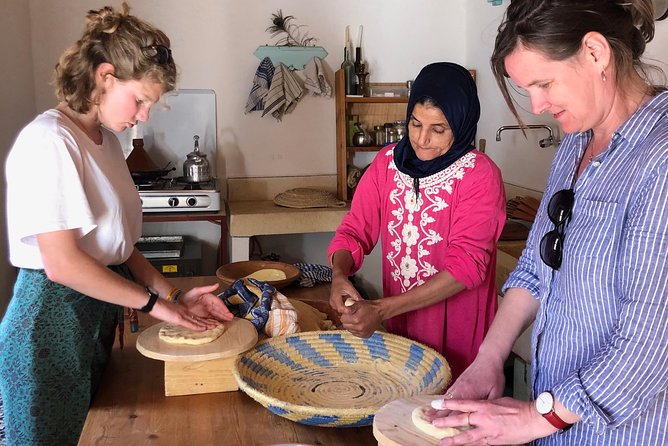
- Haha-region farm cooking: Traditional kitchen tools, fire-based methods, and real local ingredients
- Souk shopping first: Fresh fruit, vegetables, meat, eggs, honey, and the staples you’ll use right away
- Barley to bread skills: Roast barley, then grind it in a stone mill for flour/semolina
- Clay oven + clay pot cooking: Flat bread baked in clay, couscous steamed in a traditional clay pot
- Goat-meat tagine with olive oil: Morocco spices plus farm olive oil from the trees on site
- Argan zone optional stop: Visit an argan oil cooperative for production and tastings, if scheduled
Essaouira to the Haha hills: why this day feels different
You start in Essaouira at Labo Abdelkrim Khatabi d’Analyses Médicales, 287 Rue Oued El Makhazine, with the activity running about 7 hours and ending back at the same meeting point. That matters because you’re not doing a half-day “see and leave” excursion. You’re getting out into the Haha countryside—35 km south of town—where Berber farming is part of everyday life.
The tour’s format keeps it personal. The group size is capped at 8 travelers, and that typically means you can ask questions about what’s happening at each step: why barley is roasted, how couscous is steamed, and what changes when you cook in clay instead of metal. The day is built around technique, not just watching.
Also, you’re not just eating. You’re learning where ingredients come from. That starts with a rural souk stop featuring freshly harvested produce and basics like meat, eggs, and honey—then it continues into the ecological farm kitchen where the cooking happens. If you like food days that teach you something you can use later, this one lands.
You can also read our reviews of more tours and experiences in Essaouira.
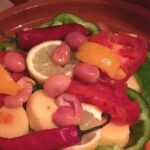
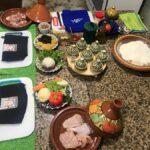
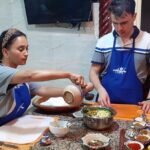
The rural souk stop: ingredients you can actually picture
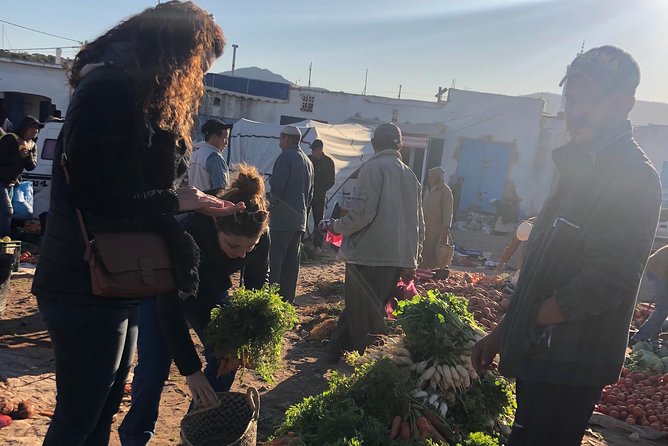
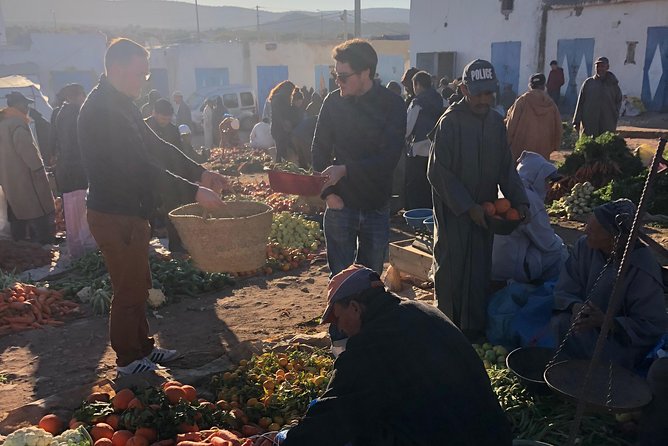
Before the cooking starts, you’ll visit a local souk. This isn’t the kind of market visit where you mostly take photos and wander. The point is to pick up what you need for the class, so you see the ingredients as part of a meal plan.
From the tour description, you’re looking at staples including fruit and vegetables (freshly harvested), plus meat, eggs, and honey. That mix is important because Moroccan home cooking is built on combinations of vegetables, spices, and protein—then tied together with bread and couscous.
A practical tip: go with curiosity and a little patience. Souks are working places. Expect lots of everyday motion rather than a polished tourist setup. If you pay attention to what you’re buying, you’ll taste it more clearly later when you make the tagine and eat the meal.
Ecological farm kitchen: clay tools and fire-based methods
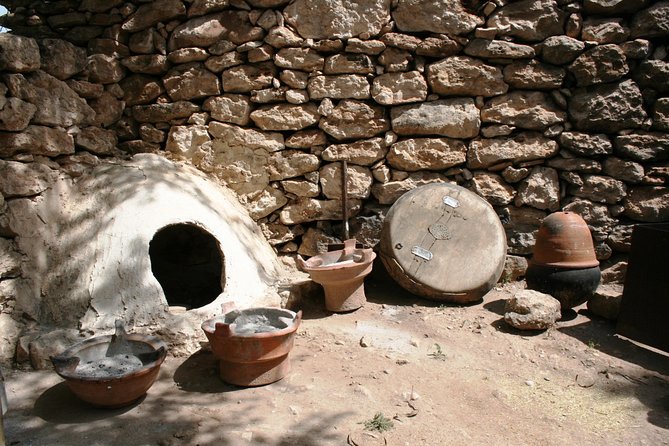
The cooking class takes place at an ecological farm centered on an authentic Berber kitchen. This is where the tour earns its value. Clay oven, clay pot, stone mill, and fire-roasted barley aren’t “theatrics.” They shape the flavor and texture.
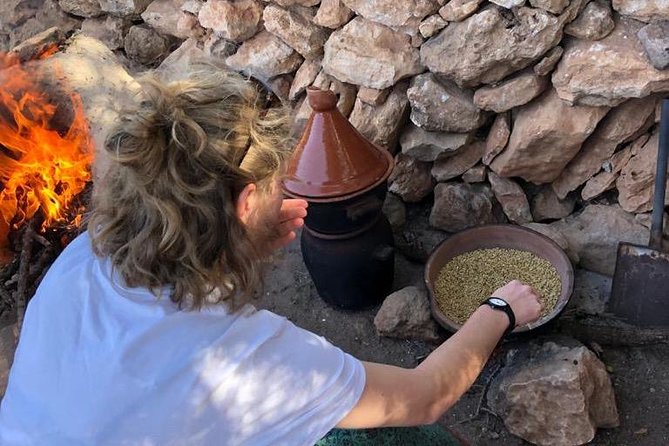
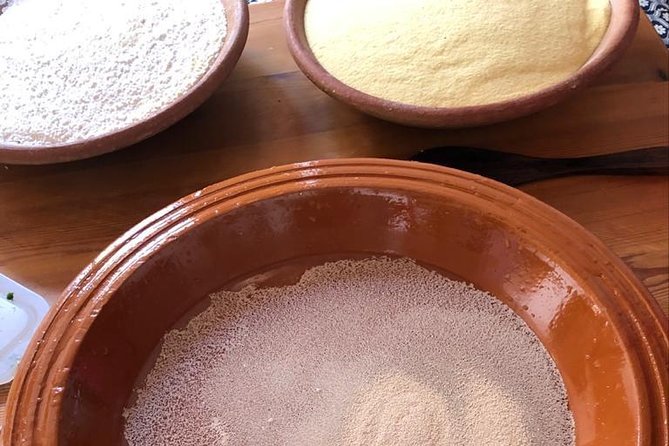
Khadija and Khadija lead the class, and the most memorable skill is the barley process. You roast barley grains on the fire, then grind them in a stone mill to make the flour and semolina that serve as the basis for traditional flat bread and couscous. That’s a big deal because it shows you the logic behind the staples, not just the finished food.
Why it matters for you: if you’ve ever wondered why couscous and bread taste different when made the traditional way, this is the moment that answers the question. The method affects texture, aroma, and how the grains behave.
Also, the class is structured around hands-on steps. Even if you’re not doing every action, you’ll see how the ingredients move from raw forms into dough and steaming couscous. You’re learning the “how,” which is what turns a meal into a takeaway skill.
From barley to semolina: the skill demo that sticks
This tour’s signature teaching moment is the barley-to-flour/semolina workflow. First comes roasting barley grains on the fire. Then it goes to the stone mill. From there, you use what’s been made as the basis for the flat bread and couscous.
That sequence teaches you two useful things at once:
- Roasting adds depth before grinding, so the grain has a warm, nutty base before it ever becomes dough or couscous.
- Grinding isn’t just prep. It determines the texture of what you’ll later bake and steam.
The class then moves to baking flat bread in a clay oven. Clay oven baking is all about heat behavior—slow, steady, and very different from a modern stove. You’ll also steam couscous in a traditional clay pot. Steaming matters because couscous is not “boiled.” It’s cooked to achieve fluffy grains that hold together with sauce later.
If you love food craftsmanship, you’ll probably find this section the most rewarding. It turns Moroccan staples into a process you can understand, not just a plate you eat.
Making a Berber tagine with goat meat and Moroccan spices
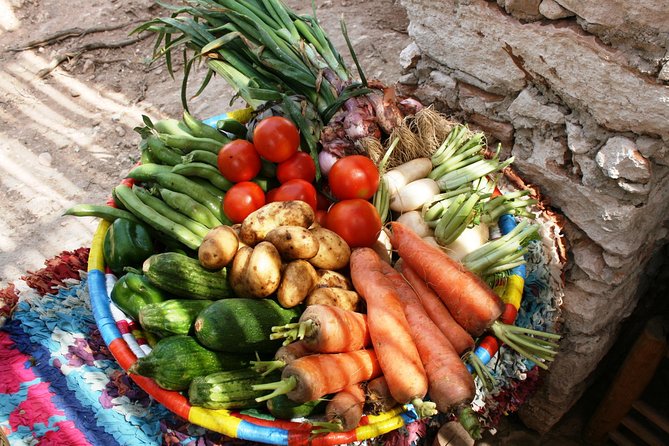
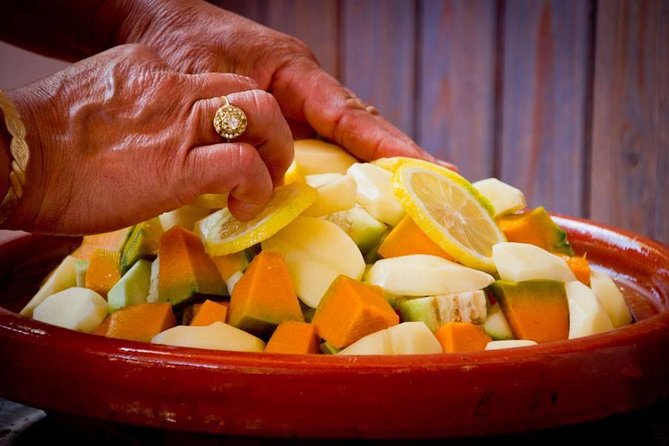
After the bread and couscous foundations, you’ll learn to prepare a traditional tagine of vegetables and goat meat with Moroccan spices and olive oil. The olive oil here isn’t generic. It’s from olive trees that grow on the farm.
This is the kind of detail that changes how you remember a meal. When olive oil is tied to the land where the cooking happens, it tastes like more than a pantry ingredient. It carries a sense of place.
The tagine approach also teaches you the flow of Moroccan cooking: vegetables and meat combine with spices, and olive oil acts as a flavor carrier and finishing richness. Even if you don’t walk away with a full recipe you can reproduce perfectly, you’ll leave with the feel for how spices and oil work together inside a tagine-style cooking method.
One practical consideration: goat meat isn’t for everyone. The tour specifically includes tagine of vegetables and goat meat, so if you avoid goat or aren’t comfortable with it, you should check with the operator before booking.
Lunch outside in the calm: what to plan for
Lunch is typically served outdoors if weather allows. After you eat, you enjoy tea infused with fresh herbs from the garden. That herb tea detail is worth noting. Herbal tea isn’t just a drink here; it’s a small ending ritual that fits the farm setting.
If the weather is good, the outdoor meal is part of the charm. You’re eating in natural surroundings where the cooking just happened. It’s one of those meals that feels less like a restaurant stop and more like being fed at someone’s home.
But you should plan around variability. The experience is noted as requiring good weather. That means your best-case lunch is outdoors, while a less ideal forecast could lead to changes in how and where lunch is served.
Optional Argan oil cooperative visit: local production and tastings
As you drive through the Argan zone, you have the option to visit an Argan oil cooperative. If it’s included for your date, you’ll learn about how argan oil is produced—something unique to this area. You’ll also taste products made with argan oil.
This stop works as a bridge between cooking and local economies. It also gives you a practical souvenir that’s tied to the region rather than a generic shop purchase. If you like understanding supply chains—where an ingredient comes from and how it’s made—this part will likely interest you.
What I’d watch for: make sure you’re comfortable with the idea that this is optional and depends on scheduling for your day. It’s a bonus, not the core of the cooking lesson.
Goats in the trees: the sight that makes people smile
Very likely, you’ll see the famous goats in the trees south of Essaouira. Even if you’ve heard about this before, it’s still one of those quick “wait, really?” moments that makes the countryside feel alive. It’s the kind of roadside scene that reminds you you’re in rural working land, not a staged set.
If you’re someone who likes stopping for photos, this is probably your moment. Just keep in mind you’re on a tour schedule, so don’t count on long photo sessions at every stop.
Price and value: what $98.76 really buys you
At $98.76 per person for about 7 hours, you’re paying for more than a cooking class demonstration. You’re paying for:
- Transport into the Haha region (35 km south) and back
- A market stop so the ingredients feel connected to the meal
- Instruction from local women (Khadija and Khadija)
- Time and tools for hands-on cooking steps (stone mill, clay oven, clay pot)
- A meal (including lunch) and herb-infused tea
Also, this is a small-group experience (maximum 8). In practice, small groups are where food classes become interactive. You’re more likely to ask questions, get feedback, and actually understand what you’re tasting.
One note on timing: this tour is often booked about 55 days in advance on average. That’s a hint that dates can fill. If you’ve got your heart set on a specific day, booking earlier gives you better odds.
Who should book this Berber cooking class
You’ll likely love this tour if you want:
- A food day that teaches technique (barley roasting, stone milling, clay oven baking, couscous steaming)
- A grounded look at Berber farming culture in the Haha hills
- A rural souk ingredient run that makes lunch feel earned
It’s also a great fit if you enjoy small-group settings. With up to 8 travelers, the experience tends to feel calmer and more conversational.
This is less ideal if you want a purely sightseeing itinerary with minimal cooking. The main event here is cooking and eating in the farm environment, with a market stop and an optional argan cooperative add-on.
Should you book? My honest take
If you’re choosing between food experiences in Morocco, I’d lean toward this one because it’s structured around real steps, not just a meal. The combination of souk shopping, barley processing, and clay cooking methods makes it feel authentic and practical. And when you can eat outside (weather permitting), the setting turns the lesson into a full countryside memory.
Book it if you’re comfortable with goat meat in the tagine. Keep flexibility for weather, because outdoor lunch is the best-case scenario. If you want a small-group, hands-on Berber cooking day that connects ingredients to the land, this is a strong choice.
FAQ
How long is the Berber Cooking Class?
The tour runs for about 7 hours.
What time does the tour start in Essaouira?
The start time is 9:00 am.
Where do we meet and where does the tour end?
You start at Labo Abdelkrim Khatabi d’Analyses Médicales, 287 Rue Oued El Makhazine, Essaouira 44000, Morocco, and the activity ends back at the meeting point.
What is the price per person?
The price is $98.76 per person.
Is there a group size limit?
Yes. The maximum group size is 8 travelers.
What do we do at the rural souk?
You visit a local souk to find the ingredients for the cooking class, including freshly harvested fruit and vegetables as well as meat, eggs, and honey.
What will I learn to cook and bake?
You’ll roast barley grains, grind them in a stone mill to make flour and semolina, bake flat bread in a clay oven, steam couscous in a traditional clay pot, and learn to make a tagine of vegetables and goat meat with Moroccan spices and olive oil.
Is lunch included, and is it served outside?
Lunch is included, and it’s served outside if weather allows. After the meal, you’ll have herb-infused tea from the garden.
Is the argan oil cooperative visit included?
It’s an option while driving through the Argan zone. If included on your date, you’ll learn about argan oil production and taste products made with it.