REVIEW · ESSAOUIRA
Traditional Moroccan Cooking Class
Book on Viator →Operated by Cooking With Chef FATIMA · Bookable on Viator
Cooking starts in the market, not the kitchen. In Essaouira, you’ll meet near Bab Marrakech and follow Fatima into the souks to pick fresh ingredients, then finish with Berber mint tea in her home.
I like that this experience blends market shopping with real instruction, not just watching. I also love the step-by-step couscous focus, plus you get practical guidance you can actually use later.
One thing to consider: it’s also a shared meal and home visit, so if you want a tightly timed, classroom-style lesson, you may feel the pacing is more relaxed. And Pastilla is not included.
In This Review
- Key things I’d plan around
- Essaouira’s Old Medina Start: Bab Marrakech at 9:30 am
- Market Shopping With Fatima: Spices, Produce, and Real Choices
- The Home Kitchen Moment: Mint Tea Welcome and a Calm Cooking Rhythm
- Couscous Step by Step: What You’ll Actually Learn
- Tagine, Harira, and Bread Options: How the Menu Works
- The Meal You Make: Berber Mint Tea and Recipe Take-Home
- Price and Timing: Why $39 Feels Fair for Essaouira
- Who This Fits Best (and the One Caveat)
- Should You Book This Traditional Moroccan Cooking Class in Essaouira?
- FAQ
- Where does the tour start and when?
- How long is the cooking class?
- What dishes will I learn to cook?
- Is it a private experience?
- Do I need to print anything?
- Is cancellation free?
Key things I’d plan around
- Meet at Bab Marrakech (9:30 am) and start in the old medina area
- Shop for ingredients with Fatima in local markets, including choosing spices and produce
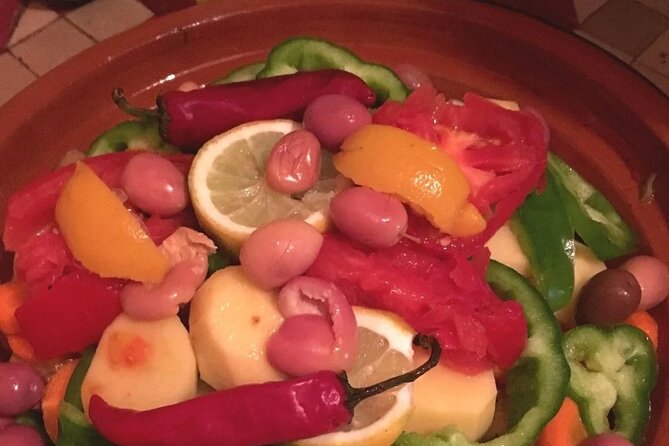
- Cook couscous step by step, plus dishes like tagine, Harira, and Moroccan bread
- Expect mint tea on arrival and again at the end, with the meal you made
- You can often choose what to cook, so the day feels personal
- Pastilla isn’t part of this class, since it takes more time
Essaouira’s Old Medina Start: Bab Marrakech at 9:30 am
Essaouira’s medina is the kind of place where you get your bearings fast, mainly by walking. This tour begins at Parking Bab Marrakech, near Place Bab Marrakech (start time is 9:30 am), and that matters because you’re not fighting a long arrival window. You’re straight into the experience.
You’ll spend the early part focused on buying ingredients. That means good shoes help. Think: short distances, mixed surfaces, and plenty to look at as Fatima takes you through the market flow.
The other advantage of a morning start is pace. By the time you reach the cooking portion, you’re ready for hands-on work, not worn out from a full day of sightseeing.
You can also read our reviews of more tours and experiences in Essaouira.
Market Shopping With Fatima: Spices, Produce, and Real Choices
What makes this class feel authentic is that you don’t arrive at a kitchen with everything prepped. You shop first, and Fatima guides you like someone showing you what her family actually uses.
You’ll explore local markets and buy fresh ingredients from the locals. In the best parts of the day, you’ll see how ingredients connect to flavor: choosing vegetables, selecting the right spices, and learning what makes a tagine or couscous taste right.
Several favorite moments show up again and again:
- picking ingredients yourself rather than accepting a fixed menu
- getting tips that make tagine flavors make sense, not just memorize-the-recipe
- seeing spices used with intention (not sprinkled randomly)
If you like food travel that’s tactile—smelling spices, comparing produce, asking questions—this is your lane.
The Home Kitchen Moment: Mint Tea Welcome and a Calm Cooking Rhythm
After the market, you head back to Fatima’s home. This part changes the tone from busy street energy to something more personal. You’re welcomed with Moroccan mint tea, and the whole experience feels like a visit with a cook who has fed a lot of people over many years.
From there, the cooking rhythm is relaxed but structured. You’ll get step-by-step help, not vague instructions. And you’ll likely notice the small things that make Moroccan cooking work: timing, seasoning balance, and how ingredients should feel as you handle them.
One practical plus: the setting makes it easier to ask questions. If you’ve ever cooked couscous at home and wondered why yours came out uneven or bland, this is where you’ll start getting answers you can use.
Couscous Step by Step: What You’ll Actually Learn
Couscous is the heart of many Moroccan tables, and this class treats it that way. You’ll learn how to cook couscous step by step. That phrasing matters because it’s not just a final method—it’s the sequence that helps you avoid the common mistakes.
Here’s what you should expect to focus on:
- timing so the couscous ends up with the right texture
- how the base and seasoning interact
- how your finished couscous should look and feel before you move on
You’ll also cook alongside Fatima, which helps you connect the instructions to what’s happening in real time. That’s a big reason this class rates so highly: you come away with a process, not just a memory of a tasty meal.
Tagine, Harira, and Bread Options: How the Menu Works
The class is built around traditional Moroccan dishes. Fatima teaches dishes like tagines, couscous, Harira (Moroccan soup), and Moroccan bread. In practice, many people leave with a set that includes couscous plus a tagine, along with bread and soup elements depending on what’s chosen and what’s available.
Here’s what I’d plan for when thinking about the menu:
- Tagine is central. You may make a vegetable version, and you might also see seafood options like sardine tajine.
- Zaalouk and aubergine salads show up in the day for many groups, especially if the kitchen time and ingredients line up.
- Harira is taught as part of the overall Moroccan meal style, and it helps broaden your cooking beyond just one dish.
- Moroccan bread is part of the lesson, so you’re not only learning sauces and stews.
The best part for value: you’re not stuck with a single dish even if you don’t love it. You usually get to choose what you prepare, and that makes the cooking feel like yours.
If you’re a beginner, this flexibility is helpful. If you’re more advanced, it keeps the class from feeling generic.
The Meal You Make: Berber Mint Tea and Recipe Take-Home
The cooking isn’t the end of the experience. You appreciate the work, then you savor what you made with Moroccan mint tea—often described as Berber mint tea. It’s a classic Moroccan rhythm: cook together, sit together, and taste what the choices created.
You’ll also get recipes. The experience shares recipes learned from Fatima’s grandmother, and many people take home something they can follow later. That’s where the value really shows: you’re not just paying for a meal today. You’re building your ability to recreate the flavors at home.
And yes, eating matters here. The food is part of the lesson. When you taste the tagine and couscous you made, you immediately understand what the instructions were trying to achieve.
Price and Timing: Why $39 Feels Fair for Essaouira
At $39 per person for about 4 hours, this class isn’t trying to be a luxury show. It’s a focused, full experience: market shopping, home cooking instruction, and a meal with mint tea.
Why it’s good value:
- you’re paying for guided market selection, not just kitchen time
- you cook multiple Moroccan staples (couscous is the anchor, plus tagine/soup/bread depending on choices)
- you leave with recipes you can use again
- the day is built around an actual home kitchen, not a classroom setup
Also, it’s typically booked in advance, with an average booking window around 14 days. That’s a sign it’s popular. If you care about your date, don’t leave it to the last minute.
Who This Fits Best (and the One Caveat)
This tour fits best if you want:
- an authentic home-style experience in Essaouira’s medina
- hands-on instruction on couscous and Moroccan dishes
- market time that helps you understand ingredients, not just buy them
- a warm, relaxed teaching atmosphere where questions feel welcome
It’s also ideal for food lovers who want to go beyond a tasting and actually learn techniques.
The caveat is the style. It’s not only a strict cooking workshop with every minute engineered for instruction. Some parts of the day may feel like shared meal prep, with explanations flowing as you cook. If you’re expecting a very formal class structure, adjust your expectations and lean into the “together” side of it.
Should You Book This Traditional Moroccan Cooking Class in Essaouira?
I’d book it if you want more than a meal. This is one of those experiences where the market-to-kitchen connection makes the food click. You get to learn couscous step by step, you cook traditional dishes like tagine and Harira, and you finish with mint tea and recipes you can bring home.
Book it confidently if you enjoy:
- learning by doing
- asking questions in a real kitchen setting
- shopping in the medina rather than skipping straight to the food
Skip it only if you want a very structured, classroom-like course or if Pastilla is a must for your Moroccan menu. Pastilla is simply not included here, and the schedule is organized around what can be taught comfortably within the class length.
If you want a practical Moroccan cooking skill plus a genuine Essaouira moment, this one is easy to recommend.
FAQ
Where does the tour start and when?
The start is Parking Bab Marrakech, Place Bab Marrakech, Essaouira 44000, Morocco. The start time is 9:30 am. The activity ends back at the meeting point.
How long is the cooking class?
It lasts about 4 hours.
What dishes will I learn to cook?
Fatima teaches Moroccan dishes such as couscous, tagines, Harira (Moroccan soup), and Moroccan bread. Pastilla is not included.
Is it a private experience?
Yes. It’s a private tour/activity, and only your group participates.
Do I need to print anything?
You’ll receive a mobile ticket.
Is cancellation free?
Yes, it offers free cancellation. You can cancel up to 24 hours in advance for a full refund.