REVIEW · HO CHI MINH CITY
Cooking Class: 3 Course Traditional Meal by local Chef HCM
Book on Viator →Operated by The Provincial Table Cooking Class · Bookable on Viator
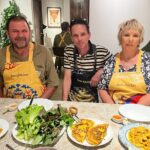
A Saigon cooking class that feels practical and fun. You get a private cook station and a chef-led setup that walks you through classic Vietnamese flavors across a 3-course traditional meal. I especially like the hands-on rhythm, where you’re not just watching—you’re cooking. One watch-out: the workspace can feel a little tight, so come ready to share the counter space with your station setup.
This one runs about 3 hours 30 minutes and keeps the group small (up to 20). You’ll meet at 131/3 Nguyễn Thị Minh Khai in District 1, then return there when you’re done. If you like eating well and learning what makes the food tick, this is a solid $30 way to get more out of your Ho Chi Minh City time.
In This Review
- Key things I’d pencil in first
- Your Own Station in District 1 (and Why That Matters)
- The 3-Course Flow: Classic Dishes, Real Skills, Beginner Pace
- What a 3-course class really teaches
- Spring Rolls: Rolling With Confidence (Not Just Luck)
- Vietnamese Pancakes: Crisp Edges and Sauce Sense
- Pho and Broth Lessons: Why the Final Course Feels Like Relief
- Chef Instruction, and the Small Details That Make It Click
- Price and Value: Is $30 a Smart Use of Your Time?
- Logistics in Ho Chi Minh City: Getting There Without Stress
- Who This Cooking Class Fits Best (and Who Should Rethink)
- Should You Book This Cooking Class?
- FAQ
- How long is the cooking class?
- What’s included in the price?
- Where do I meet for the class?
- What’s the maximum group size?
- Do I get a mobile ticket?
- Are there any specific dishes mentioned in reviews?
- What is the cancellation policy?
Key things I’d pencil in first
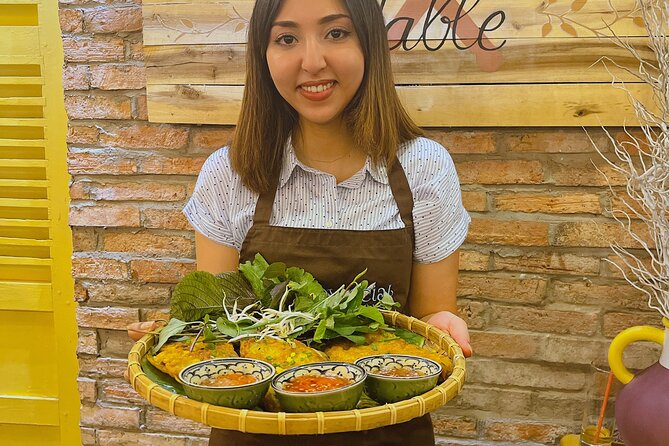
- Private station cooking so you’re actively making each course, not hovering
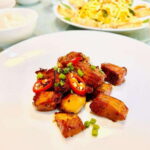
- 3 classic courses based on a chef’s daily menu (spring rolls, Vietnamese pancakes, and pho show up in reviews)
- Small group size (max 20), which usually means more attention when questions pop up
- Chef-led instruction with friendly, upbeat teaching in reviews (including an instructor named Alice)
- A recipe book to take home, so you can repeat the meal later
Your Own Station in District 1 (and Why That Matters)
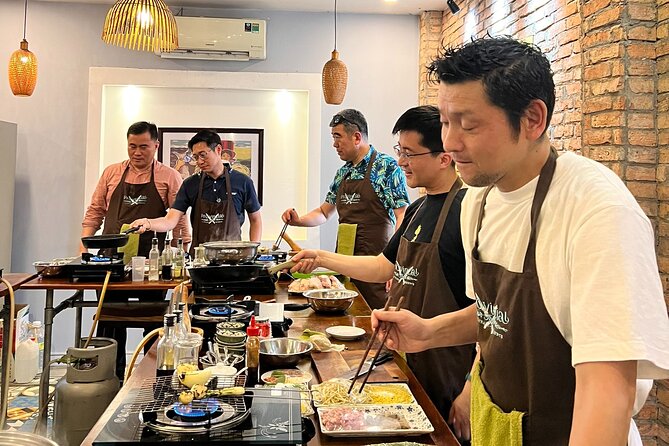
Ho Chi Minh City has a million things to do, but this format is built for one thing: you cook. The class starts at 131/3 Nguyễn Thị Minh Khai in Phường Phạm Ngũ Lão, Quận 1, and it ends back at the same meeting point. That matters because you spend less mental energy figuring out where to go and more time focusing on the food.
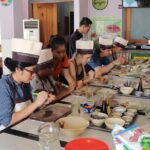
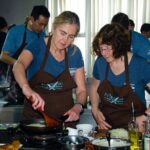
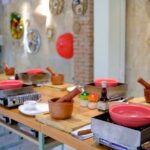
The big quality-of-life win here is the private cook station. Instead of crowded cooking demonstrations where you only see the action in your peripheral vision, you work through the steps at your own station with ingredients provided. That’s especially useful if you’re trying Vietnamese cooking for the first time and don’t yet know what “right” should look like—color, thickness, doneness, and seasoning.
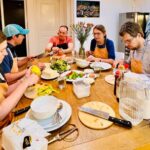
Also, the group limit is up to 20 travelers. For a hands-on class, that’s a meaningful number. Smaller groups tend to mean you’re more likely to get help before you’ve fully committed to the wrong direction (like overfilling a roll or adding a sauce a little too fast).
Finally, you’ll have a mobile ticket. That’s one less thing to print or misplace when you’re moving around District 1 with scooters, buses, and the occasional rain shower.
You can also read our reviews of more tours and experiences in Ho Chi Minh City.
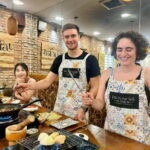
The 3-Course Flow: Classic Dishes, Real Skills, Beginner Pace
This is a fully interactive 3-course cooking class. The chef prepares a daily menu of classic Vietnamese dishes, and the class is organized so you can get through each course in the time you’re there (about 3 hours 30 minutes).
What I like about the way this is structured is the lesson-to-time fit. You’re not expected to spend the whole afternoon on one dish. Instead, you learn the key techniques that make Vietnamese food taste like Vietnamese food, then move on. Reviews also suggest ingredients are often partly prepared, which helps keep the class moving while still leaving you the important work—mixing, assembling, cooking, and adjusting flavors.
Based on what people mention in reviews, the menu can include:
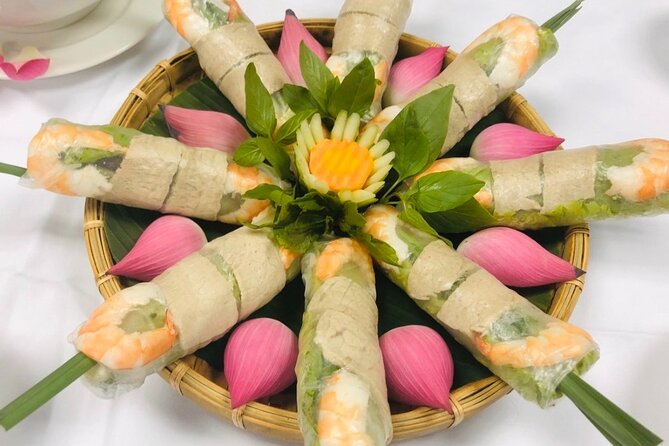
- Spring rolls
- Vietnamese pancakes
- Pho
Even if your exact menu varies day to day, the teaching approach stays the same: you learn a core technique, then apply it immediately. That’s the difference between taking a cooking class that sounds fun and one that actually gives you transferable skills.
What a 3-course class really teaches
Vietnamese cooking is built on balance: texture, aroma, heat, and acidity. In a well-run 3-course class, you usually end up practicing that balance multiple times—crispy vs. soft, quick stir vs. longer simmer (depending on the dish), and fresh flavors that cut through richness. You’re also training your eye: how things look when they’re close to done.
Spring Rolls: Rolling With Confidence (Not Just Luck)
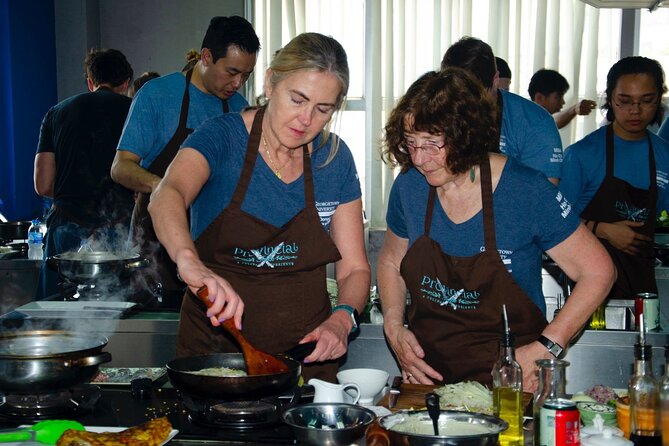
Spring rolls in Vietnam aren’t one-size-fits-all. But the core skill is the same: the wrap is your boundary. Get the wrap right and the filling lands where it should. Get it wrong and you’ll either tear the dough or end up with a roll that won’t hold together.
If your first or one of your courses is spring rolls, here’s what this kind of class typically focuses on (and why it’s useful):
- How to portion the filling so it cooks through without bursting
- How to roll with even pressure (too tight can make it crack)
- How to cook them properly so the outside has the right texture
Reviews mention spring rolls and describe the food as fresh and high quality, which usually means you’re not working with sad, pre-dried ingredients. That makes a difference. Cooking teaches faster when you can taste the result and tell it was supposed to come out better than it did.
One practical note for your comfort: wrapping can be fiddly, and some venues can feel a bit cramped while you’re working at your station. If that’s you, go in with a calm, flexible mindset. Think of it as practice. Even if your first roll looks like it went through a small earthquake, you learn the adjustment for the next one.
Vietnamese Pancakes: Crisp Edges and Sauce Sense
Vietnamese pancakes can sound like a simple dish until you cook one. The magic is in the batter behavior, the heat management, and the way the final sauce ties everything together.
If Vietnamese pancakes are on your menu (they’re mentioned in reviews), you’ll likely work on:
- Batter consistency (thickness affects whether it crisps or stays soft)
- Pan heat control so you get the right color and texture
- Assembly and timing, since pancakes can go from perfect to overdone fast
This is where a hands-on class pays off. In a restaurant, you taste. In a class, you learn. You learn that the pancake is only part of the experience—the sauce and toppings are doing a lot of the job too.
Also, pancakes are forgiving in a way. Even when they’re not perfect, you can still learn what changes to make next time. If you tend to get impatient in the kitchen, this course can actually be a confidence booster.
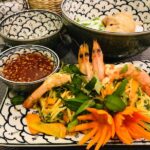

Pho and Broth Lessons: Why the Final Course Feels Like Relief
Pho is the course people remember. Even if you’ve eaten pho in Ho Chi Minh City before, making it (or working directly with pho components in a cooking class format) helps you understand why it tastes the way it does.
If your menu includes pho (again, mentioned in reviews), you’ll get insight into how Vietnamese food builds flavor for comfort:
- The role of broth as the backbone
- How aroma and seasoning interact
- Why timing and serving matter once everything is ready
Because this is a cooking class that runs about 3.5 hours, it’s usually not structured like a full home kitchen marathon. That’s good. You’ll focus on the key learnable parts rather than spending the whole time on things you can’t realistically master in one session.
Pho also tends to land as the final course because it’s satisfying and helps pull the meal together. After two other dishes, you’re ready for something warm and grounding.
Chef Instruction, and the Small Details That Make It Click
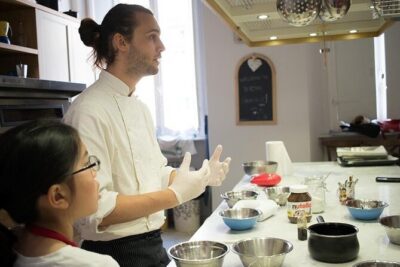
This class is chef-led. You’ll be at your station while the chef (and instructors at times) guide you through steps, explain ingredient roles, and help you adjust as you cook.
Reviews specifically praise instructors described as warm and fun, including an instructor named Alice. That matters more than it sounds. A cooking class can be technically good and still not be a good experience if the teaching style is stiff or unclear. A playful, supportive instructor helps you stay with the process long enough to learn what you need.
You’ll also benefit from immediate feedback. You can see it right away in:
- How the wrap holds
- How the pancake sets
- How the dish looks and tastes when it’s properly cooked
And at the end, you get something practical: a recipe book. Reviews mention receiving a cookbook or recipe book that makes it easier to repeat the dishes at home. That’s one of the best “value multipliers” any cooking class can offer. If you can recreate the flavors later, the $30 doesn’t just buy your meal—it buys your future dinners.
Price and Value: Is $30 a Smart Use of Your Time?
At $30 per person for a 3-course Vietnamese traditional meal in Ho Chi Minh City, you’re paying for several things at once:
- Ingredient handling and prep support
- A private station setup
- Chef-led teaching
- Time (about 3.5 hours)
- The take-home recipe book
If you’ve spent time in tourist areas of District 1, you know food prices can vary a lot. This class is good value because you’re not only eating—you’re investing in skills. A typical meal is over in 30–60 minutes. Here, you’re getting a full session of learning and tasting across multiple courses.
Also, since the group is capped at 20, you’re less likely to get lost in a crowd. That can be the difference between a fun activity and a class that actually changes what you can cook afterward.
So in plain terms: the price makes sense if you want hands-on learning, not just a quick bite.
Logistics in Ho Chi Minh City: Getting There Without Stress
District 1 is convenient, and this class starts right in it. The meeting point is 131/3 Nguyễn Thị Minh Khai, and the class ends back at the meeting point. That reduces the usual headache of figuring out where you’ll be dumped after the activity.
You’ll also find this is listed as near public transportation. Translation: you don’t have to plan your whole day around grabbing a scooter at the last minute.
The session is about 3 hours 30 minutes. I’d treat it as a mid-to-late day plan. That way, you’re not racing to fit it between long museum blocks or long travel transfers.
Finally, you’ll receive confirmation at booking, and you’ll use a mobile ticket. You can keep your plans lean—especially helpful if you’re juggling multiple small activities in Saigon.
Who This Cooking Class Fits Best (and Who Should Rethink)
This class is ideal for:
- First-timers to Vietnamese cooking who want a beginner-friendly pace
- People who learn by doing, not by watching
- Foodies who want spring rolls, Vietnamese pancakes, and pho skills in one trip
It’s also a great choice if you like a guided experience but still want control at your own station. You’re cooking throughout, which is a big deal.
Who might rethink it?
- If you hate close quarters, keep in mind reviews flag that the space can be very small. If you’re sensitive to tight working conditions, arrive with patience and expect shared close-distance stations.
- If you’re an advanced cook looking for deep technical theory, you might find the class focuses more on practical steps within the time limit.
Should You Book This Cooking Class?
If your goal is to go beyond eating and actually learn how Vietnamese dishes come together, I’d book this. The private station, the 3-course structure, the small group size, and the take-home recipe book make it feel like more than a one-time show. At $30, it’s a strong deal in Ho Chi Minh City, especially if you want skills you can use again.
Before you go, decide what you want most: a quick meal or a hands-on cooking session. If it’s the second one, this is a smart fit. If you’re worried about cramped spaces, consider that your main potential drawback.
FAQ
How long is the cooking class?
It lasts about 3 hours 30 minutes (approx.).
What’s included in the price?
The class is a 3-course traditional meal experience with ingredients provided and chef-led instruction, plus a recipe book mentioned in reviews.
Where do I meet for the class?
The meeting point is 131/3 Nguyễn Thị Minh Khai, Phường Phạm Ngũ Lão, Quận 1, Hồ Chí Minh 711106, Vietnam. The activity ends back at the meeting point.
What’s the maximum group size?
The experience has a maximum of 20 travelers.
Do I get a mobile ticket?
Yes, the experience includes a mobile ticket.
Are there any specific dishes mentioned in reviews?
Some reviews mention making spring rolls, Vietnamese pancakes, and pho.
What is the cancellation policy?
Free cancellation is available. You can cancel up to 24 hours in advance for a full refund, and cancellations within 24 hours are not refunded.