REVIEW · BALI
From Ubud: Authentic Cooking Class in a Local Village
Book on GetYourGuide →Operated by Paon Bali · Bookable on GetYourGuide
Spice shopping turns into a Balinese feast. This Paon Bali small-group class links Ubud pickup with a local market and a cooking day in Laplapan, hosted by Mama Puspa. I love how the guide energy comes through, too, including names like Wayan Arianta showing you the food side of Bali.
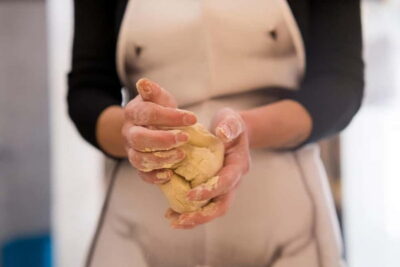
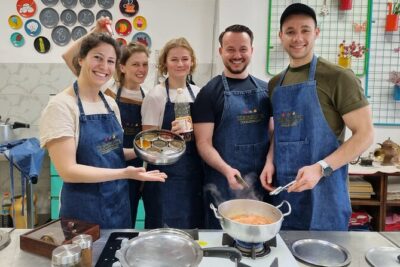
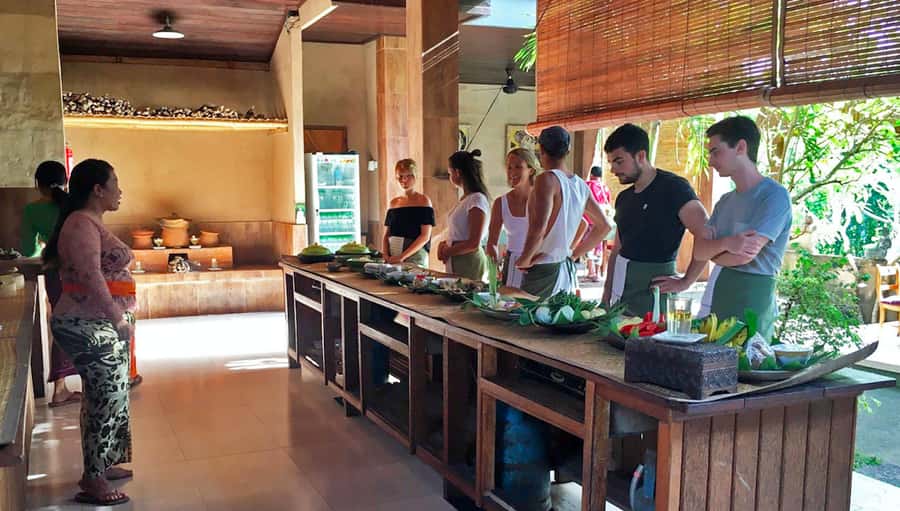
I really like the hands-on format. You work at your own cooking stations, with lots of chopping, pounding, mixing, and cooking help so you’re not just watching. I also appreciate that you leave with recipes and notes you can use later, plus a certificate.
One possible drawback: the afternoon session doesn’t include the market tour. If ingredient-hunting matters to you, pick the morning class; also note that pickup is included only for hotels in the Ubud area.
In This Review
- Key highlights worth planning around
- From Ubud pickup to the first spice stall
- Hotel pickup in Ubud and why timing matters
- Morning market tour: choosing ingredients like you mean it
- Rice plantation stop for staple-crop context
- Arriving in Laplapan: village welcome and a home-style kitchen setting
- Cooking session structure: starters, mains, and dessert at your station
- What you’ll eat: a meal built from your own cooking
- Vegetarian, meat, and allergy-friendly reality checks
- Taking Balinese cooking home: recipes you can actually use
- Price and value: what your $35 really buys
- Who this class suits best
- Should you book Paon Bali in Ubud?
- FAQ
- Is pickup included from Ubud hotels?
- How long is the cooking class?
- What’s the difference between the morning and afternoon classes?
- Is the tour offered in English?
- How many people are in the group?
- Do I get to choose vegetarian or meat dishes?
- Are ingredients included?
- Do you provide lunch?
- Do I receive recipes to take home?
- Can dietary restrictions or allergies be accommodated?
Key highlights worth planning around
- Market tour with real ingredient choices (morning only): You pick vegetables, herbs, spices, and the kind of tea/coffee you want to taste.
- Rice plantation stop for “why Bali eats rice” context: You learn how the staple crop is cultivated and prepared.
- Laplapan village setting, not a restaurant demo: You arrive to a warm village welcome and cook in a local home-style environment.
- You cook a full menu: The day is built around 3 starters, 4 main courses, and 1 dessert (you’ll end up with a feast either way).
- Meat or vegetarian options, with strong allergy support in practice: You can choose your dishes, and the team has handled multiple dietary needs when announced ahead.
- Small group capped at 15: Easier turn-taking, more hands-on guidance, and a more personal feel.
From Ubud pickup to the first spice stall
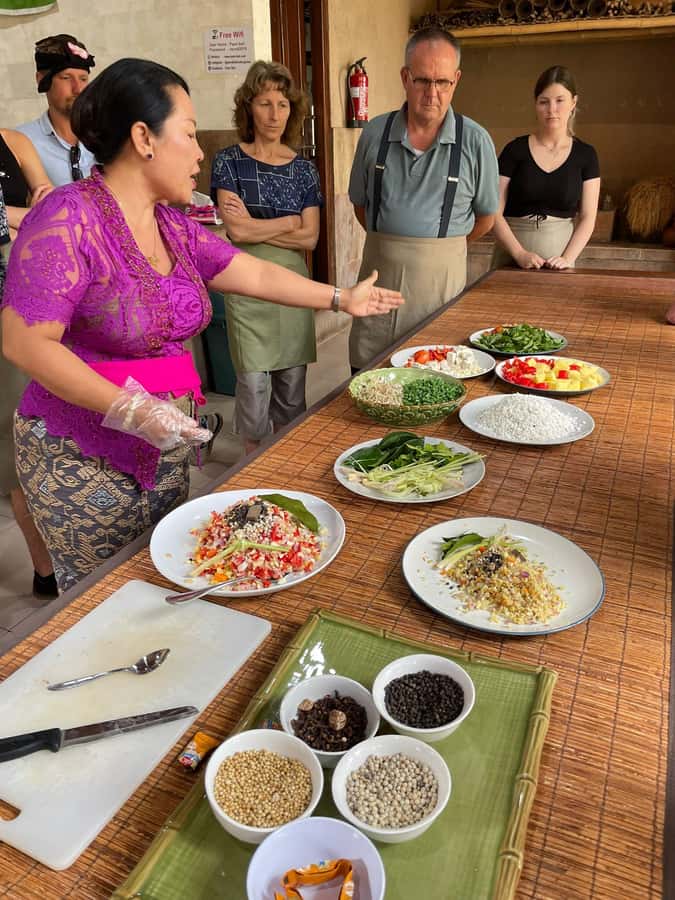
This is the kind of cooking class where the food story starts before you touch a cutting board. You’re picked up in the Ubud area and brought through a sequence that makes the later cooking make sense: market → rice plantation → traditional village kitchen. That order matters. It’s hard to cook Balinese flavors well if you only learn the recipe and skip the ingredient logic.
Most classes like this can feel generic, but this one is structured around the basics of Balinese daily eating—what’s available, what’s seasonal, and how spices get treated. You’ll also get Balinese tea and coffee included, which helps you settle in and try flavors without rushing.
The group stays small (up to 15). That’s not just a comfort perk; it affects how much you actually get to do. In smaller groups, you’re more likely to rotate through each dish step instead of waiting for your turn.
You can also read our reviews of more tours and experiences in Bali.
Hotel pickup in Ubud and why timing matters
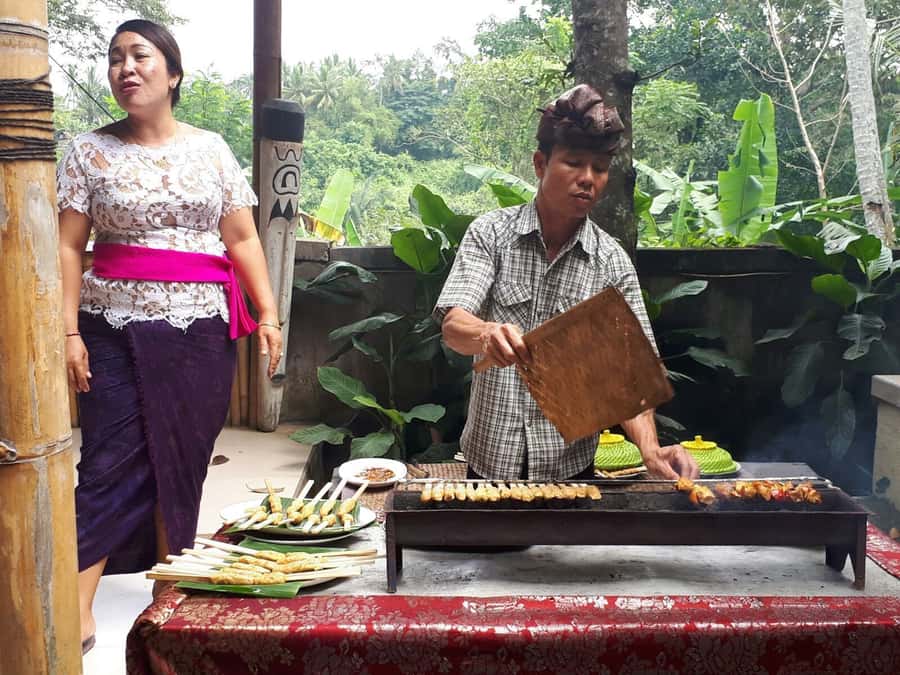
Pickup and drop-off are included for hotels in Ubud, which is a big deal if you’re planning more than one activity in a day. The transport quality is also a point people consistently rate highly, with 88% of reviewers giving it a perfect score.
One practical note: pickup from outside Ubud can be arranged as an add-on, but it may cost extra. If you’re staying just beyond the usual Ubud zone, confirm the exact pickup point during booking so you don’t lose time at the start.
If you’re the type who hates waiting around, plan to be ready a few minutes early. Even when services are well run, travel time in Bali can wobble with traffic and routes.
Morning market tour: choosing ingredients like you mean it
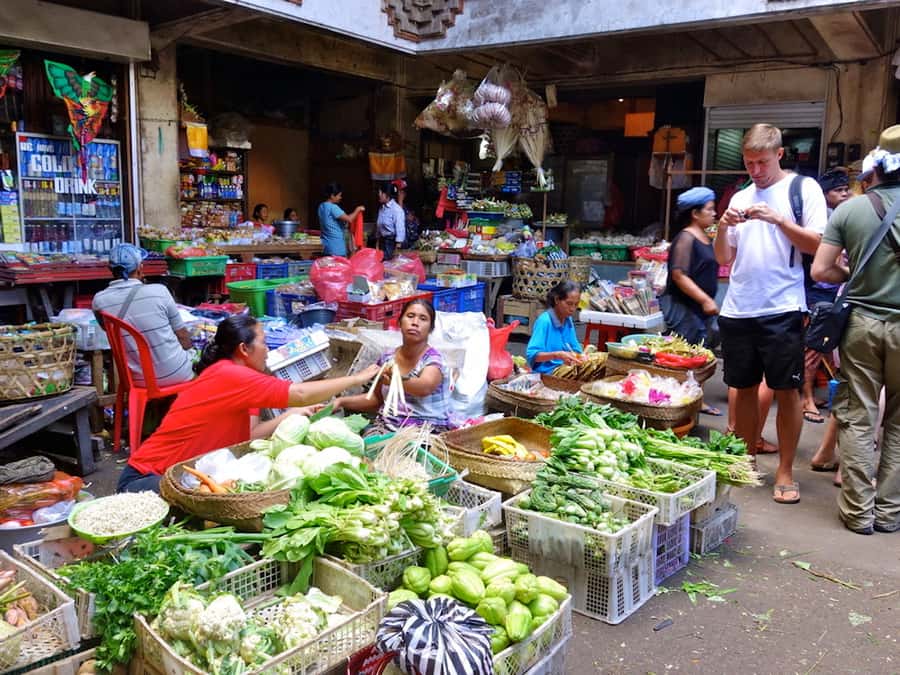
If you book the morning class, you’ll visit a fresh local food market first. This is where you get to see the real cast of characters for Balinese cooking: vegetables, herbs, spices, and proteins laid out in front of you. You’re not just told what to use—you choose ingredients from what’s available.
People often remember the market portion because it’s active. You’ll learn what ingredients do in the overall flavor profile, and you’ll hear plenty of practical notes about which items are essential and which ones can be swapped when something is harder to find at home.
There are also moments of tasting built into the experience. One of the nicest touches: guides can introduce different local fruits, and that helps you connect sweetness and acidity to the rest of the meal later. You’ll leave the market with a better sense of what to buy (and how much) when you cook again.
And yes, the morning choice is the best option if you care about buying spices you’ll actually use. The market stop is short, but it’s enough time to make a few meaningful buys.
Rice plantation stop for staple-crop context
After the market, you’ll head to a rice plantation area. Here you’ll learn how rice—Bali’s staple—gets cultivated and prepared. This isn’t “touristy photos only.” The goal is to give you the food context behind the cooking class.
You’ll also get scenic views while you listen. That matters more than it sounds. When you later make rice-based or coconut-forward flavors, you’ll understand why rice is treated like a foundation, not a side dish.
For travelers short on time, keep your eyes on the schedule. You’re moving through stops as a single flow, and that’s why it’s such a smooth day when the timing clicks.
Arriving in Laplapan: village welcome and a home-style kitchen setting
Next comes Laplapan, a traditional village where you’re welcomed when you arrive. The vibe is friendly and grounded—more like being invited into a local home routine than visiting a staged cooking school.
This is also where the day shifts from “information” to “participation.” The setting helps you understand the food culture: how spices are handled, how meals are built, and how cooking fits into everyday life. In some sessions, you may also get a chance to see a family temple area on the compound and take photos, depending on how the day is organized.
Why this portion is worth your attention: Balinese cooking isn’t only technique. It’s relationships—with ingredients, with people, and with the rhythm of daily life. A village setting helps you pick up that intangible part, even if you only care about going home with recipes.
Cooking session structure: starters, mains, and dessert at your station
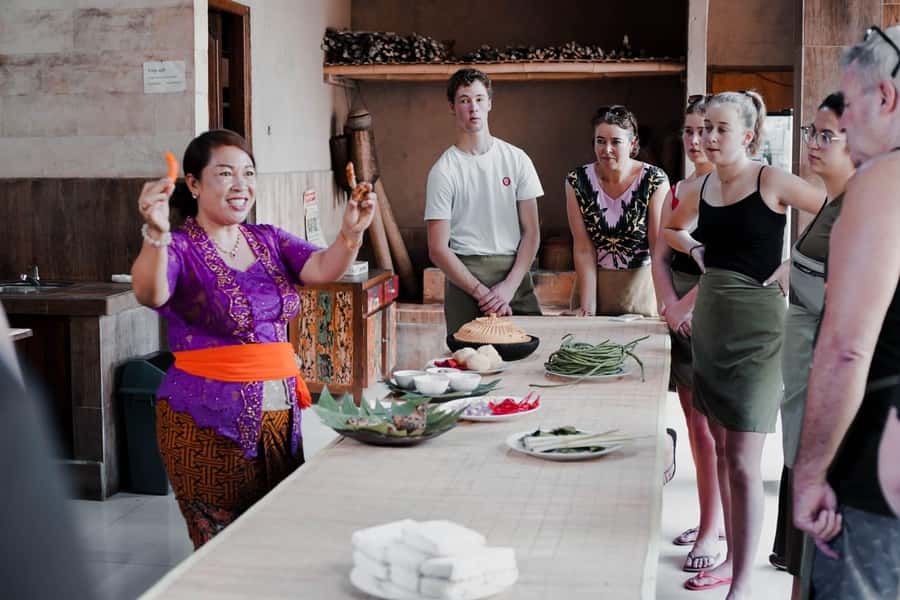
Now the fun part: the cooking class. You’ll join an instructor team (English-speaking) and learn the secrets of authentic Balinese cooking through guided steps. The class is hands-on and paced so everyone can contribute.
Here’s what the structure aims for:
- 3 starters
- 4 main courses
- 1 authentic dessert
In practice, the exact number you personally prepare and how courses are counted can vary by session flow. But you should expect a substantial menu and real participation across the cooking steps.
You’ll work with the kind of techniques that make spice paste and flavor layering happen—chopping, pounding, mixing, and cooking. A common highlight: you’re not stuck doing one repetitive task all morning. Instead, you get rotations across dishes so you build confidence fast.
Diet choice is supported. You’ll have a choice of meat or vegetarian dishes, so you don’t end up cooking a version you can’t eat. That’s especially helpful if you’re traveling with someone who eats differently.
Also, the instructors’ teaching style tends to be warm and funny. It’s practical humor, not performance. It keeps the pace upbeat while you’re learning unfamiliar ingredients and methods.
What you’ll eat: a meal built from your own cooking
After you cook, you sit down and eat what you made. This is included lunch (or a meal served with the class timing), and it’s one of the best parts of any cooking experience—because it proves the teaching worked.
Expect a real feast format: multiple dishes across starters, mains, and dessert. People consistently come away praising the flavor and simplicity. That’s key: Balinese food here isn’t presented as impossible to recreate. It’s taught with techniques and guidance that translate.
You’ll also get included Balinese tea and coffee, which pairs nicely with the meal. The drink part sounds small, but it helps the whole experience feel complete, like you’re being hosted rather than dropped off and released.
Finally, you receive a certificate. It’s not life-changing, but it adds a tidy “you completed a thing” feeling, especially if you’re the type who likes keeping proof of activities.
Vegetarian, meat, and allergy-friendly reality checks
Food needs vary. What’s reassuring here is that you can choose meat or vegetarian dishes, and the team has handled multiple dietary needs when asked ahead of time.
Examples from real experiences include:
- capsicum allergy accommodations
- garlic and onion avoidance in recipes
- gluten-free adjustments
In one case, separate handling was reported to reduce cross-contact risk. That’s exactly the kind of detail you want to hear when you’re worried about allergies. I can’t promise any specific handling method for your situation, but the pattern is clear: the kitchen can adapt when you flag your needs early.
If you have allergies, send the details during booking. Don’t assume it will be remembered by default. You’ll get the best outcome when you describe what you must avoid and what you can eat.
For vegetarians, also ask what the vegetarian set covers. The class offers a choice, so you’re not stuck building flavor around “whatever’s left.”
Taking Balinese cooking home: recipes you can actually use
This class is not just about eating that day. You’re given recipes and notes to keep, which is what makes it worth repeating later.
Here’s the value: you’ll understand the how, not only the what. When you know which ingredients create the core flavor and which ones finish the dish, you can substitute more confidently at home. You also learn what cooking tasks matter—like making spice paste to the right texture or timing cooking steps so flavors don’t flatten.
If you buy spices at the market stop, you’ll also know what to use them for. That makes your spice stash less random and more intentional.
One small caution: home kitchens differ. Bali uses different ingredients, tools, and heat sources. So treat the recipes as a guide and focus on technique and flavor balance. That’s where the class is strongest.
Price and value: what your $35 really buys
At $35 per person and about 210 minutes (around 4 hours), you’re not paying only for “someone to show you food.” You’re paying for a full experience that includes:
- hotel pickup and drop-off in the Ubud area
- (morning) a fresh market tour
- a rice plantation stop
- a guided cooking lesson in a real village setting
- all ingredients
- lunch
- Balinese tea and coffee
- recipes/notes to keep and a certificate
When you total it up, the market and transport components alone would cost a chunk on their own in many parts of Bali. Add the ingredients and meal, and the price becomes easier to justify—especially if you like hands-on experiences more than museum-style tours.
It’s also good value because the group stays small. For many cooking classes, overcrowding means you get less help. Here, the cap at 15 makes the class feel more like a guided workshop than a crowded show.
The bottom line: if you want a day that covers ingredients, technique, and real eating, the cost-to-hours-to-food ratio is strong.
Who this class suits best
This works well for:
- first-time cooks who want confidence with Balinese dishes
- couples and small groups who want an activity that feels personal
- solo travelers who like meeting people through shared tasks
- families, since people have reported it’s enjoyable with different ages (the format is interactive and structured)
It’s also a great option when you want something more “local routine” than “restaurant tourism.” The Laplapan setting helps the whole day feel grounded, not packaged.
Choose afternoon only if you’re short on time or you don’t care about the market step. The afternoon session skips the market tour, so you’ll start later with less of the ingredient story.
If you have mobility constraints, note that you’ll be moving through multiple stops. The program is short overall, but it is not a single-location event.
Should you book Paon Bali in Ubud?
I’d book this if you want a cooking day that feels like Bali life around food—not just a lesson. The big wins are the hands-on station work, the market-to-plate flow, and the fact that you leave with recipes and notes you can use.
I’d think twice if you’re mainly chasing entertainment or if you want a quiet, observation-only experience. This is designed for participation. You’ll get the most from it when you’re willing to chop, taste, and ask questions.
If morning is available on your dates, I’d lean morning for the market tour. The market portion is where a lot of the learning payoff comes from—plus you get a chance to buy spices and tea that match what you’ll cook.
If you want one “do-it-once” Bali food experience with real value at $35, this is a strong choice in Ubud.
FAQ
Is pickup included from Ubud hotels?
Yes. Pickup and drop-off at hotels in the Ubud area is included. Pickup from outside Ubud is possible as an add-on if requested.
How long is the cooking class?
The duration is about 210 minutes (around 4 hours).
What’s the difference between the morning and afternoon classes?
The morning class includes the fresh market tour. The afternoon class is shorter and does not include the market tour.
Is the tour offered in English?
Yes. There is a live English-speaking tour guide.
How many people are in the group?
It’s limited to a small group, capped at 15 participants.
Do I get to choose vegetarian or meat dishes?
Yes. You can choose between meat or vegetarian dishes.
Are ingredients included?
Yes. All ingredients are included.
Do you provide lunch?
Yes. Lunch is included with the experience.
Do I receive recipes to take home?
Yes. Recipes and notes are supplied for you to keep.
Can dietary restrictions or allergies be accommodated?
You can choose meat or vegetarian dishes, and there are reports of the team adapting recipes for dietary needs (including allergies) when communicated ahead. Tell them your needs during booking for the best results.