REVIEW · PHUKET
Half day Thai cooking Class + Market tour+Garden tour
Book on Viator →Operated by The Guide Thailand Co., Ltd · Bookable on Viator
Thai food tastes better when you shop first. This half-day experience blends a market tour with a hands-on cooking class at WOODY KITCHEN, plus a quick tropical garden stop that shows where many ingredients come from.
What I really like is the way you learn Thai cooking by doing, not just watching—hands-on cooking with an instructor who explains ingredients clearly. I also like the structure: pick up fresh produce with your teacher, head to the kitchen, cook your dishes, then eat what you made.
One thing to consider: pickup and extra charges can vary by where you start (for example, Patong pickup for a solo booking has an extra fee), and a non-cooking participant costs extra.
In This Review
- Key points before you go
- Meeting at WOODY KITCHEN in Karon: smooth start, small-group vibe
- Mae Somchit Kata Fresh Market: learning Thai food starts with produce
- Woody’s tropical garden tour: why plants matter for flavor
- Hands-on Thai cooking class: what the 3-dish course actually feels like
- Dishes you may cook (varies by day, but you can expect the classics)
- The spice and ingredient lesson you can take home
- Accident insurance and a clean, organized setup
- Banzaan Fresh Market: a short second browse in the Patong area
- Eating what you cooked, plus take-home recipes that reduce the cooking gap
- Price and value in Phuket: is $67.83 a good deal?
- Who should book this class, and who might pass
- Should you book this Thai cooking class with market and garden tours?
Key points before you go
- Market shopping first so you understand ingredients before the wok starts
- WOODY’s kitchen and tropical garden gives context for herbs, fruit, and veggies
- Hands-on cooking with plenty of guidance, not a lecture format
- 3-dish course with take-home recipes (plus a video) so you can cook again later
- Small-group feel with a maximum of 20 travelers
- A short extra stop at Banzaan Fresh Market on the route, with market admission not included
Meeting at WOODY KITCHEN in Karon: smooth start, small-group vibe
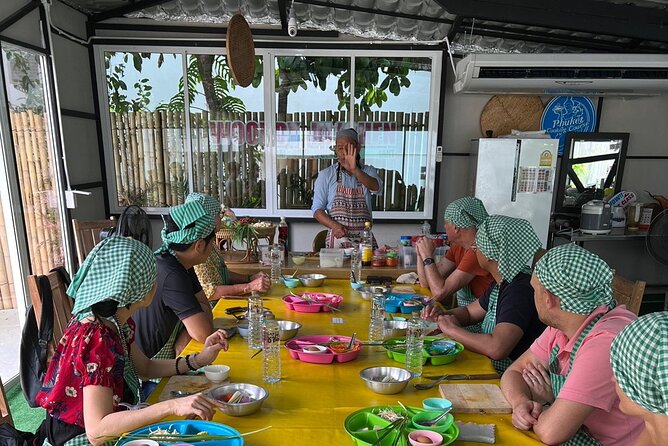
Most days begin at WOODY KITCHEN BY Phuket Cooking Course (1 Soi Plukjae, Tambon Karon). You’ll either start in the morning or the afternoon, and the whole experience runs about 4 hours 30 minutes.
Pickup is offered and works well if you’re staying in Patong/Kata/Karon/Chalong—hotel-to-kitchen is part of the deal. The tour is limited to 20 travelers, which helps the class stay practical and hands-on instead of feeling rushed.
If you’re traveling with only one person, check the pickup setup carefully. The info is clear that Patong pickup can have an extra THB500 charge for a single booking, while Kata and Karon pickups are listed as free.
You can also read our reviews of more tours and experiences in Phuket.

Mae Somchit Kata Fresh Market: learning Thai food starts with produce
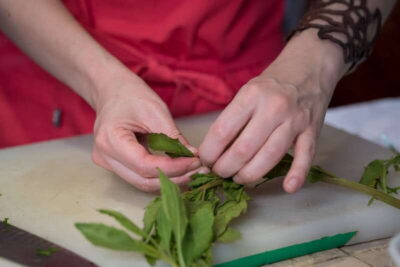
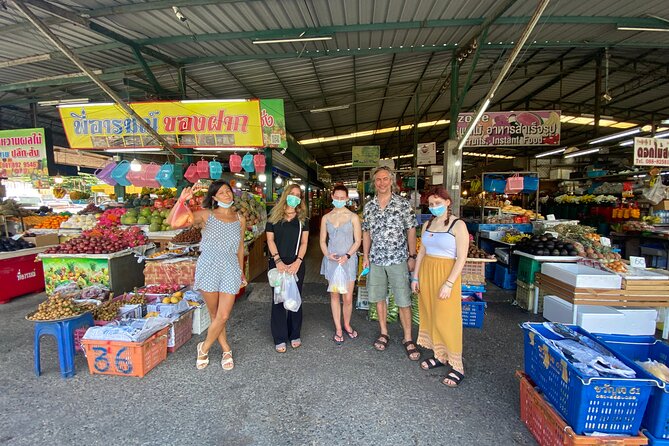
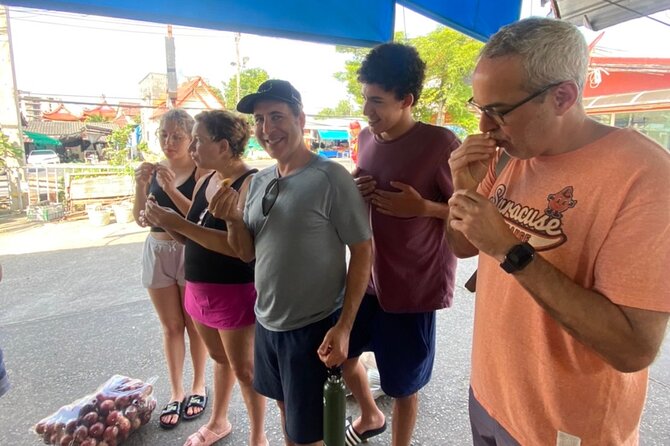
The first stop is Mae Somchit Kata Fresh Market for a 15-minute ingredient shopping window. This is where the trip earns its value, because you’re not just buying props—you’re selecting items that your dishes rely on.
I like that you’re with your teacher, so shopping becomes a lesson. You’ll learn what to look for in Thai staples like herbs, vegetables, and fruit, and which ingredients belong in which styles of Thai dishes.
Practical tip: keep a little room in your plans for small purchases. Even if you don’t buy everything, this stop helps you spot flavors you may not recognize from supermarket versions back home.
Woody’s tropical garden tour: why plants matter for flavor
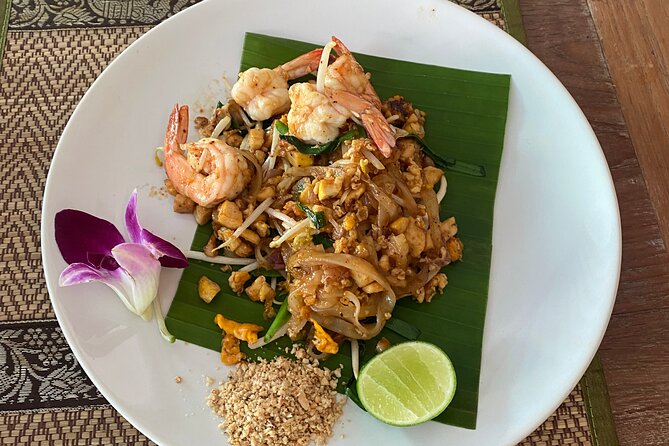
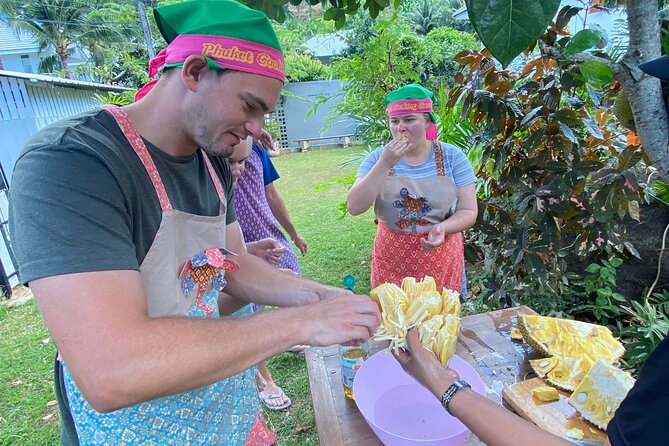
Next you head to WOODY KITCHEN, and there’s a garden tour built into the schedule. The garden is where you see tropical fruit and vegetables growing that you’ll later cook with.
This part is more useful than it sounds. Thai food can hinge on fresh herbs and the exact type of ingredient, and seeing the plants makes it easier to remember what each dish should taste like.
The garden visit also helps you understand why Thai cooking often feels fresher and brighter than what you get from less-ingredient-forward versions. When you know which plant matters—like which herb shows up in a soup versus a curry—it becomes easier to recreate the dish later.
Hands-on Thai cooking class: what the 3-dish course actually feels like
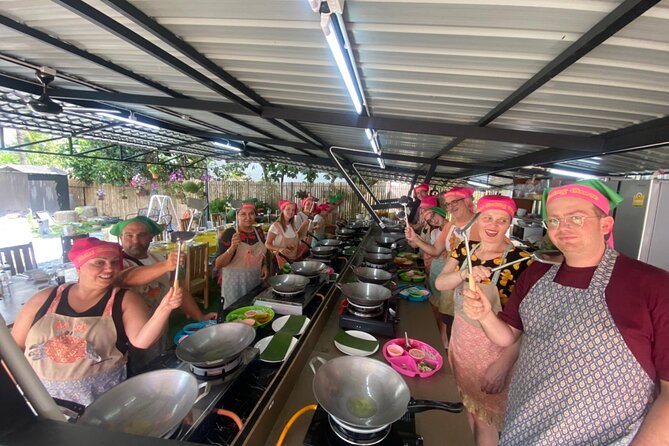
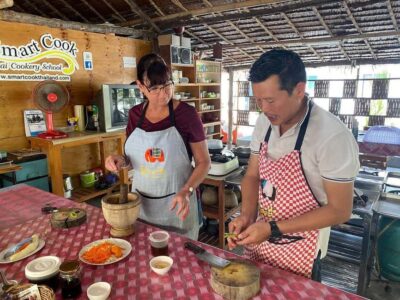
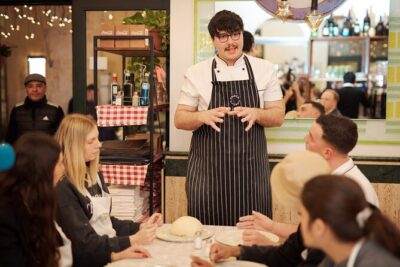
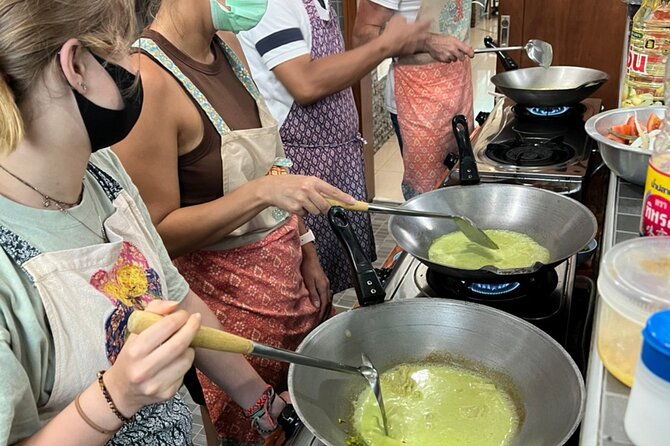
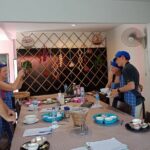
The cooking portion is the main event: you cook for about 4 hours total at the kitchen area, and you’ll follow instruction from Woody and the helpers. You’re doing real prep—chopping, mixing, and cooking in your own wok—so you’ll leave with skills, not just photos.
The class is described as a 3-dish course, and you get a course handout plus a recipe book and video. That matters because the memory of Thai food can fade fast once you’re back home, but recipes and the video help you rebuild your method.
What you learn also has flexibility. Different menus run depending on the day, and you can often request adjustments. In real terms, I like that the team is used to dietary preferences—vegetarian-friendly options are supported, and meat can be optional depending on the dish.
Dishes you may cook (varies by day, but you can expect the classics)
Different days teach different dishes, but the kinds of items you might cook include crowd-pleasers like:
- Pad Thai
- Chicken with green curry
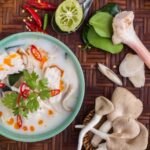
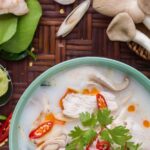
- Thai soup (often in the Tom Ka family)
- Mango sticky rice (a common dessert finish)
You’ll also get Jasmin Steam rice as part of the meal setup. And the instructors teach step-by-step so you understand not just what goes in, but how the flavors build.
The spice and ingredient lesson you can take home
From my perspective, the biggest win is learning how Thai flavor comes together: the role of aromatics, how herbs change the finish, and why some ingredients taste different when they’re fresh. The helpers are there to keep the work moving and to correct techniques before you ruin a sauce.
If you enjoy cooking, you’ll probably feel satisfied because it’s not basic instructions only. If you don’t cook much, don’t worry—the format is designed so you can participate fully even if your knife skills are rusty.
Accident insurance and a clean, organized setup
The included accident insurance is a nice safety net. And the kitchen is described as clean and organized, which you’ll appreciate once you’re working with sharp tools, hot pans, and lots of chopping.
Banzaan Fresh Market: a short second browse in the Patong area
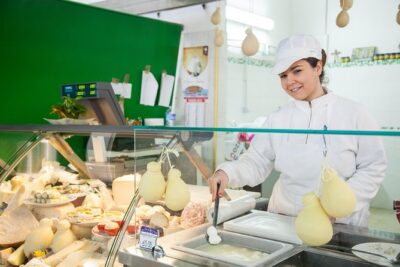
You’ll also make a quick stop at Banzaan Fresh Market (10 minutes). This is a brief look rather than a long shopping spree, and market admission here is noted as not included.
I treat this as a bonus stop. You get a little extra chance to see more product styles and get a feel for what’s available across the area, without dragging your cooking schedule.
Since time is short, keep your expectations realistic. This isn’t a full second market tour where you can shop like you’re planning a full cooking weekend. It’s more of an add-on for context.
Eating what you cooked, plus take-home recipes that reduce the cooking gap
After you prep and cook, you eat your results. That’s not just about satisfaction—it’s also the fastest way to learn. You’ll taste how your choices changed the dish, which helps you understand what you should repeat and what you’d tweak next time.
If you’re a food-lover, this part can be the best meal of your Phuket trip day. The class is designed so you’re not waiting for a restaurant-style plate—you’re eating a meal built from your own wok work.
And then comes the back-home advantage. You get:
- 3-dish course handout
- Recipe book
- Video
- A way to reproduce the dishes without guessing
In practice, those materials help you avoid the most common problem with cooking classes: you remember the concept, but you forget the order and the textures. With the handout and video, you can re-check technique and redo the sauce or garnish steps.
Price and value in Phuket: is $67.83 a good deal?
At $67.83 per person for about 4.5 hours, the value depends on what you want from your time in Phuket.
If you’re the type who enjoys food experiences that leave you with skills, this is strong value. You’re paying for:
- Pickup and drop-off in several key areas
- Ingredient shopping with a guide
- Market context
- Cooking time with instructors
- Ingredients, jasmine steamed rice
- Recipes, plus a video
Where it can feel less perfect is if your group needs special pickup arrangements or you’re paying for a non-cooking person. Non-cooking participants have an extra THB900 charge, and certain pickup areas outside the listed zones have extra costs noted in the info.
But if your base is in Patong/Kata/Karon/Chalong/Kata area and you’re actively cooking, you’re getting a full-food learning day, not a short demo.
Who should book this class, and who might pass
This is a great fit if you want an authentic Thai food day with a clear structure: market → garden context → hands-on cooking → meal → recipes. It’s also a good choice if you want something more local than a typical tourist show.
You should especially like it if:
- You want to shop for ingredients like a local
- You’re interested in Thai herbs and fresh flavor
- You want recipes you can actually follow later
- You like small-group learning
You might skip it if you hate chopping and cooking prep. This is hands-on by design. Also, if you only want a quick meal and zero ingredient learning, you may prefer a restaurant with a guide instead.
Should you book this Thai cooking class with market and garden tours?
My honest take: you should book it if you want a Phuket food experience that’s practical. The market time teaches you what to choose. The garden tour gives ingredient context. Then the class lets you cook and taste immediately, and the take-home recipe set keeps the learning alive.
Before you confirm, double-check two things: your pickup area (especially if you’re starting from Patong as a solo booking) and whether everyone in your party plans to cook. If those match up, this is one of the more worthwhile half-day activities for food-focused travelers in Phuket.
If your goal is to come home able to make at least one real Thai dish—pad thai, green curry, or mango sticky rice—this class is built for exactly that.