REVIEW · PHUKET
Thai Cooking Class by Kata Thai Cooking School in Phuket
Book on Viator →Operated by Oh-Hoo · Bookable on Viator
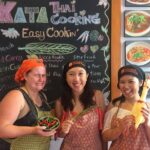
Thai cooking is best learned with your hands. At Kata Thai Cooking School in Phuket, you get a fun, structured class that turns common street-food favorites into skills you can repeat at home. Small-group instruction (up to 12) is the big advantage, and the day also has a cultural angle—so it is not just chopping and hoping.
I especially like two things: the class starts with a real taste-up front (lemongrass tea) and the teaching duo, Sally and Jim, guide you step by step while you cook. One consideration: the experience runs on good weather, and it is only about 3–4 hours, so come hungry and ready to focus.
In This Review
- Kata Beach Thai Cooking Class: The Small-Group Advantage
- Market Day vs Cooking First: How the Itinerary Flows
- Morning course: ingredients first, then hands-on cooking
- Afternoon course: walk the fresh local market
- Getting Your Bearings: Lemongrass Tea, Booklets, and Aprons
- Four Classic Thai Dishes: What You’ll Actually Cook
- Taste Your Work: Lunch You Cooked, Not Just Watched
- Sally and Jim’s Teaching Style: Clear Steps, Patient Pace
- Pickup and Timing in Phuket: Making It Fit Your Day
- Location: Kata Beach Area, Convenient to West-Coast Plans
- Price and Value: Why $83.78 Can Make Sense
- Weather Note: Why It Matters Here
- Who Should Book This Class (and Who Might Skip It)
- Should You Book Kata Thai Cooking School in Phuket?
- FAQ
- How long is the Thai Cooking Class?
- How many people are in the class?
- Does the class have morning and afternoon options?
- What happens at the start of the class?
- Do you cook, or is it mostly watching?
- Are market visits included?
- What do I receive during the class?
- Is pickup available?
- Is there a weather requirement?
Kata Beach Thai Cooking Class: The Small-Group Advantage
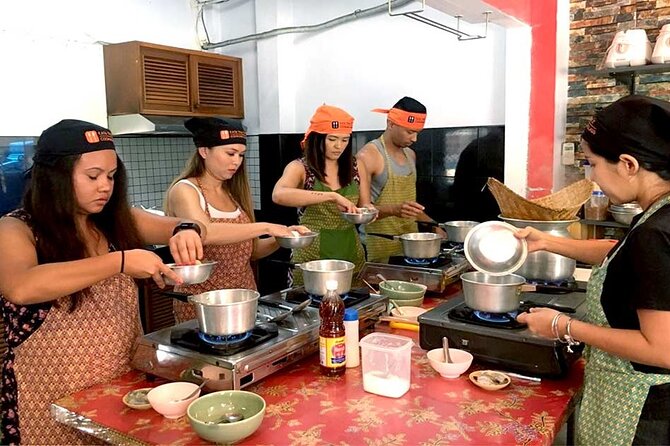
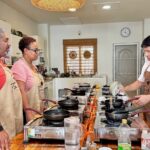
This is a Thai Cooking Class by Kata Thai Cooking School in Phuket that keeps the group tight—maximum 12, minimum 2 to run. That size matters. In a big cooking tour, you often watch others cook. Here, you are actively involved, with enough attention to fix small mistakes early, especially when you are balancing sour, salty, sweet, and spice.
You can choose a morning or afternoon start, which is rare in Phuket classes where everything is usually locked to one time slot. That flexibility helps if you want beach time first, or if you plan to explore town before your class.
The other thing I appreciate is that you are not just learning recipes. You are learning how Thai cuisine thinks—how ingredients work together, what each dish is trying to taste like, and why certain flavors show up again and again across dishes.
Market Day vs Cooking First: How the Itinerary Flows
The class is built around two different styles depending on your time slot: a market component in the afternoon, and ingredient basics plus cooking progression in the morning. Either way, you end with a full lunch you cooked yourself.
You can also read our reviews of more tours and experiences in Phuket.

Morning course: ingredients first, then hands-on cooking
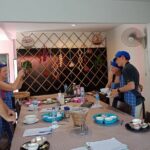
In the morning, you arrive at Kata (near Karon and Patong on Phuket’s west coast). You start with a relaxing glass of lemongrass tea and a quick meet-and-greet so everyone feels comfortable before the burners turn on.
Then the class moves into the core lesson rhythm:
- you receive a booklet with the recipes of the day and an apron
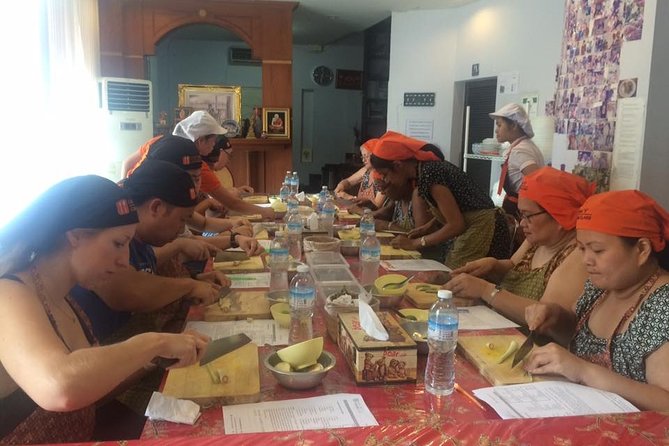
- Sally and Jim demonstrate step by step what you will make
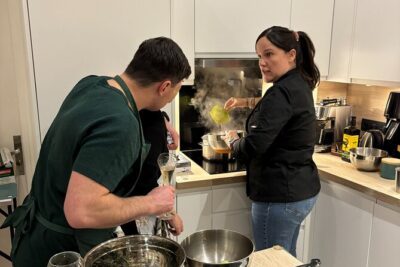
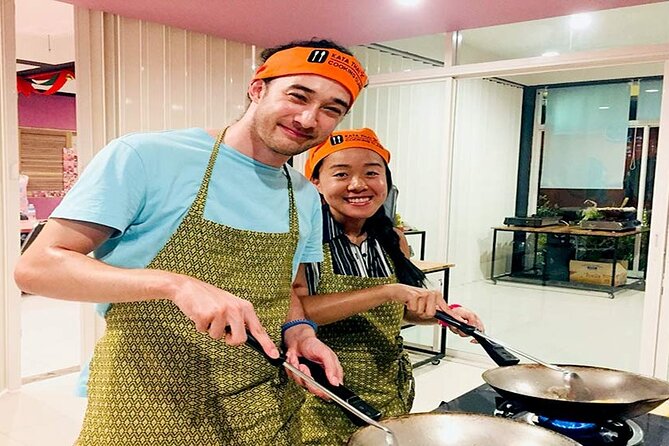
- you cook your own dishes, not just follow a script
The morning format also makes sense if you are short on time and want to go straight to the “how do I actually cook this” part.
Afternoon course: walk the fresh local market
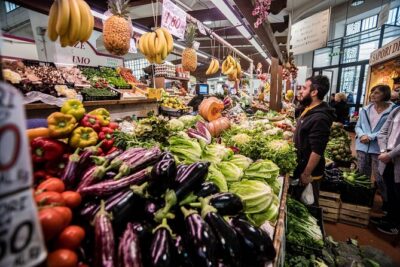
If you book the afternoon session, you start with a walk through the fresh local market. You will taste some fresh fruits or food along the way. Even if you are not a “food tour” person, this part is useful because you start seeing ingredients as Thai cooks do—what is fresh, how they choose, and how that choice affects the final flavor.
After the market walk, you move into the same core structure: demonstration, then cooking, then eating what you made. The market portion is also a confidence booster. When you later find similar ingredients back at your hotel market or a grocery store, you will know what to look for and why.
Getting Your Bearings: Lemongrass Tea, Booklets, and Aprons
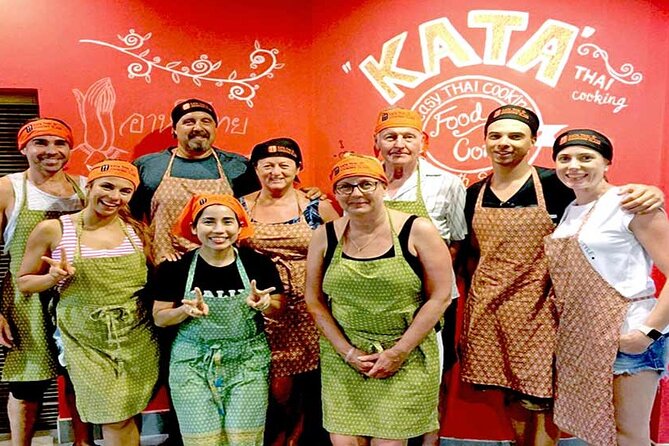
Small details can make or break a cooking class, and this one takes basics seriously.
You begin with lemongrass tea at the start time, which is a nice way to reset after Phuket travel and beach weather. It is also a simple moment that signals the tone: friendly, not stressful.
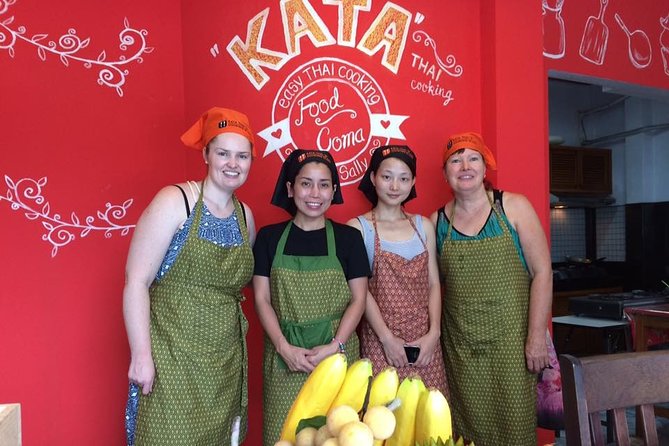
You then get a recipe booklet and an apron. That matters more than it sounds. Thai cooking depends on timing and technique, and a booklet gives you a clear reference when you try again later. The apron keeps you comfortable so you can focus on chopping, stirring, and tasting.
Four Classic Thai Dishes: What You’ll Actually Cook
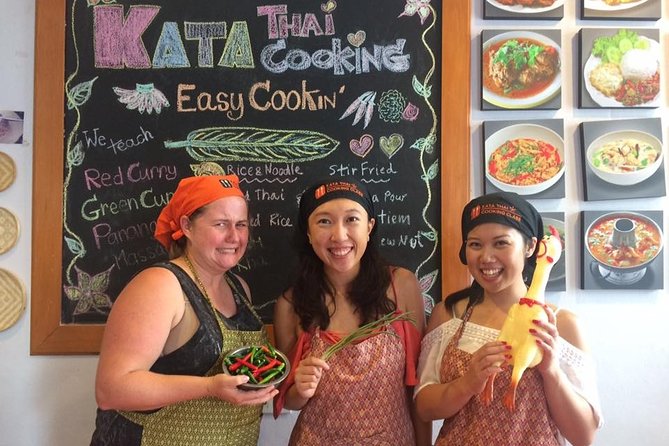
The class centers on cooking multiple dishes from scratch. You will prepare four dishes, and the day is organized to move from ingredient and technique to real cooking to eating your results.
You will also work with Thai flavor patterns that show up across dishes. The class description highlights favorites like:
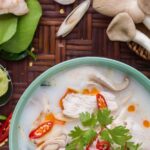
- tom yum soup
- mango sticky rice
- Thai green curry (listed as Thai green cutty)
So even if you are new to Thai cooking, you will taste familiar Thai flavors while learning the mechanics behind them—how the dish builds its sour, how spice levels are handled, and how sweet balance works in desserts like mango sticky rice.
One of the most practical parts is learning how to replicate flavor combinations, not only how to follow one recipe one time. If you like Thai food but have only ordered it, this is where the learning changes from entertainment to skill.
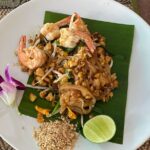
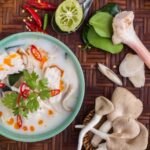
Taste Your Work: Lunch You Cooked, Not Just Watched
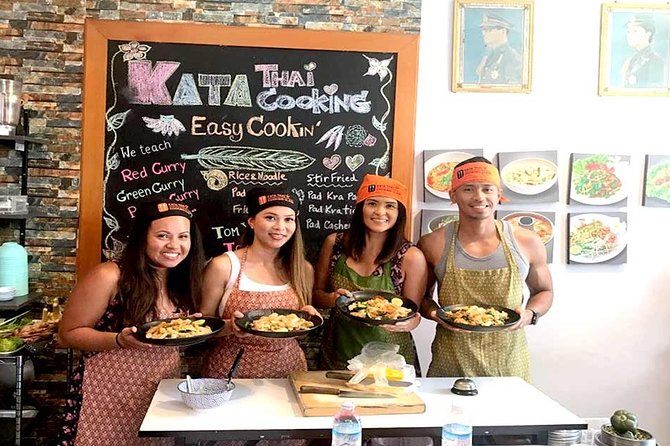
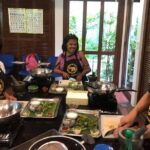
The lunch portion is the payoff. Once cooking is done, you enjoy a Thai lunch that you cooked yourself. That is important because you immediately learn how the flavors should land.
You can adjust future attempts with your own palate in mind:
- Did the soup taste sharp enough?
- Did the curry balance feel right?
- Did the sticky rice and mango sweet level match what you expected?
This is where the class becomes personal. You are not just carrying home recipes; you are carrying home a memory of what the food should taste like.
Sally and Jim’s Teaching Style: Clear Steps, Patient Pace
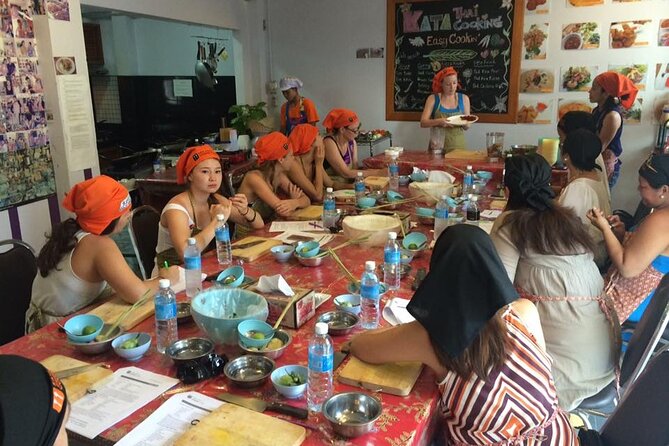
Sally and Jim run the class, and the vibe is welcoming and friendly. Multiple standout comments point to them being warm, supportive, and patient while explaining ingredients and techniques.
What I like about that kind of teaching is how it supports different cooking comfort levels. If you cook at home, you still get technique improvements. If you never cooked Thai food before, you get guided structure so you do not feel lost.
The class is also described as having a friendly atmosphere where relationships build during the session. That matters in a cooking class because the room is often hot, a little chaotic, and smelling like garlic and herbs. A good atmosphere keeps it fun rather than frustrating.
Pickup and Timing in Phuket: Making It Fit Your Day
Pickup is offered, and the experience ends back at the meeting point. That takes friction out of your logistics, especially if you are staying in or around the west coast where you might otherwise burn time finding transport.
The class runs about 3–4 hours, and you get a few clear timing markers:
- Morning arrival is at 10:30am, with learning starting after that (10:45am noted).
- Afternoon arrival is at 3:30pm, with cooking instruction starting after that (4:30pm noted).
- Lunch time lands around 1:00pm for the morning group.
- Return pickup/dropoff is around 1:30pm for morning and 7:30pm for afternoon.
Practical tip: plan to travel light. You will likely be smelling like herbs by the end, so bringing a change of shirt can be worth it if you plan dinner plans soon after.
Location: Kata Beach Area, Convenient to West-Coast Plans
The school is in Kata, next to Karon and Patong, on Phuket’s west coast. This positioning is handy. You can make it part of a beach-heavy day without needing to cross the entire island.
Also, it is near public transportation, which is useful if you are not doing pickup or if your pickup timing gets mixed up with hotel logistics.
Price and Value: Why $83.78 Can Make Sense
The price is $83.78 per person, and booking tends to happen about 46 days in advance on average. Here is how I think about value for a class like this.
You are not paying only for a meal or only for entertainment. You are paying for:
- small-group hands-on instruction (up to 12)
- a guided process that includes demonstration and then your cooking
- a recipe booklet and an apron
- lunch that comes from your own cooking
- morning or afternoon options, including an actual market walk in the afternoon
- pickup offered, depending on where you are staying
If you compare it to eating Thai food out multiple times, you are getting something more “skill-like” for your money. The key question is whether you want to leave Phuket able to cook. If yes, this class can be a solid value because the output (food + technique + recipes) sticks with you.
If you mainly want a quick photo-and-sample experience, a cooking class may feel heavier than a light food tour. But if you like to learn and then recreate, it is money well spent.
Weather Note: Why It Matters Here
This experience requires good weather. That is not a small footnote. If rain changes the setup outdoors, your class may be adjusted, offered on another date, or refunded depending on the situation. I recommend you book with flexibility if you can, and keep your other plans loose around class day.
Who Should Book This Class (and Who Might Skip It)
This class fits best if:
- you want to learn Thai cooking in a hands-on way
- you like structured steps and recipe references
- you care about learning ingredients, not only eating dishes
- you want a friendly activity with a small group where you can ask questions
It might be less ideal if:
- you hate kitchen mess and heat (cooking involves both)
- you want a super short outing (this one is about 3–4 hours)
- you are only looking for a casual food tasting without cooking
Should You Book Kata Thai Cooking School in Phuket?
If you want an experience that turns Thai food into skills you can use later, I think this is a strong choice. The small group size helps you cook, not just observe, and the combination of lemongrass tea, step-by-step instruction by Sally and Jim, a recipe booklet, and a meal you make yourself is a very practical package.
Book it if you are ready to cook four dishes from scratch and learn why Thai flavors work the way they do. Consider holding the day lightly if weather is a concern, and come prepared to taste, adjust, and repeat.
FAQ
How long is the Thai Cooking Class?
The class takes about 3–4 hours.
How many people are in the class?
The tour runs with a maximum of 12 travelers, and there is a minimum of 2 people required to run it.
Does the class have morning and afternoon options?
Yes. You can choose a morning or afternoon start.
What happens at the start of the class?
You arrive at Kata, get to know the group, and start with a relaxing glass of lemongrass tea.
Do you cook, or is it mostly watching?
You do hands-on cooking. There are demonstrations step by step, and you then cook your own Thai lunch.
Are market visits included?
The afternoon course includes walking through a fresh local market and tasting fresh fruits or food.
What do I receive during the class?
You receive a recipe booklet with the dishes of the day and an apron.
Is pickup available?
Pickup is offered, and the activity ends back at the meeting point.
Is there a weather requirement?
Yes. The experience requires good weather. If it is canceled due to poor weather, you will be offered a different date or a full refund.