REVIEW · PHUKET
Thai Cooking Class in Phuket
Book on Viator →Operated by Phuket Thai Cooking Class by Chef VJ · Bookable on Viator
Curry paste, made by your own hands. This Phuket class with Chef VJ turns Thai flavors into something you can actually repeat later, with handmade curry paste and market-fresh ingredients guided in fluent English step by step. I like that you’re not stuck watching from the sidelines—you get your own pace, your own station, and real kitchen time.
I also really like the class format for learning: clear instructions, ingredient explanations, and guidance on how to replace key items once you’re back home. One consideration: the meeting point is in the Karon area, so arrive early and use your exact pin, because small classes and a tight schedule don’t leave much room for wandering.
In This Review
- Key highlights before you go
- Phuket Thai cooking class with Chef VJ: what the day is really about
- Price and value: does $65.22 make sense?
- Getting to the right start point: pickup areas and the flow of the day
- Stop 1: Mae Somchit Kata Fresh Market and fruit tasting
- Inside the clean kitchen: your own station, your own rhythm
- Making curry paste the traditional way: no shortcuts, real technique
- Chopping, cooking, and learning ingredient replacements for home
- Your meal: fresh food, clear portions, and take-home leftovers
- Who this Phuket cooking class fits best (and who might want to pick another option)
- Should you book this Thai cooking class in Phuket?
- FAQ
- FAQ
- How long is the Thai Cooking Class in Phuket?
- Where does the class start and where does it end?
- Do they include pickup or transportation?
- Is there a market tour?
- What drinks and refreshments are included?
- Do you make curry paste from scratch?
- What do you take home?
- How many people are in the class?
Key highlights before you go
- Handmade curry paste from scratch using mortar and pestle, with no MSG and no ready-made shortcut paste
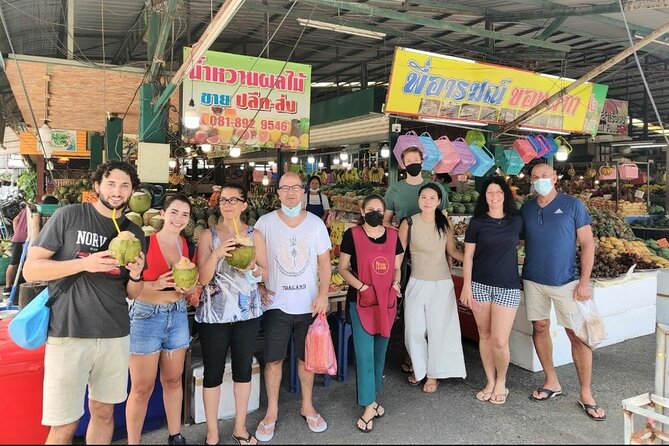
- Mae Somchit Kata Fresh Market stop with market tour plus fruit tasting for the classes that include it
- Your own cooking station in a clean kitchen so you can chop, cook, and taste what you make
- Unlimited drinks during the course, including bottled water, plus tea and ground coffee
- Take-home support with a printed recipe book and recipes also mailed to you
Phuket Thai cooking class with Chef VJ: what the day is really about
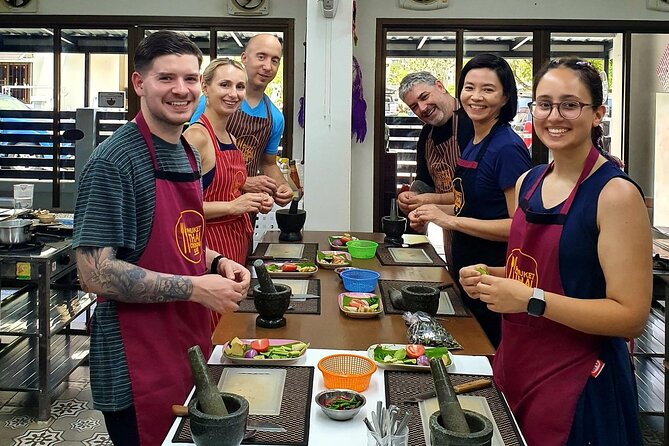
A Thai cooking class can be either “show-and-tell” or “learn-and-do.” This one leans hard toward learn-and-do. The biggest draw is that you make your own curry paste from scratch, using a traditional mortar and pestle. That single skill changes everything at home—you stop treating Thai food like a mystery box and start treating it like a repeatable set of steps.
You’ll spend about 3 hours in total, and the pace is built for understanding. Chef VJ is described as very fluent in English, so you should be able to follow each step without guessing. Add in a clean kitchen, individual stations, and a chef who demonstrates while you cook, and you get a setup that feels practical—not staged.
One more thing I appreciate: the class doesn’t just teach recipes, it teaches decision-making. You’ll also learn about replacements for important ingredients if you can’t find them back home. That’s what makes this more than a one-time meal experience.
You can also read our reviews of more tours and experiences in Phuket.

Price and value: does $65.22 make sense?
At $65.22 per person, you’re paying for several things that add up fast: ingredients, the cooking station and instruction, and the meal you eat at the end. On top of that, you’re not just given tea once—you get free unlimited bottled water throughout the course, plus unlimited tea and ground coffee.
The value gets even better if you use the round-trip transport. The class offers pickup/free transfer from several beach areas like Kata, Kata Noi, Karon, Rawai, Patong, and Nai Harn. If your schedule and location line up, transportation can easily be the difference between this feeling like a fun splurge or a fair deal.
The other “value” piece is learning you can reuse. Curry paste technique and ingredient explanations matter long after you leave Phuket. If you’re the kind of person who likes to host friends and cook at home, this price can feel reasonable because you’re buying skills, not only dinner.
Getting to the right start point: pickup areas and the flow of the day
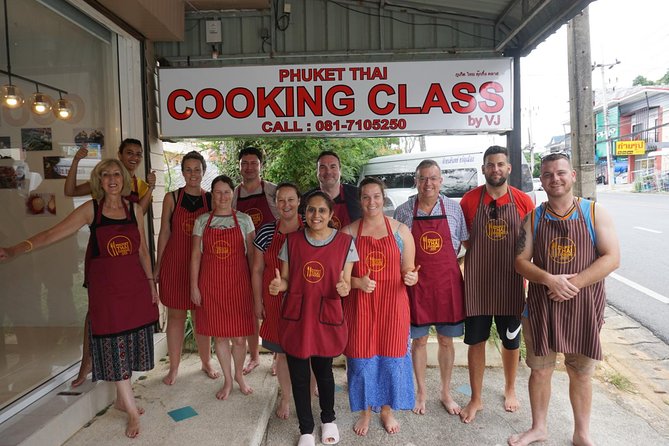
The class activity starts at Phuket Thai Cooking Class by Chef VJ, 31 Patak Rd, Tambon Karon, Amphoe Mueang Phuket. It ends back near the meeting point, so you’re not stuck crossing the island after you’re tired.
If you’re staying in Kata, Kata Noi, Karon, Rawai, Patong, or Nai Harn, you may be able to use the free round-trip transfer. For Patong and the nearby areas, there’s a note that it may have a minimum of 2 people. For Kamala beach and Surin beach, the meeting point is at Hard Rock Cafe Patong (also with a minimum of 2 people).
Because it’s a maximum of 20 travelers, the day runs on a real schedule. I’d treat it like a half-day activity: arrive with your timing straight, and keep your phone charged for your mobile ticket. If your meeting point is unclear, show up a little early rather than hoping you’ll spot the kitchen from the road.
Stop 1: Mae Somchit Kata Fresh Market and fruit tasting
If your session includes the market portion, you’ll start at Mae Somchit Kata Fresh Market. This stop is where the class becomes more than cooking—it becomes shopping with purpose.
You’ll see how Thai ingredients are chosen and used, and you’ll get explanations tied directly to what you’ll cook later. Fruit tasting is included on those market-tour sessions, which is a nice way to build your palate before you head into the kitchen.
There’s also flexibility depending on the class format. If your specific session doesn’t include the market tour, they bring the market to you and still explain the ingredients during the class itself. That’s actually useful if you’re pressed for time, don’t love being out in heat, or prefer to get straight to chopping and cooking.
One practical note for decision-makers: if you already feel comfortable with Southeast Asian markets, you might find the market portion less surprising. In that case, I’d focus your excitement on the hands-on cooking part—especially the curry paste technique.
Inside the clean kitchen: your own station, your own rhythm
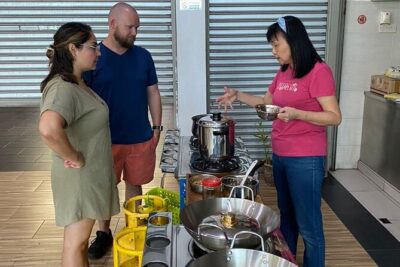
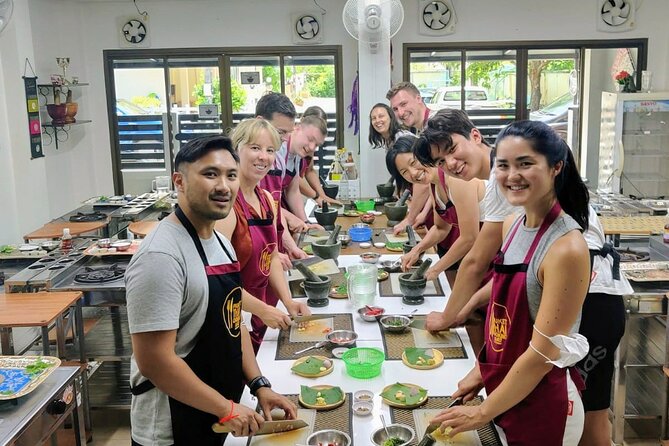
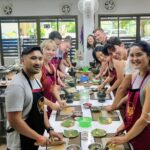
The kitchen setup matters more than people think. Here, cooking is done in a clean kitchen, and everyone has their own cooking station. That’s what lets you chop, stir, and taste without waiting for someone else’s turn.
The class format combines chef demonstrations with your own cooking time. Chef VJ and the team go step by step in English, so you should be able to ask questions as you go. And because you’re working at your own station, you don’t lose your place when you pause to check an ingredient or measurement.
There’s also a “comfort factor” in the way the day is described: the chef/host comes across as entertaining and engaging, which makes the experience easier if you’re traveling solo. You’re not just in a room of strangers silently eating—there’s guidance and energy that keeps you moving through the steps.
And yes, you’ll get your drinks covered. Expect free welcome herbal drinks, then free unlimited bottled water plus unlimited tea and ground coffee during the course. It keeps the day comfortable without making the class feel like a cafe stop.
Making curry paste the traditional way: no shortcuts, real technique
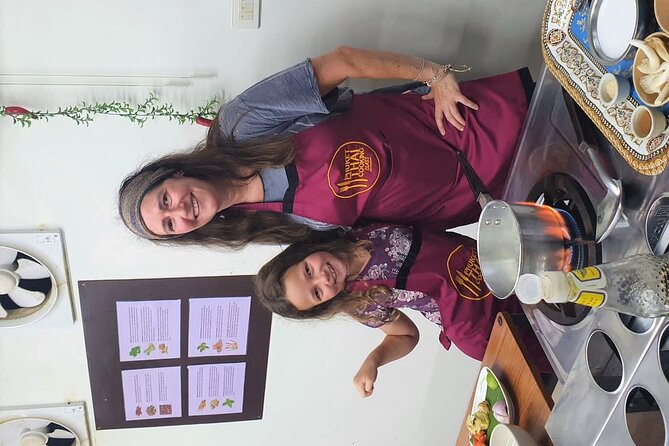
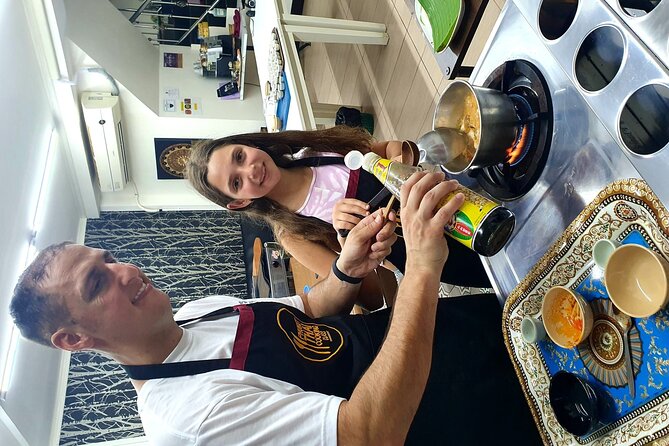
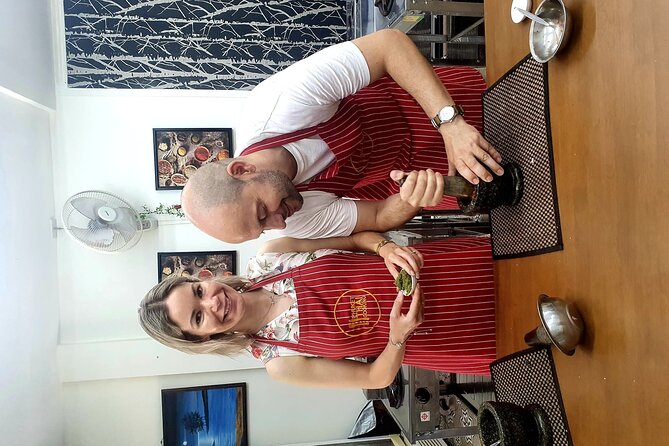
The heart of this cooking class is making curry paste from scratch. You’ll use a mortar and pestle, and the process is done in a way that avoids shortcuts: the class notes no MSG and no buying ready-made curry paste.
Why does this matter? Because store-bought paste can taste “fine” but not always like you expect once you start cooking at home. When you build your paste yourself, you understand the texture and the flavor balance. You also learn what you should be watching for during grinding and mixing.
This is also where you’ll get the most transferable skill. A curry paste isn’t just an ingredient—it’s a method. Once you know the steps and the feel, you can adjust for your pantry and still get that Thai taste.
I also like that the class doesn’t leave you stranded after the curry paste stage. You cook with market-fresh ingredients and you prepare multiple traditional dishes using what you’ve created. Then you eat what you made right there, fresh.
Chopping, cooking, and learning ingredient replacements for home
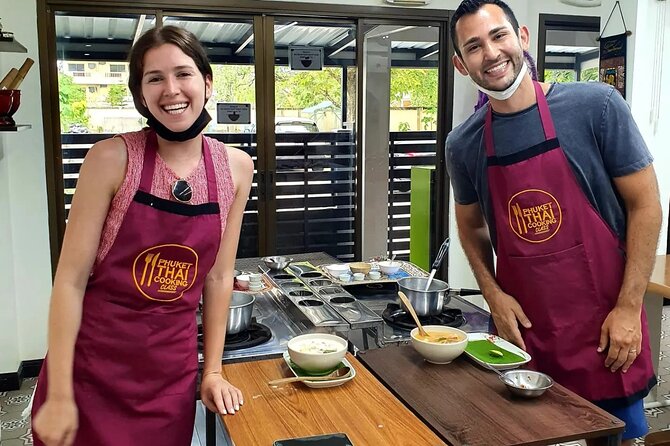
A lot of cooking classes teach a recipe. This one also teaches how to think like the person who cooks Thai food day to day.
During the class, you’ll chop and cook everything yourself. That hands-on role is the difference between “I watched it” and “I can do it.” Chef VJ provides step-by-step instructions and introductions to Thai ingredients, so even if you’ve never cooked with things like tropical fruits or regional vegetables, you’ll understand what you’re using and why.
Then comes the part that helps at home: you’ll learn about replacement options for important ingredients when something isn’t available where you live. The class doesn’t list every possible swap in the information provided, but the goal is clear: you should be able to make something close without giving up.
This matters most after you return from Phuket. The “I’ll definitely cook this later” enthusiasm often dies when an ingredient is missing. Here, they set you up to keep going anyway.
Your meal: fresh food, clear portions, and take-home leftovers
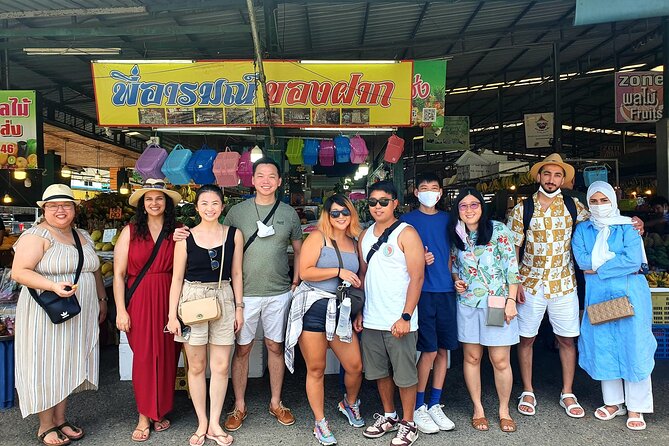
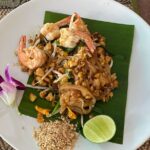
After cooking, you get to sit down and eat the meal you made. The structure is simple: you prepare, you taste along the way, and then you dig in to what’s on your plate. The emphasis is on freshness, and you’ll be eating right after cooking rather than waiting around.
Portion size is described as excellent in feedback, so it’s not a tiny “taste test” situation. And if you can’t finish, you can take the rest with you. That’s a small thing, but it’s practical—especially if you’re pairing this class with beach time later.
You’ll also have take-home items that make the experience last:
- A printed recipe book to keep
- Plus recipes mailed to you afterward (so you can reference them without worrying about taking notes during class)
If you like to impress friends back home, having that written backup is what turns a fun morning into a real dinner you can repeat.
Who this Phuket cooking class fits best (and who might want to pick another option)
This class is a great match if you want hands-on instruction and you’re serious about learning. The curry paste process and the ingredient explanations are ideal if you like technique, not just food.
It’s also a smart pick if you’re a solo traveler. The tone described includes a host who makes the experience entertaining and a group experience that doesn’t feel awkward. With up to 20 people, it’s big enough to have energy, but small enough that you should feel guided rather than lost.
You might consider skipping the market portion (or at least not making it the main reason for booking) if you already know Southeast Asian markets well. The market stop is fun, but the cooking—especially the mortar-and-pestle curry paste—is the core value.
And if you’re the type who hates being unsure about locations, plan to arrive a little early and save the exact meeting address. The class is scheduled, and the kitchen is not a walk-in restaurant where you can wander and hope.
Should you book this Thai cooking class in Phuket?
I’d book it if you want more than a meal. This is a focused class built around a repeatable skill: making curry paste from scratch and learning how to handle Thai ingredients with real guidance.
It’s also a good value when you factor in the included drinks, your meal, printed recipes, and potentially the round-trip transport to your beach area. For most people in Phuket—especially if you’re staying near Kata, Karon, or Patong—it’s an efficient way to spend a half-day learning something you can cook again.
My only hesitation is logistical: don’t treat it like a casual drop-in. Use your exact meeting pin, give yourself time, and come ready to cook.
If your goal is Thai food you can actually reproduce at home, this is the kind of class that pays you back long after Phuket fades into memory.
FAQ
FAQ
How long is the Thai Cooking Class in Phuket?
It lasts about 3 hours.
Where does the class start and where does it end?
It starts at Phuket Thai Cooking Class by Chef VJ, 31 Patak Rd, Tambon Karon, Amphoe Mueang Phuket, 83100, Thailand and ends back at the meeting point.
Do they include pickup or transportation?
Pickup/free round-trip transfer is offered for areas including Kata, Kata Noi, Karon, Rawai, Patong, and Nai Harn. For Kamala and Surin, the meeting point is Hard Rock Cafe Patong (minimum 2 people).
Is there a market tour?
Some classes include a market tour and fruit tasting (starting at Mae Somchit Kata Fresh Market). For classes without the tour, they bring the market to you and explain ingredients during class.
What drinks and refreshments are included?
You get free welcome herbal drinks, free unlimited bottled water, and free unlimited tea and ground coffee.
Do you make curry paste from scratch?
Yes. You make your own curry paste from scratch using a mortar and pestle, and it is done with no MSG and not with ready-made paste.
What do you take home?
You receive a printed recipe book to take home, and recipes will also be mailed to you. You can also take home any leftover food.
How many people are in the class?
The class has a maximum of 20 travelers.