REVIEW · NEW ORLEANS
Hands-on Cajun Traditions Cooking Class
Book on Viator →Operated by The Mardi Gras School of Cooking · Bookable on Viator
Cajun cooking, taught by locals. In New Orleans, you cook three classic courses with a chef at The Mardi Gras School of Cooking, then sit down to eat your own work, all while learning the story behind Cajun food. With a small group and about 3 hours to work at a real kitchen pace, it’s part cooking class, part culture lesson.
I love the small-group setup (max 10), because you get coaching while you chop, stir, and plate instead of just hovering. I also love that the chef focuses on more than recipes, sharing seasoning secrets and the history of Louisiana’s cuisine as you go.
A possible drawback: you’re making only three courses, so if you want a big menu of Cajun dishes to take home, this may feel a bit focused.
In This Review
- Key takeaways
- A hands-on Cajun kitchen class at Mardi Gras School of Cooking
- Price and what you really get for $163.85
- The 3-hour flow: from aprons to your final spoonful
- Course 1: New Orleans style Barbecue Shrimp starter
- Course 2: Chicken and andouille sausage jambalaya main
- Course 3: Chocolate bread pudding with brandy mocha sauce dessert
- Chef-led teaching and the conversations that make it stick
- What you’ll likely take home for your own cooking
- Where it is and how to plan your day
- Is this good for families, couples, or solo travelers?
- Should you book this Cajun cooking class?
- FAQ
- How long is the Cajun traditions cooking class?
- What is the price per person?
- Where does the class meet in New Orleans?
- How many people can join the class?
- Is the class offered in English?
- What dishes are included in the cooking menu?
- Is there a mobile ticket?
- Is it near public transportation?
- What is the cancellation policy?
Key takeaways
- Three courses, cooked by you: New Orleans-style barbecue shrimp, chicken and andouille jambalaya, and chocolate bread pudding
- Chef-led Louisiana food history as you cook, not as a separate lecture
- Pro techniques and seasoning tips that translate back to your home kitchen
- Max 10 people so the class stays interactive and you’re not lost in a crowd
- Clear, step-by-step instruction in a clean, well-organized kitchen setup
- Popular for a reason: a 4.9 rating with 99% recommendation and strong praise for the chefs
A hands-on Cajun kitchen class at Mardi Gras School of Cooking
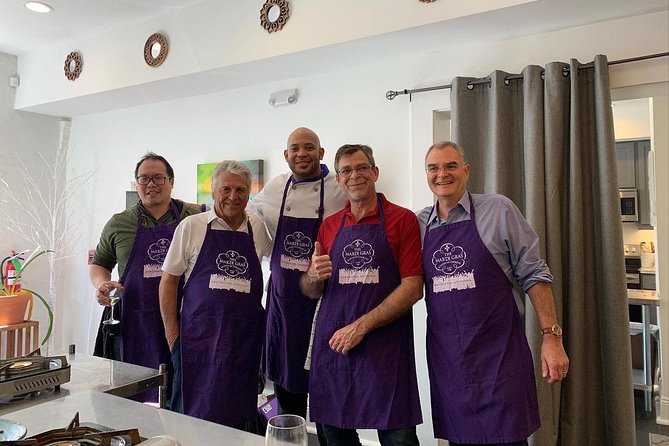
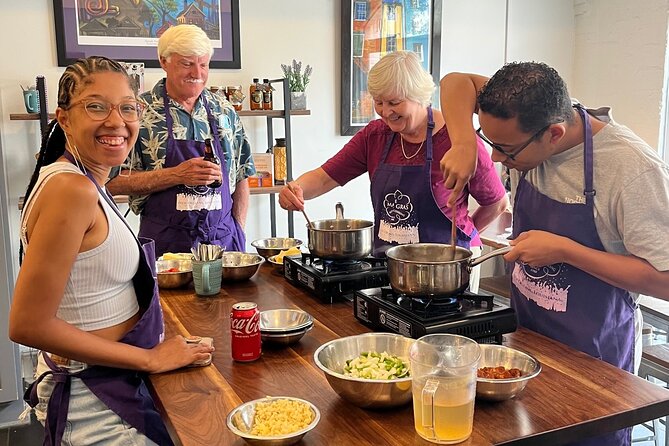
This is the kind of New Orleans activity that doesn’t sit you in a chair and hope you learn. You’re at a working station, with an apron on, cooking real food, tasting as you go, and getting the why behind what you’re doing.
The setting is run like a proper school: people note how clean it is and how organized the workspace feels. That matters, because Cajun cooking rewards attention. You want a kitchen where the steps are laid out and someone can spot what you’re doing before it turns into a burnt onion story.
One more thing I appreciate: the teaching style shows up in the praise over and over. Chefs like Mark, Raymond, Jason, David, Preston, and instructors such as Erika and hosts like Tracey come through as friendly and engaging, with plenty of conversation alongside instruction. You’ll learn faster when the teacher keeps the room relaxed.
You can also read our reviews of more tours and experiences in New Orleans.
Price and what you really get for $163.85
At $163.85 per person for about 3 hours, you’re paying for three main value pieces: expert coaching, a full meal, and the small-group experience.
You’re not just watching a demo. The format is hands-on, and you cook three traditional Cajun courses. That means the cost isn’t only “class time” but also ingredients, kitchen time, and the chef’s attention while you learn techniques.
The group size also matters for value. With a maximum of 10 travelers, you’re more likely to ask questions and get corrected in time. In bigger classes, that attention usually disappears.
Two practical notes on timing and booking: the typical booking window is about 29 days ahead, and group discounts are available. If you’re traveling with friends or you want a specific day, booking early can save you from settling.
The 3-hour flow: from aprons to your final spoonful
Your day starts at 519 Wilkinson St in New Orleans, and the class ends back at the meeting point. It runs about 3 hours, which sounds long until you’re doing it. When you’re chopping, stirring, tasting, and then cooking again, the time passes quickly.
Here’s what the flow tends to feel like:
- Arrive, get settled, and meet your group
You’ll show up to The Mardi Gras School of Cooking, get acquainted with classmates, and begin the hands-on portion with your chef.
- Learn the menu and the reasoning behind it
You’re taught professional techniques and seasoning secrets while you also get the history of Cajun cuisine—so the dishes connect to Louisiana’s story, not just to a recipe card.
- Cook in steps, then eat what you make
The class is paced for learning. People repeatedly mention step-by-step instruction and a pace that feels neither rushed nor slow.
- Finish with dessert and a wrap-up
You end with chocolate bread pudding and brandy mocha sauce, then you leave with new habits you can use at home.
You can also expect a social atmosphere. The best part of classes like this is that you end up talking to the people next to you while the chef guides your hands.
Course 1: New Orleans style Barbecue Shrimp starter
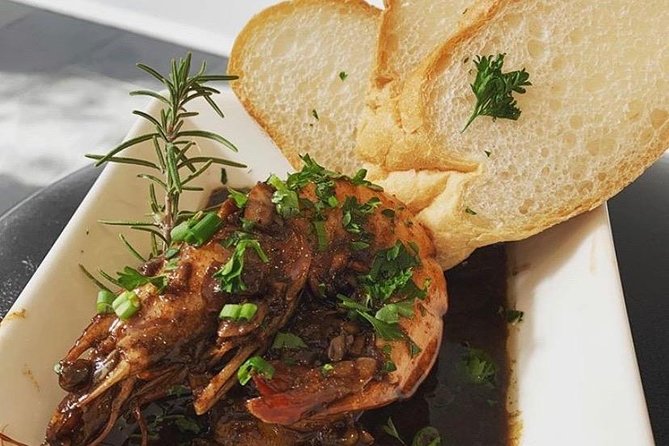
The starter on the sample menu is barbecue shrimp in a New Orleans style. This is often the moment you realize the class isn’t just about following steps. It’s about learning how flavor is built.
What you should look for during this course:
- Seasoning confidence: you’re taught the chef’s seasoning approach, including how to make the flavors click instead of guessing.
- Timing and texture: shrimp cooks fast, so learning the rhythm matters.
- Sauce focus: one highlight that comes up is how people love the sauce on the shrimp.
Even if you’ve cooked shrimp at home, you’ll likely leave with a clearer sense of how Cajun-inspired barbecue flavors come together. And since it’s the first course, it also helps you get comfortable with the kitchen flow before the heavier cooking begins.
Course 2: Chicken and andouille sausage jambalaya main
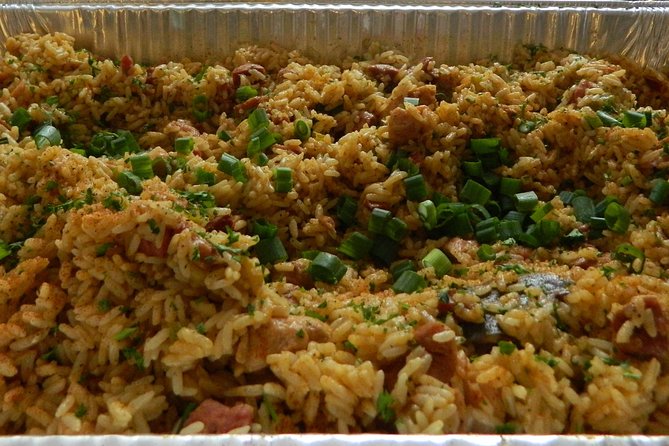
Next is the main dish: chicken and andouille sausage jambalaya. This is the center of the menu and the place where technique matters most.
This is where the class earns its reputation. People praise the step-by-step guidance and the way instruction helps you cook with more confidence, not just copy a result. You’re learning how to manage the cooking process and how to work with the core ingredients that give jambalaya its personality.
Here’s what you’ll likely come away practicing:
- Knife skills and prep discipline: at least one attendee specifically calls out knife skills and timing as part of what they improved.
- How to handle sausage flavor: andouille brings a bold profile, and you’ll learn how it affects the dish as it cooks.
- Building a satisfying finish: the point isn’t only to make it taste right in the moment. The goal is to understand what makes it work so you can repeat it.
If you’re worried about being a beginner, this is still a good fit. The class is designed to teach you, and the instruction style is described as patient, methodical, and encouraging.
Course 3: Chocolate bread pudding with brandy mocha sauce dessert
Then you finish with dessert: chocolate bread pudding with brandy mocha sauce. Bread pudding sounds straightforward, but it’s one of those dishes where the details matter, like how you combine elements and how you bake it to get the right texture.
This course gets extra love in the feedback. People mention it as a standout, and one memorable moment described involves a student suggesting extra chocolate chips on top of the loaf before baking, which the instructor liked enough to adopt. That tells you two things:
- the chef pays attention to your ideas
- the baking and assembly process is interactive, not passive
For you, this means you’ll leave with a dessert you can actually reproduce without needing a professional kitchen.
Chef-led teaching and the conversations that make it stick
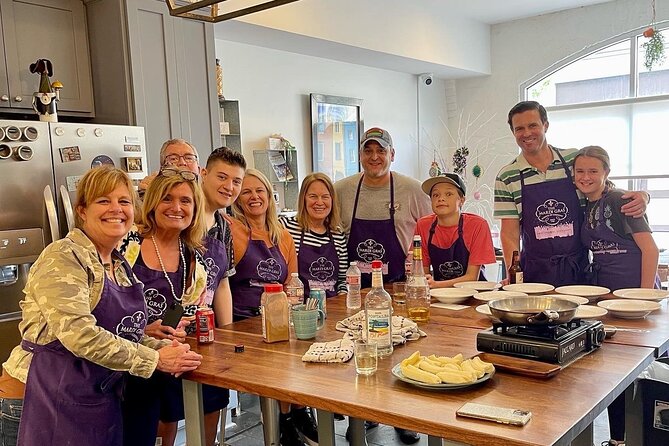
A cooking class only works when the teacher makes you feel capable. Here, the chefs show up as personable and fun, with stories and background built into the lesson.
The names that come up include Chef Mark, Chef Raymond, Chef Jason, Chef David, Preston, and instructors such as Erika, with hosts like Tracey also mentioned. Even when different chefs run different sessions, the consistent theme is engagement—chefs keep the room talking, keep the steps clear, and add extra context about New Orleans and Louisiana food.
I like that the teaching blends:
- practical cooking technique
- seasoning guidance you can use later
- a sense of place, so you understand what Cajun food is and where it came from
That combo is why people score the class so highly. It’s not only tasty. It’s sticky learning.
What you’ll likely take home for your own cooking
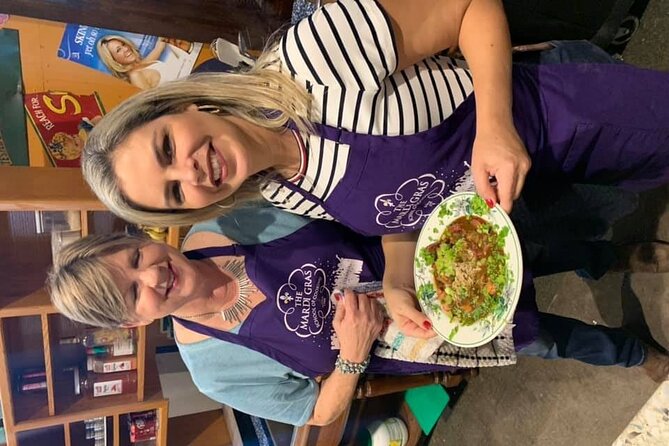
You’ll definitely eat well. But the bigger win is what you can repeat.
Based on the teaching style people praise, expect to gain:
- technique confidence (step-by-step coaching you can reference later)
- seasoning tricks that help you improve everyday cooking
- timing habits so you don’t overcook or rush the wrong step
- real-world plating and serving so the meal looks like you meant it
Also, the class setup sounds designed for learning: a clean space, organized layout, and clear pacing. That reduces stress and lets you focus on what the chef is showing.
One note to consider: because the menu is built around three courses, it’s intense during those dishes. If you want a longer list of tips for dozens of Cajun foods, you may wish there were more breadth. For many people, though, the focus is exactly what makes the class feel effective.
Where it is and how to plan your day
The class meets at 519 Wilkinson St, New Orleans, LA 70130. It’s near public transportation, which helps if you’re using transit or want to avoid hunting for parking.
This is also an easy add-on to a sightseeing day in the area. Many people talk about it as a great way to spend a few hours in the French Quarter neighborhood, especially if you want something hands-on that still feels distinctly New Orleans.
Two practical planning tips:
- Go hungry. You’re eating what you cook, and the portions are described as plenty.
- If you have any food restrictions, let the organizers know in advance. One person mentions the class handled minor restrictions.
Is this good for families, couples, or solo travelers?
This class is a strong match for people who want to do something social without turning it into a party event.
Couples often like it because you cook together, then share the meal you made. It’s also a low-stress way to talk while doing an activity.
Friends like it because the max-10 format makes conversation easy. People also highlight the group experience as a big part of the fun.
Families can work well too, especially if you want a structured activity that ends with real food. One note mentions an 11-year-old enjoying it, which suggests it can suit curious younger cooks when the pace and instruction stay clear.
Solo travelers should also consider it. Small group sizes mean you’re not isolated, and the chef interaction is a big part of what people rave about.
If you’re picky about alcohol in food: the dessert sauce is described as brandy mocha sauce. The tour data doesn’t say if it’s optional or adjustable, so you’ll want to ask before booking if that matters for your diet.
Should you book this Cajun cooking class?
Book it if you want a hands-on New Orleans experience with real chef coaching, not just a one-time tasting. The combination of three traditional courses, a small max-10 group, and repeatedly praised chefs like Mark, Raymond, Jason, David, and Preston is exactly what turns cooking into a memorable day.
Pass or think twice if you want a wide variety of Cajun recipes beyond three dishes, or if you’re very sensitive about ingredients like brandy in the dessert sauce. In that case, ask questions before you sign up.
If you like learning by doing, you’ll likely love this one. You’ll leave with skills you can use at home and a meal that tastes like you earned it.
FAQ
How long is the Cajun traditions cooking class?
The class lasts about 3 hours.
What is the price per person?
It costs $163.85 per person.
Where does the class meet in New Orleans?
It starts at 519 Wilkinson St, New Orleans, LA 70130, USA, and it ends back at the meeting point.
How many people can join the class?
There’s a maximum of 10 travelers.
Is the class offered in English?
Yes, it’s offered in English.
What dishes are included in the cooking menu?
You’ll cook and eat three courses: barbecue shrimp (New Orleans style), chicken and andouille sausage jambalaya, and chocolate bread pudding with brandy mocha sauce.
Is there a mobile ticket?
Yes, the tour includes a mobile ticket.
Is it near public transportation?
Yes, it’s near public transportation.
What is the cancellation policy?
You can cancel up to 24 hours in advance for a full refund.