REVIEW · HOI AN
Hoi An: Bay Mau Cooking Class w/ Market & Basket Boat Option
Book on GetYourGuide →Operated by Sky Travel · Bookable on GetYourGuide
A coconut boat and cooking, tied together. I love the hands-on traditional prep you do yourself, from pounding and grinding to making rice paper and rice milk. It’s the kind of class where technique matters, not just eating.
I also like the option to add a market visit and a bamboo basket boat ride through Bay Mau and the coconut forest. You get a scenic break from Hoi An’s center, plus the class happens in open air with plenty of fans.
One thing to consider: heat and timing. The cooking is outdoors, and if you choose the afternoon slot the market stop can be limited since it’s often mostly closed.
In This Review
- Key things I’d pencil in first
- Bay Mau Cooking Class in Hoi An: Why This One Feels Different
- Morning vs Afternoon Slots: Market Time and What You’ll Trade
- The Local Market Stop: Buying Ingredients Like a Food Nerd (In a Good Way)
- Cam Thanh Coconut Village and the Basket Boat Ride
- Inside the Cooking Session: Tools, Techniques, and Real Steps
- The 4 Courses: Pho and the Dishes You Can Recreate
- Drinks and Comfort: Staying Hydrated in the Coconut Forest Heat
- Price and Value: Why This One Hits Around $25
- Who Should Book, and Who Might Skip
- Should You Book Bay Mau? My Take
- FAQ
- How long is the Bay Mau Cooking Class in Hoi An?
- What dishes do you cook?
- Is there an option for a market visit and basket boat ride?
- What drinks are included?
- Does the price include pickup and drop-off?
- What food is included in the tour?
- Is the market stop available for both morning and afternoon?
- Can the class handle dietary restrictions?
- What should I bring, and is it wheelchair friendly?
Key things I’d pencil in first
- Rice paper and rice milk, made the traditional way using stone tools and wooden pestles
- 4 courses you actually cook, including pho (beef noodle soup)
- Market + bamboo basket boat option for Cam Thanh coconut village time
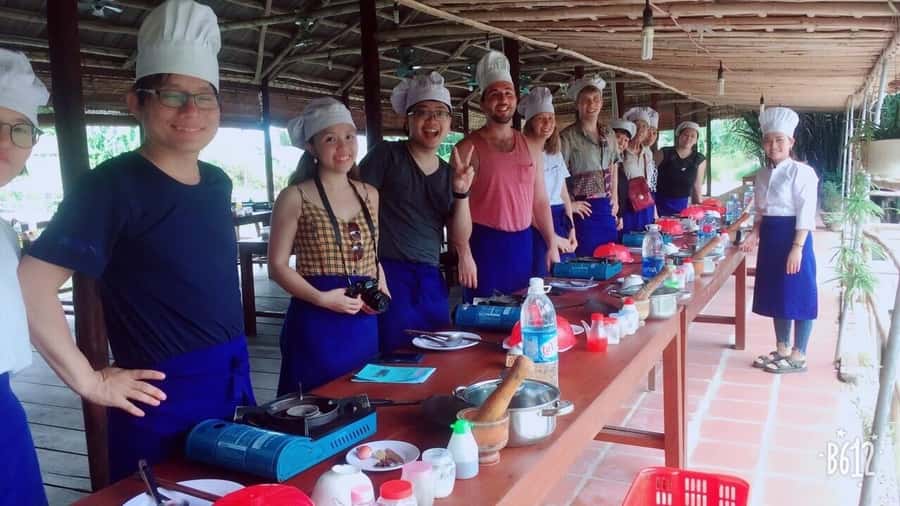
- Open-air class setting in the coconut forest, with views and airflow
- English instruction from guides like Trang, Mo, and Kieu, with clear, step-by-step teaching
- Diet adjustments available, including gluten-free and vegetarian-style swaps
Bay Mau Cooking Class in Hoi An: Why This One Feels Different
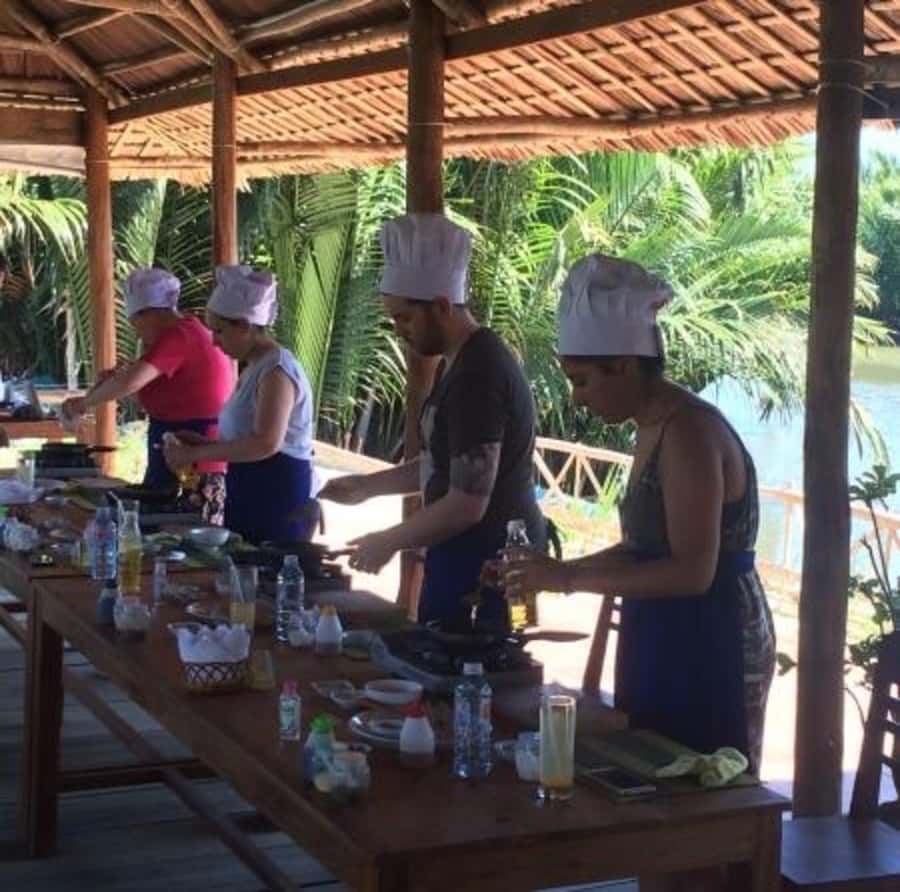
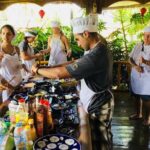
Hoi An is full of cooking classes, but this Bay Mau option sticks closer to how Vietnamese cooks actually work. You don’t just watch someone else do the prep. You do it: pounding, separating, grinding, and using traditional utensils like stone mortars, grinders, and wooden pestles.
That hands-on approach is what makes the learning stick. When you later order food in Vietnam (or try it at home), you’ll understand why certain textures and steps matter. It’s also why the class feels more like a workshop than a show.
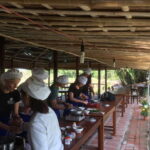
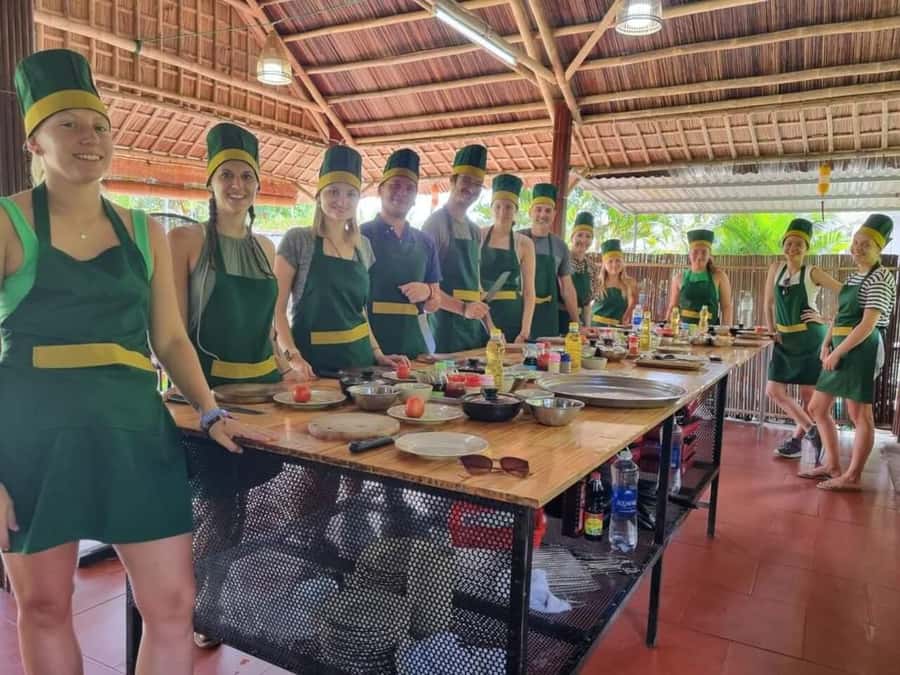
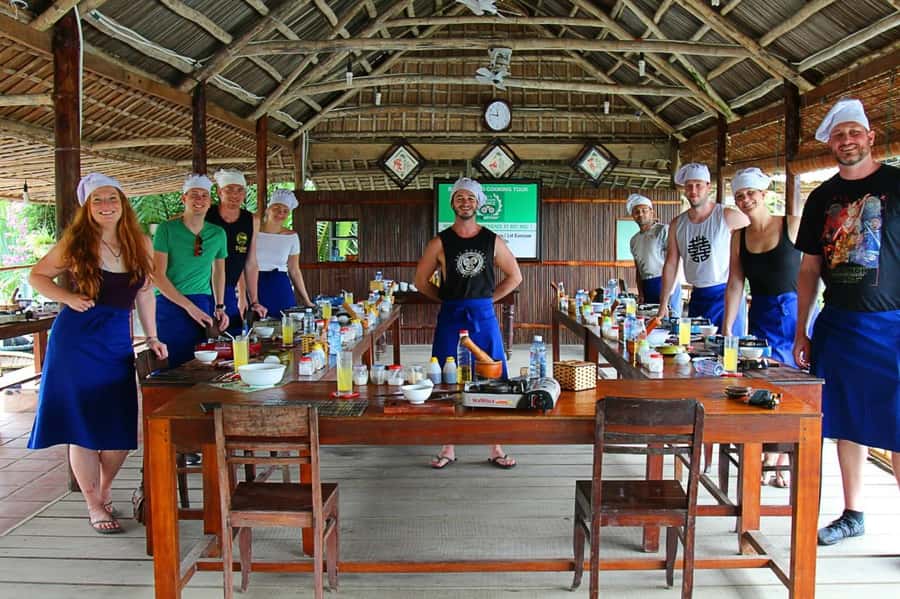
And the setting helps. The class takes place inside the coconut forest area, with outdoor cooking spaces, views, and plenty of ventilation. Even if it’s warm, it’s not the stuffy indoor kind of heat.
You can also read our reviews of more tours and experiences in Hoi An.

Morning vs Afternoon Slots: Market Time and What You’ll Trade
You’ve got a choice: a morning slot where you eat a lunch, or an afternoon slot where you eat a dinner. Either way, you’re spending about 3 hours (up to 330 minutes) total, and you’ll be guided in English by your chef.
Here’s the practical bit: if you pick the afternoon option, expect the market stop to be mostly closed. That means you may miss some of the usual browsing and ingredient-hunting vibe. If you love the idea of seeing herbs and choosing fresh items yourself, the morning tends to be the better bet.
Also, remember the whole experience runs outdoors. So even with fans, be ready for humidity and warm cooking conditions. Wear comfortable shoes, because you’ll be moving between activities and cooking stations.
The Local Market Stop: Buying Ingredients Like a Food Nerd (In a Good Way)
If you select the market option, you’ll head to a local market first, then use those ingredients for your class. This isn’t just a quick look-around. The market time is built around helping you understand the main parts of Vietnamese cooking: fresh herbs, aromatics, and the ingredients that shape each dish.
You’ll get guidance on what to look for and how different items contribute to flavor and texture. That’s useful even if you never try to cook pho at home the same exact way. You start recognizing the building blocks.
A small but smart detail: the class menu includes dishes like pho, plus other typical Vietnamese favorites. When you buy the right components up front, the cooking session makes more sense. You’re not guessing why the taste comes out the way it does.
If your goal is to learn ingredients you can recreate later, don’t shorten this part.
Cam Thanh Coconut Village and the Basket Boat Ride
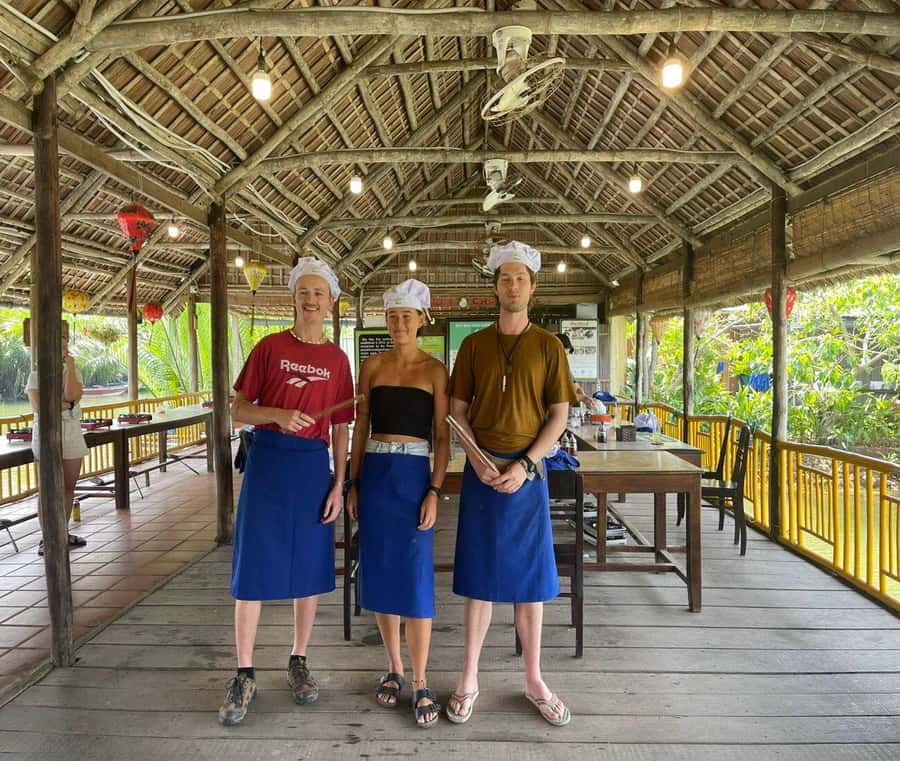
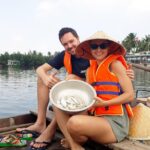
Choose the option for the coconut village and bamboo basket boat ride, and you’ll head to Cam Thanh. In that coconut forest area, you can explore the Bay Mau coconut palms and do activities like fishing before returning for the cooking class.
The boat part is memorable because it’s simple and scenic. You’re sitting on a bamboo basket boat in the coconut forest waterway, moving through a setting that feels far from the traffic and noise of town. It also breaks up the day so the cooking doesn’t feel like a nonstop workshop.
That said, not everyone wants the boat portion. If you’re the type who prefers pure cooking instruction time, you might feel like the boat is a bit more tourist-facing than the food parts. In that case, consider booking the cooking class option without the boat.
Inside the Cooking Session: Tools, Techniques, and Real Steps
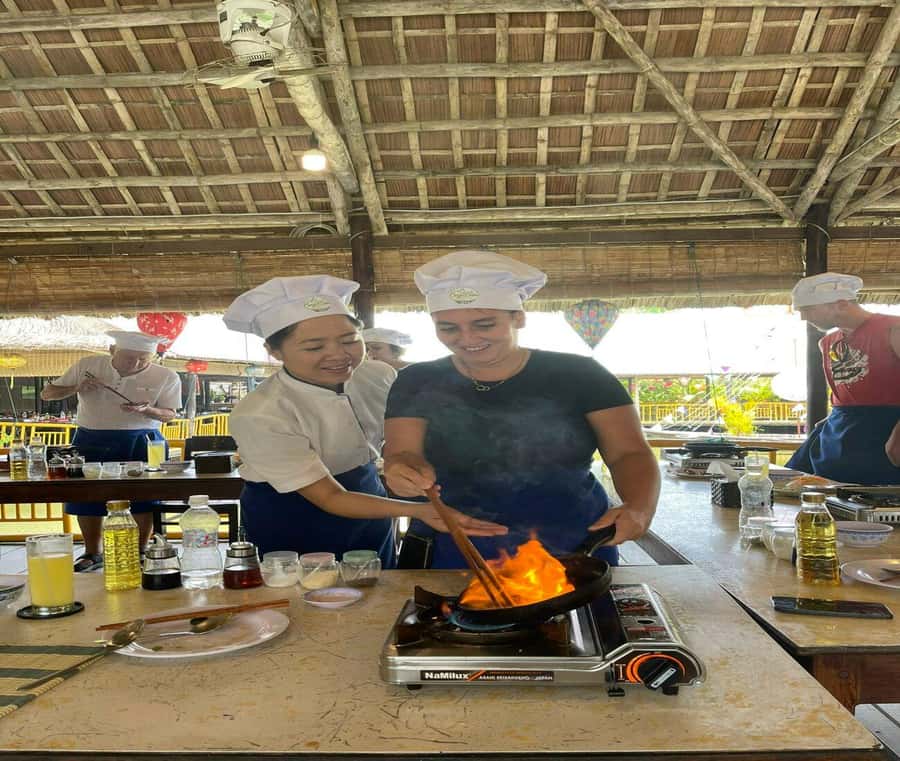
This is where the class earns its high marks. Your chef-guide shows you traditional methods you can’t really learn from a recipe video.
You’ll practice:
- pounding and separating rice-based ingredients
- grinding rice to make rice milk
- making rice paper
And you do it with traditional tools: stone mortar, grinder, and wooden pestle. These are the kinds of tools that shape texture and consistency. When you handle them yourself, you understand why Vietnamese recipes often sound exacting.
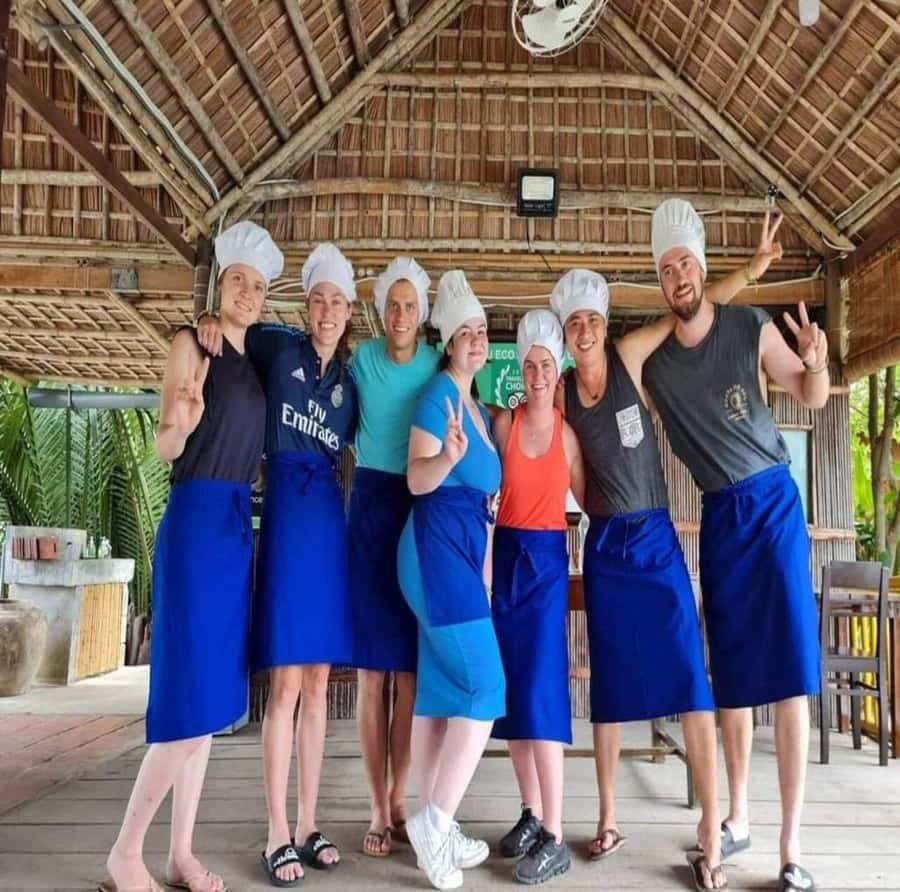
The pace is also structured. Most of the time you get demonstration, then you cook. Many guides, including people named Trang, Mo, Kieu, Dim, and Hon, are praised for clear English and patient instruction. Expect a mix of teaching and turn-taking, not just standing in line for a meal.
The environment is outdoor, but they manage airflow well, and you cook under ventilators. One review even notes the terrace-style setup, with a wooden roofed area for the class.
The 4 Courses: Pho and the Dishes You Can Recreate
The cooking class includes 4 courses, and pho (beef noodle soup) is specifically mentioned. Beyond that, the menu can include other classic Vietnamese dishes, and some examples show up clearly in the program experience.
From what you may cook, you can expect dishes like:
- beef salad
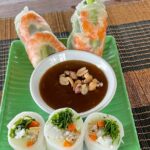
- prawn fresh rolls
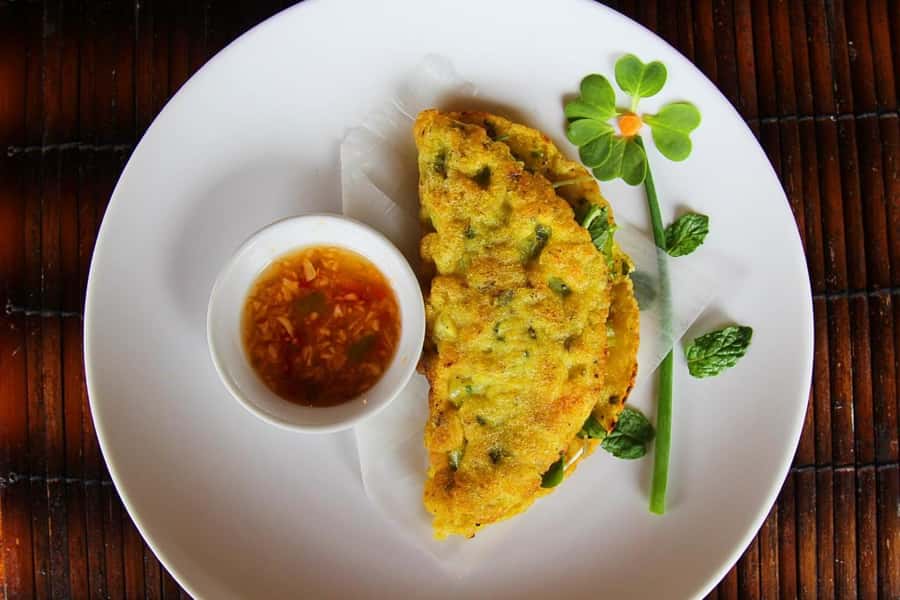
- crispy pancakes
- pho (beef noodle soup)
If you’re worried about complexity, don’t. The teaching approach is hands-on and guided, and you get step-by-step instructions for each dish. The goal isn’t only to eat. It’s to leave with enough method knowledge to try again later.
Also, the class meal is part of the experience: you’ll taste what you cook. With 4 courses, you usually leave properly fed. Some people even say it’s a better idea than doing a big breakfast right before.
Drinks and Comfort: Staying Hydrated in the Coconut Forest Heat
You get unlimited mineral water and unlimited passion fruit juice during the class. That matters more than it sounds, because you’re cooking outdoors in warm conditions.
You’ll sip between steps, and that little break helps you pace yourself while learning. It’s also a nice contrast to the savory flavors you’re making. Passion fruit juice is refreshing without being too sweet, and it’s an easy way to keep going when your hands are busy with prep.
Comfort-wise: bring comfortable shoes. You’ll likely be on uneven ground at the coconut village area and moving between market, boat (if chosen), and the cooking area. Beyond that, dress for heat and humidity, but the class itself is set up to keep air moving.
Price and Value: Why This One Hits Around $25
At $25 per person for about 3 to 3.5 hours, the value comes from combining three things that are often separate activities elsewhere: ingredient shopping, a culture add-on (basket boat), and a serious hands-on cooking workshop.
Many cooking classes give you a single dish or mostly watch-and-taste. Here, you cook 4 courses and you learn traditional prep skills like rice milk and rice paper. That’s the core value. It’s not only about the food you eat today. It’s the techniques you can reuse.
On top of that, you get included drinks, lunch or dinner depending on the slot, and chopstick souvenirs. Pickup and drop-off is included when the option is selected, which reduces hassle in a city where you may not want to coordinate multiple transfers.
The only real “cost” is time and heat. If you can handle a warm outdoor class, you’ll probably feel like you got a lot for the money.
Who Should Book, and Who Might Skip

This class is a great fit if you:
- want to learn Vietnamese technique, not just follow a cooking demo
- like interactive instruction and want clear English guidance
- enjoy scenic day trips from Hoi An, especially around the coconut forest area
- want practical recipes for later, including dishes like pho
You might skip or adjust expectations if:
- you don’t want any outdoor cooking in warm weather
- you dislike the boat portion and prefer pure cooking time (then choose the cooking class option only)
- you need wheelchair-friendly access, since the class isn’t suitable for wheelchair users
- you’re traveling with pets, since pets aren’t allowed
Diet needs can be handled in at least some cases. Gluten-free participants have been accommodated, and vegetarian-style substitutions like tofu and mushrooms have been suggested. If you have a serious allergy, it’s smart to mention it in advance so your chef can plan.
Should You Book Bay Mau? My Take
If your ideal day in Hoi An includes both food learning and a real local setting, I’d book it. The strongest reason is the combination of traditional tools plus four dishes plus step-by-step English teaching. Even if pho is familiar to you, making rice paper and rice milk gives you new skills, not just a full stomach.
Choose the market-and-boat option if you want the broader cultural day: buying ingredients, then a boat ride through the coconut forest before you cook. Choose cooking-only if you’re time-tight or you’d rather keep the day focused on the kitchen.
If you’re going in the afternoon, treat the market stop as smaller. Plan your expectation around that, and you’ll still get the main event: hands-on Vietnamese cooking in a beautiful outdoor space.
FAQ
How long is the Bay Mau Cooking Class in Hoi An?
It runs about 3 hours, listed as 3 hours to 330 minutes.
What dishes do you cook?
Pho (beef noodle soup) is included, along with three other Vietnamese dishes. Examples mentioned include beef salad, prawn fresh rolls, and crispy pancakes.
Is there an option for a market visit and basket boat ride?
Yes. You can select the option that includes a local market visit and a bamboo basket boat trip in the coconut village area.
What drinks are included?
Unlimited mineral water and unlimited passion fruit juice are included.
Does the price include pickup and drop-off?
Pickup and drop-off are included if that option is selected.
What food is included in the tour?
Depending on the slot, you’ll have lunch for the morning option or dinner for the afternoon option, and you’ll eat the dishes you prepare.
Is the market stop available for both morning and afternoon?
For the afternoon option, the market is mostly closed.
Can the class handle dietary restrictions?
Adjustments are available for diet types and allergies. Examples include catering for gluten-free needs and vegetarian substitutions like tofu and mushrooms.
What should I bring, and is it wheelchair friendly?
Bring comfortable shoes. It is not suitable for wheelchair users, and pets are not allowed.