REVIEW · SEOUL
Seoul: Korean Cooking Class at a Local Home and Market Tour
Book on GetYourGuide →Operated by HELLO K COOKING · Bookable on GetYourGuide
Cooking with locals beats classroom lessons. I love the market-first shopping that shows what people actually buy, and I love the hands-on chef-guide time in a real home setting. One thing to plan for: there is no elevator to reach the kitchen.
This is a 3.5-hour class with a small group (max 10), starting at Mangwon Station and ending back there. You’ll cook 4 dishes, then sit down for a true Korean course meal style setup with lots of side dishes and rice wine.
If you’re expecting a quick photo stop and a seat-by-seat show, this won’t feel that way. It’s better as a practical, do-it-yourself food lesson with a bit of culture built in.
In This Review
- Market-First Magic at Mangwon (and World Cup) Market
- From Mangwon Station to a Local Kitchen (No Elevator Means Plan Ahead)
- Cooking Class Rhythm: Watch, Cook, and Actually Learn
- Bibimbap: The Art of the Bowl
- Dakgalbi: Stir-Fry That Teaches Timing
- Haemul-Pajeon: A Pancake You Can Read by Look and Sound
- Doenjang-Jjigae: Comfort From Fermented Soybean Paste
- Hanjeongsik Dinner: Over 10 Side Dishes, Seasonal Fruit, and Rice Wine
- Tal Mask Moment: A Funny, Photo-Friendly Culture Break
- Price and Value for $98: What You’re Really Paying For
- What to Know Before You Go (So the Class Feels Easy)
- Who This Cooking Class Fits Best
- Should You Book This Seoul Cooking Class?
- FAQ
- FAQ
- What dishes will I learn to cook?
- How long is the cooking class?
- Where do I meet the guide?
- Is there hotel pickup or drop-off?
- What languages does the instructor speak?
- Is the group limited in size?
- Is the venue wheelchair accessible?
- Do I need to tell the host about allergies?
- Can I cancel for a full refund?
Market-First Magic at Mangwon (and World Cup) Market
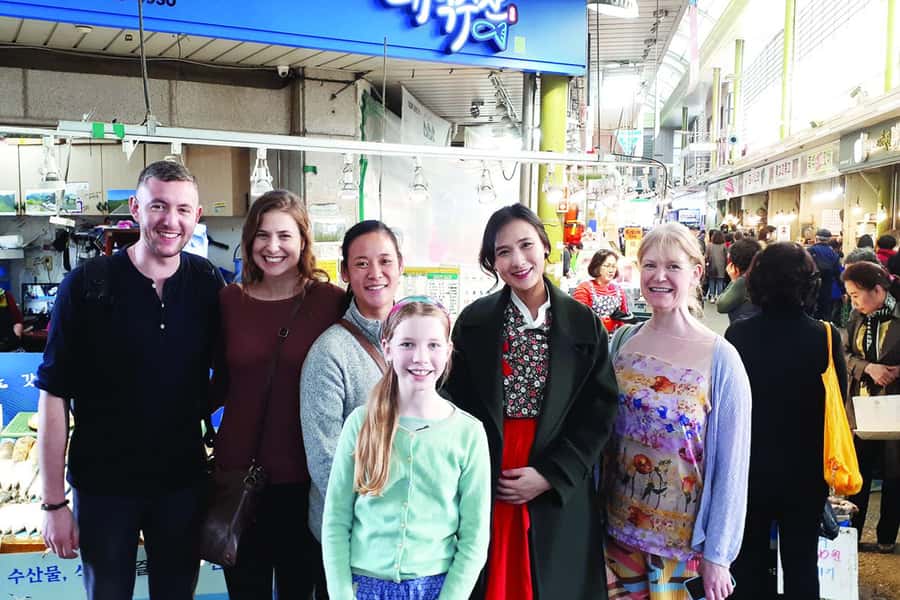
The day starts with walking through a traditional Seoul market, the kind where you learn ingredients by seeing them in context. Your chef-guide helps you choose what matters for the dishes, not just what looks good in a store display. You’ll also taste street food samples, which is a smart way to understand flavors before you cook them.
I like this approach because it answers the real questions: what is that ingredient, what does it taste like, and why does Koreans treat it as essential? It also makes the cooking class feel more grounded. You’re not memorizing recipes, you’re connecting ingredients to dishes.
One practical note: it is time on your feet. Wear comfortable shoes and plan for some walking during the market portion.
From Mangwon Station to a Local Kitchen (No Elevator Means Plan Ahead)
You meet your guide at Mangwon Station, exit 2 (outside). From there, you’ll head to the cooking venue in Gyeonggi Province (a local home), and you’ll return to the meeting point at the end.
A big logistics point: there is no elevator to get up to the home. If stairs are an issue for you, factor that in before you book. Also, there’s no hotel pickup or drop-off, so you’ll need to make your own way to the meeting point.
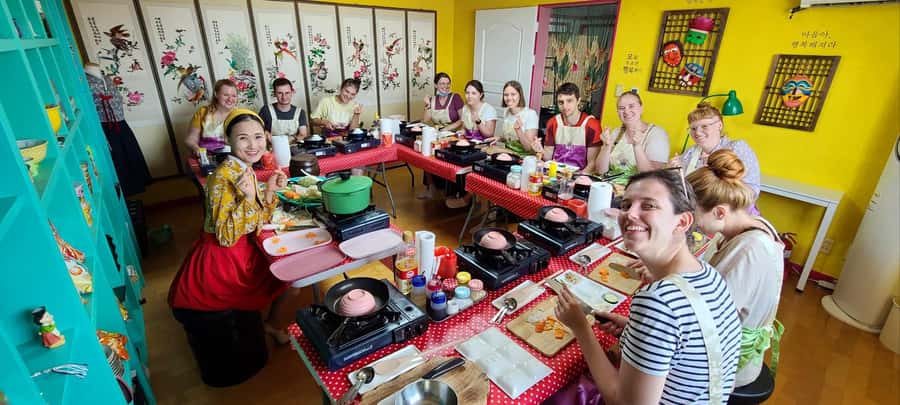
Once you arrive, expect a welcome tea and a quick warm-up before the cooking starts. You’ll also learn a few Korean phrases, which is useful in the moment and makes the meal feel more like part of daily life rather than a scripted activity.
You can also read our reviews of more tours and experiences in Seoul.
Cooking Class Rhythm: Watch, Cook, and Actually Learn
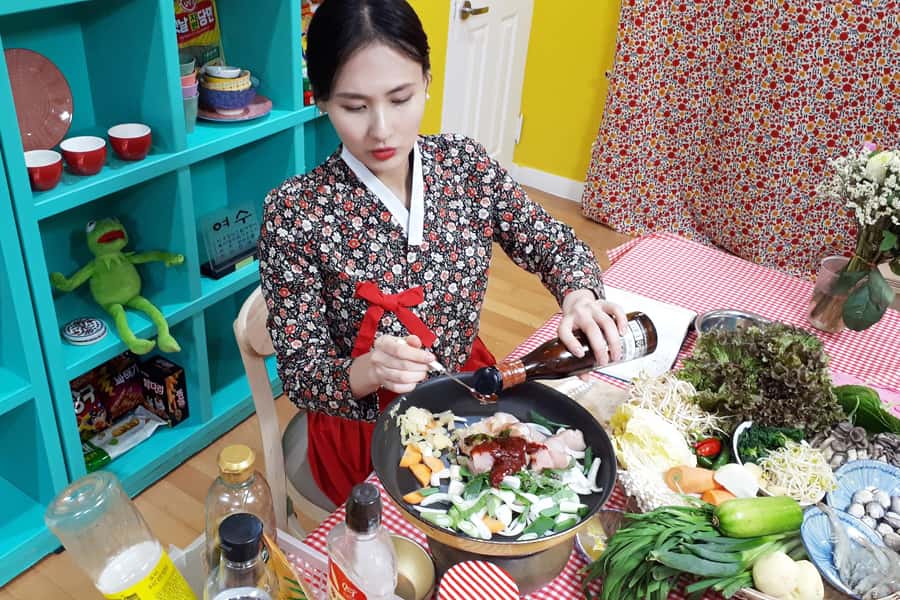
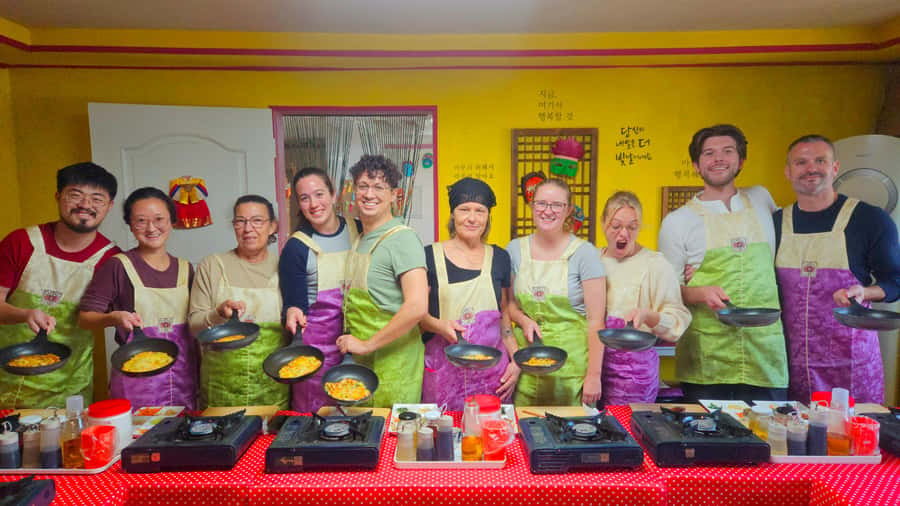
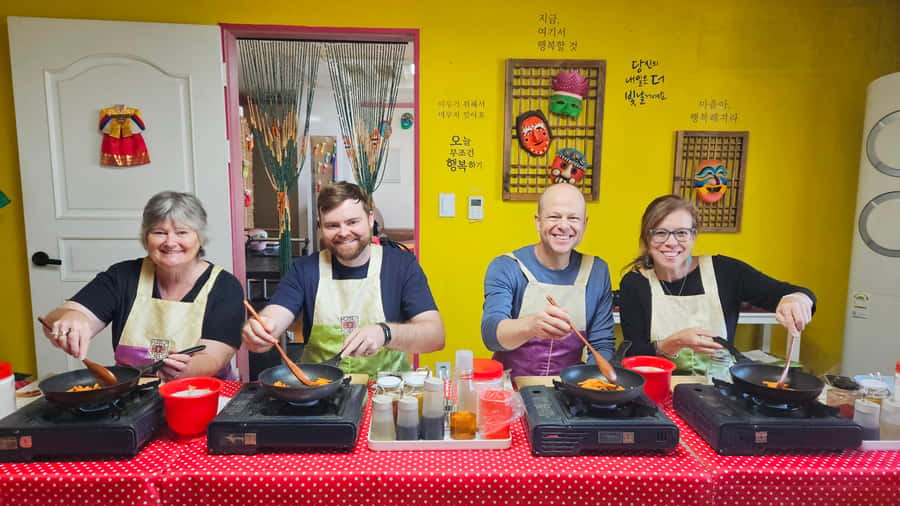
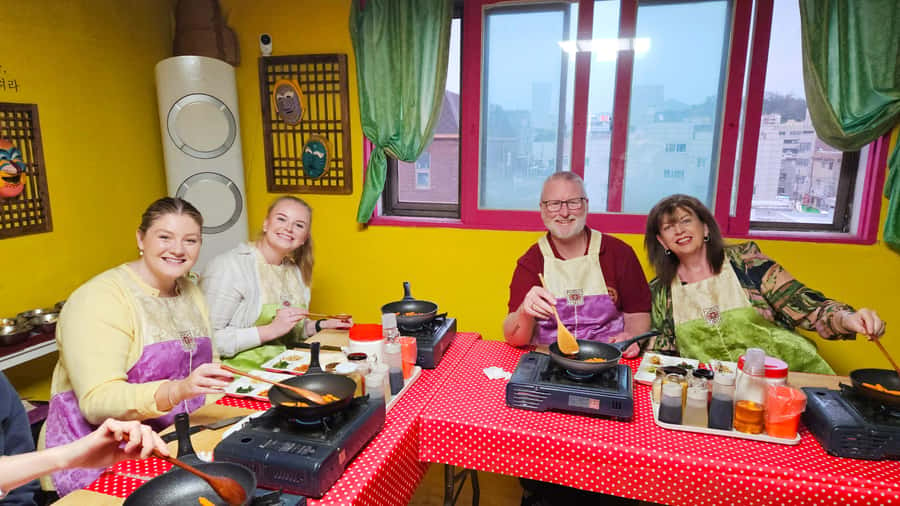
This class is built around doing. With a small group capped at 10 participants, you typically get more attention and clearer guidance than in a large cooking tour. The instructor is English and Korean, which matters because it lets you ask questions without losing nuance.
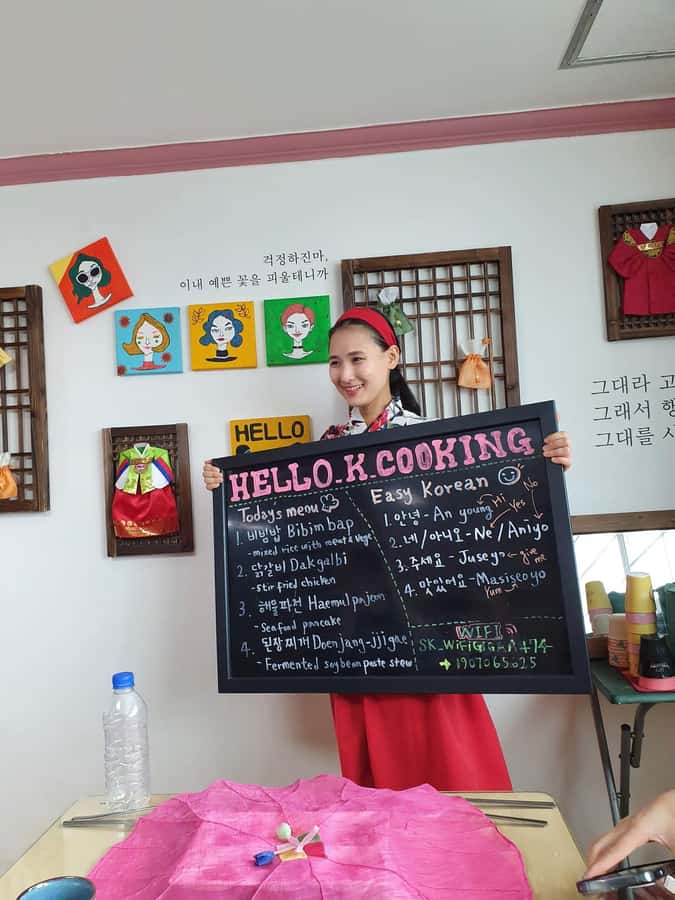
You’ll prepare 3 main dishes and 1 stew:
- Bibimbap (mixed rice with meat and vegetables)
- Dakgalbi (stir-fried chicken)
- Haemul-Pajeon (seafood and green onion pancake)
- Doenjang-Jjigae (fermented soybean paste stew)
What I like about these choices is balance. You get a rice bowl (bibimbap), a go-to street favorite category (pancakes), a spicy-sweet stir-fry (dakgalbi), and then the deep comfort of a fermented base stew (doenjang-jjigae). Together, they cover staples you’ll keep seeing across Korea.
Bibimbap: The Art of the Bowl
Bibimbap is all about assembly and textures. Your chef-guide helps you learn how to combine components so each forkful has variety: warm rice, seasoned toppings, and the sauce vibe that ties it together. Even if you’ve never built a bowl like this, the class format makes it doable.
Dakgalbi: Stir-Fry That Teaches Timing
Dakgalbi is where you learn the mechanics of stir-frying: heat control, seasoning rhythm, and how to keep ingredients lively instead of soggy. This is also a dish that helps you understand Korean flavor layering without needing a huge list of complicated techniques.
Haemul-Pajeon: A Pancake You Can Read by Look and Sound
Haemul-Pajeon (seafood and green onion pancake) is one of the most fun parts because it’s visual and interactive. You’ll be making a pancake that cooks like it’s meant to be crisp at the edges while staying tender inside. Your guide’s instructions matter here because small changes in batter and pan heat shift results quickly.
Doenjang-Jjigae: Comfort From Fermented Soybean Paste
This stew is the flavor backbone of many Korean meals. Doenjang-jjigae teaches you what fermented soybean paste brings: warmth, savoriness, and that slow-cozy effect you can’t fake with shortcuts. It’s also a relief after spicy or rich dishes, since stew is naturally restorative.
Hanjeongsik Dinner: Over 10 Side Dishes, Seasonal Fruit, and Rice Wine
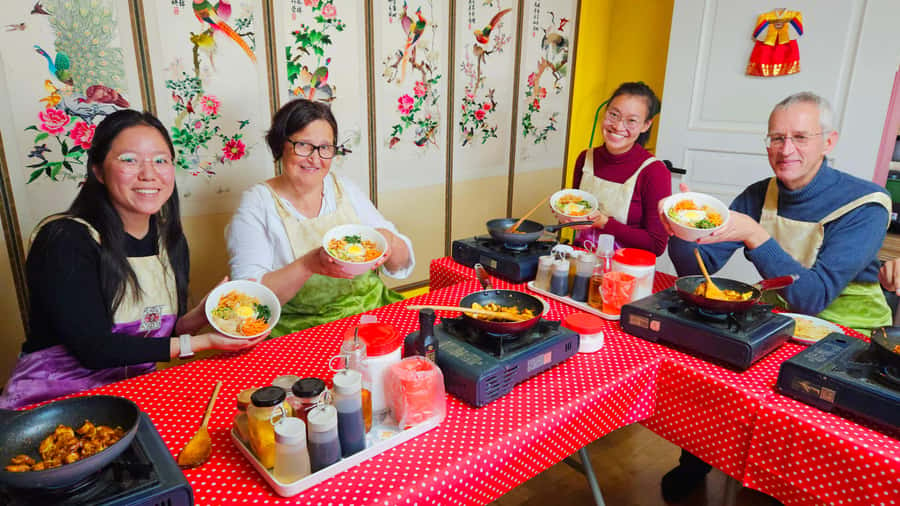
After cooking, you sit down for the meal, and this part is the cultural payoff. You’ll experience Hanjeongsik, a traditional Korean course meal with more than 10 side dishes, plus seasonal fruits and rice wine.
This matters because it shows how Koreans actually eat: you don’t treat food as one main plate. Instead, you build balance across small dishes—salty, tangy, fresh, pickled, and savory—so your meal changes with each bite. It’s also a great way to try variety without needing to order a huge spread yourself.
If you’re a foodie who likes to understand the logic behind meals, this course setup is worth the price alone. Even if you’re not a hardcore Korean-food fan yet, you’ll probably leave with a better sense of what to order next time you’re eating out in Seoul.
And yes, you’ll get rice wine with the dinner. Some people also mention related rice-based sips during the experience, so it’s common for the class to feel lively around the meal time.
Tal Mask Moment: A Funny, Photo-Friendly Culture Break
One of the highlights is trying on a Tal mask. This is worn at many Korean heritage festivals, so it’s not just a random costume. It’s a small cultural moment that connects your meal experience to broader traditions.
It’s also a good reminder that Korean culture isn’t only food. Food can be the doorway, and the Tal mask is a fun nudge into the idea that festivals, art, and local identity shape what you taste and how you celebrate.
Plus, you’ll get photo and video service, so this is one of those moments that will actually make it into your travel album.
Price and Value for $98: What You’re Really Paying For
At $98 per person for about 3.5 hours, this isn’t a bargain class. It is, however, strong value for what you’re getting: market time, street food samples, a chef-guide, ingredients and equipment, a hands-on cooking session for 4 dishes, plus a full course-style meal with more than 10 side dishes and rice wine.
Here’s how I see the value:
- You shop like locals first, then cook what you chose.
- You eat a structured meal (Hanjeongsik), not just a plate of what you made.
- You leave with recipes, so the learning doesn’t stop when you’re full.
One more value factor: it’s a small group. With a max of 10, the experience is less chaotic and more personal, which helps if you’re a beginner or if you want to ask why something tastes the way it does.
What to Know Before You Go (So the Class Feels Easy)
A few details can make or break your comfort level.
- There’s no hotel pickup. You need to get yourself to Mangwon Station exit 2.
- The venue is a local home with no elevator. Plan for stairs.
- If you have allergies or dietary restrictions, you must contact the local host in advance. Don’t assume it’s handled automatically.
- The class includes water, welcome tea, and photos/videos, so you’re not managing those basics during the day.
Also, bring a curious mindset. This isn’t just a cooking demo. Your guide will help you understand ingredients and steps, and you’ll be cooking along the way.
Who This Cooking Class Fits Best
This is ideal if you want:
- A hands-on Korean food experience that goes beyond one dish.
- A market walk that helps you recognize ingredients later.
- A cultural meal format (Hanjeongsik) you can’t easily recreate from memory alone.
It’s especially good for first-timers to Korean cooking. The dishes chosen are common enough that you’ll find ingredients back home, but they’re also specific enough to feel genuinely Korean.
If you’re traveling solo, you’ll still get plenty of interaction because the group is small. If you’re traveling with friends, you can share bites and compare notes between dishes—then trade favorite flavors at the table.
If you hate stairs, or if you need an accessibility-friendly venue, this is the one caution flag to take seriously.
Should You Book This Seoul Cooking Class?
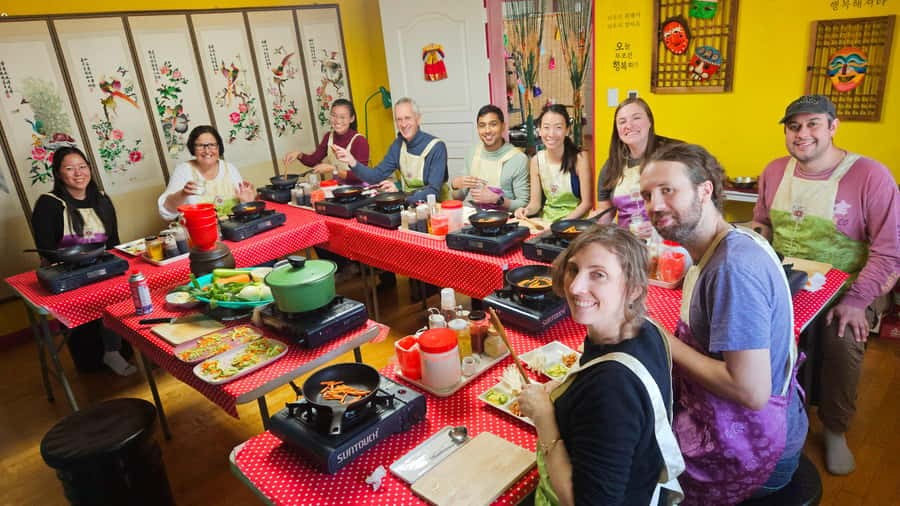
Yes, I think you should book it—if you want a practical, tasty Korean experience that connects market shopping to real cooking and then to a full course meal format.
Book it especially if:
- You like learning by doing, not just watching.
- You want four dishes across rice, stir-fry, pancakes, and stew.
- You’re excited to try Hanjeongsik with lots of side dishes and rice wine.
- You value a small-group setting with English support (English and Korean).
Skip it if stairs are a hard no, or if you’re mainly looking for a quick sightseeing activity with minimal participation.
FAQ
FAQ
What dishes will I learn to cook?
You’ll prepare bibimbap, dakgalbi, haemul-pajeon, and doenjang-jjigae as part of the class.
How long is the cooking class?
The experience runs for 3.5 hours.
Where do I meet the guide?
You meet at Mangwon Station, exit 2 (outside).
Is there hotel pickup or drop-off?
No. You are responsible for getting to and from the meeting point on your own.
What languages does the instructor speak?
The instructor provides instruction in English and Korean.
Is the group limited in size?
Yes. It’s a small group limited to 10 participants.
Is the venue wheelchair accessible?
The information provided notes there is no elevator to get up to the local home, so stairs are involved.
Do I need to tell the host about allergies?
Yes. You’re asked to contact the local host for any dietary restrictions and allergies.
Can I cancel for a full refund?
Free cancellation is available up to 24 hours in advance for a full refund.