REVIEW · KYOTO
Kyoto Udon & Tempura Cooking Class with Professional Chefs
Book on GetYourGuide →Operated by MagicalTrip · Bookable on GetYourGuide
Handmade noodles take over your whole afternoon. In Kyoto, this small-group class turns flour and water into chewy udon under a local master’s watch, with an English guide keeping everything clear and calm. You get the fun of doing it yourself, then you actually sit down and eat what you made.
I especially like the way it focuses on skills you can reuse: kneading and rolling udon dough by hand, then learning how to build your rice base for Inari Sushi and onigiri. The class also covers tempura, so you’re not just watching a demo you’ll be frying your own crisp bites.
One thing to consider: the experience can run more like a preparation-focused lesson than a full cooking-from-start-to-finish marathon. Based on real experiences shared afterward, you may spend most of your time on dough making (and possibly dipping/frying steps) rather than every component being cooked from scratch, and the total time can feel shorter than the longer end of the description.
In This Review
- Key things that make this Kyoto cooking class worth it
- Kyoto’s comfort-food trio: udon, Inari Sushi, and tempura
- Finding the kitchen: meeting at 7-Eleven Kyoto Kawaramachi-Takoyakushi
- Udon from scratch: kneading and rolling for that chewy pull
- Inari Sushi and onigiri rice: shaping seasoned comfort into forms
- Tempura practice: how to get crisp results (and what to watch)
- Mini sake tasting: pairing your meal without turning it into a ceremony
- What you actually get at the end: English recipes and photo keepsakes
- Small group energy: up to 8 people, and why that matters
- Timing reality check: 2 hours on paper, lesson pace in practice
- Value for $83: what you’re paying for (and what you’re getting back)
- Who this class is best for (and who should think twice)
- Should you book this Kyoto udon and tempura class?
- FAQ
- How long is the Kyoto Udon & Tempura Cooking Class?
- What dishes will I make in the class?
- Do I need prior cooking experience?
- Is the class taught in English?
- Where do I meet for the tour?
- Are drinks and recipes included?
Key things that make this Kyoto cooking class worth it
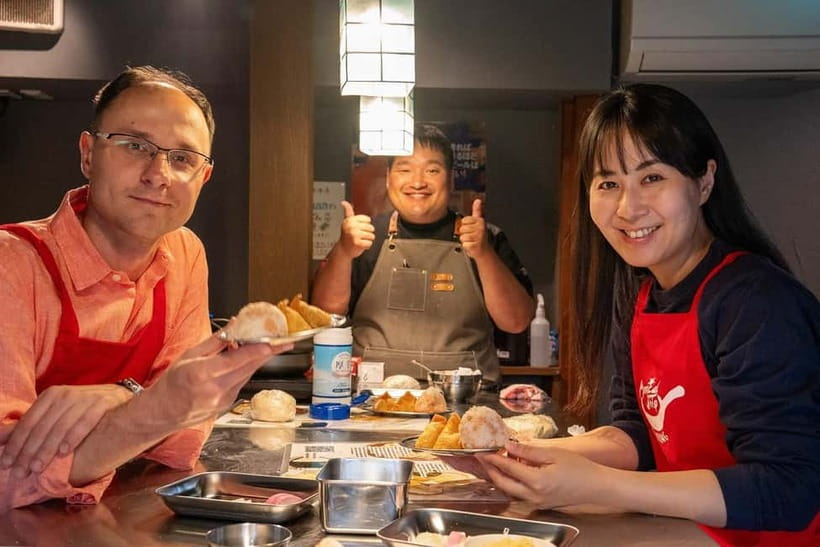
- Udon dough by hand: knead, roll, and shape so you understand the texture that makes udon feel right
- Rice technique for Inari Sushi and onigiri: season and shape fresh, then turn it into actual food you’ll eat
- Tempura practice: you learn the frying rhythm and how to get that golden crunch
- English support with a local master: you get the how-to without getting lost in translation
- Mini sake tasting included: a small, fun pairing that fits the meal
- Take-home English recipes and photos: you have a reference point after you leave the kitchen
Kyoto’s comfort-food trio: udon, Inari Sushi, and tempura
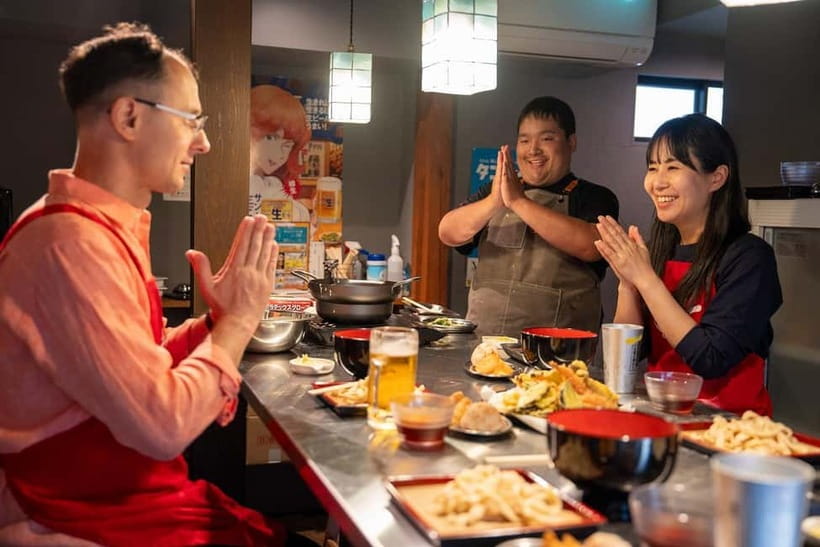
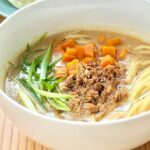
This class is built around three Japanese favorites that are easier to understand when you make them with your own hands. Udon gives you a foundation for chew, Inari Sushi shows you how Japanese rice can be shaped into quick forms, and tempura teaches you the contrast between light batter and hot oil.
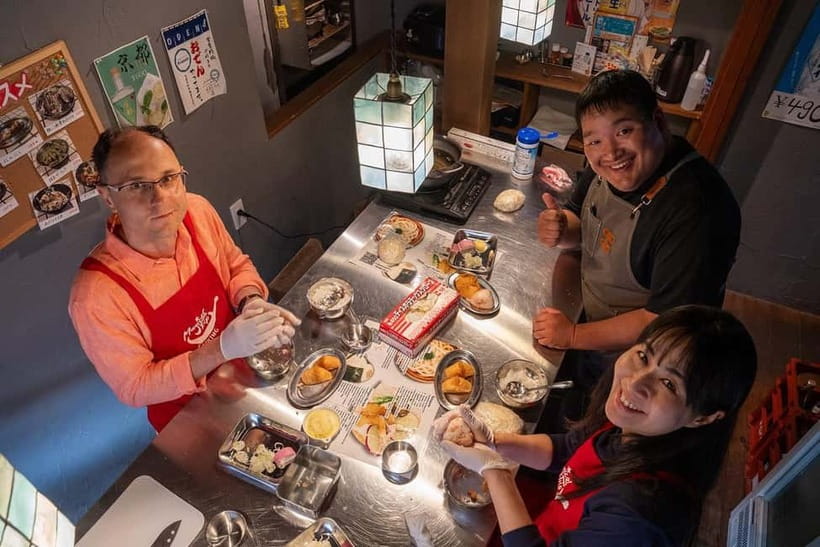
The best part is that the meal isn’t an afterthought. You prepare multiple components, then you eat them together. That makes it feel like a real meal experience, not a short demo where you leave hungry.
And yes, it’s “English-friendly.” The guide is there to translate cooking terms, explain what matters, and help you keep moving through the steps without stress.
You can also read our reviews of more tours and experiences in Kyoto.
Finding the kitchen: meeting at 7-Eleven Kyoto Kawaramachi-Takoyakushi
You meet at a 7-Eleven—Kyoto Kawaramachi-Takoyakushi. It’s a practical choice, since it’s easy to spot and easy to navigate to whether you’re coming from Kyoto-Kawaramachi Station (Exit B3) or Gion-Shijo Station (Exit 3).
Why I like this meeting point: it helps you avoid a classic Kyoto problem—getting stuck trying to match vague directions to a maze of streets. A short walk from a major station is exactly what you want for a scheduled food class.
Udon from scratch: kneading and rolling for that chewy pull
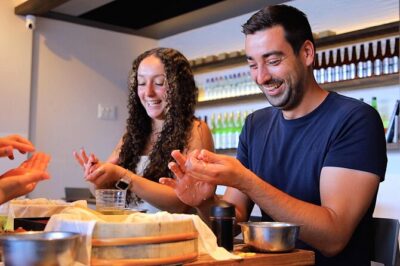
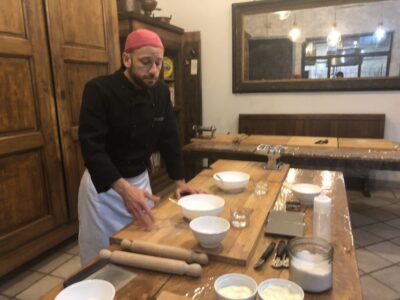
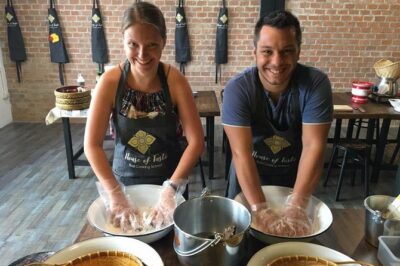
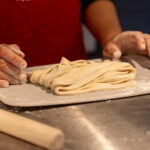
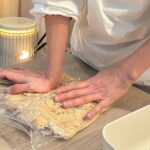
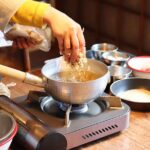
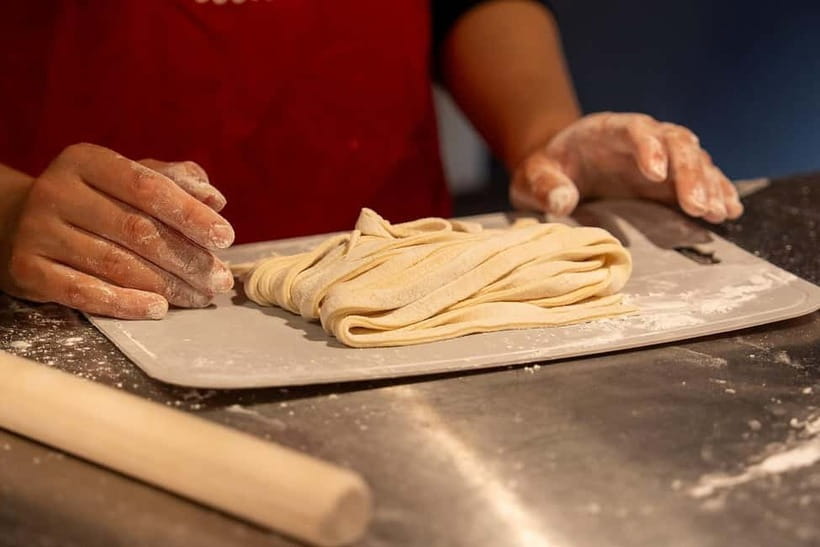
Expect the udon portion to be tactile and learn-by-doing. You start with basic ingredients (flour and water) and build dough through mixing, kneading, and rolling. This is the part that many people remember, because you can feel the dough change under your hands.
Here’s what you’re really learning beneath the surface:
- How gluten development affects chew (you can feel it as the dough firms up)
- Why thickness matters when you roll—too thick and it won’t have that familiar bite, too thin and you lose the texture
- How shaping and cutting create consistent strands for eating
You’ll also likely spend time understanding dough handling, not just making it once and moving on. That skill matters if you want to try this at home later.
Inari Sushi and onigiri rice: shaping seasoned comfort into forms
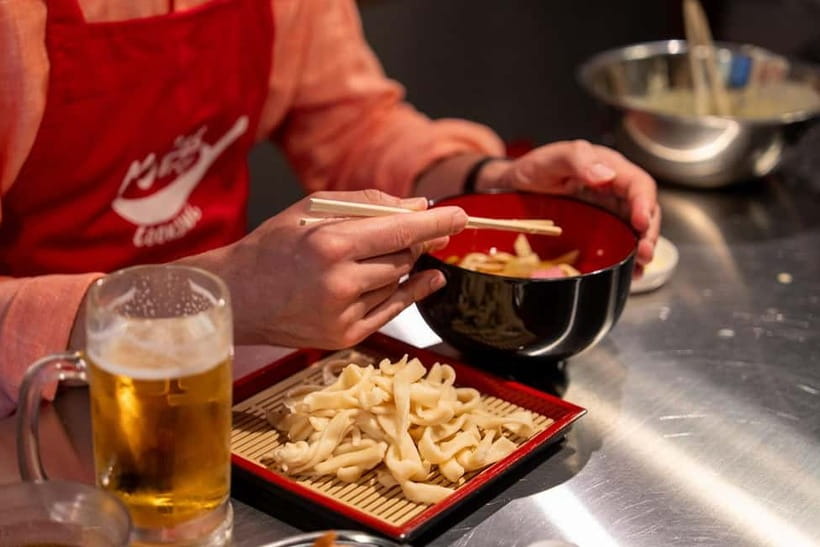
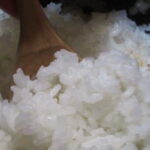
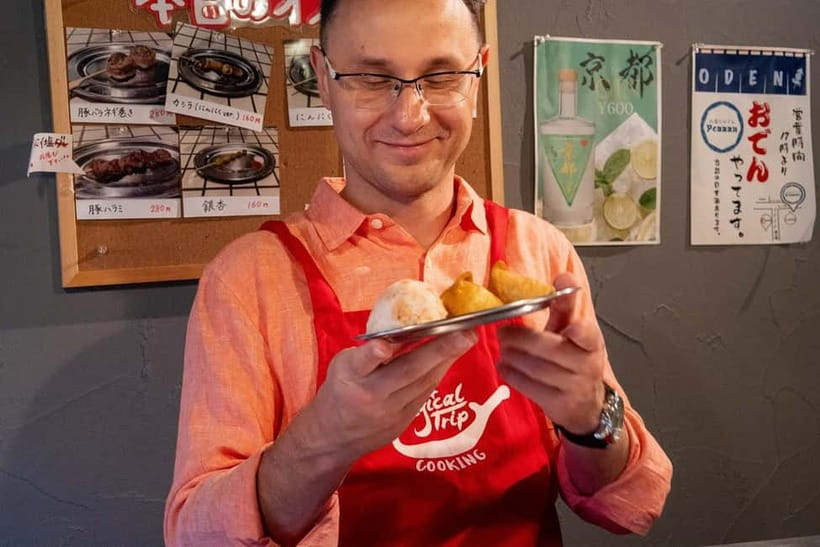
After udon dough work, you shift to Japanese rice dishes. Freshly steamed rice is part of the process, and you’ll learn how to season the rice for Inari Sushi, then shape it into onigiri and inari sushi.
This section is valuable because it teaches a concept that’s easy to miss when you just buy it: rice isn’t one-size-fits-all. When you season and shape it yourself, you start noticing how texture, stickiness, and handling affect the final bite.
Also, rice shaping is surprisingly forgiving for first-timers. Even if you’ve never cooked before, this is one of the steps where you can make progress quickly. You’ll see the finished forms go from messy to plate-ready within the session.
Tempura practice: how to get crisp results (and what to watch)
Tempura is where the class gets exciting—hot oil, golden color, and that crisp crunch. The chef and guide show you the process, and you fry your own tempura bites.
Two important notes for your expectations:
- The description presents tempura as something you learn from scratch, but some real experiences shared afterward suggest you might focus more on dipping and frying than preparing every batter component yourself.
- The class may lean more toward techniques and dough/rice prep than full “every component cooked start-to-finish” production.
That doesn’t make it less fun. It just means your best move is to show up ready to learn technique, not to demand a total production pipeline. Ask the guide at the start what’s included today, and you’ll set yourself up for a smoother, more satisfying experience.
Mini sake tasting: pairing your meal without turning it into a ceremony
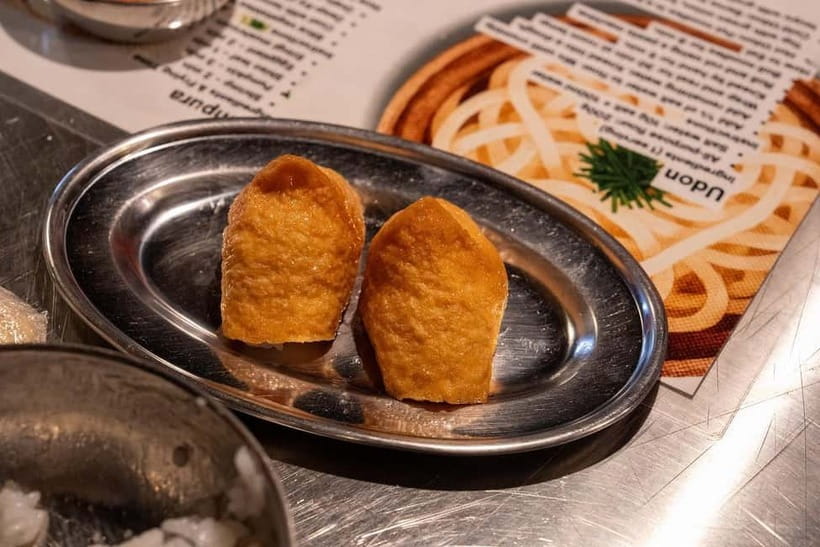
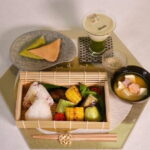
After you’ve made the udon, Inari Sushi, and tempura, you get to eat everything you worked on. To round it out, there’s a mini sake tasting experience.
This matters for two reasons. First, it gives your meal a Kyoto-food finishing touch. Second, it’s a low-pressure introduction to sake. You don’t need to be an expert—just taste and notice how it fits with crispy tempura and chewy noodles.
You’ll also get two drinks total. The class data doesn’t spell out what the second drink is, but it’s included, so you can plan for a meal with pairings rather than a dry workshop.
What you actually get at the end: English recipes and photo keepsakes
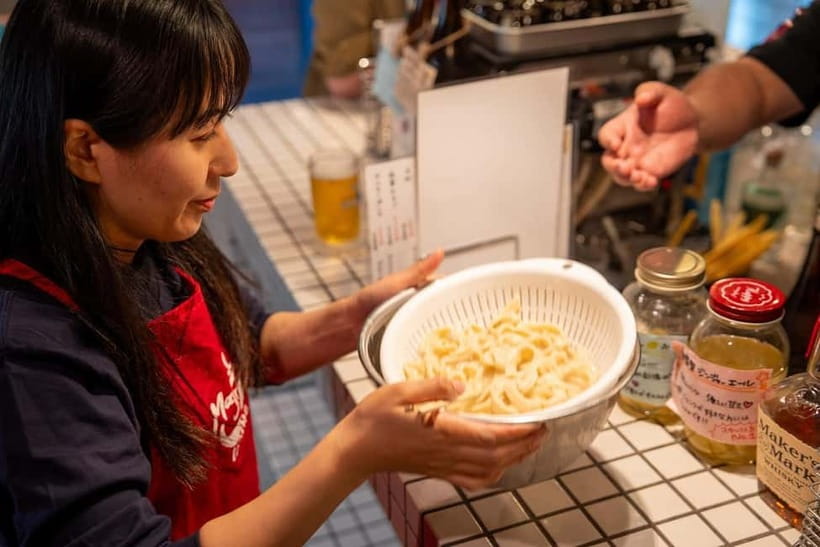
One reason I like cooking classes in travel is that the best ones give you a souvenir you can use. Here, you take home an English recipe set designed to recreate what you learned using ingredients you can find at home.
That recipe sheet is more important than it sounds. Without it, you forget proportions and timing. With it, you can turn this into a real “I did this in Kyoto” memory you can repeat later.
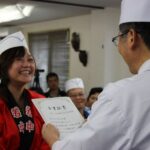
You also get tour photos. That’s handy because food moments happen fast in a kitchen, and you might not want to juggle your camera while you’re kneading dough.
Small group energy: up to 8 people, and why that matters
This runs as a small group capped at 8 participants. In practice, that means you’re less likely to get stuck watching and waiting while the kitchen moves on.
Small-group instruction is especially helpful for hands-on steps like:
- kneading dough (you need a correction early)
- rice seasoning and shaping (you benefit from quick feedback)
- tempura frying (you want guidance before things get hot)
It also helps keep the vibe friendly. Cooking works best when you don’t feel rushed or embarrassed to ask a basic question.
Timing reality check: 2 hours on paper, lesson pace in practice
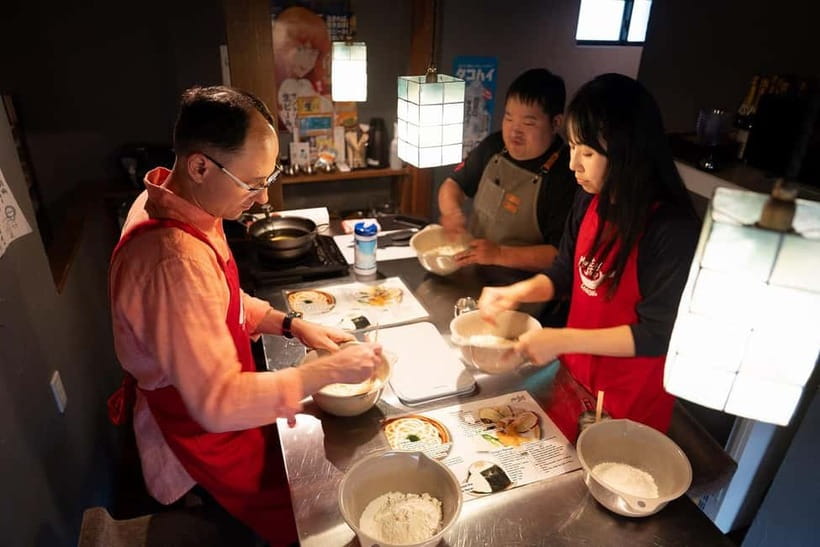
The scheduled duration is listed as 2 hours, which sounds perfect: long enough to learn and eat, short enough to keep your Kyoto day intact. Still, the way the class is structured can affect how it feels.
Some real experiences shared afterward point to a quicker meal/setup overall, with more emphasis on dough preparation and shaping than on making every element end-to-end (for example, udon broth cooking not being a focus). That’s not necessarily a bad thing—it just changes what you’ll remember most.
My practical advice: if you have a tight next stop, build in a small buffer. And if timing matters a lot, arrive on time and settle in early so the first steps start without delay.
Value for $83: what you’re paying for (and what you’re getting back)
At $83 per person for a 2-hour, small-group class, you’re paying for more than “a cooking activity.” You’re paying for:
- instruction from an udon master and a local English-speaking guide
- ingredients provided for the class
- a meal made from your work (udon, Inari Sushi, tempura)
- two included drinks
- sake tasting
- an English recipe set for cooking at home
- tour photos
This is closer to a guided food lesson and meal experience than a low-cost workshop. If you enjoy hands-on cooking, the value works well because you leave with both food and a usable reference.
If you’re the type who wants to eat exactly one dish and skip the workshop portion, this might feel like too much. But if you want to learn how Japanese comfort foods are built, it’s a fair deal.
Who this class is best for (and who should think twice)
You’ll probably love this if:
- you’re curious about how udon dough and rice shaping actually work
- you want a guided kitchen experience without needing prior skills
- you like eating what you make
- you want an English-friendly class in Kyoto (not a silent cooking spectacle)
It may not be ideal if:
- you expect every component to be made fully from scratch, including every cooking stage (some versions may focus more on preparation and technique than a full broth or batter build-out)
- you have an extremely rigid schedule and can’t tolerate a lesson that runs slightly shorter or more preparation-heavy on the day you book
Good news: the class is described as suitable for all ages and requires no prior cooking experience.
Should you book this Kyoto udon and tempura class?
Book it if you want a hands-on Kyoto food lesson where you make multiple dishes, sit down for your own meal, and leave with English recipes you can actually use later. The combination of udon technique, Inari Sushi rice shaping, and tempura frying practice plus the mini sake tasting is a strong mix for learning and eating in one stop.
Skip it or ask extra questions before committing if you specifically want a full end-to-end production of everything from scratch. With some sessions leaning more toward dough/rice preparation and frying/dipping, you might not get the exact scope you imagined.
If you’re flexible, this is the kind of experience that turns Kyoto food from something you read about into something you can repeat at home.
FAQ
How long is the Kyoto Udon & Tempura Cooking Class?
The class is listed as 2 hours. Starting times can vary, and the session length may feel different depending on how the steps are paced.
What dishes will I make in the class?
You’ll learn to make udon noodles, Inari Sushi (including shaping onigiri as part of the rice lesson), and tempura, then eat what you prepared.
Do I need prior cooking experience?
No. Prior cooking experience is not required, and the class is suitable for all ages.
Is the class taught in English?
Yes. The instructor/guide is listed as English.
Where do I meet for the tour?
You meet at 7-Eleven – Kyoto Kawaramachi-Takoyakushi. It’s about a 3-minute walk from Kyoto-Kawaramachi Station Exit B3, or about a 9-minute walk from Gion-Shijo Station Exit 3.
Are drinks and recipes included?
Yes. Two drinks are included, and there’s also a mini sake tasting experience. You’ll also receive an English recipe set to take home.