REVIEW · TAIPEI
Street Food Cooking Class in Taipei : Gua Bao/Lu Rou Fan/Boba Tea
Book on Viator →Operated by CookInn Taiwan · Bookable on Viator
One of the best things about Taipei is learning how it tastes. This street-food cooking class focuses on xiao chi classics—gua bao, lu rou fan, and bubble milk tea—so you’re not just eating, you’re building the flavor step by step. In about two hours, you get hands-on practice and a meal that feels earned.
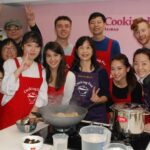
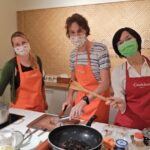
I really like the small-group size. With a max of 8 people, you get real guidance, not “good luck in the kitchen.” I also love the mix of make-from-scratch skills and street-food outcomes: steamed buns for gua bao, braised pork belly tips, and tapioca pearls for boba, then you sit down and eat what you made.
One consideration: boba pearls take hands-on timing. It’s not hard in theory, but the process can be a bit of a workout for your patience—so come ready to focus and don’t expect it to be instant magic.
In This Review
- Key highlights to know before you go
- Taipei Street Food, Actually In Your Hands
- Gua Bao: Steamed Buns and the Pork Belly Backbone
- Lu Rou Fan: Why the Braise Matters Beyond One Dish
- Bubble Milk Tea: Tapioca Pearls and the Shake Test
- The 2-Hour Flow: From Prep to Sitting Down and Eating
- What You Take Home: Recipes That Actually Help
- Price and Value: What $79 Really Buys
- Where It Happens: Zhongshan and How to Plan Your Day
- Who Should Book This Class (and Who Might Not)
- Should You Book This Street Food Cooking Class in Taipei?
- FAQ
- Where is the meeting point?
- What time does the class start?
- How long is the class?
- What is the price per person?
- How many people are in the group?
- What dishes will I learn to make?
- Do we eat the food we make?
- What ticket format do I get?
- Is confirmation provided after booking?
- What is the cancellation policy?
Key highlights to know before you go
- Small group kitchen time with individual attention (max 8)
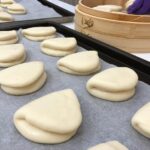
- Gua bao from scratch, including learning the steamed bun technique
- Lu rou fan meets the braise, with practical tips for pork belly flavor
- Bubble milk tea pearls from scratch, plus the shaking part you control
- You eat your results at the end, so there’s no waiting for dinner later
Taipei Street Food, Actually In Your Hands
Taipei runs on small eats, and this class is built around that reality. “Xiao chi” is more than a cute phrase on a menu. It’s the culture of quick, flavorful bites—stuff you can buy on the street, but also the kind of food you learn to love because it’s repeatable and consistent.
What makes this cooking class feel worth your afternoon is the balance between technique and reward. You learn how to do the key parts—steamed buns, braising, and tapioca pearls—then you get to use that work right away in gua bao, lu rou fan, and bubble tea.
And yes, this is the kind of experience that works even if you’re not a big “kitchen person.” The class format is designed for normal visitors: you’ll follow guidance, cook in a shared setup, and still come away with skills you can repeat at home.
You can also read our reviews of more tours and experiences in Taipei.
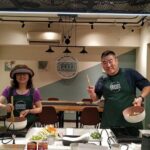
Gua Bao: Steamed Buns and the Pork Belly Backbone
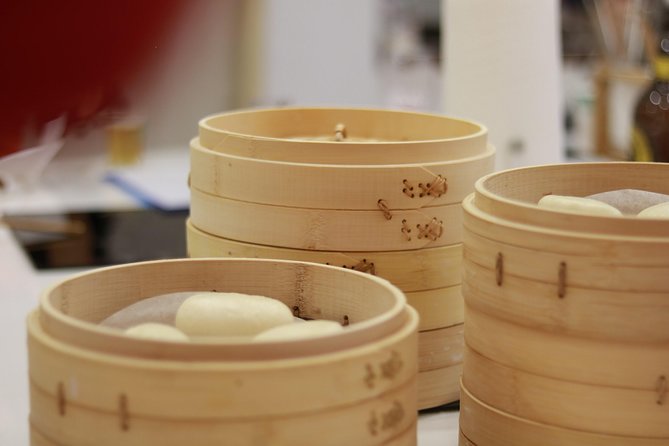
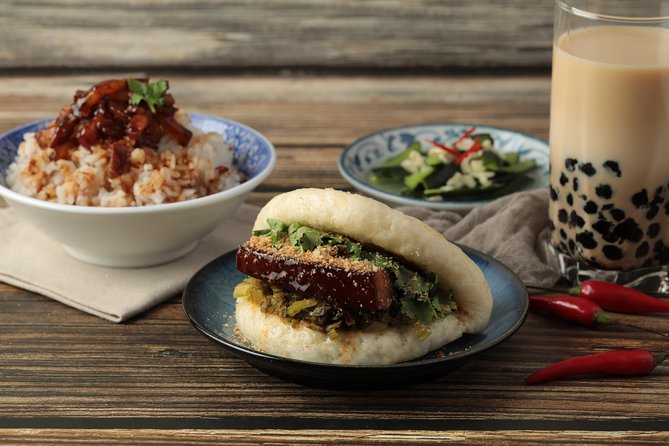
Gua bao is often called the Taiwanese hamburger for a reason. It’s handheld. It’s comforting. It’s also all about the relationship between bread, filling, and sauce-level flavor.
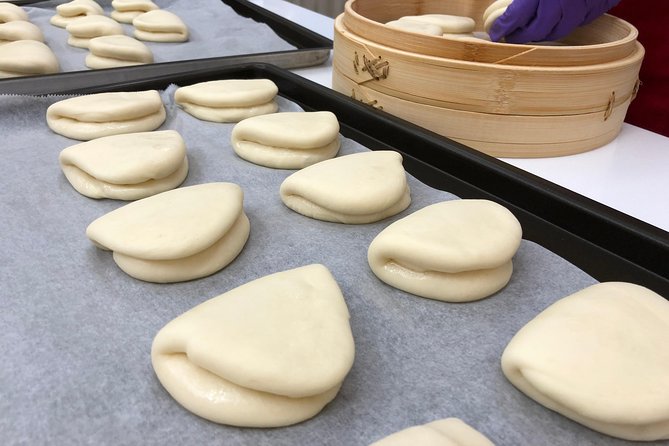
In class, you learn the process behind the steam buns—not just assembly. That matters because the bun is where a lot of the texture magic lives. If you only learn how to put pork in a bun, you miss the part that makes gua bao feel right.
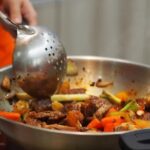
Then comes the other half of the heart: braised pork belly. You’ll learn tips for braising the classic pork belly so it’s rich without tasting greasy. The goal is that clingy, savory pork flavor that holds up against the soft bun.
A detail I appreciate: the pork belly work isn’t treated like mysterious restaurant-only magic. In practice, it’s broken into steps you can understand and later replicate. One review notes that the braised pork was used on top of pre made rice during the class, and that tracks with how many Taiwan home-style setups work—make the star topping, then build your bowl or bao around it.
Lu Rou Fan: Why the Braise Matters Beyond One Dish
Lu rou fan (often called braised pork rice) is one of those dishes that seems simple until you pay attention. On the surface: rice + braised pork. But the braise is doing the heavy lifting—sweetness, salt, aroma, and that slow-cooked depth that makes the spoonful addictive.
This class treats lu rou fan as more than a side assignment. It’s an extension of the pork belly technique you’re practicing for gua bao. So when you taste what you made, you’re tasting the same “Taipei street” flavor in a different format.
If you’ve ever wondered why two bowls of braised pork rice can taste so different, this is the lesson in that question. You’re learning the braising approach that makes the pork taste cohesive instead of just fatty and salty. That’s the difference between eating food that’s fine and eating food that makes you understand why locals line up for it.
And since the class ends with you eating your creations, you’ll get an immediate sense of how the pork portion, the rice portion, and the overall seasoning fit together. It’s the kind of feedback loop cooking classes should always include.
Bubble Milk Tea: Tapioca Pearls and the Shake Test
Bubble tea gets all the attention, but the real star is the tapioca pearl. They’re chewy for a reason, and if you get the timing wrong, the texture can go from great to disappointing fast.
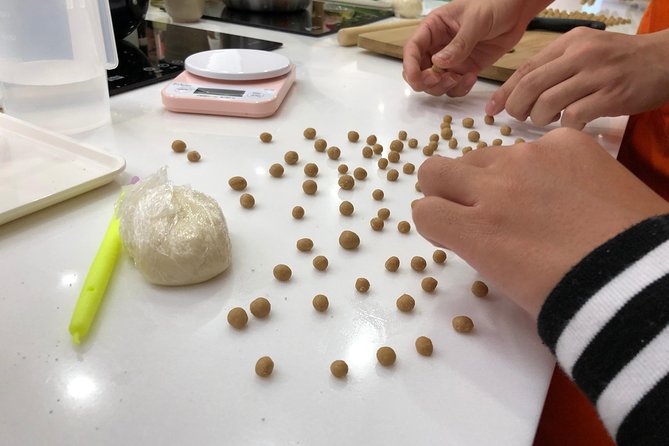
In this class, you’ll make the tapioca pearls from scratch. That’s a huge part of why the experience feels educational instead of just “tour and taste.” You see how the pearls are formed and handled, then you learn the practical steps that affect chew.
Then you’ll shake your cup of bubble milk tea yourself. That final step is surprisingly satisfying because it’s where control meets flavor. You can’t fake the final balance by eating a pre made drink; you taste what you made.
One thing to be ready for: reviews call out that the boba process can be hard. That doesn’t mean it’s a disaster. It means you should stay present. Focus on timing and follow the instructor’s guidance closely.
The good news? You’re not doing it alone. The small group setup helps. When you hit a snag, you can ask, adjust, and keep going.
The 2-Hour Flow: From Prep to Sitting Down and Eating
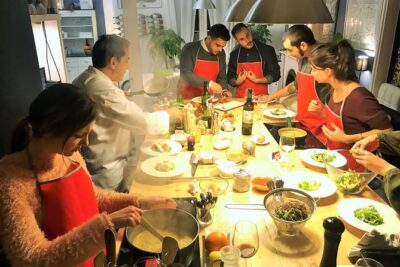
This isn’t a long day class where you wander around and snack. It’s a 2-hour, hands-on session designed so you’ll finish with a full meal.
The typical rhythm looks like this:
- You start with bun and pork setup, learning the core techniques.
- You move into building the street-food versions: gua bao and lu rou fan style servings.
- You switch gears to bubble tea pearls and drink preparation.
- You end by sitting down to enjoy what you made, so hunger doesn’t turn into stress.
That “end with a meal” part sounds basic, but it’s actually a big value point. Taipei food tours often leave you still looking for dinner afterward. Here, you’re creating and eating within the same class window.
It also helps that the class is described as easy for everyone, with instructions that work for different ages. One review specifically notes the instructor being patient with kids ages 8, 10, and 11. If your group includes younger food fans, this is the kind of cooking experience where they can participate instead of watching from the sidelines.


What You Take Home: Recipes That Actually Help
In cooking classes, I care about one thing after the smells fade: will I remember what to do later?
Here, you get a recipe book as a souvenir. That small detail is a big deal for value. If you’re going to pay for a class, you want something more useful than a photo on your phone.
And because the class focuses on a few classic Taiwanese staples—gua bao, lu rou fan, and bubble tea—you’ll likely make these again. The recipe book gives you a way to recreate the dish without relying on memory.
Also, the fact that gua bao gets called out as the star by multiple reviews makes sense. When the bun and pork come together the right way, it feels like you learned the dish, not just cooked ingredients.
Price and Value: What $79 Really Buys
$79 per person isn’t cheap, especially if you’re comparing it to a self guided street-food crawl. But the value changes when you look at what you’re paying for.
You’re paying for:
- A small group setup (max 8) with hands-on coaching
- Learning multiple Taiwanese classics in one session
- Making multiple components from scratch, especially boba pearls
- Eating the finished meal at the end
- Leaving with a recipe book you can use later
If you go on a food tour only, you usually pay to taste. Here, you pay to learn technique and then eat. That means the experience lasts longer than the meal window.
And because the class is only about two hours, it’s also a time-efficient way to get a “cooking day” vibe without sacrificing your whole afternoon or evening.
Where It Happens: Zhongshan and How to Plan Your Day
The meeting point is CookInn Taiwan (Zhongshan 教室), Section 1, Chengde Rd 103, Datong District, Taipei City at the address 66號 2樓. Start time is 2:30 pm, and the class ends back at the meeting point.
From a planning standpoint, that makes it a nice slot between lunch and dinner. You can eat earlier, arrive hungry enough to appreciate the meal, and then get an experience that doesn’t require a full day commitment.
A quick practical note: since you’ll be working in a kitchen and handling components, keep your outfit practical. You don’t need to dress like a chef, but you also don’t want to show up in something you’d hate to get a little cooking close.
Who Should Book This Class (and Who Might Not)
This class fits best if you want more than eating. If you like understanding the “how” behind Taiwanese staples, you’ll get a lot from it.
You’ll probably be especially happy if:
- You’ve already tried Taiwanese street food and want to recreate it
- You love gua bao and want to learn the bun and pork balance
- Bubble tea is your drink of choice, and you want to understand pearls instead of just ordering one
- You’re traveling with a mixed group and want a small-group experience that can include kids
If you’re the type who wants a long guided walkthrough of markets and street scenes, this class is more about cooking than sightseeing. It’s not meant to replace an exploring food day. Think of it as the hands-on chapter that makes the rest of your Taipei tastings make more sense.
Should You Book This Street Food Cooking Class in Taipei?
If your goal is to come home with both memories and skills, I’d book it. The strongest draw here is the hands-on focus on gua bao, lu rou fan, and bubble tea pearls, plus the small-group attention and a recipe book you can actually use later.
If boba pearls intimidate you, don’t worry too much. The class is structured, and the process is part of the fun. Just come ready to pay attention for timing and steps.
And if you really love Taipei street food, this is one of the more direct ways to turn that love into something you can repeat at home.
FAQ
Where is the meeting point?
The class meets at CookInn Taiwan (Zhongshan 教室), 66號 2樓, Section 1, Chengde Rd, Datong District, Taipei City.
What time does the class start?
The start time is 2:30 pm.
How long is the class?
It lasts about 2 hours.
What is the price per person?
The price is $79.00 per person.
How many people are in the group?
The class has a maximum of 8 travelers.
What dishes will I learn to make?
You’ll learn to make gua bao (including the steamed buns), lu rou fan, and bubble milk tea, including making tapioca pearls from scratch.
Do we eat the food we make?
Yes. The class ends with you sitting down to enjoy your homemade meal.
What ticket format do I get?
You’ll receive a mobile ticket.
Is confirmation provided after booking?
Yes. Confirmation will be received at the time of booking.
What is the cancellation policy?
Free cancellation is available up to 24 hours in advance for a full refund. If you cancel less than 24 hours before the start time, the amount paid is not refunded. The experience may also be canceled if a minimum number of travelers isn’t met, with an option of a different date/experience or a full refund.