REVIEW · TAIPEI
Taiwanese Gourmet Cooking Class in Taipei
Book on Viator →Operated by CookInn Taiwan · Bookable on Viator
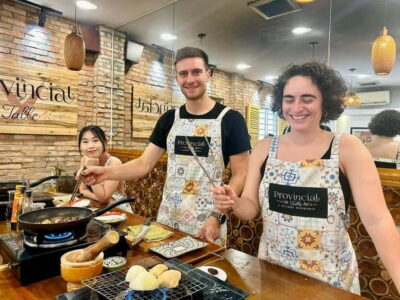
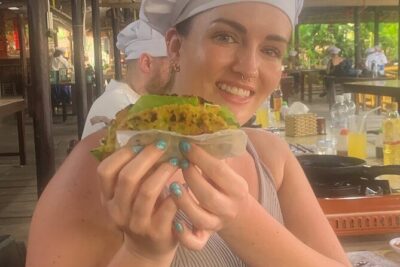
Food gets real when you’re at the stove. This Taiwanese Gourmet Cooking Class turns popular dishes into hands-on technique, plus the stories that explain why they taste the way they do. You’ll cook a full set of classic favorites and finish with a plated dessert, all in about 3 hours.
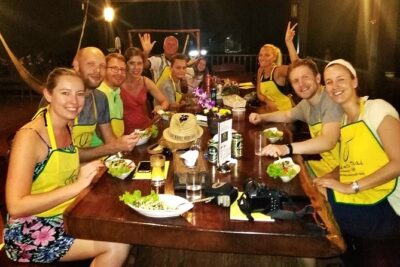
I especially like that the class stays practical: you prepare multiple dishes from start to finish, not just watch. The small group size (up to 8) helps you get personal direction, and the teaching pace is friendly whether you cook often or mostly at home.
One thing to consider: this is a focused cooking session, not a long city tour. If you’re hoping for a market walk, note that a market tour is no longer available since September 1st, 2022, and the session is centered on the kitchen experience.
In This Review
- Key things to know before you book
- A Taipei cooking class that actually teaches technique
- What you cook: black-gold roe, three-cup chicken, and five-taste squid
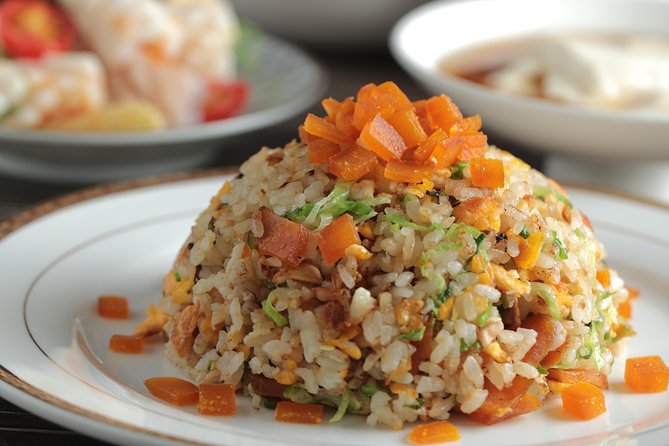
- Mullet Roe Fried Rice
- Three-Cup Chicken
- Squid with Five-Taste Sauce
- Soft Tofu Pudding (dessert)
- The sauce stories that make Taiwanese flavors make sense
- What you’ll notice while cooking
- The multi-course feast: cooking and eating in one continuous flow
- Classroom setup: how small groups keep the learning hands-on
- Price and scheduling: is $95 worth it?
- Where it starts in Taipei (and how to plan your morning)
- Who this cooking class is best for
- Should you book this Taiwanese Gourmet Cooking Class?
- FAQ
- How long is the cooking class?
- What dishes will I cook?
- Who is the instructor and what languages are used?
- How many people are in each class?
- Where do I meet the class, and what time does it start?
- Is the class suitable for kids?
- What if the class is canceled due to weather or you need to cancel?
Key things to know before you book
- Small group coaching (max 8) means more hands-on time and fewer minutes waiting
- You cook a set menu that includes Mullet Roe Fried Rice, Three-Cup Chicken, Five-Taste Squid, and Soft Tofu Pudding
- The class connects food to meaning with stories behind staples like three-cup sauce and five-taste sauce
- The instructor Diana is known for clear instruction in both Chinese and English
- It ends back where you start, keeping your morning simple around 9:30 am
A Taipei cooking class that actually teaches technique
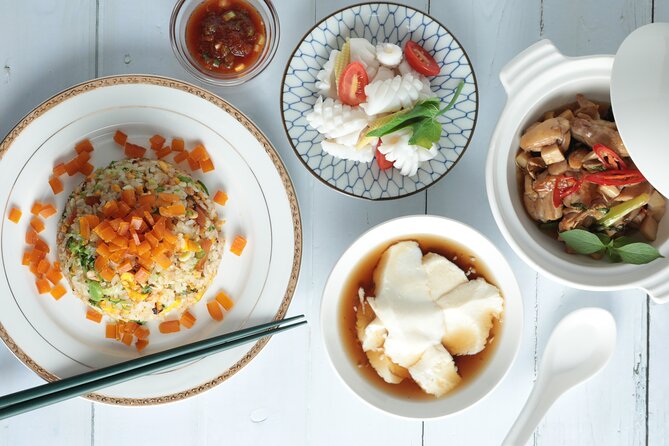
A lot of cooking classes in big cities are entertainment with a little food at the end. This one leans the other way. The goal is for you to leave with repeatable methods you can use later—how to build flavor, how to balance sauces, and how to handle key ingredients so you get the real Taiwanese taste instead of a vague imitation.
What makes it work is the format. You’re not stuck with a single dish. During the session you’ll tackle several classics, then eat a multi-course feast that comes from what you made. That’s the payoff: you get a chance to cook, adjust, and then taste the results as a whole meal.
Also, the class is timed for a morning start. If you like packing your day with activities that don’t stretch into the afternoon, the 9:30 am start is a good fit.
You can also read our reviews of more tours and experiences in Taipei.
What you cook: black-gold roe, three-cup chicken, and five-taste squid
This “Taiwanese Gourmet Menu” is built around dishes that show up again and again in Taiwanese home cooking. You’ll cook three classic dishes plus dessert, all inside the 3-hour window.
Mullet Roe Fried Rice
You’ll work with mullet roe, which in Taiwan is often called black gold. Even if you’ve never cooked with roe before, the idea is simple: it’s an ingredient with a strong flavor profile, so you can treat it like a seasoning ingredient as much as a star.
For you, the value here is learning how to handle a bold ingredient without turning the dish harsh or salty. Fried rice also teaches timing. You want the rice coated and fragrant, not soggy.
Three-Cup Chicken
Three-cup sauce is one of those Taiwanese “signature” flavors. It’s classic, and once you understand it, you can adapt the same sauce logic to other proteins. In this class, you’ll make the dish from start to finish, which matters because the sauce technique is the heart of it.
The practical skill you take home is how to build the sauce so it tastes balanced, not just one-note sweet or overly salty. Three-cup dishes also teach the rhythm of simmering and reducing until the sauce clings properly.
Squid with Five-Taste Sauce
Squid can be forgiving if you respect texture. Too much heat or too long a cook can make it tough, so this dish is a good lesson in controlling the final outcome.
Five-taste sauce is another cornerstone flavor. If you’ve ever had Taiwanese squid dishes that tasted complex but not confusing, this is the reason. The sauce gives you that layered tang, savory depth, and aromatic finish.
Even if you don’t become a squid expert overnight, you’ll walk away understanding the sauce structure. That’s the kind of knowledge you can reuse.




Soft Tofu Pudding (dessert)
Dessert is not an afterthought here. You finish with soft tofu pudding, which gives you a sweet-and-smooth contrast to the savory meal. It also teaches you how tofu behaves when treated properly in a dessert context.
If your goal is to understand Taiwanese cooking as more than one flavor style, this final stop helps. You see that tofu-based comfort food belongs in the sweet section too.
The sauce stories that make Taiwanese flavors make sense
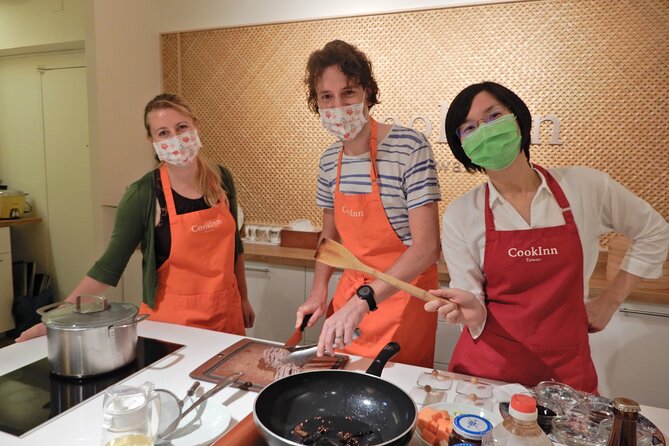
Two sauces get highlighted as especially important: three-cup sauce and five-taste sauce. You’ll hear the reasoning behind these classics, not just what goes into them.
Here’s why that matters for you: Taiwanese dishes often rely on sauces that do more than add salt. They create a specific balance of salty, sweet, aromatic, and tangy notes. When you know the logic, you can adjust at home instead of following a recipe blindly.
You also get ingredient context. For example, the class frames mullet roe as a prized local product, often tied to Taiwan’s waters. When you understand where ingredients fit culturally and regionally, the flavors stop feeling random. They feel intentional.
What you’ll notice while cooking
- Each dish has a flavor anchor: roe in the rice, sauce structure in chicken, and sauce logic again in squid.
- The instruction tends to focus on balance. That’s the difference between a dish that tastes good once and a dish you can reliably recreate.
- The stories help you remember. Names and meaning stick better than a list of seasonings.
The multi-course feast: cooking and eating in one continuous flow
One of the nicest parts of the experience is the sequence. You cook, then you eat what you made as a multi-course feast. That means there’s no awkward gap where you wonder if the dish will come together.
This format also helps you learn. When you taste your own food, you can connect flavors to decisions you made during prep. If something tastes off, you can usually trace it to a technique step—too little reduction, sauce added at the wrong moment, or a balance that needs adjustment.
And because you’re making several dishes, you get a sense of how Taiwanese flavors move through a meal. Savory richness up front, a different texture and aroma in the middle, and a soft, comforting finish with dessert.
Classroom setup: how small groups keep the learning hands-on
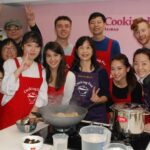
This class caps at 8 travelers, which changes the whole experience. With a small group, you aren’t standing on the sidelines. You can watch, ask, and step back in when it’s your turn to work.
The kitchen is described as clean and spacious, which matters more than it sounds. When the space is comfortable, you move with less stress. And when you move with less stress, you pay more attention to technique.
Language support is also a real plus. Instructor Diana is described as clear and bilingual, speaking both Chinese and English. For you, that means you can follow steps without translating everything in your head. It also makes it easier to ask questions if you’re unsure about a sauce consistency or a cooking stage.
Price and scheduling: is $95 worth it?
At $95 per person for about 3 hours, the price can sound like a splurge if you compare it to a casual dinner. But cooking classes aren’t just about eating. You’re paying for instruction, ingredients, and the chance to leave with techniques you can reproduce.
Here’s where the value becomes clearer:
- You cook multiple dishes, not a single one.
- The group size is small, which usually means more coaching per person.
- You get both the cooking process and the meal outcome in one session.
Also, the class is typically booked around 20 days in advance. That’s a hint that the experience runs well and fills up. If you’re traveling during peak dates, booking earlier tends to help you lock in a time.
Finally, you’ll get a mobile ticket, which is a small detail but a real convenience. It reduces friction on the day of the class.
Where it starts in Taipei (and how to plan your morning)
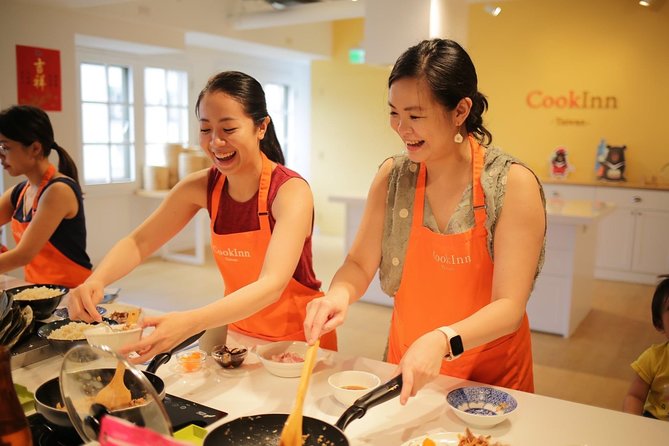
The session starts at CookInn Taiwan (Zhongshan 中山教室) in Taipei’s Datong District. The address is 103, Section 1, Chengde Rd, 66號2樓. You’ll return there at the end.
Start time is 9:30 am, so plan your Taipei morning accordingly. If you’re juggling other plans that day, the biggest advantage is that you won’t be sent far across town mid-experience. The class ends back at the starting point, which keeps your day from turning into a transit puzzle.
Also, keep an eye on weather. The experience notes that it requires good weather. If it’s canceled for poor conditions, you’ll be offered another date or a full refund.
Who this cooking class is best for
This class is a great fit if you want Taiwanese cuisine in a form you can actually cook later. It’s especially strong for people who like understanding flavor logic—how sauces work, why ingredients matter, and how timing affects texture.
You’ll likely enjoy it if:
- You already cook at home and want to level up with Taiwanese techniques
- You’re a casual cook who wants clear steps and an easy-to-follow pace
- You enjoy learning stories alongside food, not just collecting recipes
Age-wise, the class is suitable for ages 12 and above. There’s a 15% discount for children aged 7–11, and one child under 6 may accompany free of charge. If you’re traveling with a multigenerational group, this helps you plan.
Should you book this Taiwanese Gourmet Cooking Class?
Book it if you want a compact, high-learning experience that blends technique with Taiwanese flavor identity. The combination of multiple dishes, small-group coaching, and a menu anchored by signature sauces makes it more than a one-dish food activity. If your goal is to leave with skills you’ll actually use, this format supports that.
Don’t book it if you want a broader sightseeing experience or a market-style tour. This is a cooking-first event, and a market tour is no longer part of the offering since September 1st, 2022.
If you’re deciding based on value: you’re paying for instruction and ingredients while eating a full meal you helped create. For $95, that math tends to work best when you care about learning, not just tasting.
FAQ
How long is the cooking class?
The class lasts about 3 hours.
What dishes will I cook?
The class covers three classic dishes: Mullet Roe Fried Rice, Three-Cup Chicken, and Squid with Five-Taste Sauce, plus dessert Soft Tofu Pudding.
Who is the instructor and what languages are used?
The instruction is described as clear, and the instructor Diana speaks both Chinese and English.
How many people are in each class?
The class has a maximum of 8 travelers, which keeps it small-group and hands-on.
Where do I meet the class, and what time does it start?
You meet at CookInn Taiwan (Zhongshan 中山教室), 103, Section 1, Chengde Rd, 66號2樓, and the start time is 9:30 am.
Is the class suitable for kids?
The class is suitable for ages 12 and above. Children aged 7–11 get a 15% discount, and one child under 6 may accompany for free.
What if the class is canceled due to weather or you need to cancel?
You can cancel for free up to 24 hours before the experience starts for a full refund. If it’s canceled due to poor weather, you’ll be offered a different date or a full refund. The experience can also be canceled if the minimum number of travelers isn’t met, with a different date or full refund offered.