REVIEW · VALENCIA
Valencia: Paella Cooking Class with Central Market Tour
Book on GetYourGuide →Operated by Sea Saffron · Bookable on GetYourGuide
Paella in Valencia starts with the market. This 4-hour class takes you from Mercado Central shopping (for most departures) to a hands-on cook session with a professional paella chef. It’s the kind of food day where you learn the why behind the steps, not just the order of what to do.
Two things I like a lot: you’ll get fresh ingredients early, and you’ll cook side-by-side with a guide who can answer questions as you go. The other big win is that you don’t just stand around tasting. You finish by eating your own paella with local tapas, wine, and dessert.
One drawback to factor in: the Central Market visit depends on your time slot. Evenings and Sundays skip the market and the whole experience runs shorter (about 3 hours instead of 4), so if you care most about shopping, aim for a morning departure.
In This Review
- Key things to know before you go
- From Plaza de la Virgen to Mercado Central: where the day starts
- The cooking station setup: hands-on, not just watching
- Making traditional Valencian paella the right way
- The role of wine, tapas, and dessert (and why it works)
- Your guide and the team: English instruction with real personality
- Timing details that change the experience
- What’s included, and what you may pay for yourself
- Price and value: is $82 worth it?
- Who this class is best for
- Should you book the Valencia paella class with Central Market tour?
Key things to know before you go
- Central Market ingredient shopping (morning shifts Mon–Sat) sets you up with the right flavors for Valencian paella
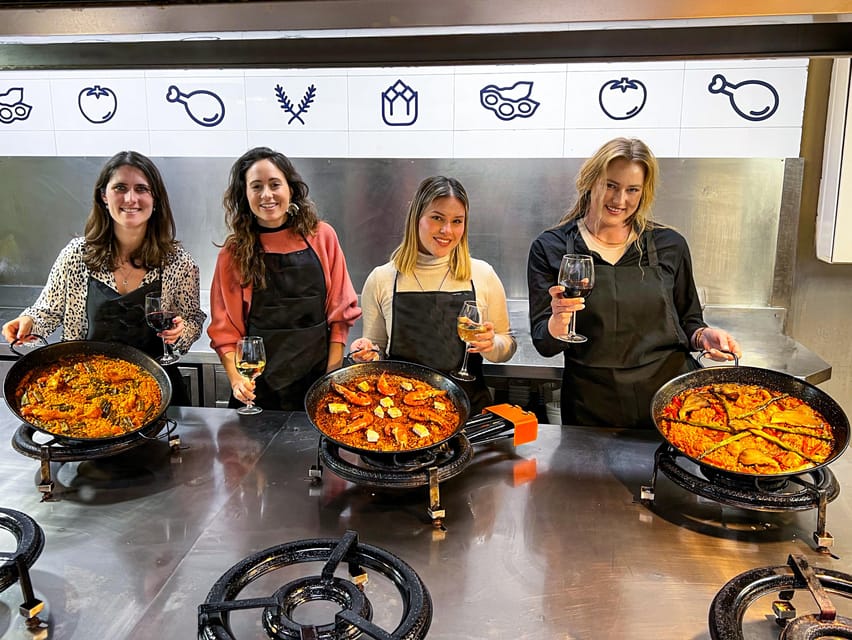
- Live, step-by-step cooking at your own station (typically 1–3 people per setup)
- English-speaking instruction with multiple chef-hosts leading the class on different dates
- Wine and tapas while you cook, plus dessert to end the day
- Time-slot matters: evening and Sunday options won’t include the market visit
From Plaza de la Virgen to Mercado Central: where the day starts
Your experience begins near Plaza de la Virgen. You meet your guide, then you’re off on a short walk before you even touch the stove. This part matters because paella isn’t just a recipe. It’s a shopping list, a cooking rhythm, and a very regional idea of what the dish should be.
If you’re on a morning shift Monday–Saturday, you’ll go to Mercado Central Valencia to buy ingredients fresh. This is where you learn to shop like locals: pick what looks right, understand what each ingredient is doing in the final pan, and see how the market’s produce and seafood shape the meal.
If your booking is an evening shift (like 5PM or 8PM) or any Sunday, you won’t get the market visit. The class still includes the cooking and eating, but the format tightens to about 3 hours. You’ll miss that early “how we choose the ingredients” experience, which is a big reason this tour gets such high marks.
You can also read our reviews of more tours and experiences in Valencia.
The cooking station setup: hands-on, not just watching
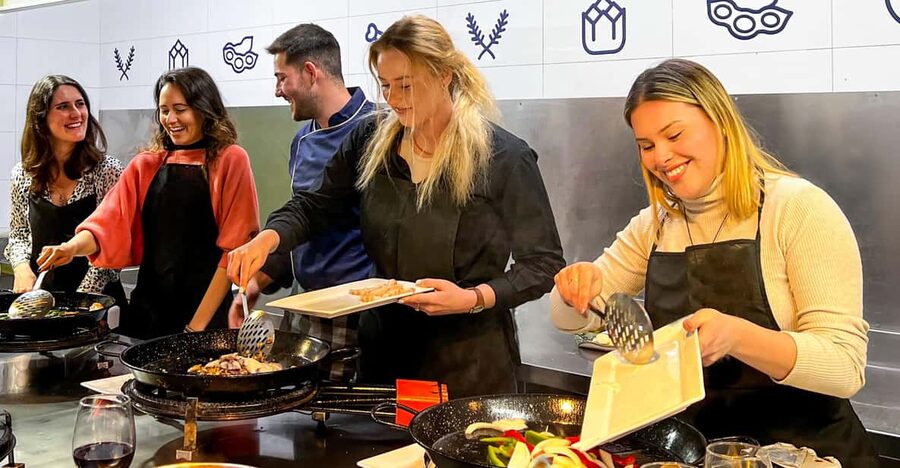
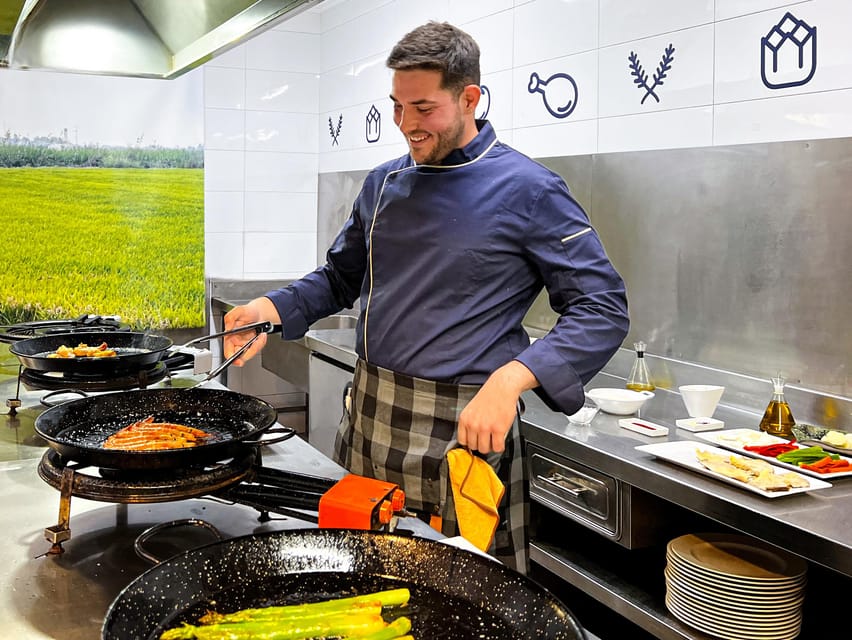
After shopping (or after a shorter start for evening/Sunday departures), you head to the paella kitchen for the live class. What I appreciate here is the structure: you don’t get handed an apron and left to guess.
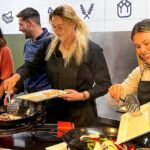
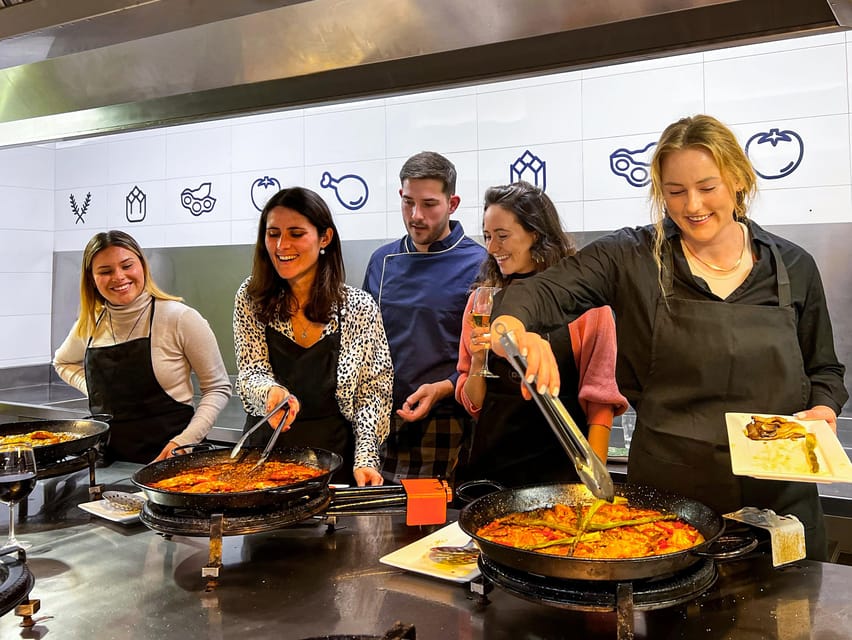
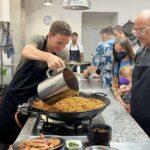
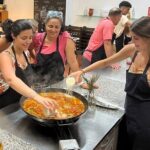
You’ll cook at your own station, usually organized so that 1–3 people share a setup. That small grouping keeps you from disappearing into the crowd and it helps the chef notice what you’re doing in real time. Several guides mentioned in participant reports—such as Daniel, Reyes, Victor, Juanda, Juan, and others—run the same kind of step-by-step format, and you can feel the difference when the instructor checks in rather than only giving a lecture.
The instruction is in English, and participants repeatedly highlight clear explanations and patience during the process. Even if you’ve never cooked paella before, the chef’s role is to turn nerves into doable steps. You’re not just learning how to make paella; you’re learning how to make decisions while cooking—heat control, timing, and when things should look a certain way.
Making traditional Valencian paella the right way
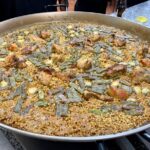
Paella has variations, and the class doesn’t treat that as a trivia fact. It uses it to show you what makes Valencian paella different from the seafood version. In multiple write-ups, guides like Daniel and Reyes specifically walk through that distinction, so you understand why you’re using certain ingredients and what kind of result you should aim for.
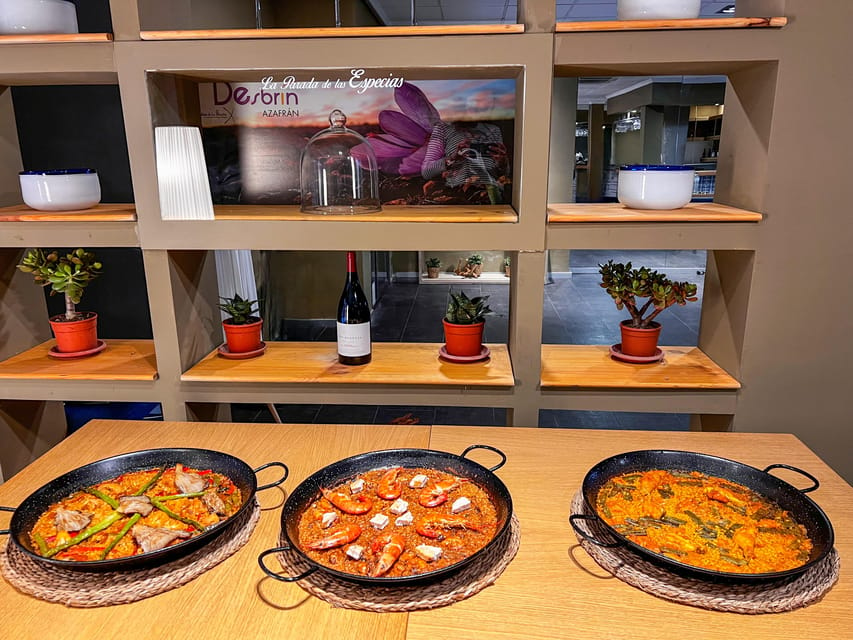
You’ll be taught the classic Valencian approach, and then you’ll apply it at your station. The chef keeps the session moving, but not rushed. You should expect a real cook-along, where each step ties to the next one. That’s where the value is, because paella is one of those dishes where one wrong assumption (too much liquid too late, heat too high or too low, poor timing) can change everything.
A fun detail: some participants describe nailing the final finish and getting the crisped layer people talk about as socarrat. Even if you don’t obsess over the term, you’ll understand the goal—when the bottom develops the right texture without burning the flavor.
The role of wine, tapas, and dessert (and why it works)
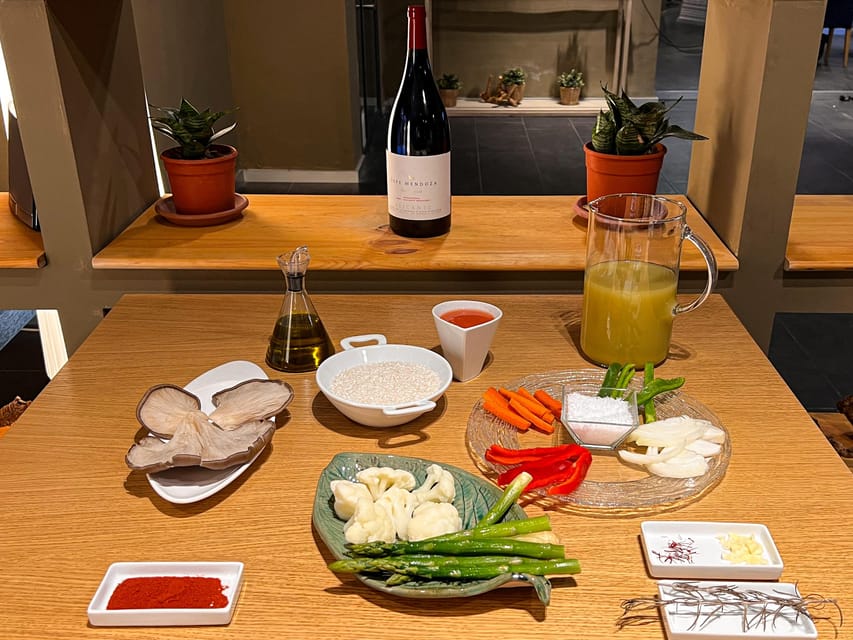
This tour doesn’t separate the class from the meal. While you cook, you’ll also enjoy local tapas and wine. The pairing portion is part education, part morale boost. It makes the cooking feel social instead of school-like.
In participant experiences, the drinks often include cava, local white and red wines, and sometimes a sweet dessert wine such as Mistella. The class setup can include wine pairings timed to the tapas, plus small bites during the cooking flow. If you like your food days to come with a rhythm, this one does.
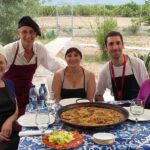
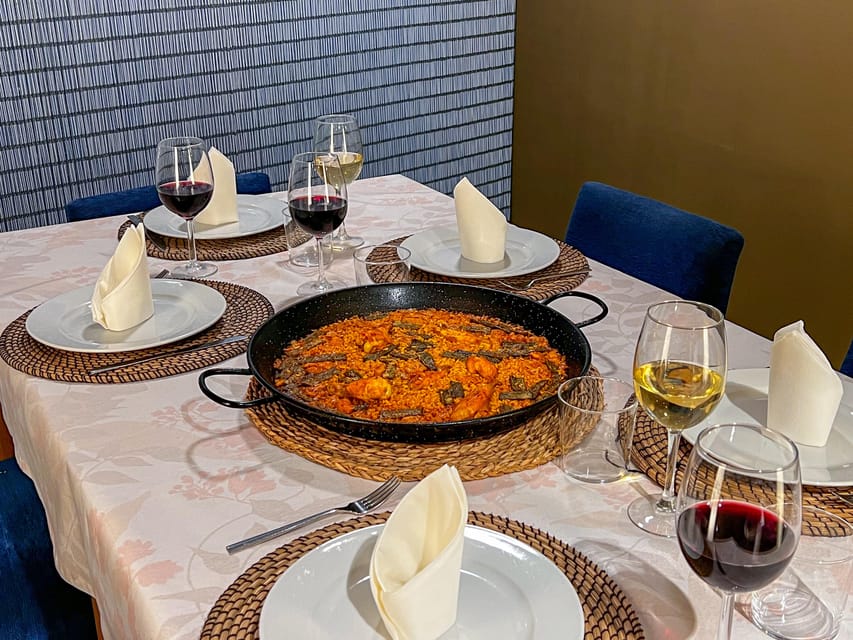
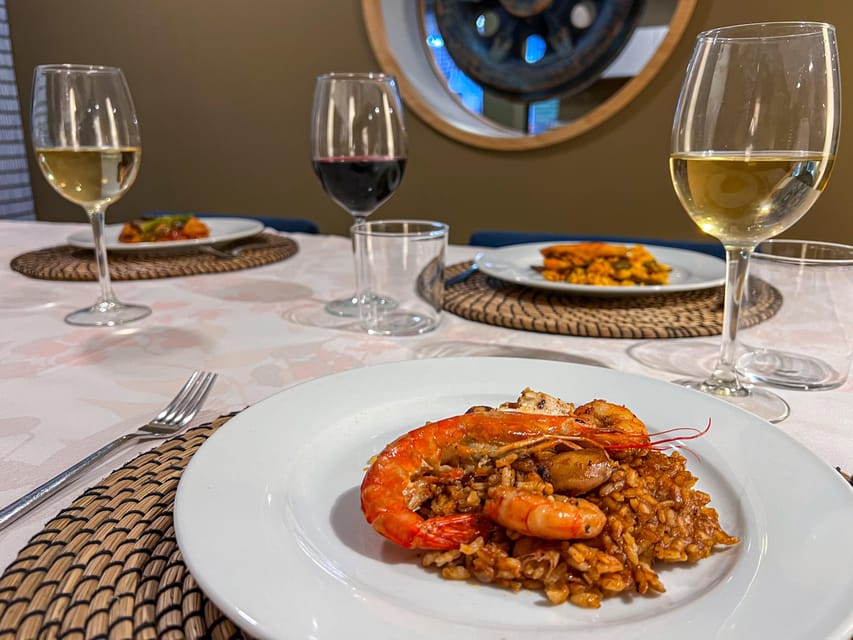
After the cook, you sit down and eat what you made. There’s usually a group meal feel, where your paella lands at a table alongside tapas and the rest of the drink lineup. The dessert finish is a sweet close to the effort—so you don’t leave with rice-stress still in your head.
This is also where the “local” part shows. A lot of paella experiences stop at dinner. Here, you’re taught, then fed like it’s a real Valencia day, not a staged performance.
Your guide and the team: English instruction with real personality
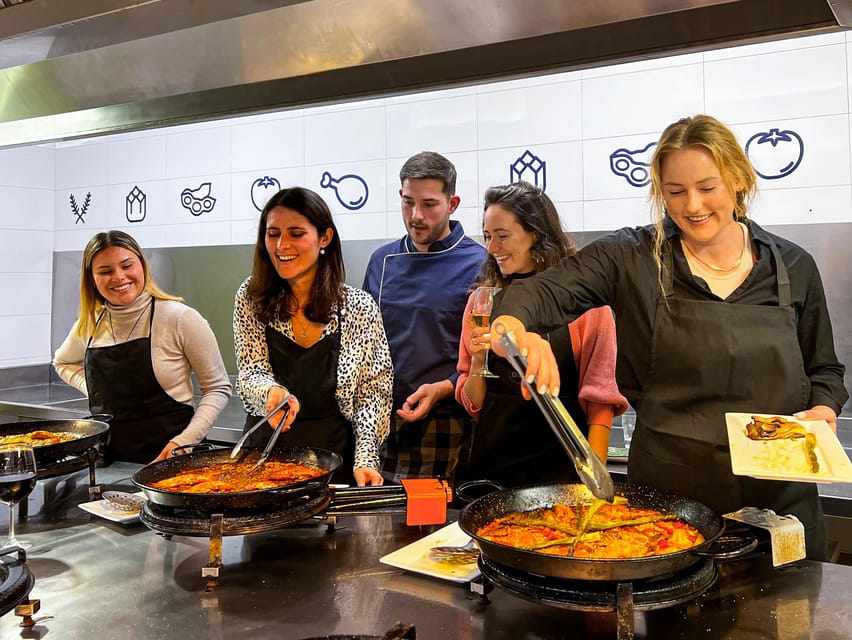
One reason this experience scores so consistently is the human factor. The class hosts and chefs—reported as names like Daniel, Reyes, Victor, Juanda, Juan, Sofia, Samantha, Julia, Isabel, Emma, Mimi, and even hosts like Cormac—tend to bring two things together: food expertise and a relaxed teaching style.
You’ll also likely get short context as you walk and cook: why the market matters, what certain ingredients bring to the pan, and how paella connects to regional identity in Valencia. If you’re the type who likes your meals with context (but not a 90-minute lecture), this works well.
If you’re traveling solo, this format can also help you meet people. Several accounts describe group bonding during and after the class, sometimes continuing out for drinks. Even if you don’t chase the after-party, you’ll probably leave with new dining friends.
Timing details that change the experience
Here’s the practical thing: the tour length and market access depend on when you book.
- Morning shifts Monday–Saturday: you get the Mercado Central visit plus the full experience that runs about 4 hours
- Evenings (example shifts at 5PM and 8PM) and all Sundays: no Central Market visit, and the class runs about 3 hours
If you’re trying to decide, don’t treat this as a minor schedule difference. The market stop is where you practice “buying like a local” and learn what ingredients matter. If your main goal is cooking, the evening/Sunday version can still be satisfying—but it will feel more like a pure cooking-and-dining block rather than a full “from market to pan” day.
What’s included, and what you may pay for yourself
For the money, the inclusions are broad. You’ll get:
- a live paella cooking class with a chef
- all cooking materials and ingredients
- local tapas, paella, wine, and dessert
- a trip to Mercado Central for morning shifts Monday–Saturday
Not included: any extra purchases. If you fall in love with something in the market and want to buy it to bring home, that will be on you.
Also note that the class is taught in English and the experience is wheelchair accessible. (If you have mobility needs, it’s still worth confirming your specific route and seating arrangement when you book, but the activity is listed as accessible.)
Price and value: is $82 worth it?
At $82 per person for about 4 hours (for the departures that include the market), this is priced like a full food experience, not a casual cooking demo.
Here’s what you’re paying for:
- the market-guided ingredient selection (major part of the “why”)
- the chef-led, hands-on cooking instruction
- materials and ingredients
- the meal: your paella plus tapas
- multiple rounds of wine and a dessert finish
In other words, you’re getting a kitchen experience plus a restaurant dinner in one package. If you’d otherwise pay for a guided market visit, a proper paella meal, and drinks, the bundled value becomes more obvious. If you’re only going for the cooking portion and you’re booking an evening/Sunday slot that skips the market, it can still be worth it, but you’re giving up the strongest “ingredient story” part of the program.
Who this class is best for
This is a great pick if:
- you want authentic Valencian paella and not just a generic Spanish cooking class
- you like learning through doing—hands-on, with someone watching your steps
- you’re happy with a social group format and eating together at the end
- you enjoy pairing food with wine and tapas
It’s also a solid birthday or group outing because the structure keeps everyone involved. Several write-ups describe a relaxed, welcoming vibe with staff making participants feel at ease, even those who were nervous about frying or cooking from scratch.
If your biggest goal is pure sightseeing, you may prefer a shorter food stop. But if you want one memorable food day in Valencia, this one has the pieces.
Should you book the Valencia paella class with Central Market tour?
Yes—with one smart condition.
Book it if you can. And if you care about the market, book a morning shift Monday–Saturday so you get the Mercado Central shopping. That start gives the whole day extra meaning because you’re not just learning to cook. You’re learning what to cook with, and why.
Choose an evening or Sunday only if you’re okay with a shorter, cooking-focused experience. You’ll still end up with paella, tapas, wine, and dessert, plus the chef-led steps. But you’ll be skipping the best “from market to pan” storyline.
If you want one practical rule: pick the time slot that matches what you want most—ingredients first (morning) or cooking and dinner (evening/Sunday).