REVIEW · UBUD
Ubud: Cooking Class with Transfers and Optional Market Visit
Book on GetYourGuide →Operated by Ubud Costume Dress · Bookable on GetYourGuide
Ubud turns cooking into culture lessons. In a short 2–3 hour session, you can shop for ingredients (morning option), cook traditional dishes with local chefs, and end by eating a full meal you made yourself.
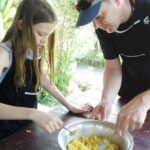
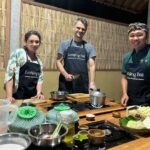
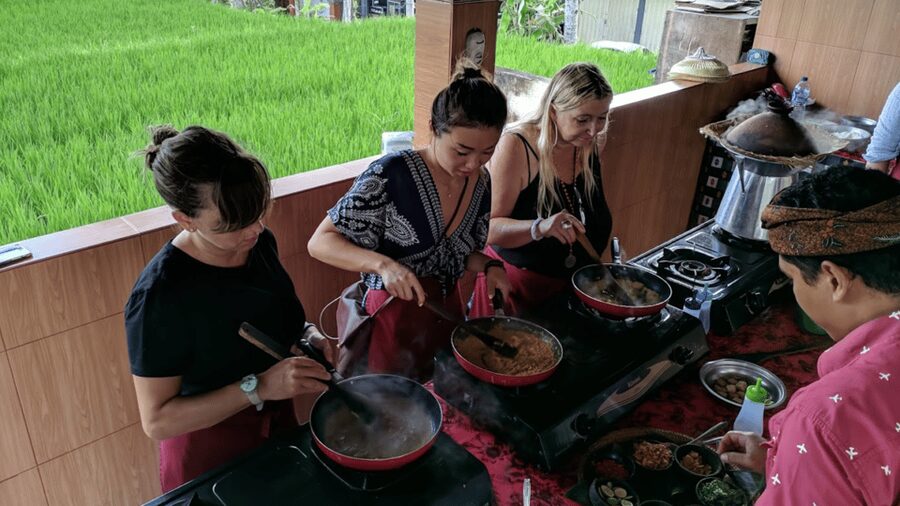
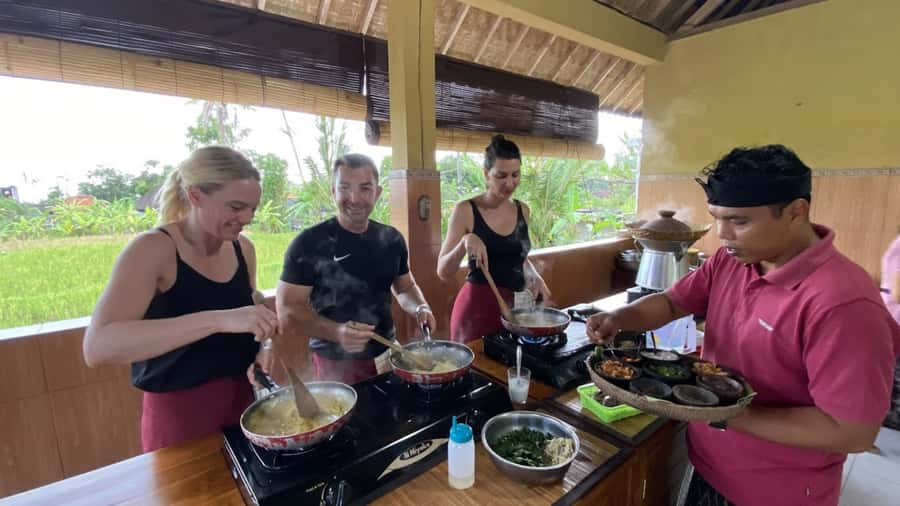
I love the hands-on approach, where you’re chopping, mixing spices, and cooking with a calm guide like Eri or Made guiding every step. I also love the payoff: you sit down with your group and eat the curries, satays, and desserts as the final dinner.
One thing to consider is cost creep if your pickup location is in the Sebali or Keliki area, where there’s an extra 50.000 per person. Also, the meeting point can be a parking field, since traffic at night can slow everything down.
In This Review
- Key things that make this Ubud cooking class special
- Why this class in Ubud works so well (not just another cooking show)
- Market time in Ubud: where flavors start (morning option)
- From ingredients to technique: how the kitchen instruction is set up
- The dishes you’ll make: curries, satay, and dessert with real purpose
- Small group energy: hands-on roles and coaching that actually helps
- Transfers and meeting point: how to plan your timing in Ubud
- Price and value: why $21 can be a fair deal in Ubud
- Who should book this class, and who might skip it
- Should you book this Ubud cooking class?
- FAQ
- How long is the cooking class in Ubud?
- Is there a market visit included?
- Does the tour include hotel transfers?
- What language is the guide in?
- How big is the group?
- What dishes will I cook and eat?
- Are dietary requirements accommodated?
- Should I book?
Key things that make this Ubud cooking class special
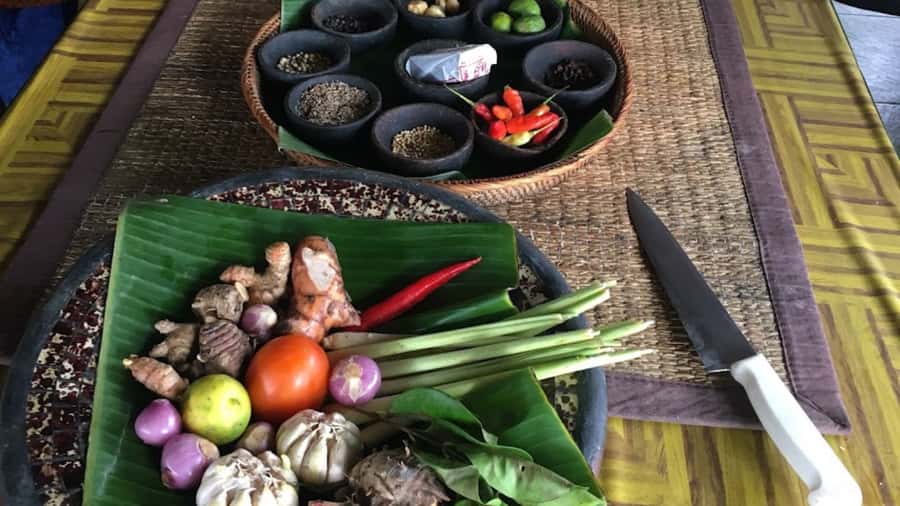
- Market-to-kitchen flow (morning option) so you understand ingredients before you cook
- Small group teaching with a class limited to 10 participants and lots of chance to get involved
- Real Balinese techniques for spice blending, chopping, and cooking the dishes you’ll eat
- Culture explained with the food, including why each dish matters in day-to-day Balinese life
- A proper meal at the end, not just a few bites, plus desserts
- A completion certificate to take home, plus support for dietary requirements when needed
Why this class in Ubud works so well (not just another cooking show)
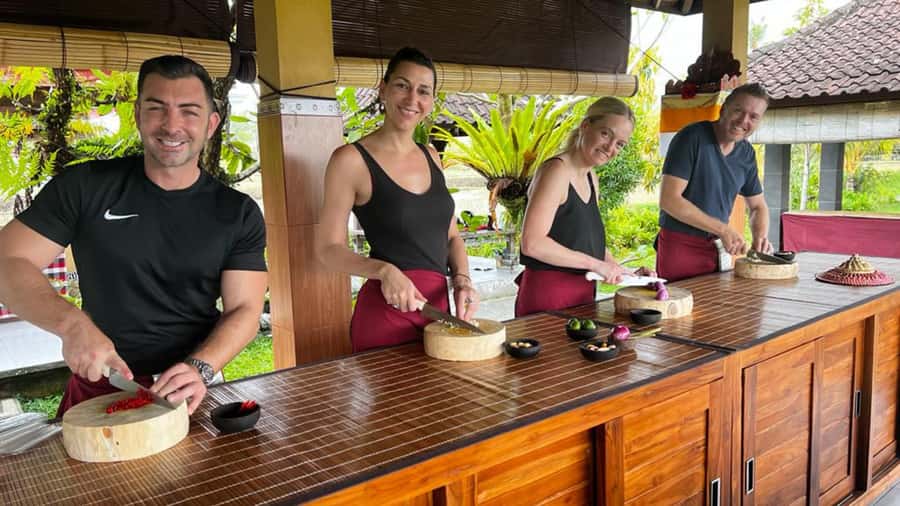
This isn’t built like a demo where you stand back and watch. You’re working in the kitchen with a guide, learning how flavors are built and how Balinese cooking thinks about balance. That’s the real value: you’ll leave with more than recipes for curry and satay. You’ll understand how to approach ingredients.
I also like the “small group” size. With a max of 10, instructions actually land, and it’s easier to ask why something tastes the way it does. The vibe stays focused, with plenty of time for hands-on tasks.
Finally, the cultural layer matters. You’re not just told what to cook. You learn the significance behind dishes, and that connects what you taste to the way Balinese people live.
You can also read our reviews of more tours and experiences in Ubud.

Market time in Ubud: where flavors start (morning option)
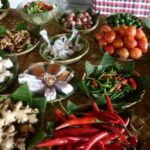
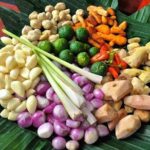
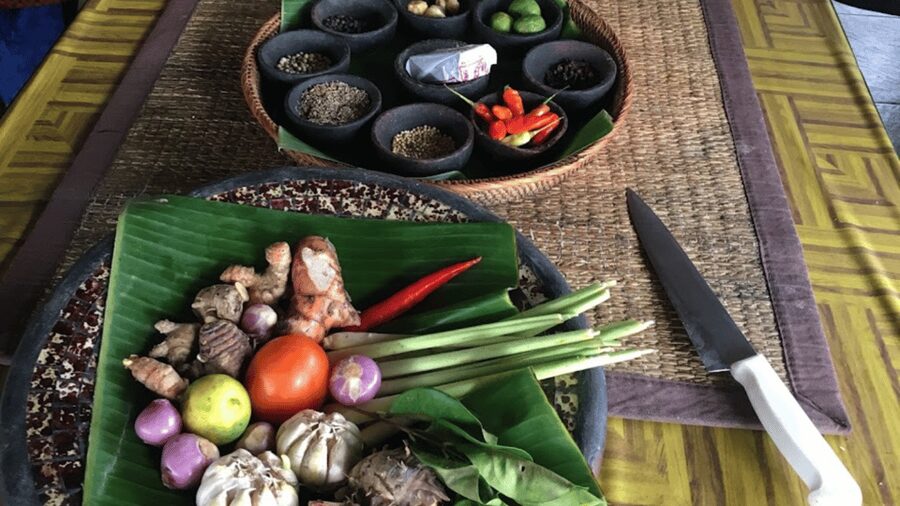
If you choose the morning tour, you’ll do a market visit with your guide before cooking. That part can be surprisingly useful, because Balinese cuisine depends on ingredients you might not recognize at home. You’ll see fruits, vegetables, herbs, and spices in the same places locals buy them, and you’ll get guidance on what matters for flavor.
The market walk also helps you understand cooking terms you’ll hear later in class. For example, spice blending isn’t just about making something spicy. It’s about building aroma and body, and your ingredient choices affect the final curry base and satay seasoning.
Practical note: the class includes hotel pickup/drop-off at Ubud Center for morning or afternoon options, so you’re not left figuring out transport on your own. If you want to go for the market experience, this is the best way to do it.
From ingredients to technique: how the kitchen instruction is set up
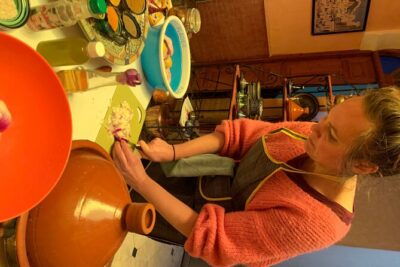
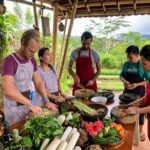
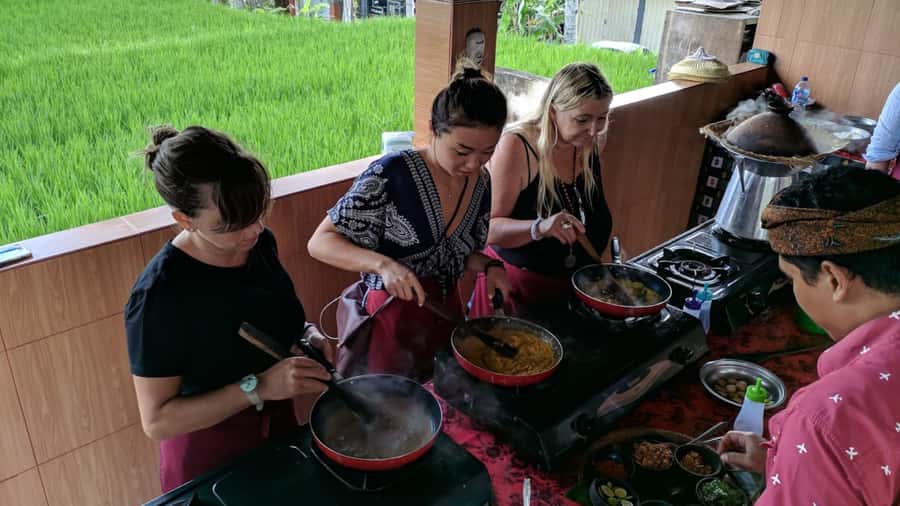
After picking produce, you head to a cooking school in tropical surroundings. The setup is designed so you can move through tasks without standing around. You’ll be shown how to chop, measure, and blend spices, then you’ll repeat it with your own hands.
Most cooking classes teach you steps. This one also tries to teach you the logic behind the steps. You’re working through the process while your guide explains how Balinese dishes come together and how cultural meaning connects to the food. That’s why people often say it feels like more than a cooking class.
If your host is Eri or Made, you’ll likely notice a similar pattern: clear explanations, calm pacing, and lots of patience for questions. Several reviews highlight how involved you are without feeling rushed or overwhelmed, which is exactly what you want if it’s your first time cooking this style.
And yes, you’ll likely notice the small things that make the experience easier: equipment that’s kept clean, organized teamwork, and a kitchen flow where you get more than one job.
The dishes you’ll make: curries, satay, and dessert with real purpose
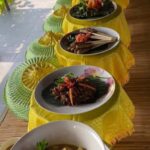
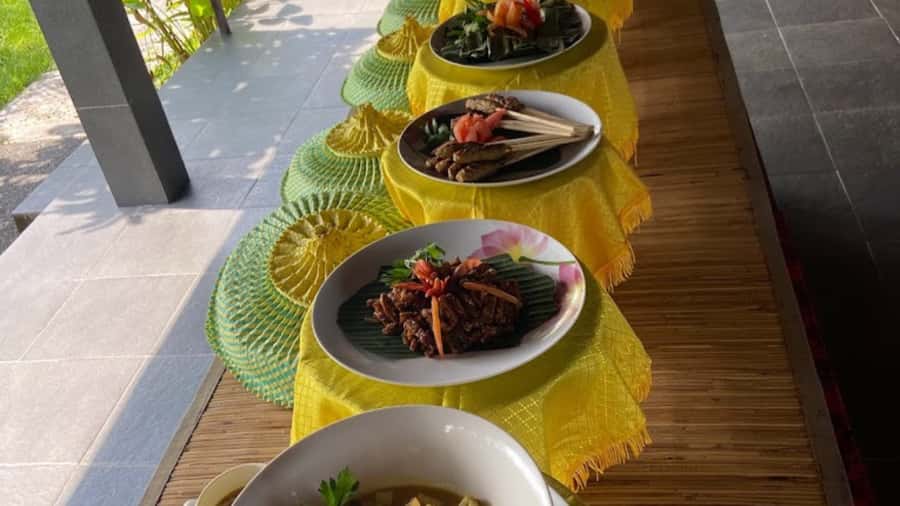
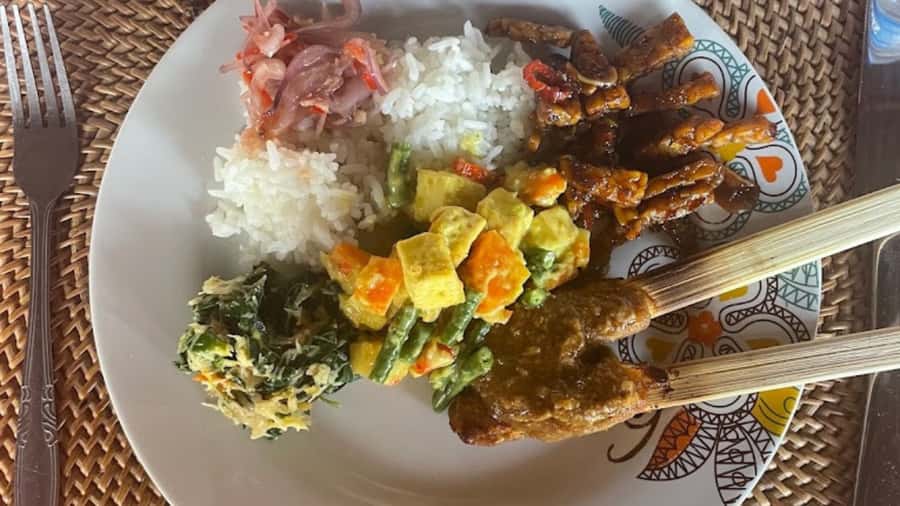
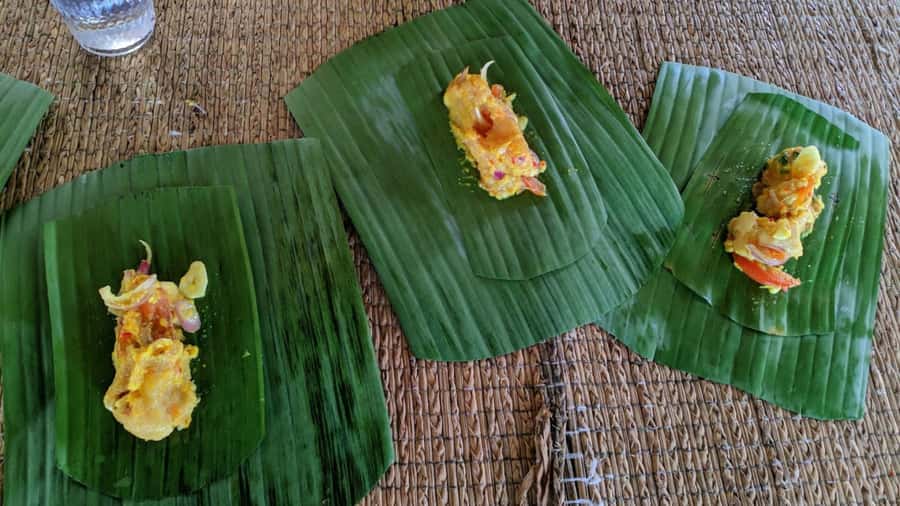
The headline dishes are fragrant curries, satays, and desserts. But the class is also described as a full spread, and many people report cooking around 10 dishes that become your dinner meal.
Here’s how to think about it while you’re cooking:
- Curries teach you how spice blends become sauce, how coconut or other components contribute texture, and how aroma builds as ingredients heat through.
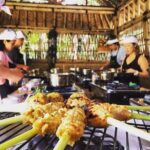
- Satays teach you flavoring and grilling basics, because the seasoning matters as much as the cooking time.
- Desserts show a different side of Balinese flavors, where sweetness often balances spice and fragrance rather than overpowering everything.
A key part is learning the significance of dishes. In practice, that means your meal doesn’t feel random. You can make connections between what you’re cooking and what it represents in Balinese daily life.
Some sessions also include small Hindu offering traditions, like making a canang offering, and a few people mention making an offering box related to Galungan. If that’s part of your session, treat it as part of the “why” behind the food, not a side activity.
Small group energy: hands-on roles and coaching that actually helps
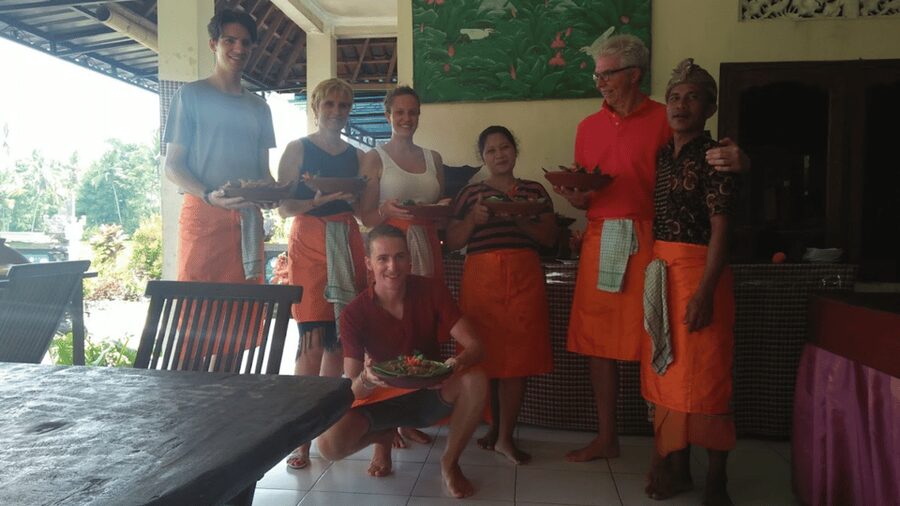
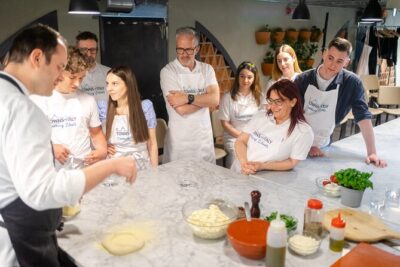
The class is limited to 10 participants, which keeps the kitchen manageable. You’re not stuck waiting for someone to finish before you can touch anything. With a small group, your guide can correct technique as you work.
I like how teamwork shows up. Reviews mention sous chefs or helpers, so there’s usually someone nearby to support the hand work—whether it’s chopping, grinding, mixing, or finishing a dish. That also makes it easier to handle timing. When everyone is cooking, the kitchen doesn’t drag.
This kind of setup is especially good if you’re traveling with different comfort levels. Someone who loves cooking will enjoy getting more responsibility. Someone who’s nervous will still be able to follow along because steps are explained.
Dietary needs are supported when possible. Multiple reviews specifically mention vegetarian options and alternatives for fish-related restrictions. If you have allergies or a strict diet, tell the organizer ahead of time so they can match you with the right ingredients.

Transfers and meeting point: how to plan your timing in Ubud
You can be picked up and dropped off at Ubud Center if you choose the morning or afternoon option. Pickup is listed as optional, and you’re expected to wait in your hotel lobby. That matters, because it changes how fast you can get moving once the class starts.
One practical wrinkle: the meeting point is in the parking field because night traffic can be heavy. If you’re doing an evening option, plan a little extra buffer time so you’re not stressed about being late.
Also, there’s a location surcharge if you’re in the Sebali or Keliki area. Before you lock it in, check whether your hotel sits in one of those areas so you know the total cost up front. This is one of those details that can surprise people if they only look at the headline price.
Price and value: why $21 can be a fair deal in Ubud
At about $21 per person, this is priced like a true budget-friendly food experience, especially because it includes more than a taste. You typically get:
- a guide
- a cooking class
- a meal (including desserts)
- hotel pickup/drop-off at Ubud Center for morning or afternoon options
- market tour for the morning option
For the time frame (2–3 hours), that’s a strong value. A normal paid lunch won’t teach you techniques, and a lot of paid cooking classes either skip the market part or don’t include the full sit-down meal.
What you get here is structured learning plus dinner. You work, you eat what you make, and you leave with cultural context that makes the meal feel connected to place, not just flavor.
If you’re the kind of traveler who likes “one good activity that feels worth the money,” this fits. It’s not trying to be fancy. It’s trying to be useful, and that’s why the price feels fair.
Who should book this class, and who might skip it
Book it if you want a hands-on Ubud activity that mixes cooking and culture in a short window. It’s ideal for:
- food lovers who want to learn how spices and ingredients actually work
- first-timers in cooking classes (the pacing and small group support help)
- couples or small groups who want an activity with a shared payoff at the table
You might skip it if you only want a casual, passive sightseeing moment. This class is built around doing work in the kitchen, so you’ll get more out of it if you don’t mind getting involved.
It also works well if you’re traveling with teenagers, since one review specifically calls out a great experience for a family group. Just keep expectations realistic: it’s a cooking lesson, not a long full-day tour.
Should you book this Ubud cooking class?
If your goal is to leave Bali with skills you can repeat at home, this is worth booking. You’ll learn how Balinese curries and satays come together, and you’ll understand the cultural meaning behind dishes instead of just memorizing steps.
I’d say go for it if you can do the morning option and want the market visit. Ingredient shopping first makes the cooking part click faster.
One last check: confirm your pickup area, especially if you’re not staying in central Ubud. If Sebali or Keliki applies, that extra 50.000 per person changes the real price.
Overall, this is one of those Ubud activities where the value isn’t just the meal. It’s the mix of hands-on cooking, patient coaching, and a clear cultural story tied to what ends up on your plate.
FAQ
How long is the cooking class in Ubud?
The experience lasts about 2 to 3 hours.
Is there a market visit included?
Yes, the market tour is included with the morning option.
Does the tour include hotel transfers?
Hotel pickup and drop-off at Ubud Center are included if you select the morning or afternoon option. Pickup is optional, and you wait in your hotel lobby.
What language is the guide in?
The live tour guide is in English, and an English audio guide is included.
How big is the group?
It’s a small group with a maximum of 10 participants.
What dishes will I cook and eat?
You’ll learn to make fragrant curries, satays, and desserts. The meal included is based on what you cook.
Are dietary requirements accommodated?
Dietary requirements are supported, including vegetarian options and alternatives for restrictions mentioned in reviews.
Should I book?
If you want a short Ubud experience that combines hands-on cooking with a guided explanation of Balinese food culture, book this. The included meal, the small group size, and the option to do the market visit make it feel like one of the most practical “food education” activities you can fit into a Bali trip.