REVIEW · TBILISI
7-Day Georgian Wine and Culinary Private Tour with Cooking Class
Book on Viator →Operated by Traffic Travel LLC · Bookable on Viator
Georgian food and wine, organized. That is the magic here: a small-group, private 7-day route that pairs winery stops with proper meal time and a hands-on cooking class. I like the way the tour mixes big-name sites with down-to-earth family cellars, so you get both polish and real local flavor. You also get a strong guide team, including a culinary expert, which matters when you want to understand what you’re tasting.
Two things I’d bet you’ll like fast. First, the cooking class is scheduled right after winery lunch, so the learning lands while your appetite is still switched on. Second, the itinerary hits stand-out tasting settings like Khareba Winery’s underground spaces, plus multiple tastings across different regions. One consideration: this is wine-forward, and the days run packed—great if you love food and driving, less fun if you want slow mornings.
If you’re picky about value, this tour has a clear logic: transportation in an air-conditioned minivan, hotel or guesthouse nights, tastings, and most meals are built into the flow. For around $784.62 per person, you’re paying for time saved and access arranged, not just “tickets to places.” With a maximum of 6 people per booking, you also avoid the heavy shuffle you get on larger group tours.
In This Review
- Key highlights to look for
- Your base in Tbilisi, and why a private route helps
- Day 1 in Tbilisi: Sarajishvili, Chateau Mukhrani, and your first cooking lesson
- Day 2 in Kakheti: Telavi, monasteries, Twins Wine Cellar, and Khareba underground
- Day 3: churchkhela, Teliani Valley, Shumi cooking, Signaghi, and Pheasant’s Tears
- Day 4: Kutaisi area with Uplistsikhe, Stalin’s museum, and Gelati Monastery
- Day 5 in Racha: Bugeuli, a family cellar near Ambrolauri, and Barakoni Monastery
- Day 6: Shaori Lake, Nikortsminda Cathedral, Prometheus Caves, and Kutaisi city time
- Day 7 back to Tbilisi: upper Imereti Road, Katshki Pillar, Mtskheta, Jvari, then gala night
- Value and practical expectations for $784.62 per person
- What to bring, and how to make the most of tastings and cooking
- Should you book this Georgian wine and culinary private tour?
- FAQ
- How much does the 7-Day Georgian Wine and Culinary Private Tour cost?
- How long is the tour?
- Where does the tour start?
- What is the meeting/start time listed for the tour?
- How many people can be in a booking?
- What’s included in the price?
- Are the tastings and meals covered, or do I pay extra?
- What kind of accommodation will I get?
- What is the cancellation policy?
Key highlights to look for
- Small-group private format (max 6): easier questions, less waiting, more chatting at wineries.
- Cooking class tied to tastings: you learn Georgian flavors right after tasting them.
- Kakheti wine-country day: monasteries plus multiple cellar/winery experiences.
- Khareba Winery underground tasting: a different kind of setting than a typical tasting room.
- Signaghi + modern cuisine at Pheasant’s Tears: a break from the usual “standard tour meal.”
- Multi-region scope with real stops: Tbilisi, Kutaisi, Racha, Shaori Lake area, and the Imereti route back.
Your base in Tbilisi, and why a private route helps
Tbilisi is your launching pad, and that’s smart. You start with city energy, then step out into Georgia’s wine regions with a guided plan instead of building a DIY driving puzzle. Because it’s private (up to 6 people), you get a pace that doesn’t feel like you’re sprinting from one photo stop to another. Your guide can also adjust timing when tastings or meal service run long, which is a real-world difference.
Transport is handled in an air-conditioned minivan, and the tour keeps things comfortable by design—this matters for day-long road time in Georgia. Bottled water is included, and you also get hotel pickup and drop-off, so you’re not spending your mornings herding taxis or figuring out meeting points.
The “who this suits best” part is simple. This tour is for you if you want to learn Georgian wine and cuisine as a story, not as random samples. It’s also ideal if you prefer being guided through places like monasteries and museums without worrying about what order makes sense.
If you’re the type who wants lots of free time, this one may feel tight. The schedule is packed with multiple tastings and major sights each day, and you’ll be traveling between regions regularly.
You can also read our reviews of more tours and experiences in Tbilisi.



Day 1 in Tbilisi: Sarajishvili, Chateau Mukhrani, and your first cooking lesson
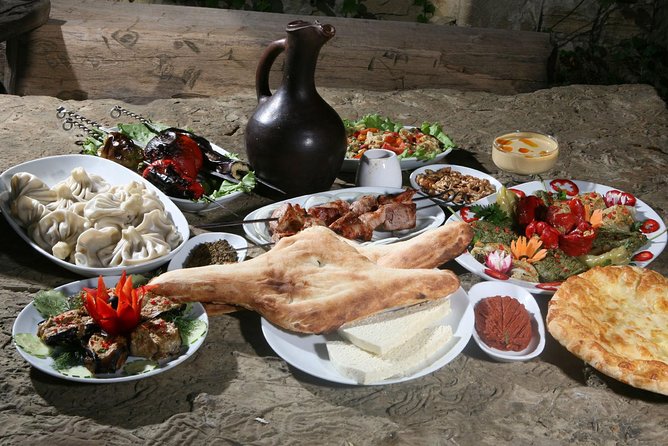
The first stretch in Tbilisi sets the tone: brandy and wine culture first, then food that you can actually recreate. You start with a stop at the Sarajishvili brandy factory, which gives context to how Georgia’s spirits and wine culture show up beyond simple tastings.
Next comes a meal at Chateau Mukhrani, a restaurant with its own vineyard. That pairing is important. Eating on-site at a place connected to the wine production chain helps you connect flavor and place faster than if you only taste in a separate tasting room.
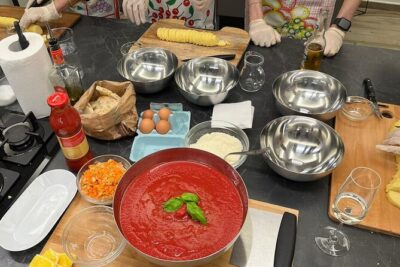
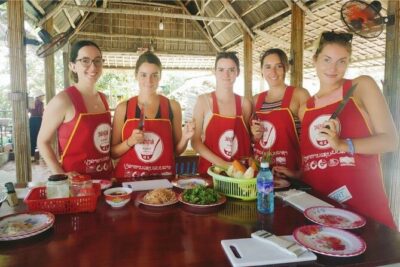
After lunch, you take a master cooking class focused on Georgian delicacies. This is where the tour earns its name as a culinary experience. Instead of just watching chefs or eating a set menu, you learn techniques and flavor-building steps tied to the same food culture you’ve been tasting. In practical terms, this is the part that turns your trip into something you can bring home—at least as ideas, if not exact ingredients.
Dinner is also arranged: you’ll have a traditional Georgian feast at Barbarestan, in a stylish Tbilisi district. It’s a nice first “big table” moment to end the day, especially after a day of tastings and learning.
One small timing note: the start time is listed as 9:00 pm in Tbilisi. Plan for a late evening arrival or late pickup style for the beginning of the experience, even if the “active” daytime sightseeing unfolds across the following days.
Day 2 in Kakheti: Telavi, monasteries, Twins Wine Cellar, and Khareba underground
Kakheti is the eastern wine region, and this day is built around that idea—wine plus culture. You begin in Telavi and explore the Alexander Chavchavadze Estate Museum, which adds a historical lens before you hit the tasting rooms. It’s a smart rhythm: first you get a sense of place, then you drink with better context.
Then the day shifts to spiritual landmarks: Alaverdi Monastery and Gremi Monastery. Even if you’re not the type who reads long explanations, these stops help you understand why Georgia’s wine story isn’t just about grapes. The landscape of villages, monasteries, and family properties is part of the cultural setting that surrounds production.
Wine tastings follow at two very different-feeling places. First, the Twins Wine Cellar in Napareuli, described as a rustic vineyard and museum experience. Rustic can mean relaxed, and that’s usually a good sign: you get to see the human scale of a working place.
Then you have lunch at Ikano Winery, with another wine tasting. After that, the day goes into something you don’t see on typical wine circuits: Khareba Winery, described as being located in a former bomb shelter, with a special tasting in underground tunnels. If you like your travel stories to have a memorable setting, this is the one day I’d point to.
Drawback to consider for this day: it’s a lot to process. Monasteries, estates, and multiple tastings in one day means your senses will be busy. Pace yourself at tastings, and don’t feel pressured to taste everything rapidly.
Day 3: churchkhela, Teliani Valley, Shumi cooking, Signaghi, and Pheasant’s Tears
This is the day that balances “snack culture” with more serious wine learning, then adds a town that feels different from Tbilisi.
You start with churchkhela, a traditional Georgian sweet made from grape juice. That’s a fun, edible bridge between wine ingredients and Georgian sweets—especially if you enjoy learning through food rather than through lectures.
Then you visit Teliani Valley Winery for a wine tasting. After that, you get another hands-on step: a masterclass at Shumi Winery. Having the cooking moments spaced across the tour (not all on day one) helps. You’re not just learning once and moving on—you’re getting repeated reinforcement, which makes recipes and flavor concepts stick better.
In the afternoon, you move to Signaghi, described as a red-roofed town in the heart of the wine region. Town time matters because it breaks the “all wine, all day” feeling. Instead of only seeing cellars and production settings, you get streets and atmosphere.
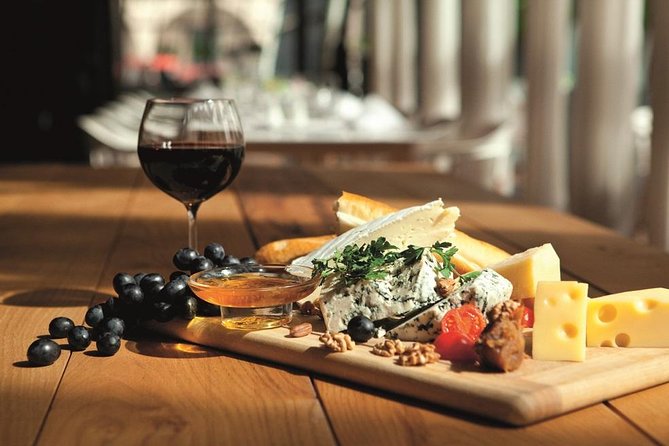
You then visit Pheasant’s Tears Winery, where the tour includes interpretive modern cuisine and their rich wine selection. If you’ve mostly been thinking about traditional Georgian flavors, this kind of stop gives you a sense of how modern Georgian dining can still connect to wine culture.
You also sample local bread and cheese, then return to Tbilisi in the evening. The day ends with dinner at Barbarestan again as part of the tour’s planned feast rhythm, making sure you get a real sit-down experience.
Day 4: Kutaisi area with Uplistsikhe, Stalin’s museum, and Gelati Monastery
The tour keeps momentum as you drive west to Kutaisi. This is a good shift because you’re no longer only in wine-country routines—you’re mixing wine with major cultural sights.
Before Kutaisi fully takes over the day, you visit the ancient cave town of Uplistsikhe. Cave towns can feel dramatic even when you’re not into archaeology, because you get that immediate “people lived here long ago” sense. It also breaks up the tasting pattern with a totally different kind of walking.
Then you stop at Stalin’s museum. This is one of those stops that may divide people—depending on your comfort level with political history in a travel setting. If you like museums and narrative context, you’ll probably appreciate it. If you want your trip to avoid heavy themes, you can still treat it as a historical stop rather than a debate.
After that comes an afternoon wine tasting, then a major spiritual landmark: Gelati Monastery. Even if you don’t spend hours inside, this kind of stop helps you see why Georgia’s cultural identity isn’t separable from religion and art.
You spend the night in Kutaisi, which is helpful. It gives you a proper reset after a day of mixed sights and at least one wine tasting.




Day 5 in Racha: Bugeuli, a family cellar near Ambrolauri, and Barakoni Monastery
Racha is northern Georgia, and the tour treats it like its own world rather than a quick detour. You start at Bugeuli Winery, then continue to a family wine cellar near Ambrolauri. That pairing is a big reason this tour feels authentic: it mixes a formal tasting experience with smaller-scale family hospitality.
Between tastings, you visit Barakoni Monastery, tucked between wild green mountains. Even without added commentary, the location concept tells you what kind of pause this is: a change of pace from wine tasting rooms into open-air scenery.
You sleep in Oni, a historic town in the region. That overnight matters because it makes the day feel like part of a route instead of a long day trip. You’re not bouncing back and forth constantly—you’re actually living in different towns.
If you’re sensitive to fatigue, this is where you’ll want to hydrate and slow down. A day like this comes down to stamina more than anything.
Day 6: Shaori Lake, Nikortsminda Cathedral, Prometheus Caves, and Kutaisi city time
You climb into a scenic day with Shaori Lake, described as clear water high in the mountains. The itinerary’s phrasing suggests you’re meant to see it from viewpoints and take in the overall feel, which is exactly what you want after prior days of tastings and monastery stops.
Then you visit Nikortsminda Cathedral, an 11th-century site. Cathedral stops often work best when you let them be “small moments.” You don’t need to rush through; you just need to notice the setting.
Next comes Prometheus Caves, a change of scenery that adds variety to the mix of wine and architecture. Caves can be cool and comfortable compared to outdoor walking, so it’s a practical break too.
After those mountain-area highlights, you return to Kutaisi for a city tour. This gives you a chance to connect the “sites” you’ve seen with the actual town where you’ll be sleeping.
Day 7 back to Tbilisi: upper Imereti Road, Katshki Pillar, Mtskheta, Jvari, then gala night
The final day is all about the scenic route and the big Georgian religious landmarks near Tbilisi.
You travel back via the upper Imereti Road and stop at Katshki Pillar, a natural limestone formation with a church perched on top. That kind of stop is visually memorable because you get the structure of the rock and the church together rather than just seeing one or the other.
Then you go to Mtskheta, Georgia’s ancient capital, and visit Svetitskhoveli Cathedral, described as the second-largest church in the country. You also stop at Jvari Monastery, on a cliff’s edge.
These final stops are a strong way to end if your goal is understanding Georgian culture as a chain: food and wine today, and then the deeper roots that shaped the country long before wineries and restaurants.
The tour ends with a gala dinner and a national folk show back in Tbilisi. That makes sense for a culinary-and-wine focused trip: you’re finishing with a performance-style celebration, not another tasting room.
Value and practical expectations for $784.62 per person
Let’s talk about the money in a way that helps you decide.
At $784.62 per person for about 7 days, you’re paying for:
- 6 nights in 3-star hotels or guesthouses
- Round-trip private transfers plus hotel pickup and drop-off
- Air-conditioned minivan transport
- A professional guide and a culinary expert guide
- Breakfast and dinner, plus tasting-focused meals included across the route
- Wine tastings and food tastings throughout
- Entry-type touring activities across multiple regions
If you tried to piece this together yourself, the biggest cost would be time and coordination: booking wineries, arranging transport between regions, and building in cooking and meals so they match what you’re seeing. Here, that work is done for you. You’re buying a functioning plan.
The best value sign isn’t the low price; it’s the structure. A tour like this only feels worthwhile if it keeps tastings and learning tied together, instead of turning into random stops. The fact that you get cooking classes on a guided flow, plus tastings that occur in specific places (including underground spaces), suggests the organizers are aiming for more than “see-and-go.”
Also consider group size. Max 6 people per booking tends to raise the value. It’s more likely you’ll actually talk with your guide, ask questions, and keep the day feeling human.
What to bring, and how to make the most of tastings and cooking
No tour is just a calendar. It’s what you do with the time.
- Wear shoes you can walk in on monastery steps and cave-town surfaces.
- Bring a light layer for caves and indoor spaces; temperatures can shift quickly.
- Pace your tastings. Wine tastings can stack up fast over several days.
- For the cooking class days, consider bringing a small notebook or phone notes. You’ll be tasting and learning at the same time, and it’s nice to capture what you want to repeat later.
If you’re vegetarian or have strict dietary needs, the tour data doesn’t spell out special meal handling. You might want to check directly with the provider before booking, especially because wine country meals and feasts are a major part of the experience.
Should you book this Georgian wine and culinary private tour?
Book it if you want a guided, small-group route that treats Georgian cuisine and wine as a learning experience, not a snack crawl. You’ll probably enjoy it most if you like mixing wine stops with cultural sights like monasteries and historic towns—and if you’re excited about cooking.
Skip it or at least think twice if you strongly prefer unstructured free time, or if you don’t want a packed schedule with multiple tastings across several regions.
If your goal is to leave with both better knowledge and better memories—food you understand, wine experiences you can place, and sights you actually remember—this one has a clear shape and good pacing for it.
FAQ
How much does the 7-Day Georgian Wine and Culinary Private Tour cost?
The price is $784.62 per person.
How long is the tour?
It lasts 7 days approximately and includes 6 nights of accommodation.
Where does the tour start?
It starts in Tbilisi, with hotel pickup and drop-off included.
What is the meeting/start time listed for the tour?
The start time is listed as 9:00 pm in Tbilisi.
How many people can be in a booking?
There is a maximum of 6 people per booking.
What’s included in the price?
Included features cover 6 nights accommodation, breakfast and dinner, food and wine tastings, a local guide and professional guide, private transport by air-conditioned minivan, bottled water, and round-trip private transfers plus hotel pickup and drop-off.
Are the tastings and meals covered, or do I pay extra?
Food and drinks are not included unless specified. The tour includes breakfast and dinner, plus food tasting and wine tasting as part of the program.
What kind of accommodation will I get?
You’ll stay in 3-star hotels or guesthouses each night.
What is the cancellation policy?
Free cancellation is available up to 24 hours in advance of the experience for a full refund. Canceling less than 24 hours before the start time is not refunded.