REVIEW · TBILISI
Private Cooking Class with a Tbilisi Food and City Expert Dinara
Book on Viator →Bookable on Viator
Georgia tasted better at someone’s home. In Dinara’s private apartment kitchen in Saburtalo, you get personal instruction and cook traditional Georgian dishes that her family has passed down through generations. You finish by eating what you made, family-style, right where you cooked.
One catch to consider: the menu is set by the class, so while you can expect a few specific classics, your exact mix of dishes (like khinkali vs. Shkmeruli) depends on what Dinara teaches that day. Also, you’re in a real home kitchen—so you’ll want to be comfortable with a more close-up, hands-on setup.
In This Review
- Key Things To Know Before You Go
- A Private Home Kitchen in Saburtalo (Not a Demo, a Meal)
- Meeting Dinara and Settling In Before You Cook
- What the Class Structure Feels Like in Real Life
- The 3 Dishes You’ll Make From Scratch
- Khachapuri: The Comfort Bread That Anchors the Table
- Georgian Salad and Pkhali: Fresh, Herb-Forward, and Not Just Side Dishes
- Khinkali or Shkmeruli: Pick Your Dumpling Day or Garlic Chicken Day
- The “Eat What You Cook” Part (Yes, It Matters)
- Dessert: Matsoni With Honey and Nuts to Close the Loop
- Price and Value: Is $148 Worth It?
- Who This Class Is Best For (and Who Might Want Something Else)
- A Quick Note on Ratings and Customer Support Signals
- Should You Book Dinara’s Private Cooking Class?
- FAQ
- What is the location of the private cooking class?
- How much does the class cost?
- How long is the cooking class?
- Is this a private experience or a group class?
- What dishes will be included?
- Will we cook, or just watch?
- Who will you meet during the experience?
- When will I get confirmation after booking?
- Are service animals allowed?
- Is there free cancellation?
Key Things To Know Before You Go
- Dinara’s home in Saburtalo: You meet her at her apartment and cook in the space she shares with her family.
- Hands-on for about 2.5 hours: You’ll make 3 Georgian dishes from scratch, not just watch.
- A real family-style meal at the end: You’ll eat the results at the table with Dinara and her household.
- Expect classics like khachapuri and pkhali: The class includes specific Georgian dishes with familiar flavors.
- A city-guide host, not just a cook: Dinara is also a Tbilisi guide (and a former café owner), so you get context, too.
- Private means your group stays together: This is only for your group, not mixed with strangers.
A Private Home Kitchen in Saburtalo (Not a Demo, a Meal)
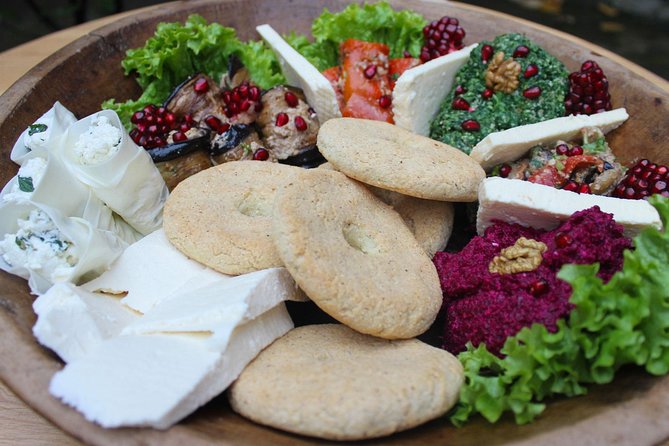
If you’ve had enough food tours that feel like you’re eating between checkpoints, this class is different. It’s anchored in one place: Dinara’s apartment in Saburtalo, where you’ll meet her and move straight into cooking mode. The goal is simple—make Georgian food with your own hands, then sit down and enjoy it.
I like that you’re not stuck in a “watch, smile, take notes” setup. You’ll get instruction as you work, and the time is built around cooking plus eating. That matters, because Georgian cuisine is all about technique and timing—things you only understand by doing them.
You can also read our reviews of more tours and experiences in Tbilisi.



Meeting Dinara and Settling In Before You Cook
The experience starts at Saburtalo, Tbilisi, and it ends back at the same meeting point. That keeps the day tight. There’s no long transfer to a studio, and you don’t spend your energy hunting for a kitchen you don’t know.
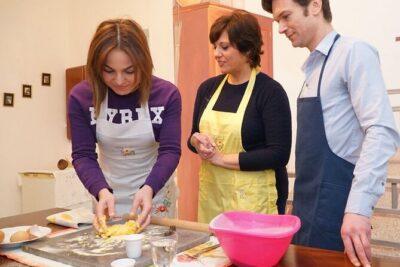
Dinara meets you at her apartment, which she shares with her husband, daughter, and a friendly dog. Before you get cooking, you’ll have a refreshing drink, then you’ll join her in a large open kitchen. It’s a welcoming setup, and you should think of this as hanging out in a home while you learn.
What the Class Structure Feels Like in Real Life
This runs about 3 hours 30 minutes total, with about 2.5 hours focused on hands-on cooking. That’s a good rhythm: long enough to actually learn, but not so long that you’re exhausted before you eat.
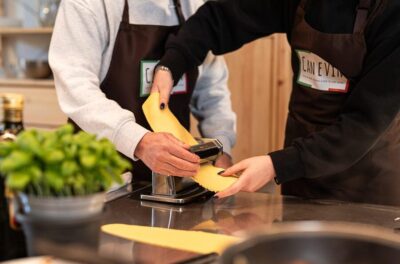
You’ll cook using recipes Dinara has learned from her family. And because this is private—your group only—you can ask questions without feeling rushed. If you like to understand what you’re doing (not just finish a task), this format fits well.
The 3 Dishes You’ll Make From Scratch
You’ll learn to make 3 Georgian dishes from scratch, and the class instruction is built around tips and techniques for Georgian cooking. Even if you’ve cooked before, expect a few moments where you realize the method matters as much as the ingredients.
Here’s what you can expect on the menu overall (the full meal includes more than the 3 dishes you cook):
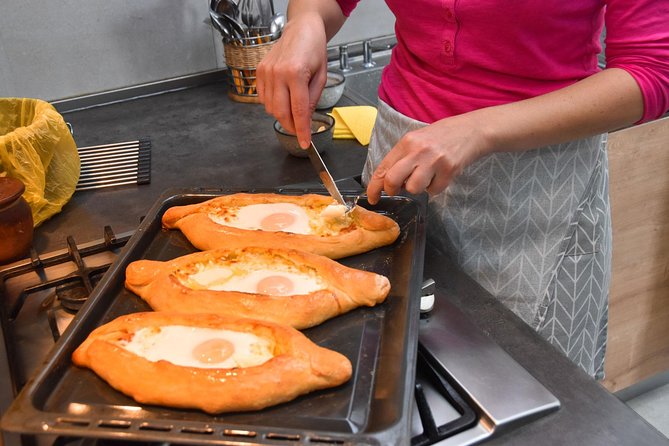
- Khachapuri: a cheese and egg filled bread
- A Georgian salad
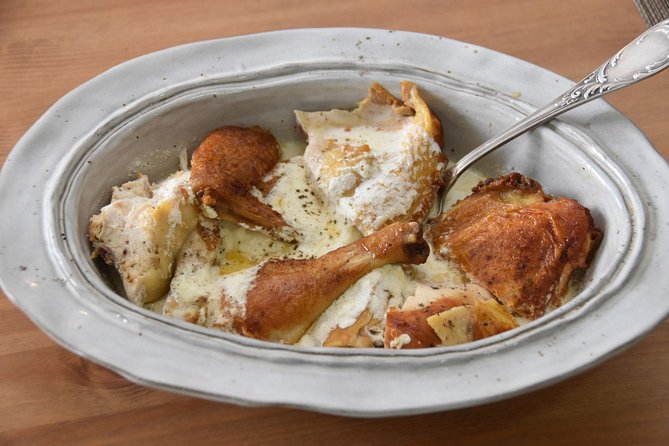
- Khinkali (Georgian dumplings) or Shkmeruli (fried chicken in a garlic sauce)
- Pkhali: minced vegetables with nuts and herbs
- Dessert such as matsoni (yogurt) with honey and nuts
Because your hands-on part is limited to 3 dishes, you’ll likely focus on the ones that best match your class group and Dinara’s flow. Either way, you’ll come away with a clearer feel for how these dishes are assembled and served.
Khachapuri: The Comfort Bread That Anchors the Table
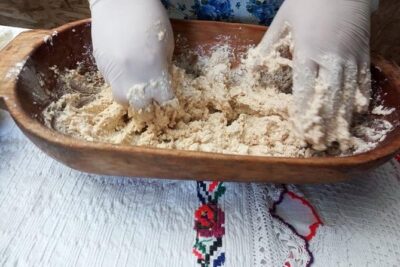
Khachapuri is one of those dishes you’ll recognize immediately from the name—but you’ll be surprised by how much detail goes into getting it right. Since the class includes it as cheese and egg filled bread, you’ll learn how the components come together rather than treating it like a generic stuffed bread.
What I like here is that khachapuri is both simple and technical. It’s not just about mixing; it’s about how you shape, build, and time the cooking. Georgian comfort food can feel “cozy” on the plate, but it still rewards doing things in the right order.




Georgian Salad and Pkhali: Fresh, Herb-Forward, and Not Just Side Dishes
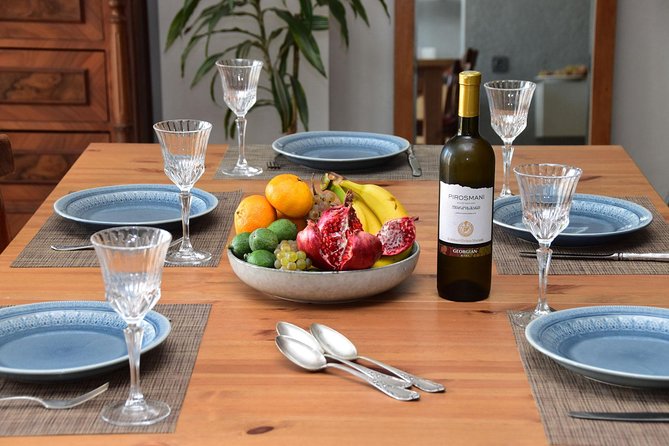
The class meal includes a Georgian salad plus pkhali, and both help balance out richer dishes. The salad gives you crunch and brightness, while pkhali brings herbs and nuts into the picture.
Pkhali is specifically described as minced vegetables with nuts and herbs. That description tells you a lot: it’s not just vegetables, and it’s not just a dip. You’ll get a sense of how Georgian flavors can be layered—earthy veg, then herbs, then nutty depth.
If you tend to focus on the big main dishes, this part is worth paying attention to. These are the flavors that make the meal feel complete, not just filling.
Khinkali or Shkmeruli: Pick Your Dumpling Day or Garlic Chicken Day
Your meal may include khinkali or Shkmeruli, and that choice depends on what Dinara teaches that day. Khinkali is Georgian dumplings, while Shkmeruli is fried chicken in a garlic sauce—so you’re looking at two very different textures and flavors.
If you do khinkali, you’ll likely spend time on the shaping and assembly side of dumplings, where small details matter. If you do Shkmeruli, the emphasis shifts toward cooking and sauce work. Either way, you’ll leave with a clearer sense of how Georgian dishes can swing from dumpling comfort to garlic-forward chicken satisfaction.
The “Eat What You Cook” Part (Yes, It Matters)
After the hands-on cooking, you’ll sit down together for a family-style meal. The table is where the class becomes more than just a cooking lesson.
This is also where you’ll get the full picture of how the dishes work as a set: bread plus salad, dumplings or chicken, pkhali, then dessert. It’s one meal, paced like a home dinner, not like a restaurant service where everything hits at once.
Dinara is a former café owner and also a city guide, so the conversation tends to be more than recipes. You might pick up practical context about Tbilisi and Georgian food culture while you eat—especially if you ask questions as you cook.
Dessert: Matsoni With Honey and Nuts to Close the Loop
The class concludes with a Georgian dessert, such as matsoni with honey and nuts. Since it’s yogurt-based with honey and nuts, it’s a sweet finish that doesn’t feel heavy in the way some desserts do.
Even better, it gives you a simple ending point to the whole experience: you started with cooking, you ate your handiwork, and now you end with a local-style finish.
Price and Value: Is $148 Worth It?
At $148 per person, this isn’t a budget activity. But it also isn’t a quick snack lesson. You’re paying for a private home experience plus real instruction and a full meal you prepare.
Here’s what makes the value hold up:
- It’s private (your group only), so you’re not squeezed into a large shared session.
- You cook 3 dishes from scratch, not a single dish or just a tasting.
- You eat a full meal afterward, including several Georgian classics.
- Dinara brings extra context as a city guide, not just a cook behind the scenes.
One more point: the experience is an average of 17 days booked in advance, which suggests people plan it as a deliberate highlight rather than a last-minute add-on. If you want the best chance of getting a slot that fits your schedule, book earlier rather than waiting.
Who This Class Is Best For (and Who Might Want Something Else)
This experience fits best if you like hands-on learning and you want Georgian food in a home setting. It’s especially appealing if you’re curious about how recipes get passed down and you enjoy asking questions while you work.
It may be less ideal if your goal is to spend the day doing sightseeing around Tbilisi. This class is focused on the apartment kitchen and the meal, so you’re trading city wandering for a deeper food experience.
Also, because the menu includes specific items like khachapuri, Georgian salad, pkhali, and dessert, it’s best for people who are open to trying those dishes. If you have strong dietary restrictions, you might need to confirm details directly with the host before booking.
A Quick Note on Ratings and Customer Support Signals
The overall rating sits at 4.2 from 5 reviews. One comment praised the experience as a highlight, and another mentioned a customer support hiccup around messaging, later handled by the platform involved. The takeaway for you: plan to confirm your timing and details, and if something feels off with support messages, push for resolution early so the experience stays smooth.
Should You Book Dinara’s Private Cooking Class?
If you want one memorable meal that teaches you something real, I’d book it. The biggest reason is the structure: private, home-based, hands-on cooking for about 2.5 hours, followed by eating what you made.
Book this if you:
- want a focused Georgian food experience in a Saburtalo apartment
- enjoy cooking with guidance and eating together afterward
- like the idea of learning recipes that come from a family setting
Skip it if you:
- mainly want sightseeing or a multi-stop city tour
- need a highly flexible menu or very specific dietary accommodations
If your schedule allows, it’s the kind of experience you’ll remember because you did the work and tasted the result.
FAQ
What is the location of the private cooking class?
The class takes place in Tbilisi, Georgia, with the meeting point listed as Saburtalo, Tbilisi. The experience ends back at the meeting point.
How much does the class cost?
The price is $148.00 per person.
How long is the cooking class?
The duration is about 3 hours 30 minutes total, with hands-on cooking lasting about 2.5 hours.
Is this a private experience or a group class?
It’s a private tour/activity. Only your group participates.
What dishes will be included?
The meal includes Georgian dishes such as khachapuri (cheese and egg filled bread), a Georgian salad, khinkali or Shkmeruli (fried chicken in a garlic sauce), pkhali (minced vegetables, nuts, and herbs), and dessert such as matsoni with honey and nuts.
Will we cook, or just watch?
You’ll get hands-on instruction and learn to make 3 Georgian dishes from scratch.
Who will you meet during the experience?
You’ll meet your host, Dinara, at her Tbilisi apartment, where she shares the home with her husband, daughter, and a friendly dog.
When will I get confirmation after booking?
Confirmation is received within 48 hours of booking, subject to availability.
Are service animals allowed?
Yes, service animals are allowed.
Is there free cancellation?
Yes. You can cancel for a full refund up to 24 hours in advance of the experience’s start time.