REVIEW · JAIPUR
Cooking Class in Jaipur – Family Experience with Meal & Transport
Book on Viator →Operated by vwitours · Bookable on Viator
Your hands learn Indian food fast. This Jaipur cooking class is built around a small-group, private-style lesson in a local home, with pickup and drop-off included. You cook, you eat what you make, and you get a window into day-to-day Indian cooking and family hospitality.
What I like most is how practical it feels from the first minutes. You’ll get hands-on guidance from the chef host, and you’re not just watching from the sidelines. Second, the meal part is included: dinner plus coffee/tea and other beverages, so the class ends with a proper table spread instead of a quick snack.
One thing to consider: the class is only about 2 hours, so you’ll learn a handful of dishes (not a full buffet of everything Indian). If you’re the type who wants to cook 8+ recipes, you may feel the time is tight—still, it’s enough to learn the core techniques you can repeat later.
In This Review
- Key highlights worth marking on your map
- A family-style cooking class in Jaipur with pickup
- What you’ll cook: the lunch/dinner set plus kheer
- The 2-hour flow: from prepping to sitting down
- Pickup, drop-off, and small-group logistics in Jaipur
- Price and value: what you really get for $29.98
- Who should book this Jaipur cooking class (and who should skip)
- FAQ
- FAQ
- How long is the Cooking Class in Jaipur?
- Is pickup and drop-off included?
- What kinds of dishes can I learn for the lunch/dinner class?
- What kinds of dishes can I learn for the breakfast class?
- Do I get dinner and drinks as part of the experience?
- How big is the group?
- Is the class private?
- Can I request a specific dish to cook?
- Do I need to tip?
- What’s the cancellation policy?
- Should you book this Jaipur cooking class?
Key highlights worth marking on your map
- Pickup and drop-off included so you can focus on cooking, not logistics
- Small max group size (8 people) for real interaction with the host family
- Cook the meal you eat with dinner plus beverages included
- Clear dish sets (4 items for lunch/dinner or 3 items for breakfast)
- English support may be available through the chef host (many classes run smoothly for non-Hindi speakers)
- Chef contact details shared so you can ask follow-up questions at home
A family-style cooking class in Jaipur with pickup

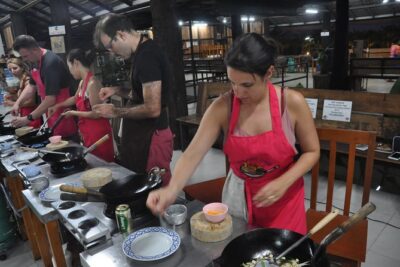
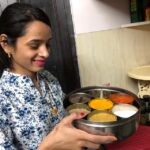
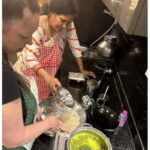
This isn’t a factory-kitchen workshop where you follow a script and leave with a folder. The format is more like: you’re invited into a home kitchen, taught step by step, and then you sit down for the meal you made. That home setting changes everything. The pace is calmer, the questions feel normal, and the cooking comes with stories about spices, habits, and ingredients.
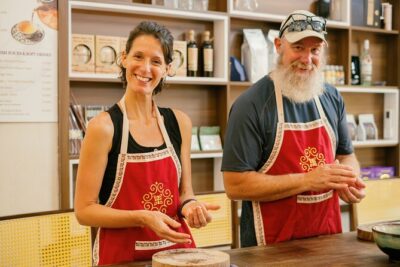
A lot of the best parts of these sessions come from the human side. Hosts you might meet include cooks such as Raveena or Sharda, and they’re often teaching with family members nearby. That matters because Indian home cooking is rarely “one person, one recipe.” It’s multitasking, tasting, adjusting, and learning by doing.
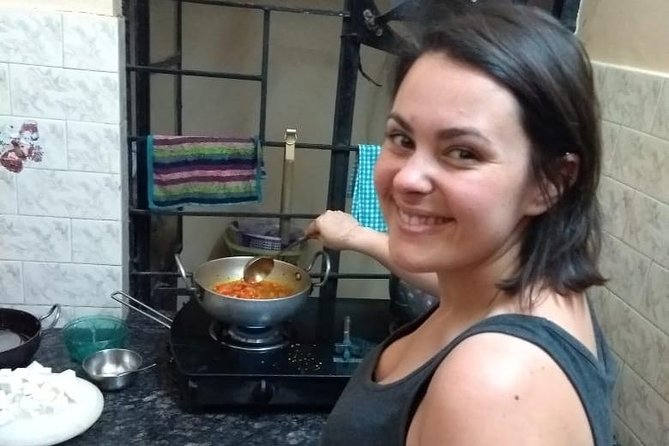
You’ll also want a clean, comfortable space—this matters in a hands-on class where you’re actively working at the stove and counter. Several classes are run with a very tidy kitchen setup, which makes it easier for first-timers to feel at ease, especially if you’re nervous about spices or timing.
And yes, you get the practical support too: transport for pick up & drop off is included. In Jaipur, that saves energy. You don’t have to time taxis with your cooking schedule, and you can show up ready to work, not stressed about getting there.
You can also read our reviews of more tours and experiences in Jaipur.

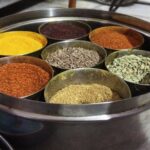
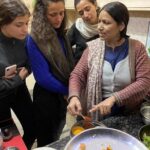
What you’ll cook: the lunch/dinner set plus kheer
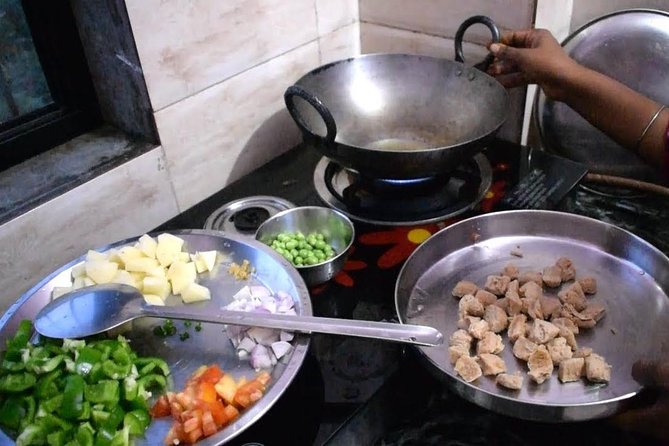
The core experience is hands-on Indian cooking with a defined set of dishes. For Lunch & Dinner, you’ll make any 4 items. You can expect around 2 vegetables, chapati, and rice pudding as part of the selection.
Here’s what’s typically on the menu for lunch/dinner learning:
- Roti / Chapati (Indian bread): the foundation. You’ll learn how dough behaves and what “right” looks like on the pan.
- Aloo Pyaaj Sabji (potato-onion dish): a classic comfort bowl where onions and potatoes teach timing and flavor balance.
- Daal Fry (lentils): this shows how Indian cooking builds depth with spices, tempering, and texture.
- Chana Masala or Bhindi Masala: chickpeas or okra, both common on Rajasthan plates, both good examples of how masalas cling and thicken.
- Khoya Paneer: richer and more indulgent, great if you want to understand how dairy turns a dish silky.
- Rice Pudding (Kheer) for sweets: dessert isn’t an afterthought here. It helps you see how Indian “sweet” cooking works with slow simmering and careful texture.
So what’s the value in this specific mix? It covers the big categories you’ll want to replicate later:
- bread vs. curry
- lentils vs. chickpeas
- a vegetable side
- one dessert built around cooking technique, not just sugar
If you choose the Breakfast version, you make any 3 items. The list includes:
- Masala Tea
- Upma
- Idli
- Poha
- Aloo Paratha
- Vegetable Spring Roll
- Vegetable Cutlet
This breakfast set is especially good if you want variety beyond roti-and-curry. You’ll see how Indian breakfast can be quick, snacky, and structured around texture—like the difference between poha and idli, or how a paratha-style approach changes the whole meal rhythm.
One smart move before booking: if there’s a specific dish you want—something you’ve tasted in Jaipur or want to recreate—there’s an option to request it ahead of time. That flexibility is rare, and it can make the whole class feel more personal.
The 2-hour flow: from prepping to sitting down
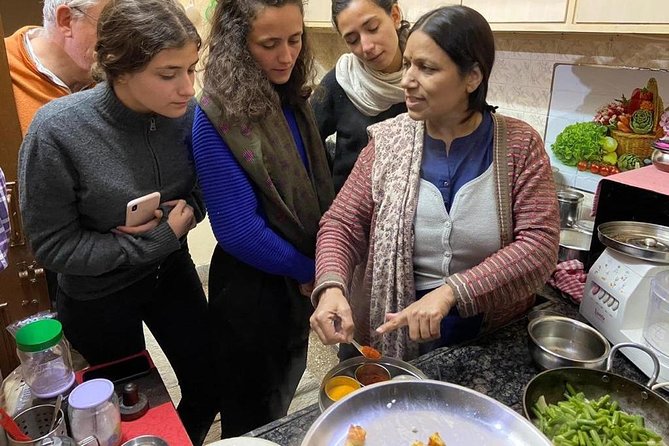
The class is designed around a tight timeline—about 2 hours—so you’ll feel the “do, taste, adjust” cycle quickly. Usually it starts with the host welcoming you into the kitchen and explaining what you’ll make. Then you jump into station work: chopping, mixing, rolling, and cooking in an order that actually makes sense for a group.
This is where the small-group limit matters. With up to 8 people, you’re more likely to get attention when you need it. You’re not waiting your turn for a pan while someone else holds the line. You’re involved, and you learn by watching and repeating.
If you’re worried you’ll only get “knife lesson” time, aim for sessions where you’re actively cooking the core recipes in the set. In many of these classes, the host guides you step by step and gives time for questions, so you understand what you’re doing and why—especially when it comes to spice use and bread technique.
At some point, you shift from kitchen work to table work. Dinner and beverages are included, and you’ll eat what you prepared alongside your host. That’s not just a perk. It’s the learning tool. You taste the dish at the moment it’s freshest, and you connect the flavor to each step you performed.
Coffee and/or tea is included too. One extra practical note: if you like a drink the moment you arrive, don’t assume that’s guaranteed at the exact start time. Still, coffee/tea is part of what’s included, so you won’t leave without a warm option.
Pickup, drop-off, and small-group logistics in Jaipur
Let’s talk about the part that can ruin a trip if it’s handled poorly: getting to and from the experience. Here, it’s taken care of. Transport for pick up & drop off is included, which makes this a strong choice if you’re mixing cooking with other Jaipur stops.
The class also has practical constraints that help the experience feel organized:
- Near public transportation
- Max 8 travelers
- Mobile ticket (so you don’t need printed documents)
- Confirmation is received at booking time
Also, consider the scheduling rhythm. This is usually booked about 18 days in advance on average, so if you have a specific day in mind, plan early. Jaipur has a lot going on, and slots can fill around popular sightseeing windows.
For tips: tips aren’t compulsory, but if you hire a car/driver through a local arrangement, you can budget something. A helpful guideline given for driver tips is 200 to 500 Rupees. That’s not a fee you pay to the class directly, but it’s smart travel math for courteous, efficient pickup service.
Price and value: what you really get for $29.98
At $29.98 per person, the price looks low compared to restaurant meals plus a real hands-on lesson. The value is in what’s bundled:
- Cooking class + meals with your cooking teacher
- Beverages, plus coffee/tea
- Transport (pickup and drop-off)
- All taxes and handling charges
The trade-off is simple: time. You won’t cook everything. You’ll cook a targeted set—four items for lunch/dinner, three items for breakfast. But those choices are the “repeatable skills” basket: roti technique, curry building, lentil/vegetable flavoring, and kheer (the slow-simmer sweet) or breakfast staples.
Who this is a good deal for:
- First-time visitors who want to learn Indian cooking without needing special equipment
- People who prefer small groups with personal attention
- Families or couples who want an activity that ends with actual food, not just a lesson
- Anyone who wants a home-kitchen feel rather than a commercial show
When you might feel it’s not enough:
- If your goal is learning a huge menu in one go
- If you want an included market tour (this class is cooking-only at the host house, not a market walk)
- If you expect a long 3–4 hour cooking immersion
For most people, the included meal and transport make it feel fair. For the “I want more time and more dishes” crowd, you may want to look for longer-format classes elsewhere.
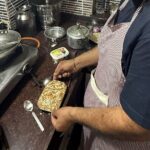
Who should book this Jaipur cooking class (and who should skip)
Book it if you want hands-on Indian cooking with a family meal feel. You’ll get real technique practice (bread, curry structure, and sweets) and you’ll eat what you make. The small size helps you ask questions and get corrections while you’re doing it.
Skip or reconsider if:
- You only care about a market tour or food walk. This one focuses on cooking at the home.
- You’re looking for a long, multiple-course cooking marathon. At 2 hours, it’s efficient, not sprawling.
- You want every dish on the planet. The menu is selective by design.
One last practical thought: ask for your preferred dish request ahead of time if the option is available during your booking. That one step can turn a good class into your best Jaipur memory.
FAQ
FAQ
How long is the Cooking Class in Jaipur?
It runs for about 2 hours.
Is pickup and drop-off included?
Yes. Transport for pick up & drop off is included.
What kinds of dishes can I learn for the lunch/dinner class?
For lunch/dinner, you learn any 4 items from options like daal fry, seasonal vegetables, khoya paneer, chana masala or bhindi masala, chapati or puri, and rice pudding (kheer).
What kinds of dishes can I learn for the breakfast class?
Breakfast options include masala tea, upma, idli, poha, aloo paratha, vegetable spring roll, and vegetable cutlet. You learn any 3 items.
Do I get dinner and drinks as part of the experience?
Yes. Dinner and beverages will be provided, and coffee and/or tea is also included.
How big is the group?
The class has a maximum of 8 travelers per booking.
Is the class private?
It’s described as a private cooking class experience, with the practical limit of up to 8 people.
Can I request a specific dish to cook?
Yes. You can tell the organizer if there is any specific Indian dish you’d like to learn before joining.
Do I need to tip?
Tips are not compulsory. A suggested driver tip guideline is 200 to 500 Rupees.
What’s the cancellation policy?
You can cancel for a full refund up to 24 hours before the experience’s start time.
Should you book this Jaipur cooking class?
Yes, if you want a small-group, hands-on Jaipur cooking class that ends with a real home-cooked meal—and you appreciate convenience like pickup and drop-off. It’s a good value when you treat it as a skill lesson: you leave knowing how to make roti/chapati, a lentil or chickpea dish, a potato-onion or other vegetable preparation, and kheer. If your dream is more dishes, more time, or an included market tour, then you’ll likely want a different format.