REVIEW · HANOI
Hanoi Cooking Class in a Haven of Tranquility – Thom culinary
Book on Viator →Operated by Thơm Culinary · Bookable on Viator
A herb garden meal starts with a quiet kind of learning. At Thơm Culinary, you mix a market food hunt with hands-on cooking, then sit down to eat what you made in a calmer pocket of Hanoi. The focus isn’t just recipes. It’s how Vietnamese cooks balance herbs, spices, and textures so the whole meal tastes intentional.
Two things I like right away: the hotel pickup and drop-off (so you’re not fighting Hanoi traffic before you even get started) and the way the class uses the city as a classroom. You’ll shop for ingredients at markets like Đồng Xuân, then connect what you bought to what you cook. That makes the dishes feel practical, not like a cooking show.
One drawback to plan for: you do spend part of the time walking around markets. If you’re sensitive to noise, crowds, and strong smells, you might find that portion a bit much, even though the cooking side of the day is much calmer.
In This Review
- Key highlights you’ll actually feel during the day
- Why Thơm Culinary feels calming even when Hanoi isn’t
- The cyclo to Đồng Xuân Market: how you learn flavors before the stove
- Old City Gate and the extra local stops that make it feel real
- Thơm Culinary’s herb and fruit garden: where the lesson clicks
- Cooking four authentic dishes: technique you can repeat
- The feast: homemade dessert, herbal drinks, rice wine, and etiquette
- Price and logistics: what you get for about $64
- Should you book Thơm Culinary’s Hanoi cooking class?
- FAQ
- How long is the Thom Culinary Hanoi cooking class?
- What does the price include?
- Is hotel pickup and drop-off available?
- How many dishes will I cook?
- What markets and stops are included?
- How big is the group?
- Is free cancellation available?
Key highlights you’ll actually feel during the day
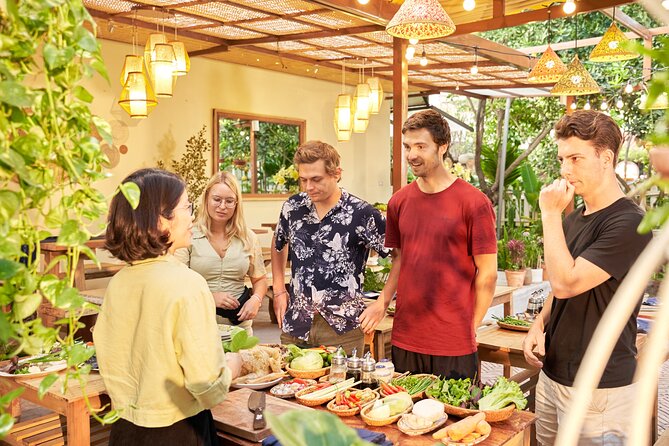
- Cyclo ride + market shopping first: You get the ingredients story before the stove story.
- Tranquil herb and fruit garden setting: The contrast between Hanoi streets and the garden is the point.
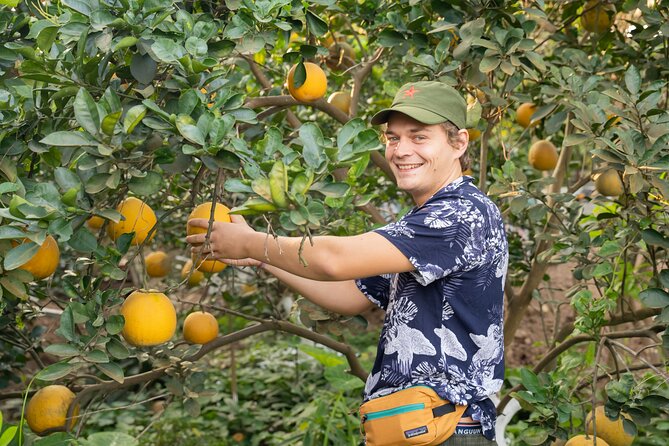
- Harvesting herbs and fruit: You learn what Vietnamese cooks mean by fresh, fragrant, and layered flavors.
- Four hands-on dishes: You’re not just watching; you’re chopping, sautéing, seasoning, and plating.
- Included drinks and sweets: Herbal drinks, homemade dessert, exotic fruit, and traditional rice wine are part of the meal.
- Small group size (max 8): More time for guidance when you’re learning technique.
Why Thơm Culinary feels calming even when Hanoi isn’t
Hanoi is loud, fast, and full-on. That’s why I like this class starts with a different mood. You’re guided through the day, but the cooking happens in a garden house setting that feels like a breather from the honking outside.
The class also has a clear teaching style. You don’t just get told what to add. You learn why Vietnamese cooking leans on herbs and spices and how cooks balance flavors that can seem opposites: fresh versus savory, cool versus warm, light versus deep. It’s a useful skill because you can carry it home when you shop and cook on your own.
And yes, there’s a sensory bonus. After the market stop, seeing a green herb and fruit garden makes everything click. You’re more likely to remember the names of plants and the role each one plays, because you can connect the lesson to what’s literally growing nearby.
You can also read our reviews of more tours and experiences in Hanoi.
The cyclo to Đồng Xuân Market: how you learn flavors before the stove
You’ll start with a cyclo ride and head toward Đồng Xuân Market, one of Hanoi’s most important trading areas. The payoff here is timing. Shopping first means you understand what ingredients are, where they come from, and how they’re used in everyday Vietnamese food.
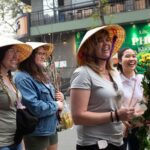
At the markets, you’ll do more than browse. You’ll get street food tasting and see how locals shop and trade. That helps you read Vietnamese menus faster later, because you learn what you’re looking at: herbs used for fragrance, greens used for freshness, and spices used for depth.
In practical terms, this is the best part for planning your own trip. After you’ve walked stalls and heard explanations, you’ll know what’s worth paying attention to when you’re on your own in Hanoi. You’ll also understand why some flavors feel bright and clean while others feel warm and savory.
A small caution: markets are crowded and busy by design. Give yourself patience for the walking and expect your senses to get hit at times. The good news is the cooking part is far more relaxed.
Old City Gate and the extra local stops that make it feel real
The day doesn’t just do one market and one kitchen. It builds in small stops that help you understand Hanoi beyond the food.
You’ll visit areas connected to Old City Gate, and you’ll also check out market variety by seeing Cầu Đông and Thanh Hà markets. The value here is variety. Different stalls lean toward different ingredients and textures, so the “shopping” phase feels like learning the system, not just collecting items.
There’s also a quieter, more unusual stop: a family worship hall and a fish pond. It doesn’t sound food-related, but it gives context for how food culture sits inside daily life, not outside it. You get a reminder that Vietnamese food doesn’t exist in a vacuum; it’s part of how people live, gather, and mark routines.
If you like cultural details that don’t drag, this pacing works. It’s enough variety to keep your brain engaged, but not so many detours that you lose the whole afternoon to walking.
Thơm Culinary’s herb and fruit garden: where the lesson clicks
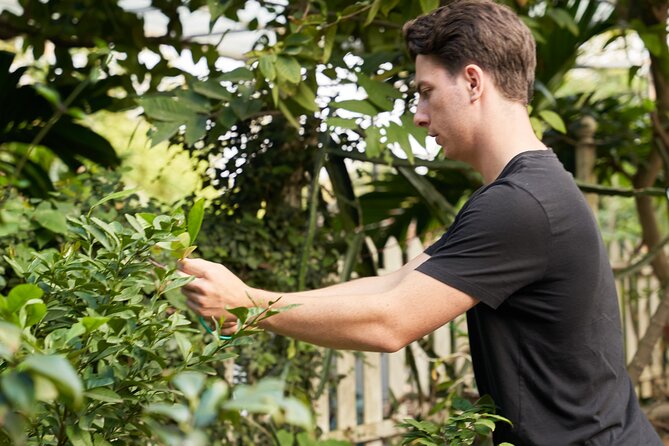
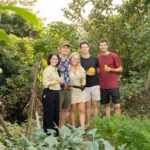
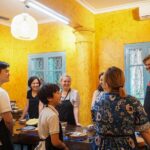
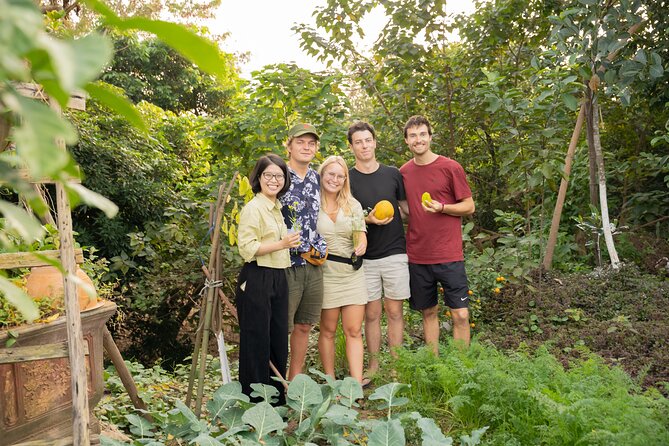
At the cooking base, the vibe changes fast. You’ll move into the kind of setting you usually have to work hard to find in cities: a lush green herb and tropical fruit garden next to the kitchen.
The class includes harvesting herbs and exotic fruit from the garden. That matters more than it sounds. When you pick the herb yourself, you learn how fresh it looks, how it smells, and how it behaves in a pan. Dry herbs and bagged herbs don’t behave the same way, and this helps you stop cooking with guesswork.
This is also where you learn the philosophy of Vietnamese cooking in a grounded way. The focus is on balancing contrasts—flavor and texture, sour and savory, cool herbs and warm spices. You’ll learn that Vietnamese cuisine often aims for harmony rather than one dominant taste.
If you’re the type who forgets recipes easily, I think you’ll do well here. You’ll remember the role of each ingredient because you experienced it in three ways: in the market, in the garden, and then on the plate.
Cooking four authentic dishes: technique you can repeat
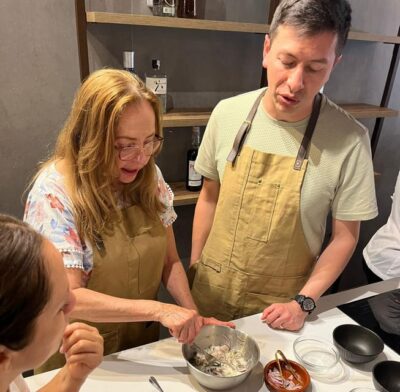
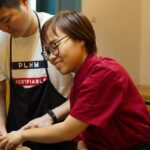
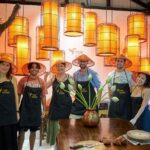
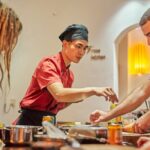
This is a real hands-on class. You’ll cook four authentic Vietnamese dishes, guided closely as you chop, sauté, season, and plate.
The best value is that you’re cooking from scratch with instruction tied to ingredient choices. Instead of treating the meal like separate recipes, the class frames it as one coherent set of flavors. You learn how herbs affect the final dish, not just what herb goes where.
You’ll also get practice with the basics that make a Vietnamese dish taste Vietnamese: timing, heat control, and seasoning balance. Those are the same skills that help you recreate food later, even if you don’t find the exact same herbs in your home supermarket.
From the included meal setup, you can also expect that the class doesn’t end when the cooking ends. You’ll finish with a full sit-down feast, and the meal is structured so you understand how each dish fits the others.
One more practical note: because you’re doing four dishes in a single session, you’ll want to listen carefully at the start. When the prep moves quickly, you’ll get more out of the class if you stay attentive and ask questions early, not mid-stir.

The feast: homemade dessert, herbal drinks, rice wine, and etiquette
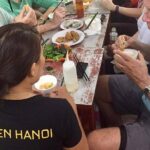
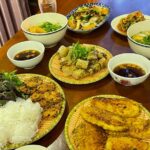
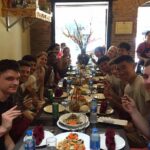
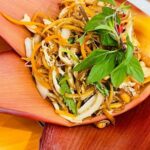
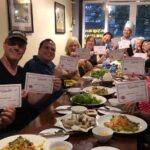
After the cooking, you’ll eat what you made. And it’s not just a plain meal. You’ll get homemade dessert plus traditional sweet treats, bottomless herbal drinks, and exotic fruit. Traditional rice wine is also included.
That mix makes the meal feel like Vietnamese dining instead of a teacher grading your chopping skills. You’ll also learn eating etiquette—how meals are meant to flow and how people approach sharing dishes and flavors at the table. Even if you’re not a formal diner, that context makes the food feel more grounded.
The herbal drinks are a nice touch for learning. They reinforce the herb theme of the day. Instead of herbs being just an ingredient, you experience them as something meant for refreshment and digestion.
Rice wine can be a deciding factor. The class includes it, so if you don’t drink alcohol, you’ll want to be ready for that aspect of the meal. The good news is the drink experience is part of a broader set of flavors—herbal drinks and fruit—so you’re not stuck with only alcohol.
Overall, this is the “why it matters” part. Cooking classes often stop at tasting. Here, the class ties the tasting to how you’re supposed to eat Vietnamese food.
Price and logistics: what you get for about $64
At $64.31 per person for about 4 hours 30 minutes, this class competes well if you care about more than cooking. You’re paying for transport (including round-trip transportation and cyclo), market time with street food tastings, four hands-on dishes, and multiple drinks plus dessert.
Value-wise, the biggest win is that it’s not just instruction. You’re also getting ingredients access and the cultural context that makes those ingredients make sense. If you’ve tried DIY cooking after a casual market visit, you already know the difference between buying things and understanding how to use them.
The schedule also helps. With pickup and drop-off near your hotel, you’re not losing time to finding your way around Hanoi before the class even starts. That’s especially important in a city where traffic can turn a simple ride into a long event.
One more plus: group size is capped at 8 travelers. That typically means you get better attention while cooking, and it’s easier to ask questions without shouting over a classroom full of people.
Should you book Thơm Culinary’s Hanoi cooking class?
If you want a hands-on Hanoi cooking class that teaches more than recipes, this is a strong pick. I’d book it if you like the idea of starting at Đồng Xuân Market, then learning herb-driven flavor choices in a garden setting, and finishing with a real meal that includes sweets and drinks.
It’s also ideal if you want an experience with a calmer pace than the typical city tour. The garden and garden harvesting give you a contrast that makes the whole day memorable. And the small group makes the teaching feel personal.
Skip it or adjust expectations if you dislike market crowds or you want a low-walking day. The market portion is part of the lesson, and it can get lively.
If you’re deciding between a generic cooking demo and a guided food-and-market experience, this one leans toward the practical middle: you learn technique, you learn ingredients, and then you eat well.
FAQ
How long is the Thom Culinary Hanoi cooking class?
It runs for about 4 hours 30 minutes.
What does the price include?
The package includes cyclo and round-trip transportation, street food tastings, 4 hands-on cooked authentic dishes, a unique homemade dessert, bottomless herbal drinks, homemade rice wine, exotic fruit, and herb/fruit harvesting from the garden. It also includes visits to markets such as Đồng Xuân, Cầu Đông, and Thanh Hà, plus a family worship hall and fish pond.
Is hotel pickup and drop-off available?
Yes. Pickup is offered, and you’ll also be transferred back to your hotel at the end.
How many dishes will I cook?
You’ll cook 4 hands-on dishes with guidance.
What markets and stops are included?
You’ll visit Đồng Xuân Market, Old City Gate, Cầu Đông Market, and Thanh Hà Market, plus a family worship hall and fish pond.
How big is the group?
The experience has a maximum of 8 travelers.
Is free cancellation available?
Yes. You can cancel for a full refund up to 24 hours in advance.