REVIEW · MADRID
Madrid Spanish Omelet Cooking Class and Bottomless Wine brunch
Book on Viator →Operated by The Cooking Clubhouse · Bookable on Viator
Madrid tastes better with a pan in hand. This Spanish omelet cooking class and bottomless wine brunch is a hands-on, pairs-based workshop at The Cooking Clubhouse, where you learn the recipes behind classic tapas-style brunch. Two big reasons I think it works: you get unlimited cava or wine while you cook, and the class is capped at 16 people for a relaxed feel.
Here’s the one trade-off to keep in mind: the session focuses on a specific set of recipes and you’ll finish with a cozy meal, not a wide, full-day tasting itinerary. If you’re hoping for a bigger “tour of everything Spanish,” this is more a skill-builder than a crawl.
In This Review
- Key highlights worth showing up for
- The Cooking Clubhouse: your 12:00 kickoff in Madrid’s Centro
- What the 1 hour 45 minutes actually feels like
- The Tortilla de Patatas moment: the Spanish omelet lesson that matters
- Salsa brava and potatoes: learning a sauce, not just a topping
- A Mallorcan tapa plus Spanish brunch energy
- Bottomless cava or wine: a fun fuel, not a separate party
- The communal table finish: eat what you made, not just sample
- Starters and sweet finish: ensaimada, honey-style flavors, churros, and coffee
- Instructors make or break it: the names that show up in great classes
- Price and value: what $96.12 buys you in Madrid terms
- Who should book this (and who might want a different Madrid class)
- Should you book the Madrid Spanish Omelet Cooking Class?
- FAQ
- What time does the cooking class start?
- How long is the experience?
- What language is the class offered in?
- What’s included in the food and drinks?
- How many people are in each class?
- If I cancel, do I get a refund?
Key highlights worth showing up for
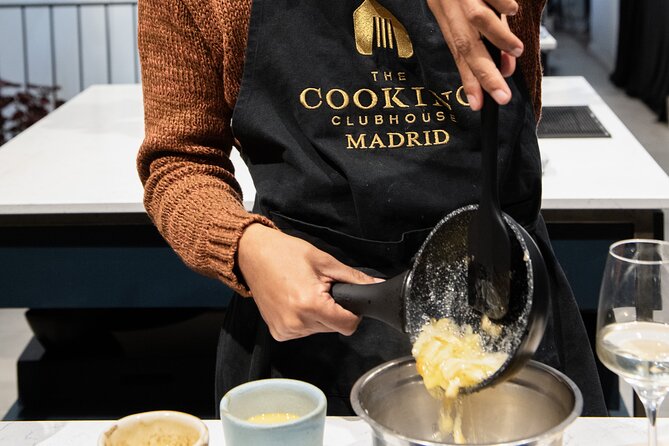
- Bottomless cava or wine while you cook, eat, and chat
- Four classic recipes you can repeat at home, not just watch and taste
- Small-group pace (max 16) that makes Q&A and pacing feel human
- Technique plus stories, including the origins/history behind national dishes
- A warm venue setup with a communal-table finish and a brick-lined dining room feel
The Cooking Clubhouse: your 12:00 kickoff in Madrid’s Centro
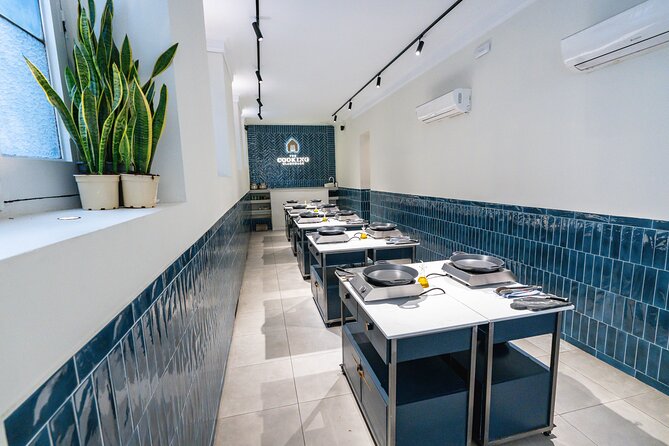
The experience starts at The Cooking Clubhouse, C. de Atocha 76, in Centro. One review called out that it’s easy to find right near the San Martín metro exit, with the entrance at street level. That matters more than you’d think in Madrid: when you arrive stressed, you cook worse.
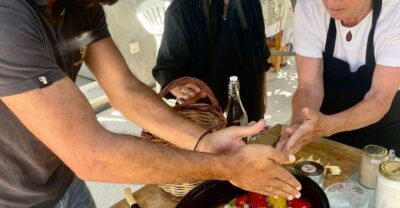
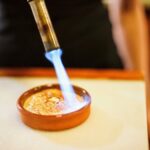
The vibe is part kitchen class, part social hang. Expect a storefront-style check-in first, then you’ll move into a proper cooking setup. Reviews also describe a clean, professional space with induction cooktops and good tools. Translation for you: you’re not fighting for a pan, a burner, or a utensil. You can focus on learning what actually makes the food work.
Timing is tight and friendly: it runs about 1 hour 45 minutes, and it ends back at the meeting point. So you’re not stuck with a half-day commitment if you still want to see neighborhoods afterward.
You can also read our reviews of more tours and experiences in Madrid.
What the 1 hour 45 minutes actually feels like
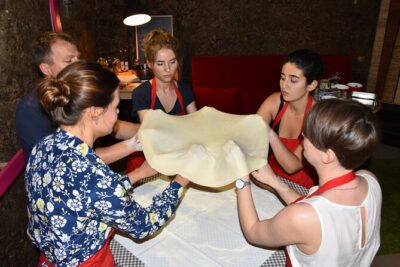
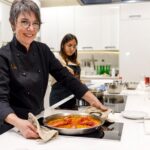
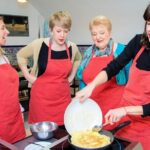
This is a hands-on workshop where you work in pairs. That sounds simple, but it’s the secret to why this class keeps coming up as memorable. You get real cooking contact—flipping, stirring, sauce work—without the awkwardness of standing around alone.
A lot of the ingredients are prepped in advance, so you can move from instruction to action quickly. That’s a plus for most people: you’ll spend your time learning technique instead of doing a long prep marathon. The one caution is for the few who love every step from scratch—this class is built to keep the pace brisk, so it won’t feel like an all-day “grow your own ingredients” project.
During the workshop you’ll also have bottomless tea, coffee, wine, or cava. In practice, that means you can keep the mood upbeat while you’re learning things that need patience—like getting tortilla timing right or balancing salsa brava flavor.
Group size is capped at 16, and multiple reviews describe chatting with others because the class isn’t huge. Even if you book solo, you’re not stuck in a silent bubble.
The Tortilla de Patatas moment: the Spanish omelet lesson that matters
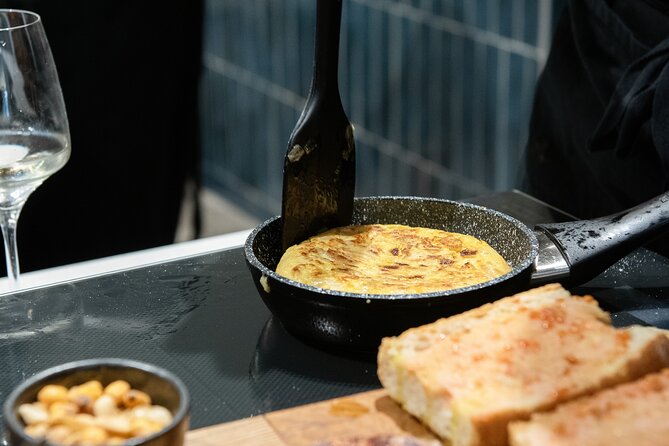
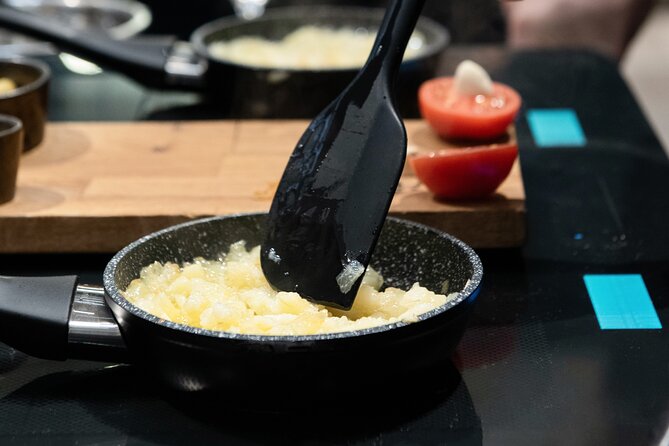
The centerpiece is the traditional Spanish tortilla, and you’ll learn it as a real process, not just a final dish. Reviews consistently highlight tortilla technique and easy-to-follow instruction, with instructors guiding you step-by-step.
Here’s what you’ll likely want to pay attention to while you’re cooking:
- Getting the egg and potato balance right so it’s set but not dry
- Learning how to handle heat so the tortilla doesn’t go from golden to overdone
- Understanding how the tortilla becomes sliceable, not just a soft scramble
The staff also bring in context—at least one instructor is praised for explaining Spanish history alongside the cooking process. That’s useful because tortilla de patatas isn’t just a “breakfast thing.” It’s a national comfort food, and the class is designed to connect technique with why the dish exists and how it became a staple.
One review basically summed up the feeling as: you leave confident you can make it at home. That’s the real goal. If you want a Madrid souvenir you can eat repeatedly, this part is where you’ll get it.
Salsa brava and potatoes: learning a sauce, not just a topping
After the tortilla comes salsa brava and potatoes. Brava sauce is one of those “I’ve had it a hundred times” foods until you try to build it. The class approach helps you understand the logic of flavor—how heat, texture, and seasoning come together—so you can stop treating it like a mystery restaurant product.
In a workshop setting, you’re not just tasting. You’re actively making it, which gives you a mental model for how to adjust things later at home. If you like tapas culture, this is also a handy skill because salsa brava shows up all over Spain, even when it’s served slightly differently by region and bar.
One practical tip if you’re cooking along: watch the sauce consistency. Reviews focus on instruction and technique, but salsa brava is won or lost on texture as much as taste. You’ll learn what they mean by perfect, and you can repeat that at home.
A Mallorcan tapa plus Spanish brunch energy
The workshop also includes a typical Mallorcan tapa. The exact tapa isn’t named in the provided menu details, but you should expect flavors that feel at home in a Spanish brunch-to-tapas rhythm.
Why this matters: tortilla and brava are Spain-wide icons, but adding a Mallorcan element gives you variety and a chance to learn something beyond the most famous hits. It’s also a good way to taste the idea that Spanish food is regional. Same language, different neighborhoods.
This is also where the atmosphere really helps. You’re cooking, chatting, and swapping small food questions with whoever is next to you. Several reviews mention that the experience supports socializing—especially for solo travelers who want a “from isolation to integration” kind of trip moment.
Bottomless cava or wine: a fun fuel, not a separate party
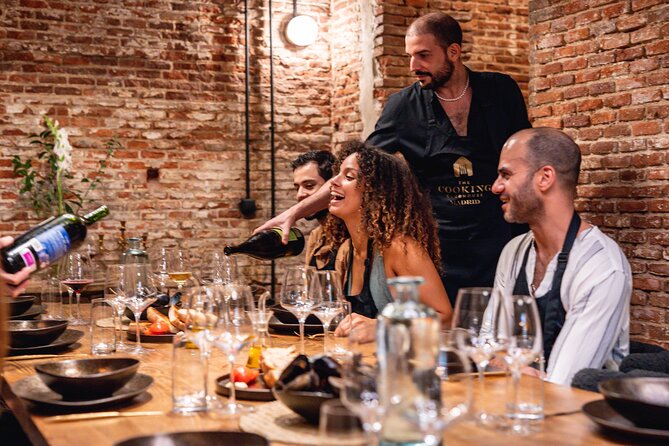
The brunch side is built around bottomless cava or wine during the workshop. Drinks aren’t treated as a separate gimmick. They’re part of the meal rhythm while you cook and then sit down afterward.
One review highlighted that glasses were never empty and that the instructor kept the flow going. Another described music, sparkling wine, and a high-energy feel. So yes, it can be lively, but it’s still a cooking class first.
Practical advice: if you’re sensitive to alcohol or prefer to keep your hands steady, pace your drink. Coffee and tea are also included, and the workshop isn’t built to force you into a party mood.
The communal table finish: eat what you made, not just sample
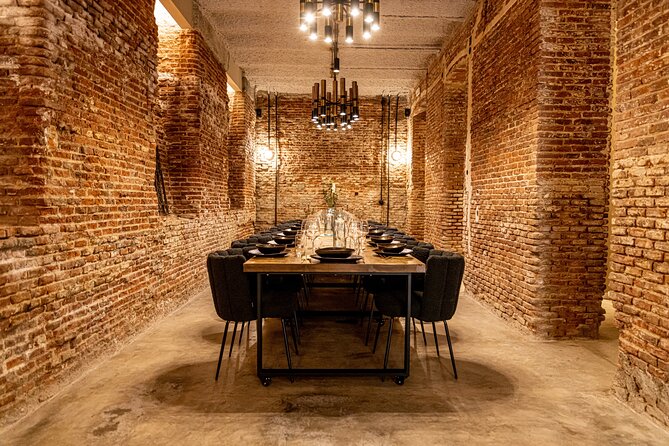
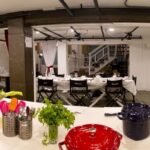
Once your dishes are ready, you’ll wrap up seated at a communal table. Reviews describe a cozy dining room feel, with exposed brick walls and a welcoming setup. This is where the class shifts from “learn and cook” to “sit, taste, and share.”
This part matters for two reasons:
- You learn best by eating your own results. If tortilla texture is off, you’ll notice—and it clicks for next time.
- You get to talk with your pair and the rest of the group while the meal is fresh.
In a small class, people tend to actually talk. That’s not guaranteed everywhere in Madrid, but here it’s part of the structure.
Starters and sweet finish: ensaimada, honey-style flavors, churros, and coffee
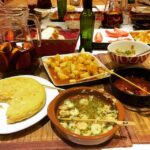
The sample menu includes:
- Starter: ensaimada
- Starter: sobre asada y miel
- Starter: salsa brava and potatoes
- Main: traditional Spanish tortilla
- Dessert: churros and chocolate
- Plus freshly brewed coffee
Even if you’re mainly there for tortilla skills, don’t skip the early bites. Ensaimada is a reminder that Spanish brunch can be sweet and buttery, not only savory. And sobre asada y miel adds a salty-sweet contrast that makes you appreciate what you’re building in the savory dishes.
The ending is classic Madrid comfort. You’ll finish with churros and chocolate and freshly brewed coffee. It’s the kind of close that makes the whole class feel like a complete brunch meal instead of a quick cooking session.
If you’re the type who plans your day around dessert, this is a strong reason to do it at midday. It gives you a satisfying finale before you head out to walk it off.
Instructors make or break it: the names that show up in great classes
The staff really come through in the reviews. Names you’ll see mentioned include Jaime, Pao, Vasco, and Eric, and they’re praised for being friendly, fun, and focused on both technique and Spanish food context.
A couple of the specific “why this matters” points:
- Jaime is described as greeting people with a drink right away, then explaining the process while sharing Spanish history.
- Vasco is praised for technique focus and keeping energy up, including music and sparkling wine in the mood.
- Eric gets repeated love for making the environment feel easy to learn in, while still being structured.
You don’t need a culinary degree here. The best classes teach you so you can repeat the steps later, and these instructors seem to aim for that.
Price and value: what $96.12 buys you in Madrid terms
At $96.12 per person for about 1 hour 45 minutes, you’re paying for more than a meal. You’re paying for:
- Four recipes you can replicate at home
- An instructor-led workflow with real hands-on cooking
- A small-group setting (max 16)
- Breakfast food plus bottomless wine or cava during the workshop
- Coffee and tea included, and a dessert finale
Compared to grabbing drinks and tapas on your own, the value comes from the instruction and the structured meal. You leave with practical skills, not just full stomach satisfaction.
Also consider timing value. Because it’s not a long class, you’re not losing half your day. That’s a big deal when you’re paying for guided experiences during a trip.
Who should book this (and who might want a different Madrid class)
This class is a strong match if you:
- Want an authentic Spanish skill, especially tortilla de patatas
- Like hands-on cooking where you actually use your hands
- Enjoy a social setting but don’t want a huge group
- Want bottomless drinks tied to a food-focused plan, not a separate nightlife activity
It may be less ideal if you:
- Want a wide-ranging “Spain tour by food,” with lots of different dishes beyond the four core recipes
- Prefer a super long, slow cooking class with minimal alcohol pacing
One extra note from reviews: one class was described as accommodating a vegetarian smoothly. If you have dietary needs, you should ask ahead so the team can guide you properly. Don’t assume all dishes will automatically fit every restriction.
Should you book the Madrid Spanish Omelet Cooking Class?
I’d book it if you’re the kind of traveler who wants a concrete takeaway. This works because it combines three things that rarely line up perfectly: solid instruction, a fun Madrid brunch rhythm, and enough food structure to feel like a complete experience.
If you like tortilla and tapas culture, you’ll get serious mileage from learning how to make salsa brava and the tortilla technique that makes Spanish omelet slices work. And if you want a midday break that still feels like Madrid, the Cooking Clubhouse does that with a cozy room and a communal finish.
FAQ
What time does the cooking class start?
The class starts at 12:00 pm.
How long is the experience?
It lasts about 1 hour 45 minutes.
What language is the class offered in?
The experience is offered in English.
What’s included in the food and drinks?
Coffee and/or tea, alcoholic beverages (bottomless cava or wine), breakfast, and the cooking class are included. The sample menu includes ensaimada, sobre asada y miel, salsa brava and potatoes, traditional Spanish tortilla, and churros with chocolate plus freshly brewed coffee.
How many people are in each class?
There is a maximum of 16 travelers.
If I cancel, do I get a refund?
Free cancellation is available. You can cancel up to 24 hours in advance for a full refund. If you cancel less than 24 hours before the start time, the amount paid is not refunded.