REVIEW · MADRID
Madrid: Paella & Tapas Cooking Class and Market Visit
Book on GetYourGuide →Operated by Devour Tours · Bookable on GetYourGuide
Paella tastes better after the market. This Madrid class mixes a neighborhood market visit with a hands-on kitchen session, so you get the why behind Spanish food, not just the what. You start by shopping with an expert guide near one of Madrid’s most historic markets, then move into a private cooking space in the Huertas area to build your meal step by step.
I especially like the sweet vermouth aperitif in the kitchen, because it sets the tone for how Spaniards treat drinks and food as part of the same ritual. I also love the way you cook with a chef in a small group, with clear instruction that covers everything from assembling a tapa-style cheese plate to making paella Valenciana the right way.
One real consideration: this experience is not suitable for vegans, celiac disease, or lactose intolerance, and it’s also not built for kids under 12. If you’re gluten-free but not celiac, you may be able to work with the provider, but you’ll want to confirm your situation ahead of time.
In This Review
- Key highlights you’ll care about
- Market-first Madrid: from Plazuela Anton Martín to the right ingredients
- Sweet vermouth in the kitchen: how the aperitif sets up the meal
- Huertas kitchen energy: hands-on, small-group, and chef-led
- Croquetas to paella Valenciana: the two tapas and the big skill
- Your lunch plates: beer, wine, and finishing with crema catalana
- What you’ll learn beyond recipes (and how to use it at home)
- Price and value: is $108 fair for 3.5 hours?
- Who this tour is best for (and who should skip)
- Should you book the Madrid Paella & Tapas cooking class?
- FAQ
- How long is the Madrid paella and tapas cooking class?
- Where do I meet the guide?
- What dishes are included?
- Is the tour in English?
- What dietary needs can be accommodated?
- What should I bring and wear?
Key highlights you’ll care about
- Historic-market shopping for high-quality ingredients right at the start
- Sweet vermouth aperitif plus a Basque-style tapa/cheese plate setup
- Hands-on cooking in a private space behind the scenes in Huertas
- Croquetas and paella Valenciana taught with practical guidance on what makes it authentic
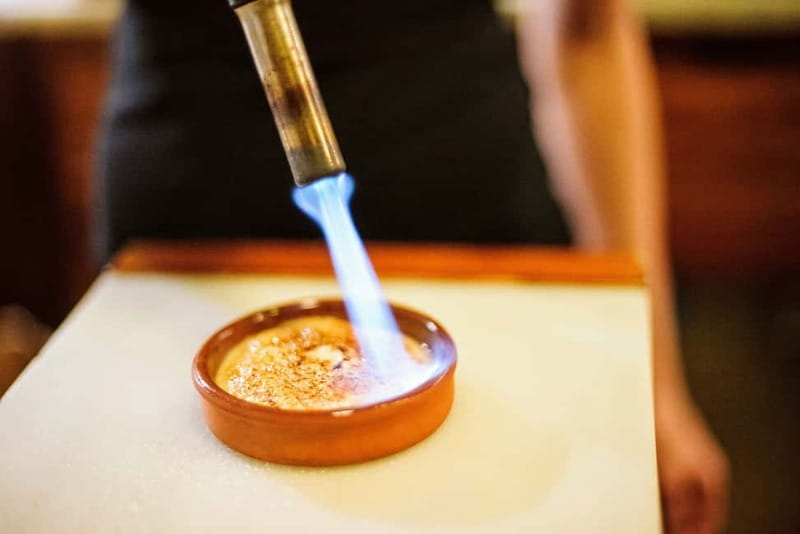
- Crema catalana dessert prepped and finished for you at the end
- Chef-led instruction with a PDF cookbook and repeatable steps for home
Market-first Madrid: from Plazuela Anton Martín to the right ingredients
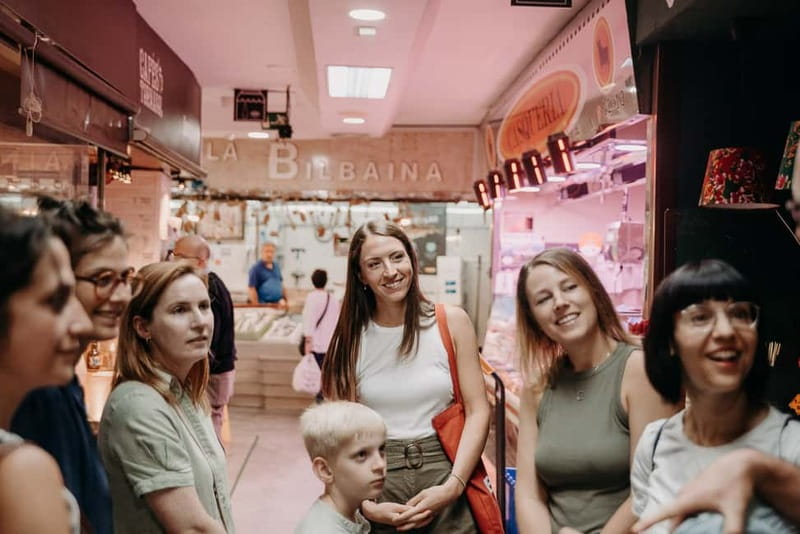
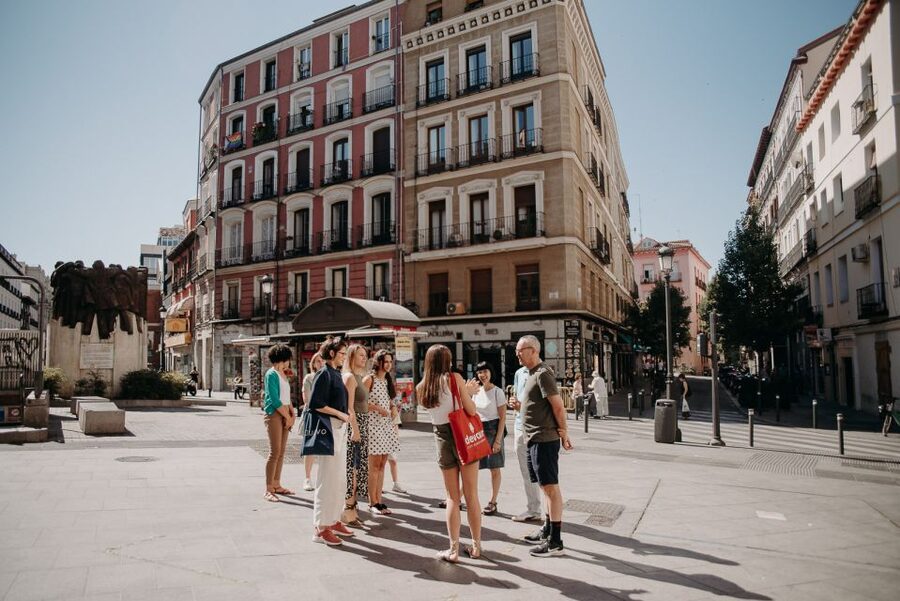
Your morning (or afternoon) kicks off near Plazuela Anton Martín (28012) by the statue of El Abrazo (the Hug). Plan to arrive about 15 minutes early, and look for your guide holding a red bag or a Devour Tours sign. This matters because you’ll want time to settle in before you start wandering the market.
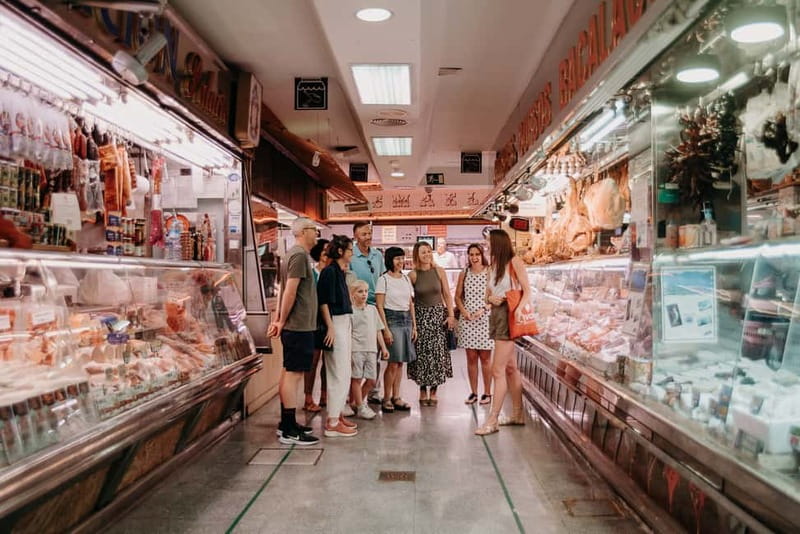
The market part is more than a stroll. You’re there to build your cooking “shopping list” with an expert, and that changes how you experience Spanish food. Madrid shoppers have been coming here for generations, and the energy is very practical: vendors point you toward quality, not gimmicks. You’ll chat with vendors, pick up fresh ingredients, and learn how Spanish cuisine is built around solid staples rather than complicated sauces.
Practical tip: wear comfortable shoes. Even if you don’t walk far, you’ll likely stand, shift, and move between food counters as you learn what each ingredient does in the final dishes.
You can also read our reviews of more tours and experiences in Madrid.
Sweet vermouth in the kitchen: how the aperitif sets up the meal
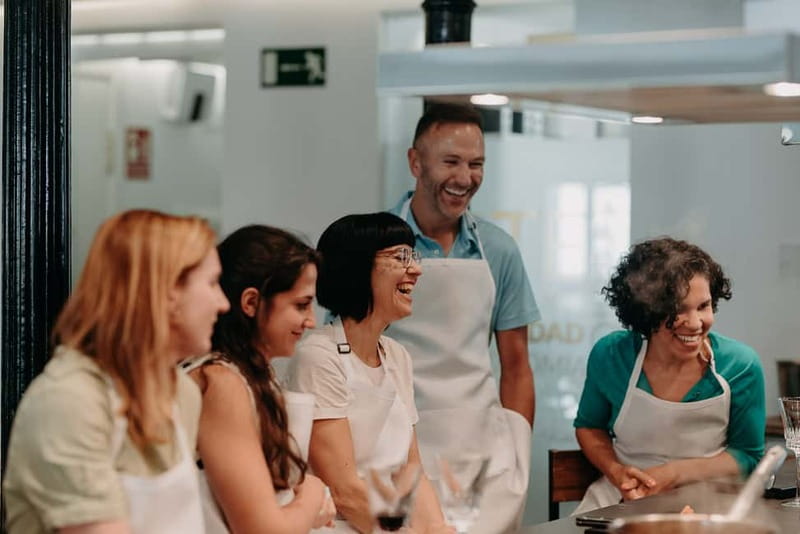
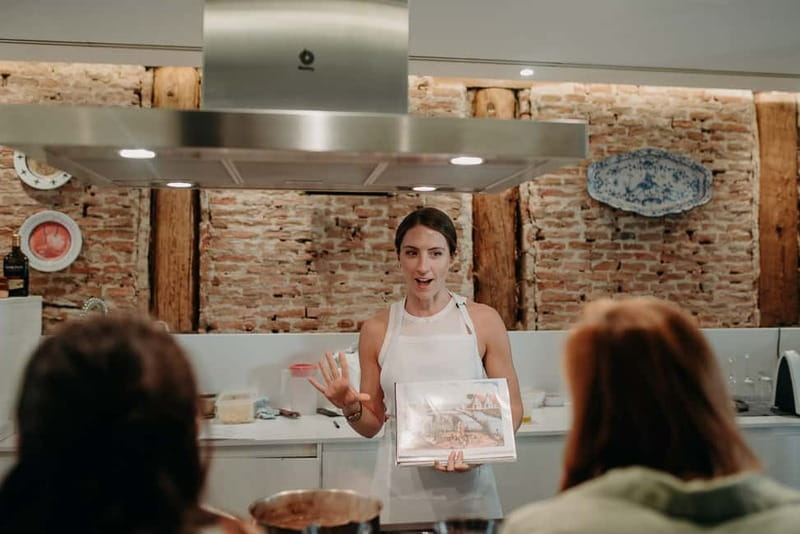
After the market, you move behind the scenes into the kitchen area reserved for your group. Before you cook, you’ll enjoy a traditional aperitif of sweet vermouth. It’s a small detail, but it’s a big lesson: in Spain, the drink isn’t separate from the meal. It’s part of the flavor story and the pacing.
Then the class begins with a cheese plate and a traditional tapa from the Basque region. This is smart because it gives you an immediate, low-stress entry point. You learn how tapas work in real life: portions that invite conversation, flavors that balance, and ingredients that taste like themselves.
There’s also a dessert moment built in. While you’re sipping and getting settled, the chef prep work is happening in the background. That sets you up for what comes later, when you’ll eat crema catalana at the end.
Huertas kitchen energy: hands-on, small-group, and chef-led
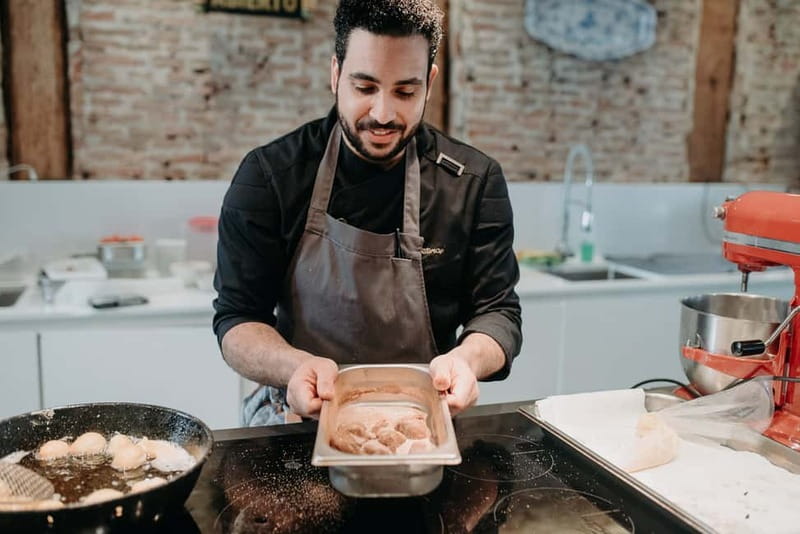
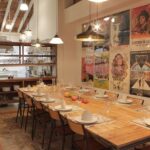
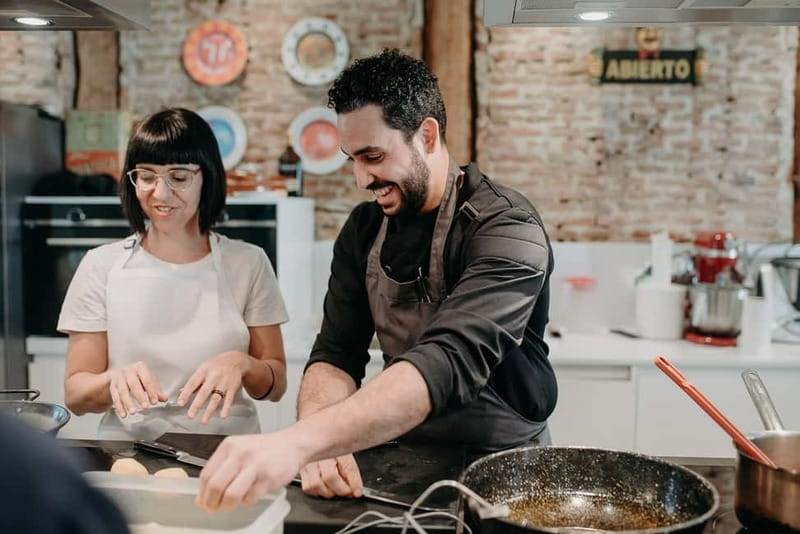
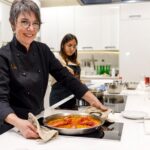
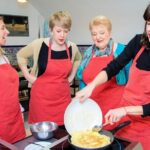
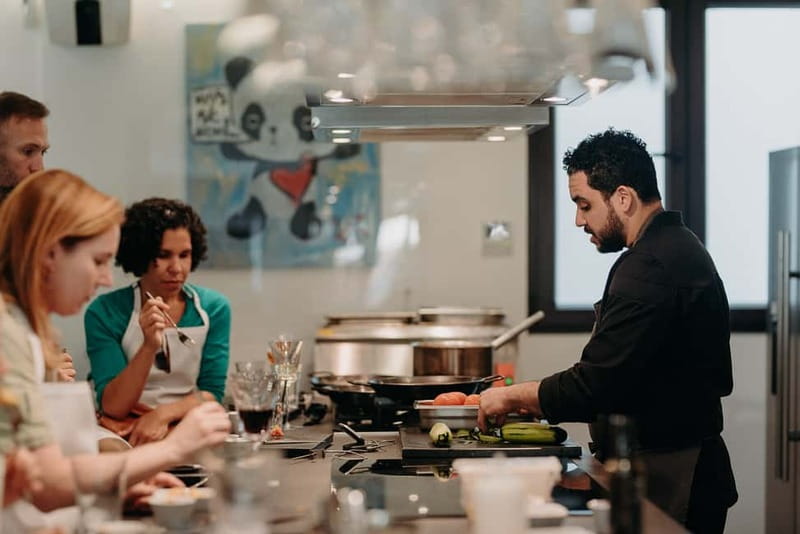
The cooking space is described as upscale and private, and it’s also very intentionally small-group. That’s what makes the workshop work: you’re not waiting for instructions, and you’re not stuck passively watching someone else do everything.
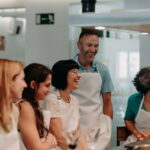
In this kitchen, you’ll see the chef’s process and then get your hands on the work. Reviews highlight the chefs’ ability to combine technique with culture, and the vibe is more “friendly training” than “performance cooking.” Some of the standout feedback mentions Chef Daniel (also called Danny) as the reason the class feels fun and memorable, especially when it comes to turning Spanish dishes into something you can actually reproduce.
What you’re learning here is not just recipes. You’re learning how Spanish cooking thinks. Many dishes rely on a few core ingredients and timing. The class format helps you pay attention to that.
Croquetas to paella Valenciana: the two tapas and the big skill
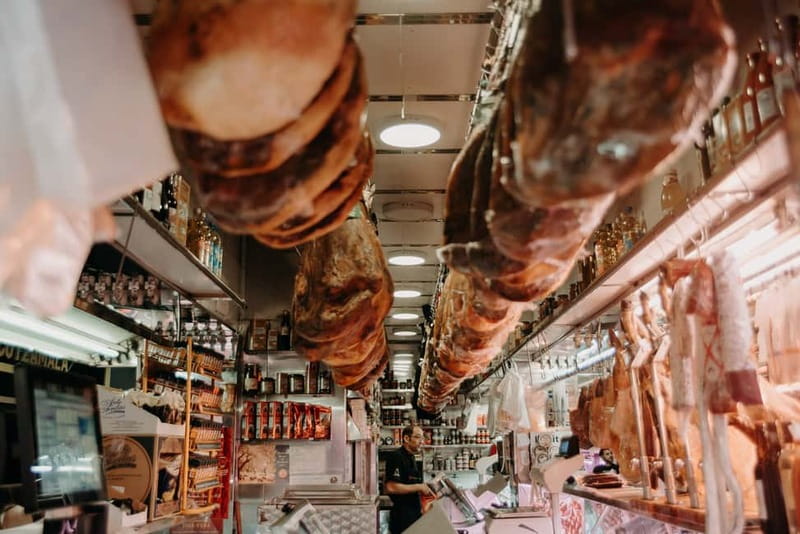
Over the next hours, you get a clear progression: a second tapa, then paella. First up, you’ll work on homemade croquetas. Croquetas are one of those Spanish foods people love but often fear at home because the technique seems fussy. In class, you’re not left guessing. You can watch the rhythm, then follow the steps with your group until your croquetas are ready to eat.
The croquetas stage teaches you something useful for paella too: don’t rush the build. Spanish cooking often means letting a base come together properly before you move to the next step.
Then comes the main event: authentic paella from Valencia. The instructor explains the history behind paella and, importantly, how to spot true paella Valenciana. That part is valuable because paella has been internationalized, and lots of versions drift away from the classic foundation. You’ll learn what makes paella Valenciana recognizable—so when you order it later, you have more than a vague “looks like paella” checklist.
Practical paella takeaway: if you’ve ever had paella that tasted more like rice with add-ons than a specific regional dish, this is how you correct that. The workshop framing helps you understand what to look for and why it matters.
Your lunch plates: beer, wine, and finishing with crema catalana
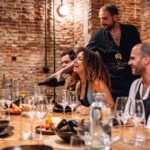
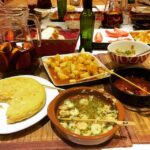
Eventually, you sit down to enjoy what you made. This isn’t a snack stop; it’s a meal you can feel good about. Your lunch includes the dishes cooked in class, and you’ll have beer or wine to go with it.
Timing-wise, the flow makes sense:
- You snack and sip with the aperitif and tapa prep
- You work through croquetas and paella
- You finish with dessert, crema catalana, which has been prepped earlier and served at the end
Crema catalana is another reason the class works. It’s a dessert that’s closely tied to Spanish tradition and comfort food, but it doesn’t require you to be a pastry expert. It gives you a full-circle “Spanish meal” feeling—salty starters, a main with signature identity, and a sweet finish.
If you’re someone who likes to eat well while you’re learning, you’ll appreciate this. Many cooking classes are more about the cooking than the eating. Here, you actually get both, and the final meal is part of the instruction.
What you’ll learn beyond recipes (and how to use it at home)
The best cooking classes leave you with more than food memory. They give you a mental model you can reuse. This one does that through the way it connects market shopping to cooking outcomes.
You learn how to select ingredients in a traditional market setting and then translate that into your kitchen workflow. That matters because the difference between “good” and “great” Spanish dishes often comes down to ingredient quality and correct preparation, not fancy techniques.
You’ll also leave with tools for repetition. One review specifically calls out a PDF cookbook with detailed cooking instructions. That’s exactly the kind of thing you want after a hands-on class—something you can reference when your paella doesn’t look exactly like the instructor’s (because it won’t) but still tastes right if you follow the method.
You also walk away with cultural context:
- how tapas function as small portions built for eating and chatting
- why paella is tied to Valencia and what makes it recognizable
- how crema catalana fits naturally at the end of a Spanish-style meal
Price and value: is $108 fair for 3.5 hours?
At $108 per person for a 3.5-hour experience, you’re paying for several things at once: market time with a guide, access to a private cooking space, chef-led instruction, multiple dishes, and included drinks.
Here’s where the value usually shows up:
- Market visit included: you’re not just cooking blindly—you’re learning ingredient selection in real Madrid.
- Small-group format: chef attention usually means less waiting and fewer frustrations.
- Multiple dishes: you’re making two tapas, plus paella, plus a dessert.
- Lunch + drinks included: that’s a practical perk. Many classes give you a small bite and call it lunch.
If you compare this to doing a tapas crawl and a separate cooking lesson, the class gives you a more structured “education plus meal” experience. It’s not the cheapest thing you’ll do in Madrid, but it’s one of the more complete ways to learn Spanish cooking without needing specialized equipment or a long shopping trip afterward.
One small note: the class includes drinks during the aperitif and with lunch, but hotel pickup and drop-off are not included, so you’ll want to plan your own way to the meeting point.
Who this tour is best for (and who should skip)
This is built for adults who want a hands-on cooking experience without complications. It’s not suitable for people with mobility impairments or for guests using wheelchairs or strollers, and it isn’t suitable for children under 12 due to sharp knives, hot stoves, and high surfaces.
Diet matters most:
- Not suitable for vegans
- Not suitable for celiac disease
- Not suitable for lactose intolerance
- Not suitable for gluten intolerance
That said, it is adaptable for several situations:
- Vegetarians
- Pescatarians
- Gluten-free diets (not celiac)
- Non-alcoholic options
- Pregnant women
If you have food allergies or a specific restriction, you’ll want to contact the provider so they can arrange your ingredients. This is one of those cases where being proactive will help the day go smoothly.
Should you book the Madrid Paella & Tapas cooking class?
I’d book it if you want more than a one-off meal. This format is great if you like structured learning: market shopping, then cooking with real guidance, then eating what you made with drinks.
You might skip it if:
- you need vegan or celiac-friendly food
- lactose and gluten issues are part of your life and you need guaranteed accommodation
- you’re traveling with kids under 12 or need a mobility-friendly setup
If those boxes fit you, this class is a strong value way to understand Madrid through food. The biggest win is the blend: market insight + chef-led technique + a full Spanish meal you can recreate later with the help of the PDF cookbook.
FAQ
How long is the Madrid paella and tapas cooking class?
The experience runs for about 3.5 hours. Starting times vary, so you’ll want to check availability for the specific day you’re considering.
Where do I meet the guide?
You meet in Plazuela Anton Martín (28012) by the statue of El Abrazo (the Hug). Arrive 15 minutes early and look for your guide holding a red bag or a Devour Tours sign.
What dishes are included?
You’ll shop at the market, then enjoy a sweet vermouth aperitif and a tapa/cheese plate setup. In the workshop you’ll make croquetas, and you’ll cook authentic paella Valenciana, finishing with dessert: crema catalana.
Is the tour in English?
Yes. The live tour guide provides the experience in English.
What dietary needs can be accommodated?
The class is adaptable for vegetarians, pescatarians, gluten-free (not celiacs), non-alcoholic options, and pregnant women. It is not suitable for vegans, celiac disease, lactose intolerance, or gluten intolerance.
What should I bring and wear?
Wear comfortable shoes. Since you’ll be cooking on-site, also expect a kitchen environment with hot stoves and sharp tools, which is why the tour isn’t suitable for children under 12.