REVIEW · MADRID
Paella Cooking Class in Madrid with Bottomless Wine Pairing
Book on Viator →Operated by The Cooking Clubhouse · Bookable on Viator
Paella gets social fast in Madrid. This class at The Cooking Clubhouse turns the iconic rice dish into a shared afternoon, with a cava welcome, hands-on cooking, and a communal meal paired with five Spanish wines.
I like how it’s both practical and relaxed: you’re guided step by step, but the vibe stays friendly and upbeat, so even a first-timer can keep up. Hands-on cooking happens in pairs, and you’ll taste multiple paella styles by the end.
One thing to consider: as a couple, you may only cook one pan during the workshop, and the group portion is shared afterward, so food lovers who expect a bigger hands-on haul might feel a little shorted.
In This Review
- Key Things I’d Highlight Before You Book
- Why This Paella Class Feels More Like a Madrid Dinner Party
- Price and Value: What $143.91 Actually Buys You
- Where You Start: Cooking Clubhouse Near Calle de Atocha
- The 2.5-Hour Workshop: How You Cook Paella From Start to Finish
- You’ll cook in pairs
- You’ll make paella you can recognize by style
- A realistic expectation about what you personally cook
- The Wine Pairing That Keeps the Experience Moving
- The Communal Table Meal: What You Eat After Cooking
- Starters and Spanish tapas-style snacks
- Main: the paella moment
- Dessert: crema catalana mouse and churros with 75% dark chocolate
- Getting the Most Out of It: Tips That Improve Your Day
- Who This Class Is Best For (and Who Might Prefer Something Else)
- Should You Book This Paella Cooking Class in Madrid?
- FAQ
- How long is the Paella Cooking Class in Madrid?
- Where does the experience start?
- Is the class offered in English?
- Do I receive a welcome drink?
- Is the wine included, and is it bottomless?
- What types of wines are included in the pairing?
- Do I cook the paella myself?
- What does the meal include?
- How big is the group?
- What’s the cancellation window?
Key Things I’d Highlight Before You Book
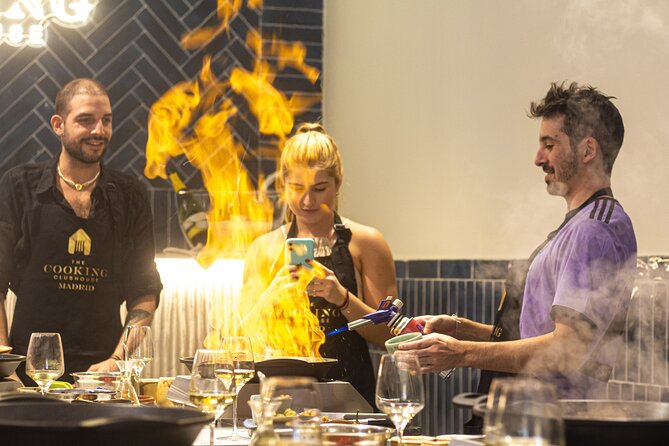
- Bottomless wine pairing: 5 Spanish wines plus a cava welcome, paced through the experience
- Cook in pairs: you’ll work at station setup with ingredients and equipment ready
- Multiple paella styles: seafood, chicken, vegetarian, and more, so you’re not locked into one result
- Communal dining room: a sit-down meal where everyone eats together after cooking
- Chef-led, no-pressure teaching: instructors guide you through technique without making it feel intimidating
- Max 20 people: small-group energy that’s easier to enjoy (and to talk in)
Why This Paella Class Feels More Like a Madrid Dinner Party
Madrid is serious about food, but it also knows how to turn eating into a social sport. This experience leans hard into that idea. You’re not just watching someone cook. You’re cooking, tasting, talking, and then sitting down together in a private dining room.
The workshop is designed to keep momentum. You get your stations set up, ingredients ready, and clear guidance from the chef. The instructors you might meet can include names like Benji, Youseff, Javi, and Claudia—and the common thread is energy: explain the steps, keep things moving, and make sure your table feels included.
The “social aspect” isn’t a marketing line here. The whole structure—pair cooking, then communal table dining—means you’ll end up chatting with people you wouldn’t normally meet on a typical sightseeing day. If you’re traveling solo, it can turn an ordinary weekday in Madrid into a memorable night out.
You can also read our reviews of more tours and experiences in Madrid.
Price and Value: What $143.91 Actually Buys You
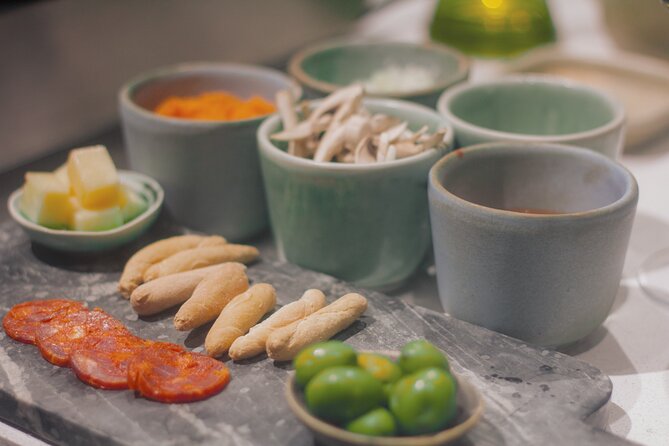
At about $143.91 per person, you’re paying for a full, guided food experience rather than just a cooking lesson. Here’s what you’re getting, in plain terms:
- A paella cooking class (2.5 hours-ish)
- A cava welcome drink
- A bottomless wine pairing featuring 5 Spanish wines (1 sparkling, 2 whites, 2 reds)
- A sit-down meal with multiple courses (including starters, your paella as the main, and two desserts)
When people feel disappointed by cooking classes, it’s usually because the “class” is too brief or the meal is an afterthought. This one is built to be the opposite: you spend real time cooking, then you get a proper meal and dessert to round it out.
Is it the cheapest way to eat paella in Madrid? No. But it’s priced like a premium, hosted experience. The wine pairing alone adds serious value, and the dinner pacing makes it feel like a full late lunch/early dinner plan, not a quick snack followed by a walk back to your hotel.
One more value point: group size. With a maximum of 20 people, the experience doesn’t feel like a factory line. You’re more likely to get help when you need it, and you actually hear the chef instead of competing with background noise.
Where You Start: Cooking Clubhouse Near Calle de Atocha
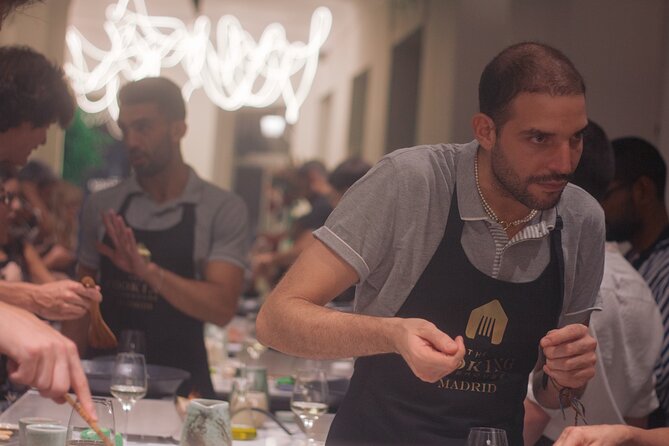
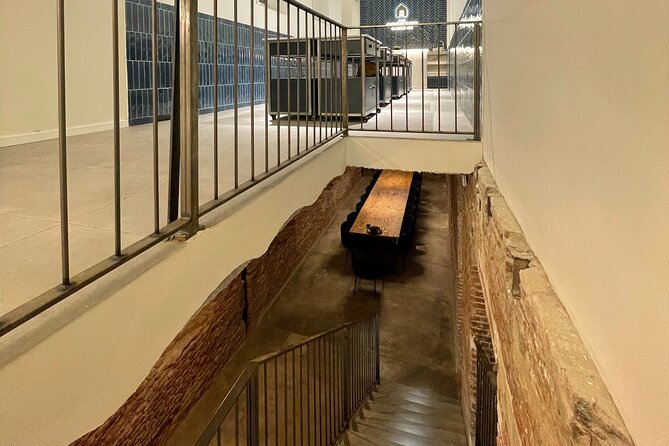
You’ll meet at The Cooking Clubhouse, C. de Atocha, 76, Centro, 28012 Madrid. It’s in a central area, so you won’t feel stranded if you’re using public transit. There’s also a mobile ticket, which is handy for keeping things simple on a day when you already have plans.
This is the kind of location where it’s easy to fit into your Madrid rhythm. You can pair it with other Central Madrid activities the same day, then plan to treat the class as your main food stop.
Practical tip: if you’re arriving from museums or long walks, go a little easy on pre-dinner snacking. The menu is substantial enough that you’ll want space for the paella and desserts—especially churros with dark chocolate.
The 2.5-Hour Workshop: How You Cook Paella From Start to Finish
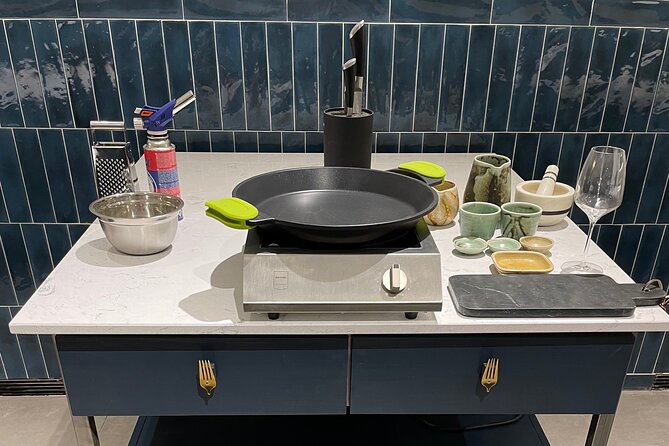
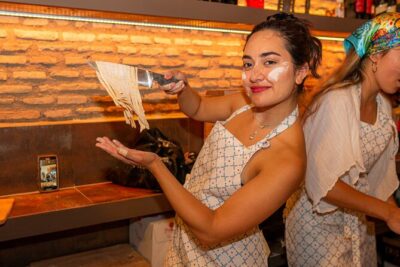
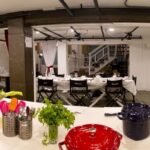
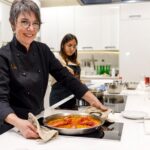
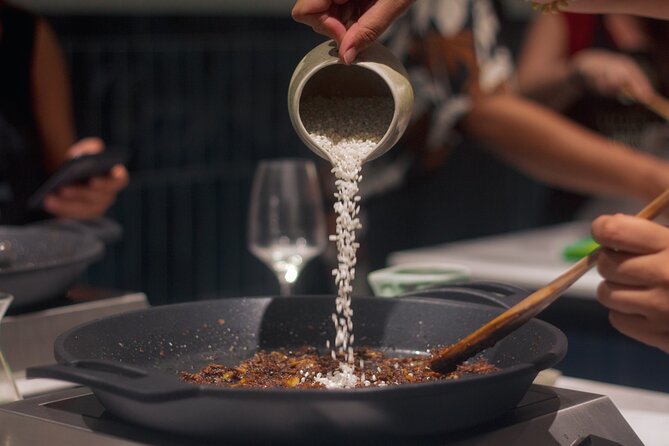
The class is built around stations, ingredients, and guided technique. When you arrive, you’re welcomed with a glass of cava, then the chef shows you where you’ll cook. The setup is described as costume made cooking stations, and the practical effect is this: your workspace is organized, and you’re not scrambling to find tools or ingredients.
You’ll cook in pairs
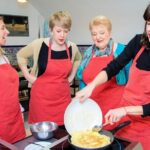
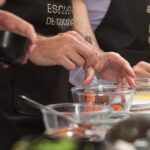
You work with a partner at your station. Many people find this ideal: it’s interactive without feeling chaotic. It also helps beginners. You’ll likely do tasks like stirring and building flavors step by step while the instructor explains what’s happening and why.
One thing I’d keep in mind from the overall format: ingredients are often prepped ahead of time. That’s not a downside. It means the cooking portion stays focused on the skills that matter for paella—timing, flavor development, and how things come together—rather than turning the class into a chopping marathon.
You’ll make paella you can recognize by style
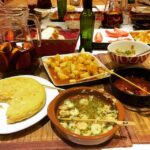
You’ll create hand-made paellas and then taste multiple versions by the end. The class is structured so you’re not stuck with one recipe. Different recipes can include seafood, chicken, and vegetarian, and the variety is the point. It lets you compare results and see how paella changes with ingredients and broth choices.
A realistic expectation about what you personally cook
Here’s the balanced note: each pair makes one paella (or one main paella component tied to the station), and the group shares what’s produced. If you’re hungry for a large portion that you 100% cooked yourself, you might feel the mismatch between your effort and the total meal size. If you’re happy with learning the process and eating a great spread, it lands perfectly.
The Wine Pairing That Keeps the Experience Moving
This is a bottomless wine experience in the best kind of way: it’s not just “drink whenever.” It’s paired with the flow of cooking and dining. You get the welcome cava, and then the bottomless wine pairing includes five Spanish wines:
1 sparkling
2 whites
2 reds
That variety matters because paella is a flexible dish. Seafood paella tends to call for sharper whites, chicken and richer broths can handle fuller-bodied reds, and the sparkling wine helps keep the energy up between courses.
Instructors keep the glasses filled, which changes the mood of a class like this. Instead of treating wine like a side detail, it becomes part of the pacing. Add the music vibe many people describe (rocking tunes comes up often), and the whole thing feels like a hosted party where the food is the main act.
A quick responsible note: bottomless is fun, but paella cooking uses real technique and hot pans. Pace yourself so you can stay present for the steps. You’ll enjoy the learning more, and you’ll feel better at dessert.
The Communal Table Meal: What You Eat After Cooking
After the cooking portion, everyone heads into a private dining room and sits at a communal table. This is where the class stops feeling like an activity and starts feeling like a real meal with friends.
Starters and Spanish tapas-style snacks
You’ll have several appetizers. A sample menu includes:
- Spanish cheese and charcuterie board, with cheese, charcuterie, olives, and mixed nuts
- Seasonal gazpacho, classic cold soup made with seasonal ingredients
- Bocata de calamares, a crispy fried squid sandwich that’s a Madrid staple (with a special touch from the chef)
One important detail: the experience includes four appetizers total, even though the sample list highlights these key items. So expect a spread that’s more than just a single starter plate.
Main: the paella moment
Your hand-made paella is served as the main course, and you’ll also get to enjoy paella made by others in your group. That’s a clever way to solve a problem that often happens in cooking classes: you learn one recipe, but you want variety. Here, the workshop creates variety at the table.
Dessert: crema catalana mouse and churros with 75% dark chocolate
Dessert is classic and satisfying:
- Crema catalana mouse, a Barcelona dessert with a modern twist
- Churros con chocolate, homemade churros dipped in 75% dark chocolate
This combo is perfect for ending with comfort after wine and savory food. It’s also one of the reasons the class works as a whole meal, not just “snacks plus cooking.”
Getting the Most Out of It: Tips That Improve Your Day
This is the part that turns a good class into a great one.
- Go in hungry, not starving. You’ll snack during cooking, then you’ll eat starters, paella, and dessert. If you eat a big breakfast, you may end up pushing through churros.
- Stay present for the technique. Even if prep is handled, the chef’s cues matter. Watch how the instructor explains building flavors and timing.
- Pace the wine. Bottomless means you can slow down without “missing out.” Also, you’ll want to feel good for dessert.
- Treat it like a group table dinner. The communal dining room is the social payoff. Use it to talk, not just to eat quickly.
- Plan this as a food anchor. With 2.5 hours and a full meal structure, it’s best when it’s one of your main plans, not a quick detour.
If you love cooking, this is a good place to learn a technique you can repeat later. If you’re not a cook, you can still enjoy it because the structure helps you participate without pressure.
Who This Class Is Best For (and Who Might Prefer Something Else)
This paella class works especially well if you:
- want a hands-on food experience in Madrid without advanced cooking skills
- enjoy social dinners and meeting people (especially if you’re traveling solo or in a small group)
- like Spanish flavors and want to compare how paella changes by ingredient style
- want real dining value: starters, main, and desserts paired with wine
It might not fit as well if you:
- expect to cook and eat a large amount that matches your effort
- dislike wine or prefer a non-alcohol-centered format (the pairing is a major part of the experience)
- want a quiet, highly technical cooking class with lots of solo time
That said, even the people who aren’t confident in the kitchen tend to enjoy it because the teaching is step-by-step and interactive.
Should You Book This Paella Cooking Class in Madrid?
If you want one of your Madrid days to be practical, delicious, and genuinely social, I think this class is an easy yes. The combination of bottomless wine pairing, a structured paella workshop, and a sit-down 5-course-style meal makes it feel like a real evening out, not just a ticketed activity.
Book it if you’ll be happy learning in a group, tasting different paella styles, and enjoying the meal at a communal table. I’d skip it if you only want to eat paella and would rather spend your time on neighborhoods, parks, or a long walking tour. In that case, you might find a simpler food plan better.
If you’re on the fence, here’s my final tie-breaker: this is one of those experiences that gives you both a skill and a story, and it happens in a way that’s easy to enjoy even if you’re not a cook.
FAQ
How long is the Paella Cooking Class in Madrid?
It’s approximately 2 hours 30 minutes.
Where does the experience start?
It starts at The Cooking Clubhouse, C. de Atocha, 76, Centro, 28012 Madrid, Spain.
Is the class offered in English?
Yes, the experience is offered in English.
Do I receive a welcome drink?
Yes. You’re welcomed with a glass of cava.
Is the wine included, and is it bottomless?
Yes. The experience includes a bottomless wine pairing with five different Spanish wines.
What types of wines are included in the pairing?
The pairing includes 1 sparkling wine, 2 white wines, and 2 red wines.
Do I cook the paella myself?
Yes. You’ll prepare paella from start to finish at your cooking station, working in pairs.
What does the meal include?
You’ll have multiple appetizers, paella as the main you cook, and two desserts.
How big is the group?
The maximum group size is 20 travelers.
What’s the cancellation window?
Free cancellation is available up to 24 hours in advance of the experience start time for a full refund.