REVIEW · ROME
Rome: Pasta & Tiramisu Cooking Class near the Spanish Steps
Book on GetYourGuide →Operated by Cheforaday · Bookable on GetYourGuide
Rome smells like butter and coffee when you learn pasta and tiramisù. This hands-on class puts you in the heart of the Spanish Steps area, then serves what you made with wine and a limoncello toast. The icing on top: you cook in a historic setting with original wall paintings inside a 17th-century building.
I like two things a lot. First, you actually make the pasta dough yourself, starting with egg and flour and shaping your fettuccine. Second, the class turns dessert into a skill you can repeat, with tiramisù taught in a way that still lets you assemble your own plate.
One heads-up: sauces come ready from the restaurant kitchen, so you are doing the pasta and tiramisù work, while sauce prep is more of a kitchen-led step. If you want to make every component from scratch, this isn’t that kind of workshop.
In This Review
- Key things to know before you go
- Why This Class Works So Well Near the Spanish Steps
- What You Actually Make: Egg-and-Flour Fettuccine and Your Own Tiramisu
- Inside the Room: Historic Wall Paintings and Air-Conditioned Comfort
- How Sauces Work Here (And What That Means for Your Cooking Skills)
- The Meal, the Wine, and the Limoncello Finish
- Teaching Styles: Why Names Like Lucas and Ricardo Keep Coming Up
- Price and Value: Does $58 Feel Fair for Rome?
- Practical Tips That Make Your Night Easier
- Who This Class Is Best For (And Who Might Skip It)
- Should You Book This Pasta and Tiramisu Class Near the Spanish Steps?
- FAQ
- How long is the cooking class?
- Where do I meet for the class?
- What will I learn to cook?
- Are sauces made by the class participants?
- What drinks are included?
- Can kids join?
- What about dietary restrictions and allergies?
- Is it suitable for everyone?
Key things to know before you go
- Spanish Steps area convenience: meeting point is inside Trattoria Amici, with a separate entrance so you can get in without fuss.
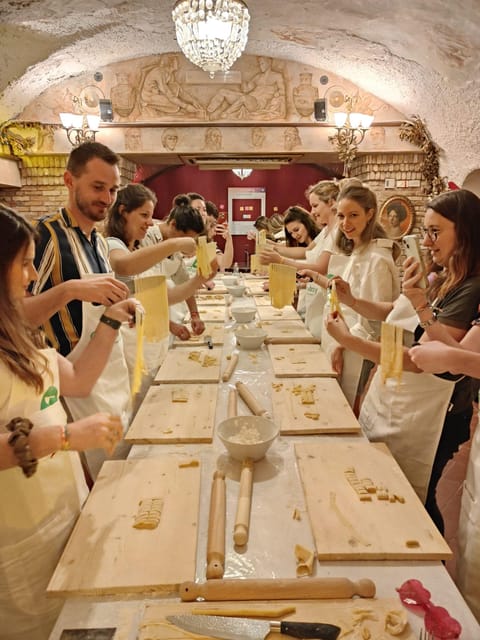
- You shape real pasta: you’ll work the dough, roll it, and cut it to form fettuccine.
- Tiramisu is structured for success: the cream base is prepared with the group, then you assemble your own tiramisù.
- Historic room break from the crowds: a 17th-century space with original 19th-century wall paintings, plus air-conditioning.
- Included drinks that match the meal: wine or soda with lunch-style dining, then a limoncello toast.
- Strong teaching energy: instructors like Lucas, Ricardo, Irene, Andrea, and others show up often in feedback for a fun, guided vibe.
Why This Class Works So Well Near the Spanish Steps
Location matters in Rome. This experience puts you close to the Spanish Steps, so you’re not burning your evening on transit. You can fit it easily after sightseeing, and you still get a proper seated meal at the end, not a quick bite on the go.
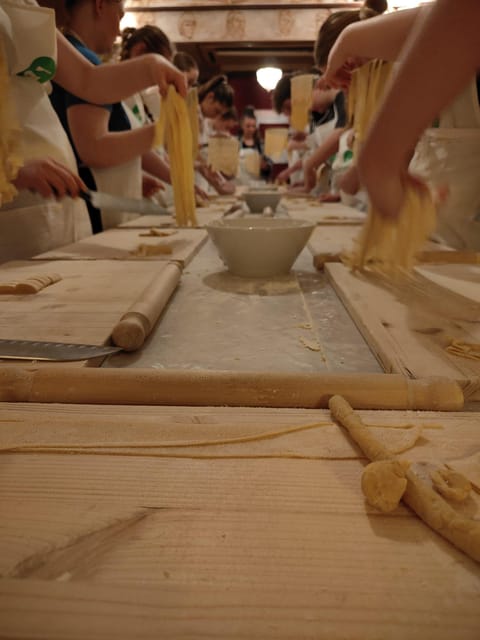
The other thing I like is the format. You’re not watching food happen from a distance. You’re working the dough, learning the motions, then eating what comes out. Multiple people in the feedback highlighted the atmosphere—light, social, and interactive—with instructors such as Lucas and Ricardo earning repeat praise for keeping things fun while still staying organized.
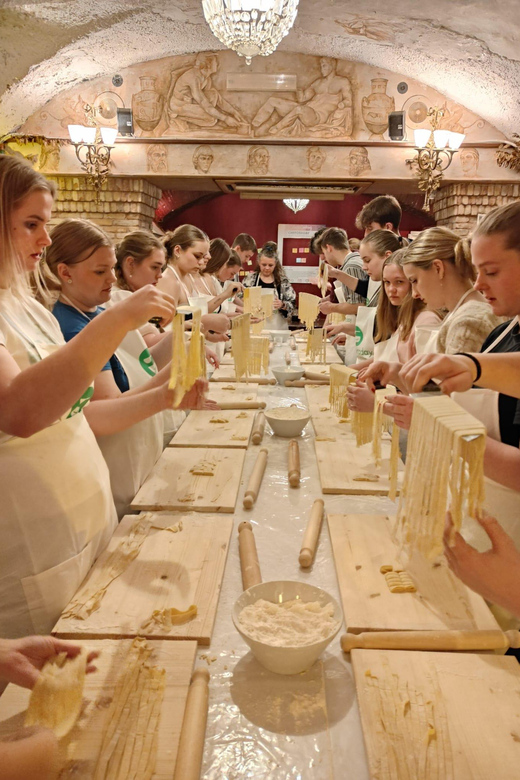
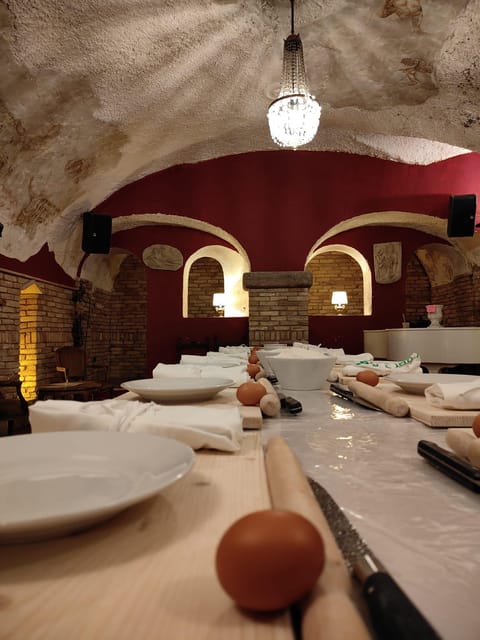
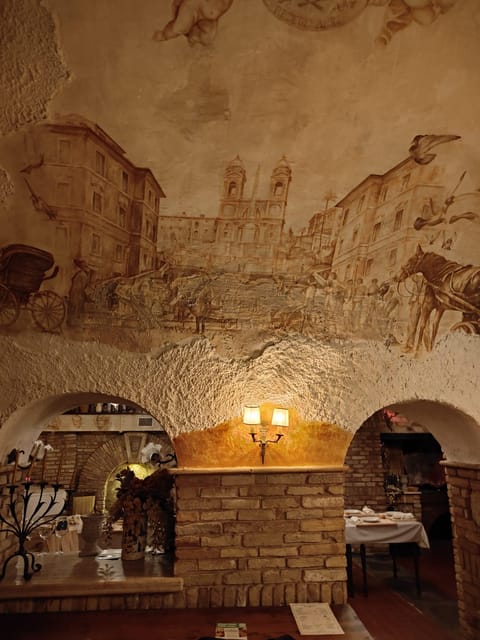
You also get a practical kind of authenticity. Cooking happens in an air-conditioned restaurant space inside a 17th-century building, with original 19th-century wall paintings visible around you. That’s not just decoration. It’s a reminder that Italian food culture isn’t staged—it’s living.
You can also read our reviews of more tours and experiences in Rome.

What You Actually Make: Egg-and-Flour Fettuccine and Your Own Tiramisu
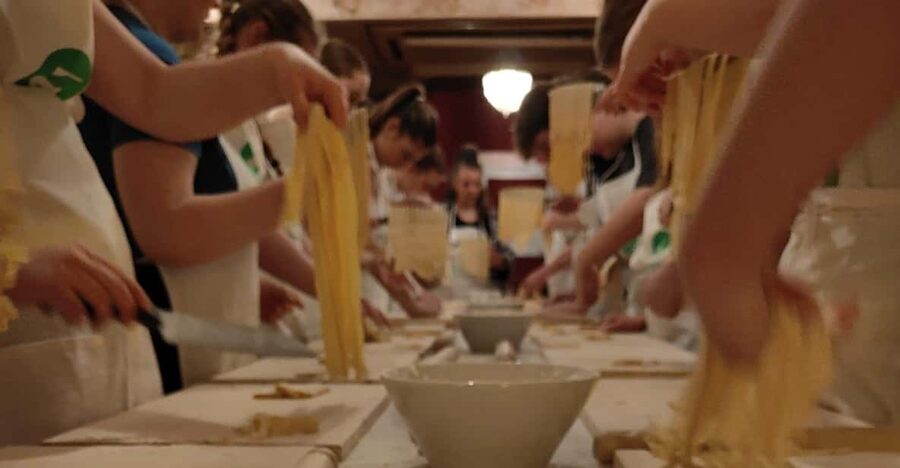
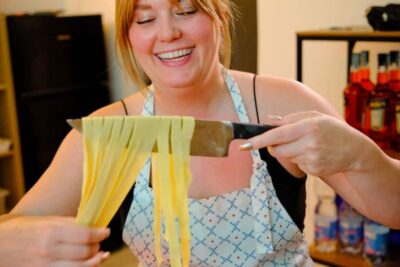
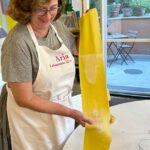
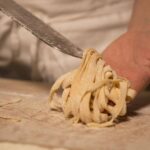
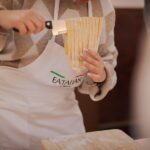
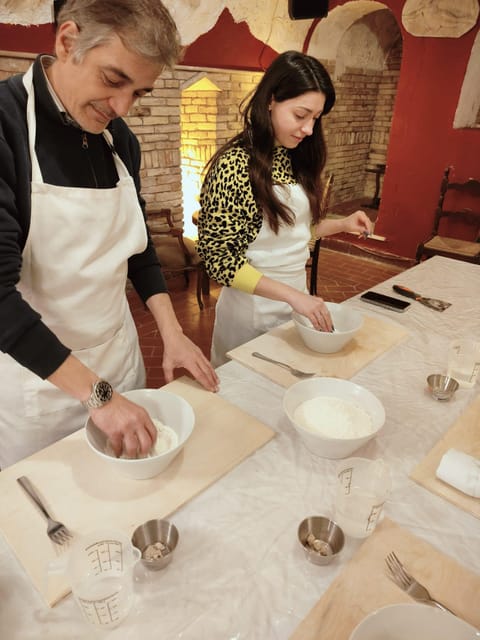
The pasta part is the real draw, and it’s very hands-on. You start with the basics: egg and flour. You learn how to turn that simple pair into dough, then you roll and shape it. You’ll end up with pasta in the fettuccine style (even if your exact cut shape can vary a bit by what the group is doing).
What’s valuable for you here is muscle memory. Once you’ve kneaded, rolled, and cut, you stop being scared of pasta-making. A lot of people reported that they expected it to be harder and then realized the process is learnable—especially with an instructor moving around to check your technique.
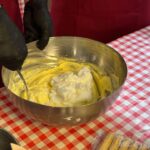
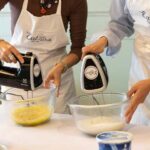
Then comes tiramisù. The timing is smart: the group creates the tiramisù cream together, and then each participant prepares their own tiramisù. That setup matters. It keeps everyone from getting stuck on the trickiest bits, while still giving you ownership of the final dessert.
This is also the part where you can impress people back home. Even if you don’t cook pasta again tomorrow, you’ll know how to build a proper tiramisù in layers and how to handle the cream so it doesn’t turn into a sad, runny mess.
Inside the Room: Historic Wall Paintings and Air-Conditioned Comfort
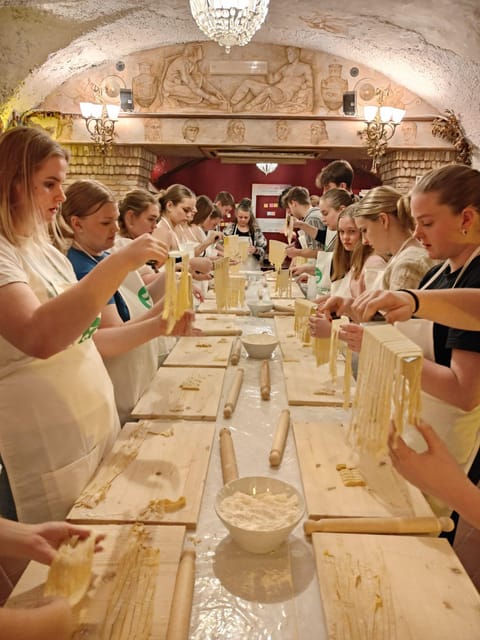
Rome can be hot, crowded, and loud. This class gives you a break in the best way: an air-conditioned restaurant environment in a historic setting. One recurring theme in the feedback is how nice the venue felt—clean, atmospheric, and not like a cramped back room.
The historic detail is specific: you’re in a 17th-century building with original wall paintings from the 1800s. If you’re the type who likes to connect the dots between food and place, this helps. You’re not just learning recipes. You’re learning them in rooms that have been standing while Rome evolved around them.
It’s also a small but meaningful advantage for your experience. When you’re comfortable, you learn better. When you’re sweating and rushing, technique gets sloppy. Here, the room lets you focus on the dough and the dessert steps.
How Sauces Work Here (And What That Means for Your Cooking Skills)
Here’s the deal: sauces are prepared by the restaurant’s kitchen. During the class, the pasta is cooked collectively, then divided by sauce choice.
That might sound like a compromise at first, but it’s actually a good trade-off for most people:
- You get full hands-on time with what’s hardest to learn: dough and shaping.
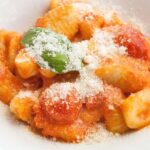
- You still get to choose your flavor direction: tomato & basil, pesto, or Alfredo.
- You avoid spending the class waiting for sauce to simmer or watching sauce break under time pressure.
Also, this format keeps the class moving smoothly. One review noted the pace could feel fast at times. When sauce prep is managed by the kitchen, the instructor can spend more attention on your technique instead of being pulled away by stovetop chaos.
If you’re a sauce person who wants to personally make everything, you might feel slightly limited. If you want the core skills—fresh pasta and true tiramisù—this structure is a practical fit.
The Meal, the Wine, and the Limoncello Finish
After you work, you eat. Your meal pairs your pasta with a glass of wine (red or white) or a soft drink. Water is available throughout the class, which is helpful when you’re kneading dough and shaping for the first hour.
Then dessert and drinks land in a classic Italian order: you finish the meal with your tiramisù, followed by a limoncello toast. The limoncello isn’t just a cute add-on. It helps the whole experience feel complete—salty-smooth from the coffee-cocoa dessert contrast, plus a bright end note that clears your palate for the walk back outside.
This sequence also makes the class feel like an evening, not a workshop. You’re not running out right after the cooking steps. You sit, you taste what you made, and you enjoy the group meal.



Teaching Styles: Why Names Like Lucas and Ricardo Keep Coming Up
A cooking class can be either inspiring or exhausting, depending on the instructor. Here, the feedback pattern is strong: instructors are consistently described as fun, patient, and active—moving around to help.
You’ll see names like Lucas, Ricardo, Irene, Andrea, Frederico, and Gabi attached to positive comments. People often mention that the instructors teach clearly and keep the mood relaxed. Some also mentioned things like humor, music, and a back-and-forth group vibe.
For you, that means this isn’t only for food pros. It’s set up for novices. The class style supports first-timers who worry they’ll mess up the dough or mess up the dessert. And it supports groups, too—people reported meeting classmates and enjoying the social side while still learning real technique.
Price and Value: Does $58 Feel Fair for Rome?
At $58 per person for a 2-hour experience, the value comes from what you actually get included—not just the label of cooking class.
You’re getting:
- Hands-on pasta-making with equipment and ingredients provided
- Pasta served with your chosen sauce option
- A glass of wine or soft drink
- Your own tiramisù experience
- A limoncello toast
- Recipes so you can recreate the dishes later
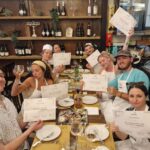
- A participation certificate
In Rome, that kind of all-in-one package is what usually makes cooking classes worth it. If you tried to replicate this on your own, you’d pay for ingredients, spend time sourcing equipment, and still not get the coaching that makes the process click.
Is it less than a typical restaurant dinner? Sometimes yes, sometimes no—depending on what you’d order. But the difference is you’re not only eating. You’re learning a repeatable skill and getting a structured evening with drinks.
If your goal is purely to eat the best pasta possible, you could spend less and go straight to a restaurant. But if your goal is a memorable activity with real payoff, the math works.
Practical Tips That Make Your Night Easier
A few things will help you get the best results without stressing.
Arrive early. You’re asked to be there at least 15 minutes before the class begins, and late arrivals may not be accepted. Plan your walk from where you’ll be before the Steps so you don’t end up sprinting in.
Pick your sauce choice before you’re seated. You’ll have tomato & basil, pesto, or Alfredo as options, and pasta is then divided by sauce.
Don’t overthink the tiramisù cream. Since the cream base is prepared as part of the group, your job is about assembling well and following the instructor’s steps. Treat it like a build process, not a chemistry problem.
Go in ready to get a little hands-on messy. Kneading, rolling, and cutting takes a bit of physical focus. You’ll probably use your hands more than you expect.
Bring curiosity, not performance pressure. The feedback is clear that the instructors set people up to succeed, even if it’s your first time. Your goal isn’t restaurant perfection—it’s learning a real process you can repeat.
Who This Class Is Best For (And Who Might Skip It)
This experience is a strong match if:
- You want a hands-on Rome activity with a clear skill outcome
- You’re traveling as a couple, small group, or even solo and want a social meal
- You’re a pasta-and-dessert fan who wants more than just eating
- You like learning in a guided way, in a comfortable setting with historic charm
It may not be ideal if:
- You need wheelchair accessibility (it is not suitable for wheelchair users)
- You’re looking for a vegan class (it’s not suitable for vegans)
- You want every component made entirely from scratch (sauces are prepared by the kitchen)
If you’re in Rome on a rainy day or just want a calmer indoor plan without giving up the flavor of Italy, this fits nicely.
Should You Book This Pasta and Tiramisu Class Near the Spanish Steps?
I think it’s worth booking if you want a fun, guided evening where you leave with both full bellies and a practical skill set. The biggest wins are the hands-on fettuccine making, the structured way tiramisù is taught, and the included meal with wine and a limoncello toast. Add the historic room with wall paintings, and you get something more memorable than a quick cooking demo.
I’d skip it if you’re vegan, need wheelchair access, or you only care about eating great food and not learning how to make it. But for most people—especially first-timers—this is exactly the kind of Rome experience that turns a normal night into a real story you can repeat at home.
FAQ
How long is the cooking class?
The experience lasts 2 hours.
Where do I meet for the class?
Go inside the restaurant Trattoria Amici and ask for the cooking class room.
What will I learn to cook?
You’ll make fresh pasta (fettuccine) and tiramisu.
Are sauces made by the class participants?
No. Sauces are prepared by the restaurant’s kitchen, and pasta is cooked collectively and divided by sauce choice.
What drinks are included?
You get a glass of wine (red or white) or a soft drink, plus a limoncello toast.
Can kids join?
Children under 7 can join for free, but they must share a workstation with an accompanying adult.
What about dietary restrictions and allergies?
You should inform the provider in advance of any dietary restrictions or allergies. The provider cannot guarantee a completely allergen-free environment or that cross-contamination will not occur.
Is it suitable for everyone?
It is not suitable for wheelchair users or for vegans.