REVIEW · KRABI
Traditional Thai Cooking Class with Smart Cook
Book on Viator →Operated by Smart Cook Krabi,Thailand · Bookable on Viator
Thai cooking in Krabi beats a food show.
This class puts you in a clean open-air kitchen with a friendly Thai chef, so you learn by doing, not just watching. Two things I really liked: you get hands-on step-by-step guidance and you leave with a recipe e-book plus photos from the session.
The main trade-off to keep in mind is the pace. It’s fast and fun, which is great for getting results, but it can feel a bit rushed if you want lots of slow, deep practice.
Instructors you might meet include names like Tiwan (often linked with Smart Cook), Poppy/Pop, New, Christina, and Aleaf, and the common thread is clear instruction and good English.
In This Review
- Key highlights before you book
- Krabi hotel pickup to an open-air kitchen
- Choosing your dishes: curry, tom yum, and your personal menu
- The hands-on method that actually sticks
- Instructor energy: English clarity and a good laugh
- What you’ll make, and how the final meal comes together
- Photos and the recipe e-book: the take-home advantage
- Vegetarian, vegan, and gluten-free: tell them and you’ll be okay
- Value check: is $47.27 worth it in Krabi?
- Timing, group size, and the one thing to watch: pace
- Who this class is best for (and who should skip it)
- Should you book Smart Cook Krabi’s Thai cooking class?
- FAQ
- How long is the Thai cooking class?
- Is hotel pickup included?
- Can I choose what dishes I cook?
- Are vegan, vegetarian, or gluten-free options available?
- Are drinks included?
- Do I get recipes and photos after the class?
Key highlights before you book
- Hotel pickup + transfer: You start with free pickup from your hotel and get to the kitchen without hassle.
- Small group size (max 12): More chances to ask questions while you’re cooking.
- You choose what you cook: Options include dishes like red curry and hot & sour prawn soup.
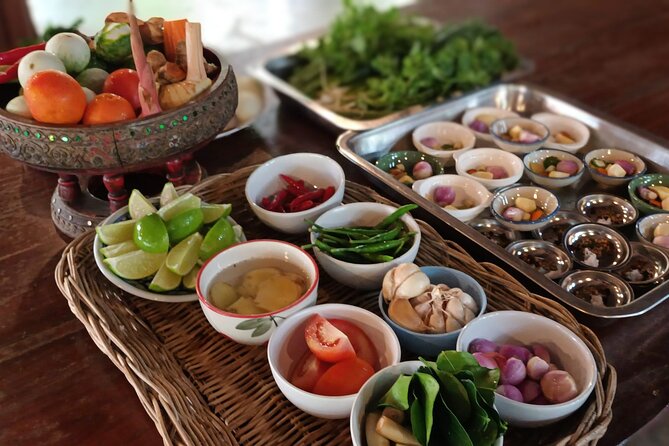
- Open-air, clean cooking setup: Fresh ingredients, visible technique, and a kitchen that feels local.
- Dietary flexibility: Vegans, vegetarians, and gluten-free diners are welcome with notice.
- You take it home: A recipe e-book (PDF/online) and class photos you can refer back to later.
Krabi hotel pickup to an open-air kitchen
Your experience starts in a simple, practical way: a pickup from your hotel in Krabi, then a short transfer to the cooking class location. It removes the big unknown that scares many people off cooking classes—getting yourself there, on time, with bags and heat and traffic.
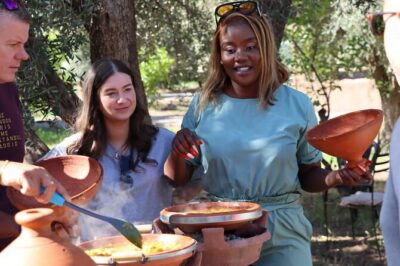
Once you arrive, you’re not stuck in a stuffy room. You cook in a clean open-air kitchen, with ingredients set out for the dishes you’ll make. That setting matters more than you’d think. It helps you see what’s happening, smell the aromatics as they go in, and understand the timing behind Thai flavors.
You also get a brief intro to Thai cooking basics before you start firing up the action. It’s not meant to be a textbook lecture. It’s there so the recipes make sense once you’re standing at the station.
You can also read our reviews of more tours and experiences in Krabi.

Choosing your dishes: curry, tom yum, and your personal menu
One of the most useful parts is that you don’t get locked into one set menu. When you book, you choose individually from the available dishes, so your meal feels like your vacation.
The class descriptions point to options like:
- Chicken in coconut milk
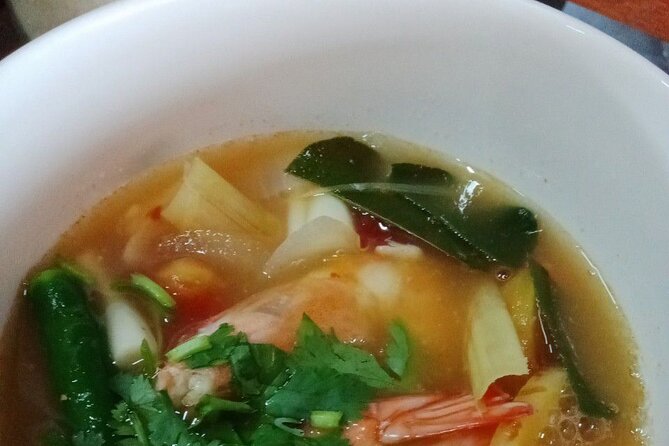
- Hot and sour prawn soup
- Red curry
That’s a nice spread. Coconut milk dishes teach you how Thai sweetness and richness are built. Tom yum (hot and sour soup) is a flavor lesson in balance—acid, heat, and aroma. Red curry shows how curry paste becomes depth instead of just spice.
In addition, a few past sessions included dessert, which means you may finish with a sweet note instead of walking away with only savory flavors. If dessert is important to you, it’s worth asking when you confirm your menu.
A practical tip: choose dishes based on how you actually cook at home. If you already like simmering soups, pick the tom yum-style soup. If you prefer sauce-and-stir cooking, choose curry. You’ll have a clearer “I can repeat this” win.
The hands-on method that actually sticks
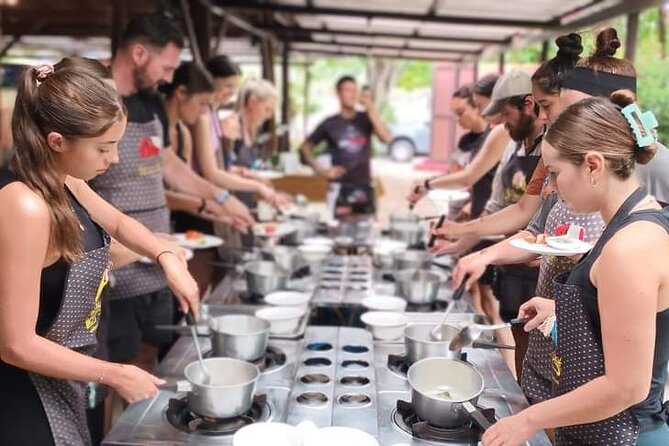
This isn’t a passive tour where you sample food and leave. You learn techniques that you can repeat at home, using a very hands-on teaching approach.
What makes the method work is that it’s structured around Thai balance:
- building flavor with aromatics
- layering heat and sour notes at the right time
- understanding how coconut milk changes the texture and taste
- learning the sequence so sauces don’t go bland or too thick
Because everything is cooked in front of you, you can copy the rhythm. You don’t just get ingredients—you get timing cues. That’s where most cooking classes fail. People leave with recipes but no sense of what changes from minute to minute. Here, the point is to teach you the “why” behind what goes in.
Also, several sessions are run in a step-by-step way, with instruction that keeps you moving. That helps you finish dishes that look and taste right, not just “almost done.”
Instructor energy: English clarity and a good laugh
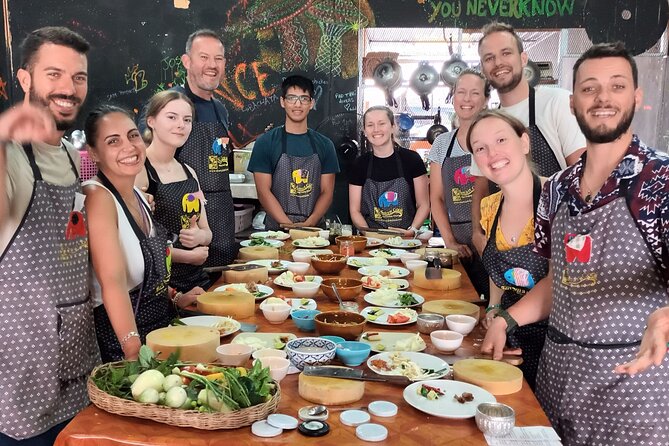
A cooking class lives or dies by the teacher. In this one, the instructor experience shows up again and again in high ratings.
You may be taught by Tiwan (Smart Cook), and other sessions have included instructors like Poppy/Pop, New, Christina, and Aleaf. Across these names, the pattern is strong: good English, clear explanations, and humor that keeps the room relaxed.
That matters because Thai cooking can feel intimidating at first—chili, shrimp paste, fresh herbs, and spice levels can all be personal. When the instructor is easy to follow, you can focus on technique instead of translating everything in your head.
One more detail that’s genuinely helpful: if you’re sensitive to heat, you can request less chili. The class messaging is flexible enough that you shouldn’t feel stuck with a too-spicy outcome. Still, Thai spice can be sneaky, so tell the instructor your comfort level early.
What you’ll make, and how the final meal comes together
Most classes like this aim for multiple dishes so you can eat what you cook. Here, the dish choice is personalized, and many sessions involve cooking several items—often around four dishes per person—so you leave full and satisfied.
You’ll typically see a flow like:
1) prep and understand the ingredients
2) cook the key component (curry paste, soup base, or coconut base)
3) finish by balancing flavor (salt, sour, heat, and richness)
4) plate and taste what you made
The big win is that your meal isn’t random. It’s tied to the dishes you picked. That makes the food feel like your own Thai dinner, not a buffet experiment.
And yes, you’re eating what you make. That’s the feedback loop that teaches you fast. If something tastes flat, you’ll learn what to adjust next time.
Photos and the recipe e-book: the take-home advantage
After the class, you get more than just memories. During the activity, the team takes photos and shares them with you afterward.
You also receive a free recipes e-book, provided as a PDF version online. It’s included, and it’s one of the most practical perks. Thai recipes often hinge on small details—what you sauté first, when you add liquids, and how you judge thickness—so having the recipe guide helps you recreate the dish accurately.
Even better: the e-book reduces the pressure during class. You can listen and cook without trying to memorize every ingredient and measurement. Later, you can use the e-book as your checklist.
If you’re the type who forgets recipes the minute you get home (most people do), this is a huge value add.
Vegetarian, vegan, and gluten-free: tell them and you’ll be okay
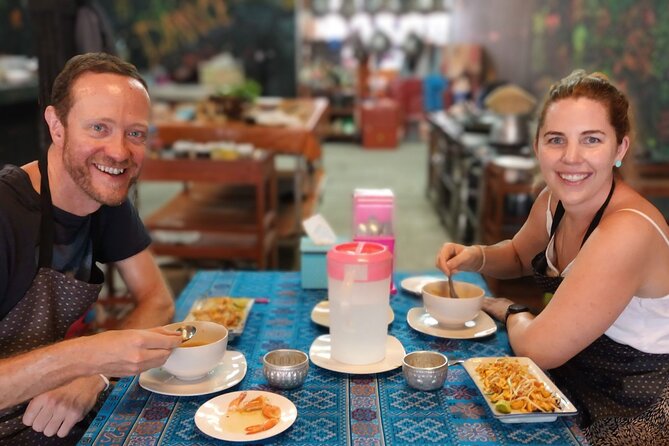
Thailand can be tricky for dietary needs if a kitchen uses shortcuts without checking. Here, the class is explicitly open to vegans, vegetarians, and gluten-free diners—as long as you let them know in advance.
That notice helps the instructor plan ingredient swaps and avoid cross-problem cooking. It also affects your menu choice, which matters because some dishes depend on stock bases or specific sauces.
If you’re vegan or gluten-free, this is exactly the kind of class you should choose, because it’s built around personal menu selection. You’re more likely to end up with dishes you can actually eat without playing guessing games.
Bring your questions too. If you have allergies or strict limits, mention them clearly before cooking starts so the team can adjust.
Value check: is $47.27 worth it in Krabi?
At $47.27 per person for about 4 hours, the value comes from the package, not just the cooking.
Here’s what you’re effectively paying for:
- free hotel transfer from your hotel
- a small-group class (max 12)
- fresh ingredients and a Thai chef-led lesson
- a free recipe e-book
- drinking water during the class
- photos shared after the session
When transportation is included, you also avoid the extra cost and time of finding your way to the kitchen. That alone can make a cooking class feel less like an extra errand.
Is it a luxury food experience? It’s not framed that way. It’s a hands-on Thai cooking lesson with practical outputs you can use later. For most people, that’s exactly what they want: learn, eat, and leave with a repeatable skill.
Timing, group size, and the one thing to watch: pace
The class runs about 4 hours, which is long enough to learn multiple techniques, but short enough that everything can feel energetic.
That energy is good for many people. You stay active, you finish dishes, and you don’t waste vacation time waiting around. But it’s also the reason a small number of people may feel like it’s too fast to fully absorb every ingredient detail.
Here’s how to protect yourself from the “too much, too quickly” feeling:
- ask questions while you’re actively cooking, not after
- focus on one or two core techniques (like curry paste flavoring or soup balance)
- take photos of the finished stages if the photo-sharing is delayed for any reason
If you’re the type who learns best by slowing down, tell the instructor you’d like extra clarification. Most classes like this respond well when you speak up early.
Who this class is best for (and who should skip it)
This experience is a great fit if you:
- want an authentic Thai cooking skill, not just a meal
- like learning with your hands and tasting as you go
- prefer small groups (max 12) so you can ask questions
- need dietary accommodations like vegetarian, vegan, or gluten-free
You might choose a different kind of activity if:
- you hate structured timing and prefer unhurried workshops
- you expect a long, slow market-to-cooking journey every day (some sessions mention extra steps like a market, but it’s not guaranteed in the core description)
For most people in Krabi, though, this hits the sweet spot: you get real technique, real food, and something you can recreate later.
Should you book Smart Cook Krabi’s Thai cooking class?
If you want a practical Thai cooking lesson with hotel pickup, a small group, and take-home recipes, I’d book it. The combination of hands-on cooking, personalized dish choice, and the included recipe e-book makes it a strong value for the time.
Book it especially if:
- you’re staying in Krabi and don’t want to deal with transport to a cooking venue
- you want to cook Thai dishes you’ll recognize from Thai restaurants at home
- you have dietary needs and want them handled in advance
The only real caution is pace. If you know you learn best slowly, plan to ask lots of questions while you’re cooking. With that, this class becomes one of those rare vacation activities that doesn’t fade after dinner.
FAQ
How long is the Thai cooking class?
The class runs for about 4 hours.
Is hotel pickup included?
Yes. Free transfer/pickup is included from your hotel.
Can I choose what dishes I cook?
Yes. You can choose individually menus when you book, and the class includes dishes like chicken in coconut milk, hot and sour prawn soup, and red curry.
Are vegan, vegetarian, or gluten-free options available?
Yes. Vegans, vegetarians, and gluten-free guests are welcome. Let the provider know in advance about dietary restrictions.
Are drinks included?
Drinking water is included. Alcoholic drinks are not included, though they may be available to purchase.
Do I get recipes and photos after the class?
Yes. You receive a free recipes e-book (PDF/online) and photos taken during the activity are shared with you after the class.