REVIEW · MONTEPULCIANO
Tuscan Cooking Class – Traditional 5 course menù
Book on Viator →Operated by Tuscan Cooking Classes by Le Caggiole · Bookable on Viator
Five hours of Tuscan cooking starts at 3 pm. At Le Caggiole in Montepulciano, this class helps you make a full traditional 5-course menù from starter to tiramisu, using the ingredients you are meant to find in Tuscany.
I also like the built-in wine tastings: four local bottles paired to your dishes, so the meal becomes a lesson you can actually remember. Just know the chef runs a tight ship, with clear rules on punctuality and hygiene, and the pace can feel serious if you expected something purely casual.
In This Review
- Key highlights worth showing up for
- Le Caggiole and the 3:00 pm timing: how this afternoon class really feels
- The traditional Tuscan menu you’ll actually cook (and eat)
- Starter: Traditional Bruschette
- First main: Gnocchi with a traditional sauce
- Second main: Pappardelle with the family traditional sauce
- Main course: Chianina beef with meat and vegetables
- Dessert: Tiramisu (family recipe)
- The step-by-step flow: practical cooking plus a cooking show
- Chef Giacomo: serious craft, clear standards, real guidance
- Wine pairing at the table: 4 local wines with 5 courses in mind
- What you learn to use at home: ingredient choices and techniques
- Getting there, moving around, and kitchen rules that affect comfort
- Price and value: what $320.48 buys you (and why it can be worth it)
- Who should book this Tuscan cooking class in Montepulciano
- Should you book? My quick decision guide
- FAQ
- What time does the class start, and how long is it?
- Where do we meet in Montepulciano?
- Is the class offered in English?
- What food and wine are included?
- Can you accommodate allergies or intolerances?
- Are videos or recordings allowed during cooking?
Key highlights worth showing up for
- A real 5-course menù, not a quick demo, built into one flowing afternoon
- Wine pairing tied to each course (dessert is a separate, relaxed moment)
- Small group size (max 8) for hands-on attention
- Chef Giacomo and sommelier training, with practical food and wine guidance
- Farm-to-table sourcing focus, including how to pick ingredients before cooking
Le Caggiole and the 3:00 pm timing: how this afternoon class really feels
This experience runs about 5 hours, starting at 3:00 pm in Montepulciano, and returning you to the same meeting point. If you like the idea of a late-afternoon food plan—rather than a rushed lunch stop—this is a strong fit. You’ll start at Traversa di Montepulciano, 12, 53045 Montepulciano SI, then move into the farmhouse kitchen for a full-on cooking flow.
One practical note that matters: you’ll be standing during the preparations, so plan for comfortable shoes and clothes you can move in. I also think it helps to come with a solid morning meal; the class recommends a good breakfast, and it makes the later wine and food tastings feel much more enjoyable.
You should also expect rules. For hygienic reasons, you won’t be able to wear rings, large bracelets, or artificial nails while cooking. That’s not just fussiness—it protects everyone’s food handling process and keeps the kitchen running smoothly with a small group.
Finally, no recordings. The class states no video or any other records during preparations, so think of this as a live experience: cook, taste, talk, and learn in the moment.
You can also read our reviews of more tours and experiences in Montepulciano.
The traditional Tuscan menu you’ll actually cook (and eat)
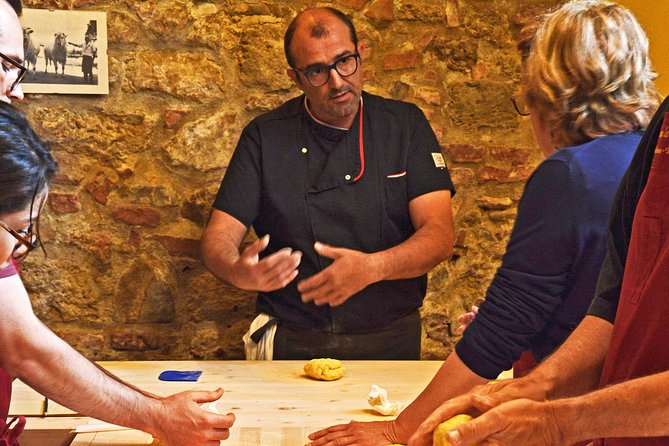
This isn’t built around random plates. You’re aiming for a Full Menù, described as 7 different preparations that result in 5 courses at the table. Translation: you’ll do multiple kitchen steps, then you’ll sit down for the full meal.
Here’s the menu structure you should expect:
Starter: Traditional Bruschette
You’ll begin with a classic Tuscan opener: bruschette. The real value here isn’t just taste—it’s learning the logic behind simple ingredients, treated well. Bruschette is unforgiving in the best way: if tomatoes, bread, and seasoning are off, you notice fast.
First main: Gnocchi with a traditional sauce
Next comes gnocchi, paired with a very traditional sauce. Even if you’ve eaten gnocchi before, making it is a different skill. The class is built to leave you with repeatable habits, not just a recipe you can’t recreate.
Second main: Pappardelle with the family traditional sauce
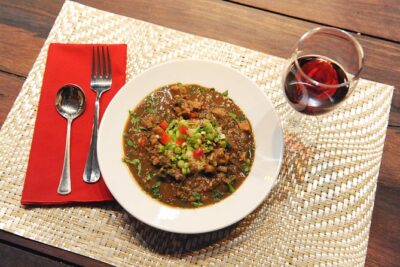
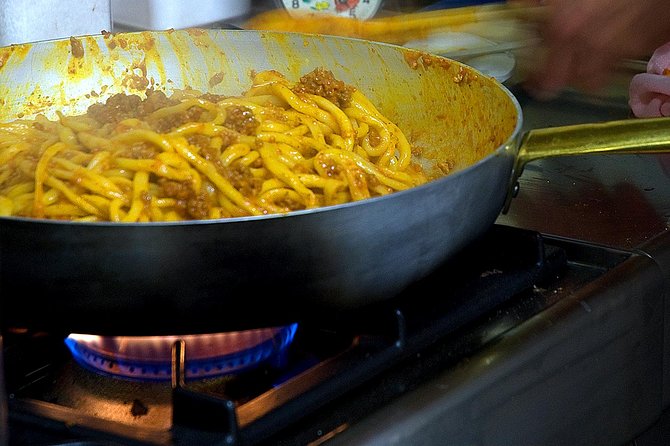
Then you move into pappardelle and a family-style sauce. One reason this class tends to score so well is that it isn’t only about flavor. It’s also about technique—how you handle dough, how you shape or cut, and how sauce and pasta work together.
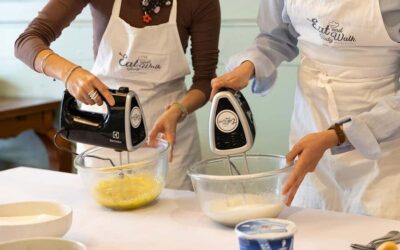
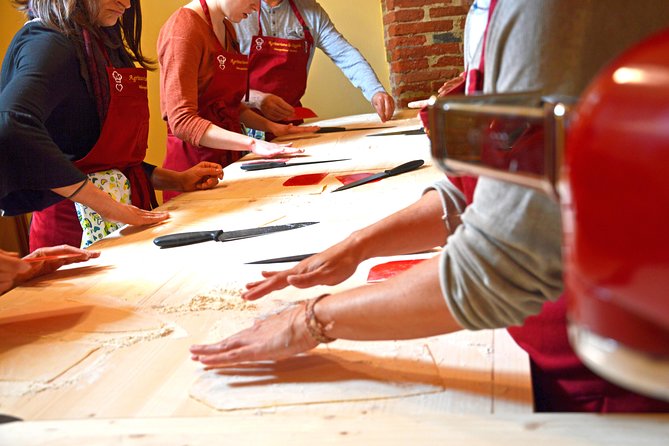
In particular, one past participant mentioned learning knife work for slicing pappardelle and how to properly whisk eggs. That kind of hands-on detail is exactly what makes a cooking class worth paying for: you learn the mechanics, not just the ingredients.
Main course: Chianina beef with meat and vegetables
Your main dish is built around Chianina beef, served with meat and vegetables. Chianina is a big deal in Tuscany, and this course is a great test of the class promise: you’re not only cooking starch and sauces; you’re handling a heartier plate where timing and seasoning matter.
Dessert: Tiramisu (family recipe)
You finish with tiramisu, using the class’s own family recipe. Dessert gets its own slow-down moment: you’ll relax while eating it on the terrace and enjoy the views. It’s a smart pacing choice—after the intensity of cooking, you get the reward phase without rushing.
The step-by-step flow: practical cooking plus a cooking show
The course is described as dynamic, with multiple formats folded together: practical cooking class, cooking show, food tasting, and wine tasting. That structure keeps the session from turning into one long sink-or-swim moment.
Why this matters for you: a good hands-on class has teaching moments and recovery moments. The show parts help you see technique before you copy it; tasting breaks let you understand what’s working while you still have time to adjust.
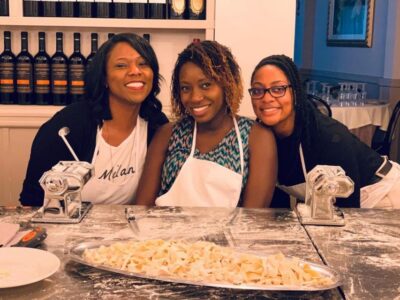
Also, you’ll get a friendly social experience with your classmates. With a maximum group size of 8, that social time is manageable instead of turning into chaos. If you want to ask questions and talk through taste differences, this is where you’ll do it naturally.
Chef Giacomo: serious craft, clear standards, real guidance
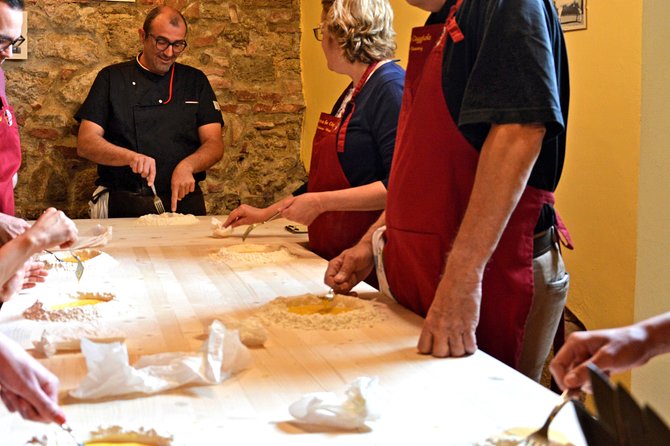
This class is led by Giacomo (Chef and graded Sommelier), with support from the team at Le Caggiole. The strongest theme across feedback is that Giacomo teaches with confidence, and he pushes for competence.
That can be either a plus or a mismatch, depending on your style. On the plus side, you’re not just receiving a vibe—you’re getting a real educational pathway for both cooking and wine. People leave feeling capable at home, because the class centers on repeatable technique: how to choose ingredients, how to handle steps in order, and how to pair flavors.
On the caution side, one review-style account flagged that Giacomo can be strict and that punctuality matters. The operator even reinforces this idea: arriving late isn’t treated like casual travel tardiness. You’ll have a schedule, staff, and other guests, and the class will keep moving.
My take: if you show up on time, follow the hygiene rules, and want to learn the mechanics behind Italian classics, you’ll likely enjoy the serious structure. If you want a relaxed party atmosphere first and technique second, you might find the tone less playful than you hoped.
Wine pairing at the table: 4 local wines with 5 courses in mind
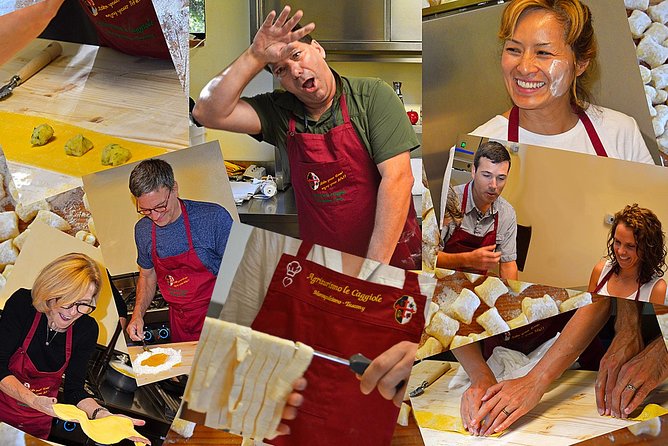
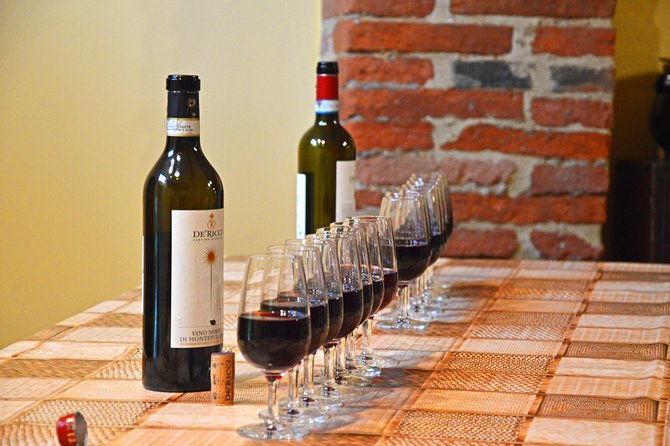
A big selling point here is the pairing approach. The class states 4 selected wines are included with food pairing, and each dish except for the dessert is paired with a specific local wine. That means you’re not guessing. You taste the food, you taste the wine, then you learn how the pairing shifts what you notice.
Think of this as learning by contrast:
- Sauce vs wine: sweetness, acidity, and saltiness change perception.
- Meat vs wine: tannins and fat interact, so your palate recalibrates.
- Pasta vs wine: starch can soften edges and make fruit notes feel rounder.
Because Giacomo is also a sommelier, the wine instruction isn’t an afterthought. It’s built into the meal so you connect cause and effect while everything is fresh in your mind.
And then dessert becomes its own moment—served at the end on the terrace—so you can relax without rushing through another pairing.
What you learn to use at home: ingredient choices and techniques
The class emphasizes organic and farm-to-table ingredients and teaches you how to choose the best items before cooking. That’s one of the most practical parts of any Italian food experience: if you can choose better ingredients, you can recreate the flavor even when you’re not in Tuscany.
You’ll also get hands-on skills you can repeat:
- pasta technique basics tied to gnocchi and pappardelle
- cooking steps for classic sauces
- practical handling of dough and eggs (based on mentioned instruction like egg whisking and slicing/cutting skills)
- service-minded assembly, so your finished plate looks like it came from a real kitchen, not a rushed dinner
On top of that, you can request pencil and block notes. That’s small, but it signals something important: this is meant to be a take-home learning experience. If you like reviewing steps later, bring your curiosity and write things down as you go.
Getting there, moving around, and kitchen rules that affect comfort
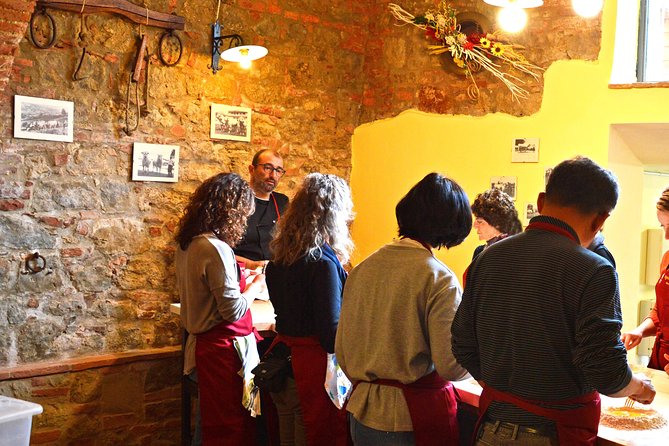
This class is in Montepulciano and starts at a specific meeting address, but it does not include transfers or shuttle service. Plan your own transport from wherever you’re staying. Since the class starts at 3:00 pm, I’d aim to arrive early rather than right on time. The experience describes punctuality expectations clearly, and the kitchen works on a tight flow.
Also plan for a cooking environment:
- You’ll stay standing during preparations.
- You need comfortable shoes.
- You’ll have kitchen tools and aprons provided.
- You can’t wear rings, large bracelets, or artificial nails.
If you’re traveling with a group, keep in mind the class is designed for up to 8 travelers, and that helps maintain hands-on teaching. If you’re booking alone, the class notes that single guests can be welcomed into an already scheduled small group—just reach out before booking so they can optimize the setup.
Price and value: what $320.48 buys you (and why it can be worth it)
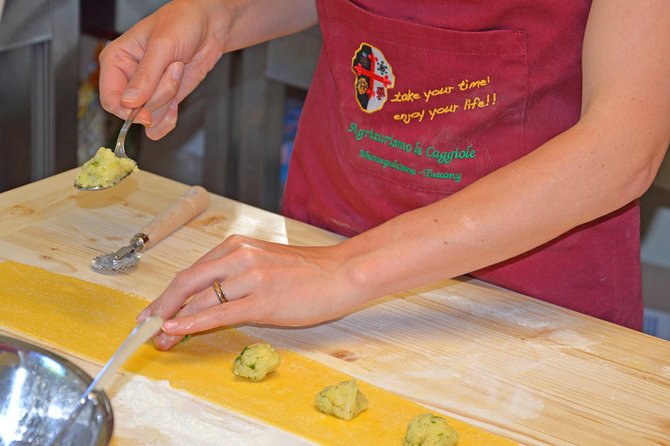
At $320.48 per person, the sticker price isn’t low. But you’re paying for a bundle that’s harder to recreate on your own: a full 5-course meal, wine pairing (4 wines), and a chef-led instruction format built around technique.
Here’s what that value usually includes in the real world:
- Ingredients and meals prepared during the session, then eaten together
- Aprons and kitchen tools, plus all ingredients needed for the courses
- A professional guide who combines cooking teaching with wine matching
- A group size capped at 8, which affects how often you get hands-on attention
- Extra learning support like note-taking materials on request
If your ideal Tuscany day is eating your way through towns, this class may feel expensive. If your ideal day is learning how to cook and then actually reproduce the results, the price starts to make sense. Especially because the menu is structured and complete—starter through dessert—with pairing built in.
Who should book this Tuscan cooking class in Montepulciano
This experience fits best if you:
- want a traditional Tuscan menu and not a light snack activity
- like learning technique and repeating dishes at home
- enjoy pairing food and wine with real guidance
- are comfortable with a small group and an instructional tone
You might want to reconsider if you:
- prefer a very laid-back, purely social cooking event with no structure
- expect a slower pace with minimal technique demands
- dislike strict timing or hygiene rules in a shared kitchen setting
That said, even the stricter tone has a purpose: the class is built so you can make the dishes again later. If you show up ready to learn, that seriousness often turns into confidence by the end.
Should you book? My quick decision guide
Book this cooking class if you want one ticket that delivers a complete Tuscan meal, real wine pairing lessons, and hands-on instruction in a small group. Plan for comfort (standing, shoes), follow the hygiene rules, and arrive a bit early. If you’re ready for clear standards and a structured learning pace, you’ll likely come away with both skills and a full belly.
Skip it if you’re mainly hunting for a casual hangout or a simple tasting without technique. This is about cooking, pairing, and doing it properly.
FAQ
What time does the class start, and how long is it?
The class starts at 3:00 pm and lasts about 5 hours. It ends back at the meeting point.
Where do we meet in Montepulciano?
The meeting point is Traversa di Montepulciano, 12, 53045 Montepulciano SI, Italy.
Is the class offered in English?
Yes. The experience is offered in English.
What food and wine are included?
You’ll taste a 5-course traditional menù prepared in the morning. Wine is included as alcoholic beverages tasting of 4 selected wines with food pairing.
Can you accommodate allergies or intolerances?
You need to inform them before completing the booking so they can evaluate whether a dish can be changed. After booking, menu changes cannot be considered.
Are videos or recordings allowed during cooking?
No. The experience states no video or any other records during the preparations.