REVIEW · MONTEPULCIANO
Cooking class at the farm in Tuscany
Book on Viator →Operated by Valdichiana Living · Bookable on Viator
Cooking with real Tuscan views.
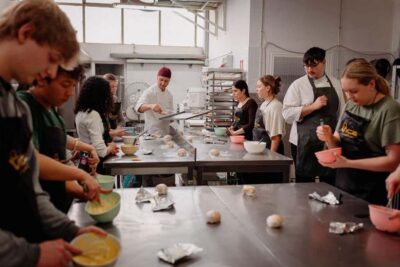
This hands-on class in Montepulciano turns a farm kitchen into your classroom. I like that you get practical cooking time with fresh, local ingredients, and that the menu can shift a bit with the season. You’ll work on a typical appetizer, fresh handmade pasta, and a Tuscan dessert—then sit down to eat what you made.
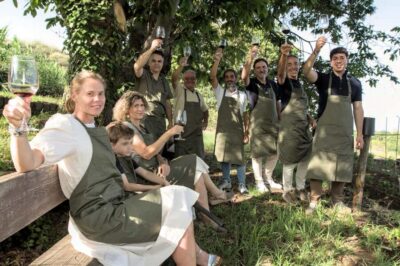
What really sells it is the payoff: lunch or dinner is included, along with a glass of local wine, in a relaxed, convivial setting. You also leave with a Valdichiana Living apron, which is a small thing, but it helps the experience feel tangible.
One consideration: while the class is offered in English, not every part will be perfectly smooth for every ear. One guest noted the instructor’s English was a bit hard to catch, and found a translation app helpful.
In This Review
- Key highlights at Valdichiana Living’s Tuscan farm kitchen
- Why this Tuscan farm class near Montepulciano feels worth your time
- The 3-hour flow: welcome drink, cooking, then wine and your meal
- Starter first: typical Tuscan flavors and what to watch for
- Handmade pasta lessons: the real skill you take home
- Tuscan dessert and seasonal changes: why flexibility is good
- Eating what you cooked: wine included, patio energy optional
- Communication and comfort: English-led with real human help
- Price and value: what $174.60 buys you in the Tuscan real world
- Who should book this class, and who might want to skip it
- Should you book the Valdichiana Living cooking class at the farm?
- FAQ
- FAQ
- What is the duration of the cooking class?
- Where does the cooking class start?
- What language is the class taught in?
- How big is the group?
- What dishes will I help prepare?
- What’s included in the price?
- Is transportation included?
- What is the cancellation policy?
Key highlights at Valdichiana Living’s Tuscan farm kitchen
- Max 15 travelers keeps the class from feeling crowded and helps you stay involved
- Handmade pasta from scratch is the main skill-focus, not just a demonstration
- Seasonal menu changes mean your starter and dessert may vary slightly
- Lunch or dinner + a glass of wine lets you relax right after cooking
- Valdichiana Living apron included gives you a real take-home souvenir
- Farm views in the Montepulciano area make the whole experience feel special, even before you cook
Why this Tuscan farm class near Montepulciano feels worth your time
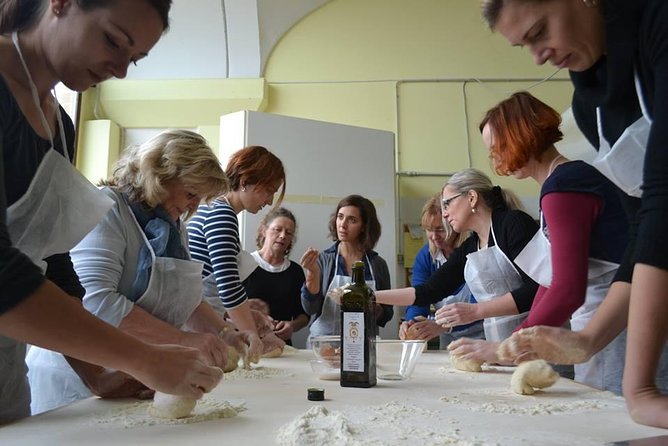
If you’ve done wine tastings in Tuscany, you already know the scenery can do half the work. This experience adds the other half: you’re actually making the food. The setting is an agriturismo/farm environment around Montepulciano, and that matters because it changes the tone. Instead of being ushered through a scripted meal, you’re learning in a home-style rhythm, with time to ask questions and get feedback.
I also like the structure. You’re not picking from a long menu of options. You’re building a meal in three steps—starter, pasta, dessert—so you leave with a clearer sense of Tuscan home cooking. And because the menu may vary slightly with seasonal availability, you’re not stuck repeating the exact same course list you’d find everywhere.
The group stays small (up to 15 people), which helps in a hands-on class. When there are too many cooks in the same space, you end up waiting around. Here, you’re more likely to stay busy and actually learn what your hands should do.
You can also read our reviews of more tours and experiences in Montepulciano.
The 3-hour flow: welcome drink, cooking, then wine and your meal
This class runs about 3 hours, and it follows a simple arc: arrive, get oriented, cook, then eat. You start at 53045 Montepulciano, Province of Siena, Italy, and the experience ends back at the meeting point.
Expect these broad stages:
- A welcome drink when you arrive (a good “settle in” moment before the knives come out)
- A hands-on starter using typical local products
- A pasta session where you make fresh handmade pasta, plus its traditional sauce
- A Tuscan dessert course
- A meal served as lunch or dinner with a glass of local wine
One detail worth knowing: you may get a short break between cooking and eating, and the meal can be served in a more formal sit-down setup. In at least one account, the food was plated and served by staff on an outdoor patio. That kind of pacing is smart. It keeps the class from turning into nonstop work, and it gives you time to taste what you made while it’s still at its best.
Starter first: typical Tuscan flavors and what to watch for
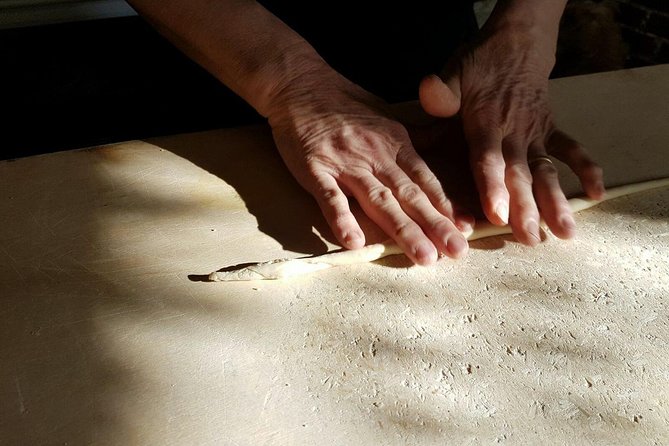
The starter course is described as typical products, and that’s usually where you’ll taste the region’s “home table” logic—simple ingredients, prepared with confidence. Depending on the season and the farm’s pantry, your starter could lean savory and straightforward.
One important practical consideration: one guest specifically mentioned disliking a chicken liver spread (pate/spread) that was part of their starter. That doesn’t mean it’s guaranteed for everyone, but it does tell you something useful: the farm may include offal-style Tuscan preparations as part of a classic starter.
If that’s not your thing, it’s worth speaking up early in the class when you can still ask what’s going into the appetizer that day. Small classes make that sort of conversation more realistic.
Handmade pasta lessons: the real skill you take home
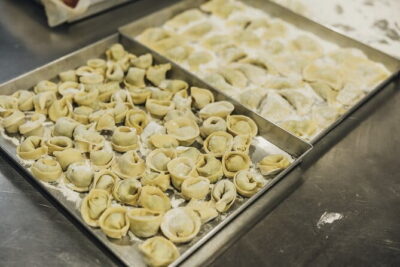
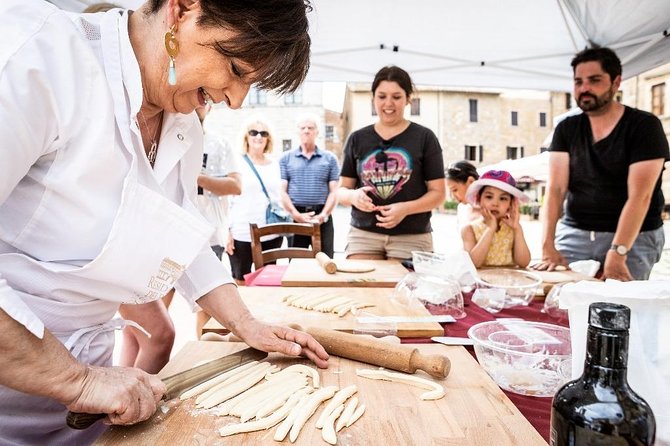
The centerpiece is the pasta: you’ll prepare fresh handmade pasta and learn its traditional sauce. That’s the part that’s hardest to fake at home, which is why this class is so satisfying. You’re not just tasting; you’re building technique.
I like that this is taught as home-style cooking. That translates to practical learning: how dough feels, how sauce matches the pasta, and how to work at a pace that doesn’t rush you. Even if you’re not a confident cook, you’re learning in stages, and the instructor supports you while you do the work.
In a few accounts, the instructor was described as patient, including one named instructor, Laura. If you’re the type who freezes when you don’t get it right on the first try, a patient teacher makes a big difference. You can focus on getting the steps correct instead of panicking over small mistakes.
If you’ve ever watched people make pasta in a documentary and thought, That looks hard, this is the antidote. The whole point is to help you do it—hands on.
Tuscan dessert and seasonal changes: why flexibility is good
Your dessert is listed as Tuscan dessert, and the menu can vary slightly depending on seasonal availability. That flexibility is not a problem here—it’s part of the value.
When a class sticks to the exact same course list year-round, you sometimes miss what makes seasonal Tuscan cooking interesting. Here, you get a version of the meal that fits what’s freshest and most available at the farm at that time.
So what should you expect? A classic Tuscan-style sweet served as part of your meal. You’re not learning baking science. You’re learning the basics of home-style preparation and how the components come together for a finished course.
Practical tip: if you have preferences or dietary restrictions, tell the team before the class if possible. The menu is flexible, and that flexibility can help you avoid ending up with something you don’t like.
Eating what you cooked: wine included, patio energy optional
Here’s the best part for most people: you eat your meal at the end. Lunch or dinner is included, and you get a glass of local wine with it. That matters for value because it turns a class into a complete Tuscan experience, not a ticket where you still have to find dinner afterward.
The atmosphere is described as relaxed and convivial. In practice, that usually means you cook together, share a table when it’s time to eat, and enjoy the results without feeling like you need to race through the experience.
One guest highlighted that after a small break, the meal was served by wait staff in a lovely outdoor patio setting. Even if your class doesn’t match that exact setup day-to-day, the key idea is consistent: you’ll be eating in a setting that matches the farm vibe, not in a busy, impersonal cafeteria.
Also, since your group is capped at 15, the meal doesn’t get swallowed by big-tour chaos. You should still be able to talk, ask questions, and compare notes on what you made.
Communication and comfort: English-led with real human help
The experience is offered in English, which is a big plus in rural Tuscany. Still, language is never perfect. One review noted the instructor’s English could be hard to follow at times, and a translation app helped with the trickier parts. That’s a reasonable approach if you want to maximize learning.
What I’d focus on, though, is the teaching style. The most praised aspect across accounts is the personalized help during the cooking. One person described the teacher, Laura, as extremely patient and helpful, even with shaky beginner skills. That’s what you want in a cooking class: guidance that keeps you moving, rather than correcting you in a way that makes you feel behind.
If you’re a beginner, look for this kind of reassurance. In classes like this, your success is partly technique and partly confidence. A patient instructor protects both.
Price and value: what $174.60 buys you in the Tuscan real world
At $174.60 per person, this isn’t a cheap activity. But it’s also not just a one-hour demo. You’re paying for:
- A structured, hands-on cooking class (about 3 hours)
- Fresh local ingredients for a starter, pasta, and dessert
- A full lunch or dinner served at the end
- A glass of local wine
- A Valdichiana Living apron
So the value isn’t only the cooking. It’s the meal package and the teaching time bundled together. If you were to buy ingredients and then try to learn on your own, you’d spend money and still miss the guidance.
Also, small-group size helps justify the cost. With up to 15 people, you’re more likely to get real help. And because the average booking is about 38 days in advance, this class has demand—meaning you should book early if you want a specific date.
Who should book this class, and who might want to skip it
This cooking class fits best if you want a day in Tuscany that’s practical and memorable. I’d especially recommend it if:
- You like hands-on learning more than watching
- You want to eat what you make, with wine included
- You’re curious about Tuscan home-style techniques
- You like smaller groups and real interaction with the instructor
You might think twice if:
- You strongly dislike specific starter flavors like liver-based spreads (which can show up as a typical Tuscan starter)
- You prefer purely lecture-style classes, where language clarity is the only focus
- You don’t want to cook at all and would rather do a tasting-only experience
Should you book the Valdichiana Living cooking class at the farm?
If your goal is authentic Tuscany with a hands-on payoff, I’d say yes. The biggest wins are consistent: the farm setting with great views, the hands-on pasta focus, and the way the meal is built into the experience rather than added later. Add the included wine and the small group size, and it starts to feel like you’re paying for a complete afternoon with real instruction.
My only caution is to be honest with yourself about starters and language. If you dislike liver or you know you’ll struggle with English in a fast classroom, plan to communicate early and consider using a translation app.
FAQ
FAQ
What is the duration of the cooking class?
It runs for about 3 hours.
Where does the cooking class start?
The meeting point is listed as 53045 Montepulciano, Province of Siena, Italy.
What language is the class taught in?
The class is offered in English.
How big is the group?
The experience has a maximum of 15 travelers.
What dishes will I help prepare?
You’ll make an appetizer, fresh handmade pasta with its traditional sauce, and a Tuscan dessert (the exact menu may vary slightly by season).
What’s included in the price?
Included are the welcome drink, the Tuscan cooking class, lunch or dinner with a glass of wine, and a Valdichiana Living apron.
Is transportation included?
Transportation service is not included, though it may be available on request.
What is the cancellation policy?
You can cancel for free up to 24 hours before the experience starts for a full refund. If it’s canceled because the minimum number of travelers isn’t met, you’ll be offered a different date or a full refund.
If you want, tell me your travel month and whether you’ll have a car, and I’ll suggest the most sensible timing for this class around Montepulciano.