REVIEW · MONTEPULCIANO
Tuscan Cooking Class -Traditional Pasta Menu
Book on Viator →Operated by Tuscan Cooking Classes by Le Caggiole · Bookable on Viator
Handmade pasta, Tuscan wine, and a family table. In Montepulciano, this small-group class at Farmhouse Le Caggiole turns a morning of cooking into a real food-and-wine lesson with Chef Giacomo and Cristiana. I especially like how much time you spend on technique while you make a full traditional menu, not just a quick demo.
My second favorite part is the wine pairing built right into the meal, so you learn why the choices work. One thing to consider: during prep you’ll be expected to stay standing, and the course also has a no-recording rule while you cook.
In This Review
- Key Highlights You’ll Care About
- Tuscan Cooking in Montepulciano: More Than a Recipe Copy
- Finding Farmhouse Le Caggiole: Morning Rhythm and Simple Logistics
- What You Actually Cook: Bruschetta, Pici, Pappardelle, and Tiramisù
- Stop at Farmhouse Le Caggiole
- Course by course: the menu
- The Real Teaching Focus: Technique, Ingredients, and Decisions
- Wine Pairing with Giacomo: How Your Plates Learn to Speak
- The Tasting Moment: A Four-Course Table and Terrace Dessert
- Small Group Energy: Personal Attention Without the Hurry
- Price and Value: What $212.85 Buys You
- Tips Before You Go: Make the Morning Easier
- Who This Class Suits Best (and Who Might Find It Less Fun)
- Should You Book This Tuscan Cooking Class?
- FAQ
- Where does the class meet?
- What time does the class start?
- How long is the class?
- Is the class offered in English?
- What’s the group size?
- What do you cook and eat during the workshop?
- Are drinks included?
- Is there transportation or a shuttle included?
- Are there restrictions on recording during the cooking?
- What should I do if I have an allergy or intolerance?
Key Highlights You’ll Care About
- A maximum of 8 people keeps the pace relaxed and the teaching personal
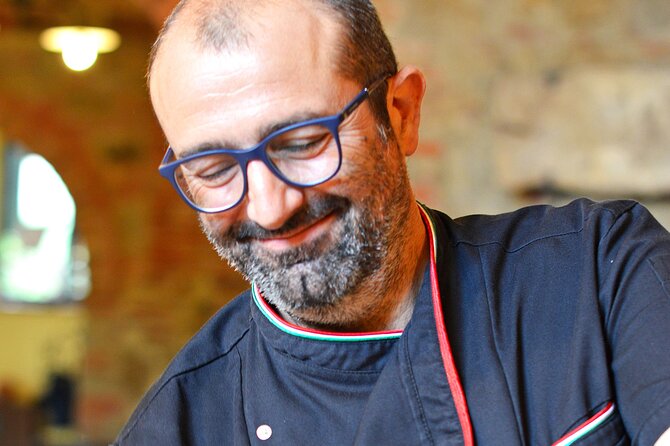
- Chef Giacomo is both a chef and a graded sommelier, so cooking and wine connect naturally
- You make four courses: bruschetta, pici, pappardelle with meat ragù, and tiramisù
- 3 local wine tastings with food pairing guide your palate, not just your appetite
- Dessert on the terrace with views makes the end of class feel like a mini celebration
- No video or records during cooking keeps the focus on learning in the moment
Tuscan Cooking in Montepulciano: More Than a Recipe Copy
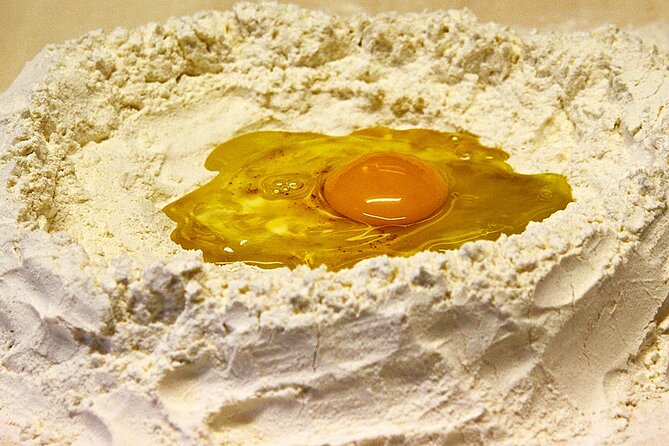
If you’ve ever cooked from a printout and wondered why it tastes a little flat, this is the kind of class that fixes that feeling. Here, the goal isn’t to memorize a list of ingredients. You practice the movements and decisions behind traditional Tuscan cooking—especially when it comes to fresh pasta.
The setting matters too. You’re not crammed into a studio kitchen. The class centers around Farmhouse Le Caggiole in the Montepulciano area, where the pace fits a morning in the countryside. That makes it easier to slow down and actually learn: feel the dough, understand the sauce, and taste as you go.
You also get the human side of Italian food. Giacomo (chef and a graded sommelier) guides you through the why, while Cristiana brings encouragement and keeps the room friendly. Several people point out that this lesson isn’t cold or scripted—it’s warm, clear, and practical.
You can also read our reviews of more tours and experiences in Montepulciano.
Finding Farmhouse Le Caggiole: Morning Rhythm and Simple Logistics
The class starts at 9:30 am and runs about 4 hours. The meeting point is Traversa di Montepulciano, 12, 53045 Montepulciano SI, Italy, and it ends back at the same spot.
No shuttle is included, so you’ll want to plan your own ride or transit in advance. That’s the one logistics detail that can affect your day the most. If you’re already staying in or near Montepulciano, it’s usually easy to organize. If you’re farther out, give yourself extra buffer time so you arrive relaxed (you’ll cook sooner than you think).
One more practical note that you’ll feel during the class: you cook standing. Wear shoes you can stand and move in comfortably, and choose clothes you don’t mind getting a little flour or sauce on.
What You Actually Cook: Bruschetta, Pici, Pappardelle, and Tiramisù
This is a traditional pasta menu class with a clear structure. You’ll work with your hands and make a full meal, then sit down at the end and taste what you produced.
Stop at Farmhouse Le Caggiole
Your morning’s work happens at Farmhouse Le Caggiole, the kind of place where cooking feels connected to place. You’re not only learning recipes—you’re learning ingredient thinking. That means you’re paying attention to freshness, texture, and how sauces behave with pasta made that same morning.
Course by course: the menu
1) Traditional Tuscan Appetizer: Bruschette
You start with classic Tuscan bruschette. It’s a simple dish on paper, but it teaches real technique: balancing flavors, timing, and getting the components to work together instead of tasting separate.
2) First fresh pasta: Pici with traditional sauce
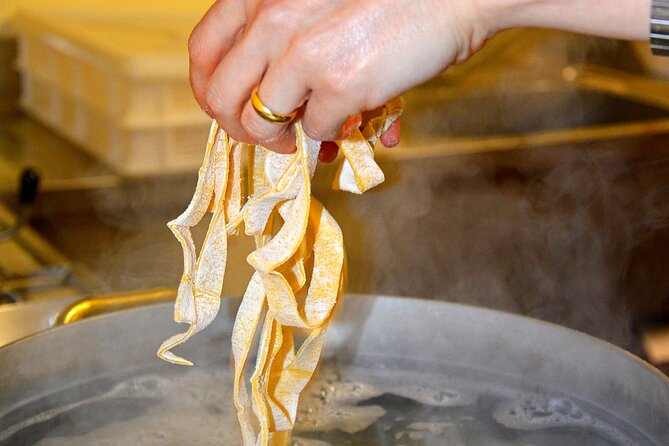
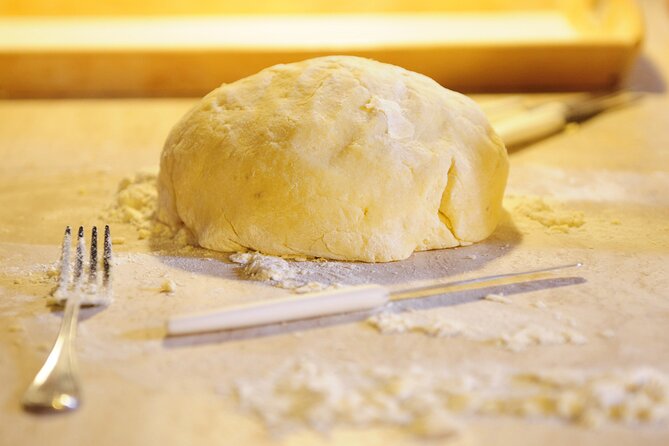
Pici is one of those “simple idea, skilled execution” pastas. You’ll make the pasta by hand and then pair it with a traditional sauce. The teaching focus here is technique, not shortcuts—how the pasta should feel as you shape it, and how sauce and texture should meet on the fork.
3) Second pasta: Pappardelle with Tuscan meat ragù (Cinta Senese pork)
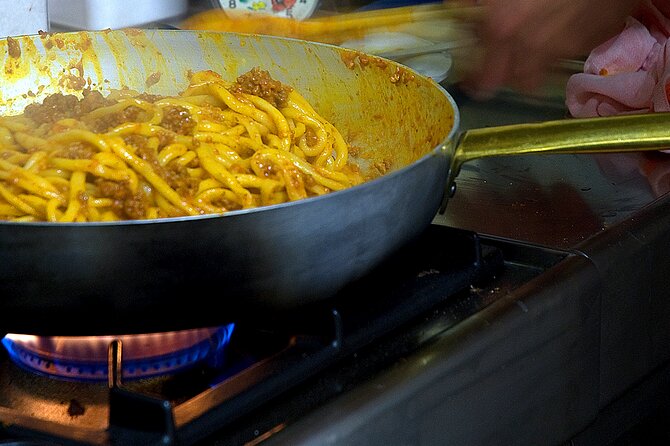
Next comes pappardelle plus a Tuscan meat ragù made with Cinta Senese pork. This is where the class earns its name as a traditional lesson. You’re not only forming pasta; you’re also learning how ragù fits the overall meal, including how it supports the pasta shape.
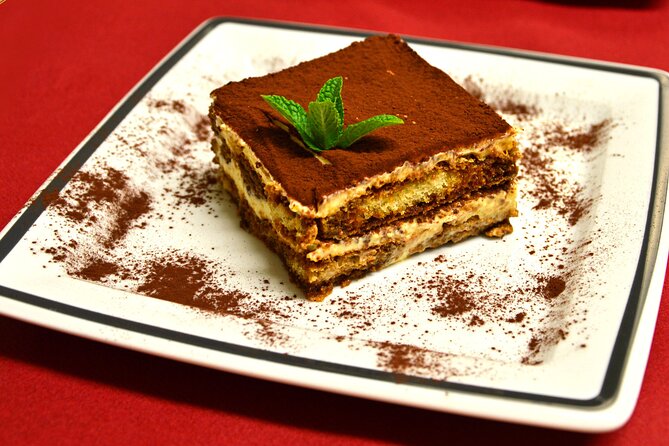
4) Dessert: Tiramisù, made in your own hands
You’ll make tiramisù using the family recipe. The best part is the payoff: you’ll taste dessert while you relax on the terrace with views. It turns the last step into a reward, not just a final plate.
The Real Teaching Focus: Technique, Ingredients, and Decisions
What I like most about this class is that it trains your instincts. You’re guided toward choices, not just steps. One of your goals is to learn how to pick better ingredients for your dishes and build basic tools for choosing wine pairings.
That matters because Italian cooking isn’t about one magic recipe. It’s about managing a few key variables:
- how the pasta dough feels and behaves
- how the sauce matches the pasta
- how acidity and richness get balanced by wine
And yes, you do more than eat while someone else cooks. The class includes using aprons and various kitchen tools, and everything you need for the lesson is included.
Also, if you like structured learning, they offer pencil and a block on request. It’s a small detail, but it helps when you want to remember technique notes after you’re back home.
Wine Pairing with Giacomo: How Your Plates Learn to Speak
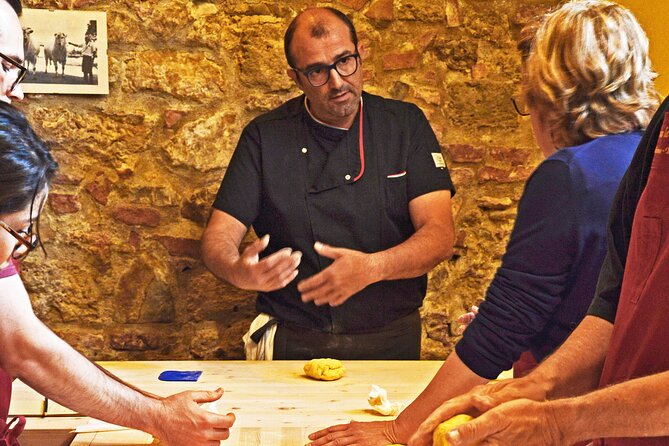
This is a cooking class, but the wine education is built in like a second lesson track. You’ll taste three selected local wines with food pairing, guided by Giacomo, who brings chef knowledge plus sommelier training.
Instead of treating wine as an afterthought, the course connects each course to a specific wine. That’s how you learn what to look for next time you shop or dine. It also explains why you can’t just match red with red and call it done.
You’ll build a tasting habit: notice what changes when you take a bite, then adjust with wine. People do especially well with this part because it’s practical. You aren’t asked to recite grape facts—you’re guided to taste and connect the dots.
The Tasting Moment: A Four-Course Table and Terrace Dessert
At the end, you sit around a large table to enjoy a four-course menu. The non-dessert courses are paired with the selected local wines as part of a guided tasting experience, so you’re not just eating—you’re learning how each pairing lands.
Dessert takes a different tone. You’ll taste tiramisù relaxed on the terrace with the views. That terrace break is one of the best “why this feels like Italy” touches: you finish work, you eat what you made, and you get a scenery reward at the same time.
Small Group Energy: Personal Attention Without the Hurry
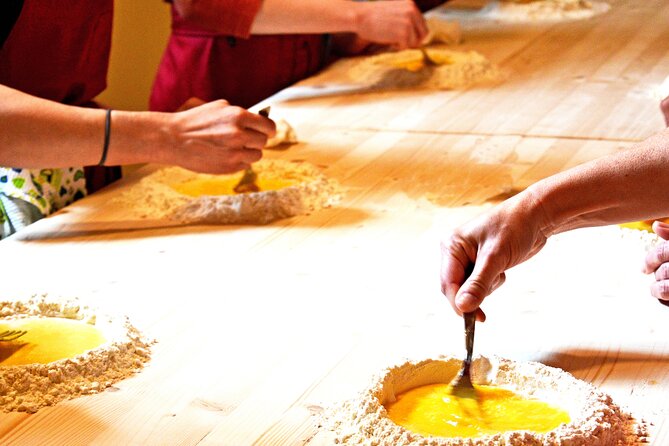
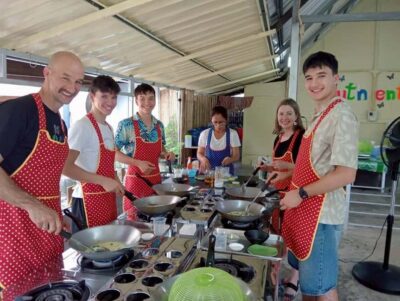
With a maximum of 8 travelers, the vibe stays manageable. You’re more likely to get one-on-one help when you need it, and the pace won’t feel like a cooking reality show.
The course also includes a friendly social component with your classmates. That helps if you’re traveling solo or if you don’t want a stiff classroom feel. Several comments highlight how Cristiana and Giacomo work well together—clear instruction plus a fun atmosphere.
There’s also a clear boundary that keeps it focused: no video or any other records during preparations. It’s not meant to spoil your trip—it’s meant to keep hands on learning front and center. You’ll want to plan your expectations so you don’t feel distracted or frustrated in the moment.
Price and Value: What $212.85 Buys You
At $212.85 per person for about 4 hours, you’re paying for more than ingredients. You’re paying for:
- hands-on instruction for fresh pasta and tiramisù
- a full meal tasting of what you cook
- three wine tastings tied directly to your food
- a small group size (max 8) that supports real teaching
- tools, aprons, and ingredients included
So the value calculation comes down to whether you want skills you can repeat later. If you just want to eat a nice meal, there are cheaper options in the area. But if you want to return home with technique and pairing judgment, this is the kind of class that justifies the price.
It’s also one of the most consistently praised experiences in its category, with a 5/5 rating and 99% recommendation. That’s not a guarantee, but it does suggest you’re likely to get the warm, focused teaching people talk about.
Tips Before You Go: Make the Morning Easier
A few practical pointers based on how the class is run:
- Eat breakfast. They recommend doing a good breakfast the morning of class. Cooking starts early, and you’ll be on your feet.
- Bring comfortable shoes. You’ll stand during preparations.
- Skip jewelry. For hygiene reasons, no rings, large bracelets, or artificial nails during the cooking.
- Tell them about allergies or intolerances before booking. You need to inform them before the booking is completed, because after booking, menu changes can’t be considered.
- Use the note offer if you like structure. Pencil and block notes are available on request.
If you love planning ahead, this class rewards it. You’ll spend less time worrying and more time learning.
Who This Class Suits Best (and Who Might Find It Less Fun)
This works best for you if:
- you enjoy hands-on cooking and want real technique
- you want wine pairing education you can actually use later
- you want a small group morning with a warm, family-style atmosphere
- you like traditional Tuscan food and want the full menu experience
It may feel less ideal if:
- you don’t like standing while cooking
- you want a purely sit-down tasting (this is hands-on)
- you need flexibility for menu changes after booking due to dietary needs
Should You Book This Tuscan Cooking Class?
I’d book it if your goal is to leave Tuscany with skills, not just photos. The combination of fresh pasta practice, a real traditional menu, and guided wine pairing with Giacomo is a strong learning package for the time.
Also, the social feel matters. A max of 8 people plus Cristiana’s support makes it easier to relax and ask questions without feeling rushed.
If you’re in Montepulciano with a morning free and you’re ready to stand, cook, and taste, this is a great use of your time.
FAQ
Where does the class meet?
The meeting point is at Traversa di Montepulciano, 12, 53045 Montepulciano SI, Italy.
What time does the class start?
Start time is 9:30 am.
How long is the class?
The duration is approximately 4 hours.
Is the class offered in English?
Yes, it is offered in English.
What’s the group size?
The maximum group size is 8 travelers.
What do you cook and eat during the workshop?
You prepare and taste a full traditional menu: traditional bruschette, pici with traditional sauce, pappardelle with Tuscan meat ragù (with Cinta Senese pork), and tiramisù.
Are drinks included?
Yes. You’ll taste 3 selected local wines with food pairing, and meals tastings are included.
Is there transportation or a shuttle included?
No. They do not offer transfer or shuttle service.
Are there restrictions on recording during the cooking?
Yes. There is no video or any other records during the preparations.
What should I do if I have an allergy or intolerance?
You need to inform them before completing your booking so they can evaluate the possibility of changing a dish. After booking, requests for menu changes can’t be taken into consideration.