REVIEW · SHANGHAI
2.5hrs Chinese Kitchen Cooking Class: Art Steamed Dumplings
Book on Viator →Operated by Trippest Travel · Bookable on Viator
Colorful dumplings teach real technique fast. This Shanghai class is fun and practical, with hands-on dumpling making plus included tea while you work. I like that it stays small, with max 15 guests, so you get actual guidance instead of watching from a distance.
Your main consideration: there’s no hotel pickup or drop-off. You’ll need to make your own way to the meeting point on Guangyuan Road.
You’ll spend about 2.5 hours learning how to knead dough, make the wrap the Chinese way, fold different dumpling shapes, steam them properly, and dip everything in an authentic sauce. Then you finish by eating what you made together and get a recipe to take home.
In This Review
- Key Things to Know Before You Go
- Dumplings You Usually Only See at Big Occasions
- Meeting on Guangyuan Road and What the Small Group Really Changes
- The Class Flow: From Dough and Wrap to Steaming and Sauce
- 1) Intro to local ingredients and cooking culture
- 2) Kneading dough by hand, then wrapping the Chinese way
- 3) Marinate pork (or choose vegetarian) for the filling
- Folding Colorful Dumplings and Learning the Meaning Behind Shapes
- Steaming Timing: The Part People Guess Wrong
- The Authentic Dipping Sauce That Ties It Together
- Eating Together and Getting a Recipe to Repeat
- Price and Logistics: Is $109.88 a Good Deal?
- Who Should Book This Dumpling Class (and Who Might Skip It)
- Practical Tips So Your Dumplings Turn Out Better
- Should You Book This 2.5-Hour Chinese Steamed Dumpling Class?
- FAQ
- How long is the Chinese Kitchen cooking class?
- How many people are in the class?
- Where is the meeting point?
- Is tea included?
- Is there a vegetarian option?
- What time does the class typically start?
- Do I eat during the class?
- Does the class include sauce-making?
- Is hotel pickup and drop-off included?
- What happens if I cancel?
- Can children join?
Key Things to Know Before You Go
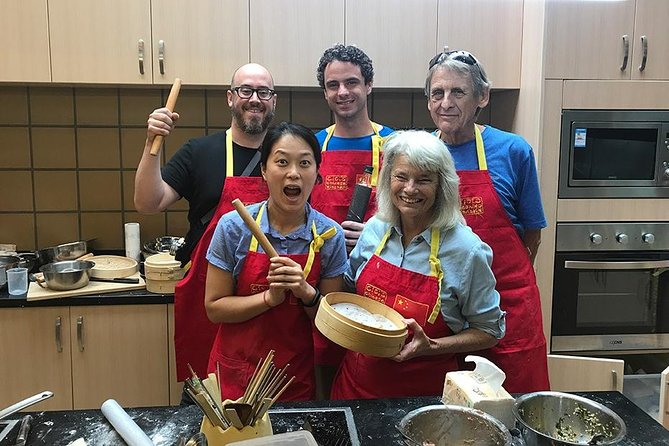
- Max 15 guests: More coaching, less standing around.
- Complimentary tea: Small comfort that makes the work feel relaxed.
- Hand-kneading + rolling pin method: You learn the wrap steps, not just the final shape.
- Pork marinating and vegetarian option: You can choose pork or go meat-free.
- Steaming timing guidance: This is where dumplings go from okay to good.
- Recipe at the end: You’re not leaving with only a memory.
Dumplings You Usually Only See at Big Occasions
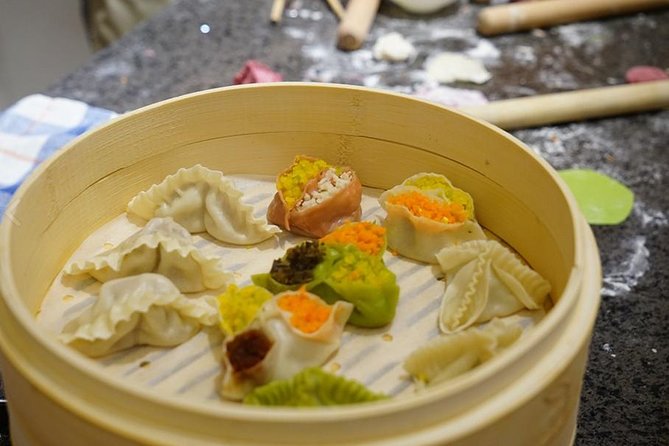
If you’ve only tried dumplings in everyday restaurants, this class feels like a shortcut to the fancier world. The colorful, neatly shaped steamed dumplings you’re making here are the kind of presentation you might normally see at state banquets or some five-star hotels, where looks and technique matter.
The class is designed to make that level of care feel doable. You’re not just copying one “prettiest” dumpling. You’ll learn how dumplings are named in Chinese, and you’ll hear the symbolic meaning tied to certain styles and how they’re shaped.
I also like that the focus stays practical. Even when the shapes look tricky, you’re taught step-by-step, so you can concentrate on what your hands are doing.
You can also read our reviews of more tours and experiences in Shanghai.
Meeting on Guangyuan Road and What the Small Group Really Changes
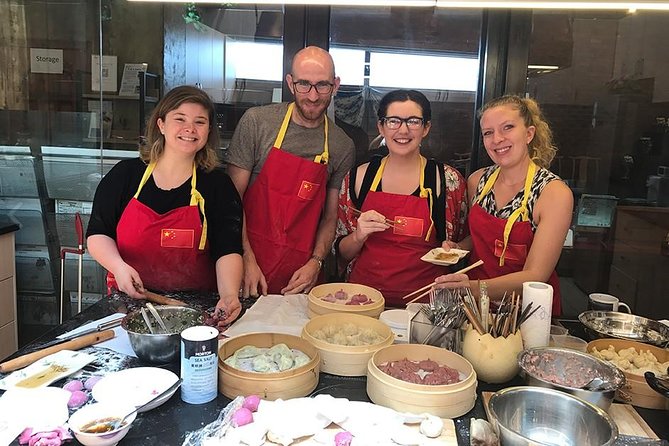
You’ll meet at the cooking school on Guangyuan Road (Guang Yuan Lu) in Xuhui District. The area is listed as near public transportation, which matters in Shanghai. It’s one less thing to stress about when you’re trying to fit your class into a day of sightseeing.
With a maximum of 15 travelers, the pacing feels more human. You’ll have time to ask questions when a dough step or a folding step isn’t going your way. In one class experience, the instructor was praised for being patient even when participants had no cooking background.
If you’re used to crowded group tours, expect this to feel different. You’re standing close to the work, and the chef can point out small mistakes that change texture and results.
The Class Flow: From Dough and Wrap to Steaming and Sauce
The activity runs about 2 hours 30 minutes. A typical flow goes like this: meet around 2:00 pm, get an intro around 2:10 pm, start cooking around 2:30 pm, sit down to enjoy your meal around 4:00 pm, and end with a recipe around 4:30 pm.
One thing I appreciate is that the schedule doesn’t leave you guessing. You know the order of operations: dough first, then wrap, then filling and shaping, then steaming and dipping, then eating and wrapping up.
Also, this is a “small group cooking class” setup, so you’re not just watching while someone else makes dumplings. You’re doing the work with guidance, from kneading through shaping.
1) Intro to local ingredients and cooking culture
Early on, you get a quick introduction to the cooking culture and local ingredients. This matters because steamed dumplings are sensitive to basics—flour texture, filling balance, and how the wrapper behaves.
If you’re the type who wants more than instructions, this is a good moment to ask questions. One instructor example shared in a class experience included conversations that covered tea and topics like art and Chinese history alongside cooking.
2) Kneading dough by hand, then wrapping the Chinese way
You’ll learn to knead dough with your hands. That sounds simple, but it’s the backbone of everything: if the dough is too dry or too soft, the wrap won’t roll cleanly and it won’t seal well.
Then comes the Chinese-style wrap step with a rolling pin. Instead of treating the wrapper like a flat circle you’ve “just made,” you practice the technique that helps it turn into something foldable and consistent.
This is one of the most valuable parts of the class. When you learn the wrap process, it becomes easier to repeat at home with your own ingredients.
3) Marinate pork (or choose vegetarian) for the filling
For the filling, the standard option includes pork. A vegetarian version is available, and the class is listed as vegetarian-friendly and vegan-vegetarian applicable.
The chef teaches an easy, healthy approach to marinating the pork. Even if you’re not a cook, you’ll see how seasoning and fat distribution affect taste and moisture inside the dumpling.
If you go vegetarian, you’ll still get the same dumpling workflow. You just swap the filling approach based on your food preference at booking.
Folding Colorful Dumplings and Learning the Meaning Behind Shapes
One of the class highlights is learning different folding methods. You might not find these colorful and shaped dumplings in ordinary restaurant service, so you’re practicing a more show-piece style—without needing restaurant kitchen skills.
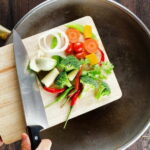
You’ll build “special” dumplings using colorful elements. The class description mentions adding several chopped colorful vegetables on top—four or five pieces. That gives you a visual cue for what to aim for and makes your dumplings look finished even if your first folds aren’t perfect.
You’ll also learn Chinese names of different dumplings and their symbolic meaning. That turns the activity from just craft into culture. Shapes start to feel less random and more like a language.
In a well-liked class experience, the instructor was praised for being patient and encouraging, with the reminder that dumplings don’t have to look perfect to taste great. That’s a smart mindset here: folding is skill-building, and flavor comes from the filling and cooking method.
Steaming Timing: The Part People Guess Wrong
Steaming is where good dumplings can quietly fall apart. If you steam too briefly, wrappers can feel underdone. Too long and the texture can turn heavy.
This class teaches “how long it’s best to steam” and the best steaming techniques. You’ll learn what the dumpling should look and feel like as it cooks, which helps you understand the timing rather than memorizing one number.
If you’re the type who wants to improve beyond the one-time class result, focus on this part. Once you know how steaming affects texture, you’ll be more confident making dumplings again later.
The Authentic Dipping Sauce That Ties It Together
Dumplings are only half the meal. The sauce is the other half, and this class includes making it.
You’ll learn how to create an authentic sauce that goes perfectly with the dumplings. The value here is practical: you’re not leaving with a vague idea like soy and vinegar and hope. You’re making a matched dip designed to complement the filling and steamed wrapper.
If you’ve ever had restaurant dumplings where the sauce tasted like a separate meal, you’ll recognize what a matched sauce does. It pulls everything together so the dumpling tastes complete.
Eating Together and Getting a Recipe to Repeat
Around 4:00 pm, you’ll enjoy your handmade meal as a group. This is a satisfying moment because you can finally compare your dumplings to the general “look” you were aiming for—without any pressure.
Then, by about 4:30 pm, the class ends with a recipe. That matters for real-life value. Cooking classes can be fun, but the best ones help you reproduce the experience later.
Also note the class includes cooking with a chef who speaks English. One class example praised chef Cici for being helpful and friendly. Another mentioned an instructor named Yin for being nice and engaging while guiding the process.
Price and Logistics: Is $109.88 a Good Deal?
At $109.88 per person, this class isn’t a bargain-basement activity. You’re paying for a hands-on, instructor-led cooking session with ingredient guidance, a small group size, tea included, and the result: dumplings you eat plus a recipe to take home.
For Shanghai, the price makes sense if you fall into one of these categories:
- You want to learn the method (wrap, filling, steaming), not just eat dumplings.
- You prefer small groups where questions are easy to ask.
- You’d rather spend a few hours making dumplings than pay for repeated restaurant visits where you might not get the same technique.
You should think twice if your priority is heavy “cooking time” as in lots of different dishes. One class feedback described the experience as having a good time making dumplings and talking about culture, but that the cooking portion felt average compared with other hands-on classes. In other words, expect dumpling-focused learning, with cultural conversation in the mix.
Also factor in logistics: no hotel pickup. If you’re staying far from Xuhui, add travel time so you arrive calm, not rushed.
Who Should Book This Dumpling Class (and Who Might Skip It)
This is a great fit if you want an authentic-feeling Shanghai activity that’s still relaxing. You get structured instruction, a chance to work with dough and filling, and a final meal that’s actually part of the class.
It’s also a good choice if you’re traveling with friends or want a social setting. Still, it’s not a giant crowd situation; with up to 15 people, it stays manageable.
You might skip it if:
- You hate any hands-on cooking. This is not a sit-and-watch experience.
- You want lots of variety beyond steamed dumplings and one sauce. The class is tightly focused on dumpling craft.
- You need hotel pickup. You’ll handle your own way to Guangyuan Road.
Practical Tips So Your Dumplings Turn Out Better
Go in with the right mindset: your first folding may be awkward. That’s normal. Dumpling skill comes from repetition, and the class gives you that repetition in one afternoon.
A few practical ideas:
- Arrive a bit early so you can settle in before dough work starts.
- Focus on wrapper sealing. If the wrapper is too thick or too thin, shaping gets harder fast.
- Pay attention to steaming timing guidance. It’s the difference between underdone and nicely set.
- If you’re vegetarian, put your preference in at booking so your class flow matches your filling plan.
Also, drink some of the complimentary tea while you work. It sounds small, but it helps you slow down and focus—especially when you’re learning something new with your hands.
Should You Book This 2.5-Hour Chinese Steamed Dumpling Class?
I’d book this class if you want a genuinely hands-on Shanghai food experience without complexity. For the price, you’re getting small-group coaching, guided steaming technique, a made-from-scratch dipping sauce, and a recipe to take home—plus a meal you helped create.
If you’re purely hunting for the cheapest Shanghai food experience or you strongly prefer being a spectator, this may feel like too much work. Otherwise, it’s an excellent way to learn steamed dumpling basics properly and leave with skills you can reuse.
FAQ
How long is the Chinese Kitchen cooking class?
It runs for about 2 hours 30 minutes.
How many people are in the class?
The class has a maximum of 15 travelers.
Where is the meeting point?
You meet at Guangyuan Road (Guang Yuan Lu), Xu Hui Qu, Shanghai, China.
Is tea included?
Yes. Complimentary tea is included.
Is there a vegetarian option?
Yes. The class is vegetarian-friendly, and vegan vegetarian is applicable. You should write down your food preference at booking.
What time does the class typically start?
The schedule indicates meeting around 2:00 pm, with cooking beginning around 2:30 pm. The overall session is about 2.5 hours.
Do I eat during the class?
Yes. You’ll enjoy the meal with the class near the end.
Does the class include sauce-making?
Yes. You’ll make an authentic sauce to dip the dumplings into.
Is hotel pickup and drop-off included?
No. Hotel pickup and drop-off services aren’t included.
What happens if I cancel?
This experience is non-refundable and cannot be changed for any reason.
Can children join?
Children under 3 years old are free to join the class.