REVIEW · SEMINYAK
Balinese Cooking Class at The Santai Umalas Kerobokan
Book on Viator →Operated by The Santai · Bookable on Viator
Spices beat scrolling every time. At The Santai Umalas in Kerobokan, you get small-group, chef-led cooking and a 3-course meal you make yourself, not just a demo. The main trade-off is time: it runs about 2 hours, so you’ll learn the basics fast, but you won’t cover everything you’d learn on a multi-day food tour.
I like how the experience is set up for real participation, with warm, professional guidance from chefs like Surya and Gusde (and their team) and a layout that feels more like a stylish Bali villa than a classroom. One thing to keep in mind: it depends on good weather, so plan to be flexible if conditions force a change.
In This Review
- Key highlights worth getting excited about
- Where The Santai’s cooking class fits in Seminyak life
- What you’ll cook: starter, main, dessert (Balinese style)
- Menus and dietary needs
- The 2-hour flow: how a cooking class actually runs
- A practical upside: you learn by doing
- Chef-to-student attention: what small group really means
- Hotel pickup and drop-off: the Bali logistics that matter
- Timing reality
- The venue: boutique hotel feel, villa comfort
- Price and value: what $45 buys you in Bali
- Who should book this class (and who might not)
- Should you book Balinese Cooking at The Santai Umalas?
- FAQ
- FAQ
- How long is the Balinese cooking class at The Santai Umalas?
- What’s the price per person?
- Do you offer hotel pickup and drop-off?
- What’s the class group size?
- What do we cook and eat during the class?
- Can I choose a morning or afternoon class?
- Is food included?
- Can the chef accommodate vegetarian diets or allergies?
- Is alcohol included?
- What time does the class start?
Key highlights worth getting excited about
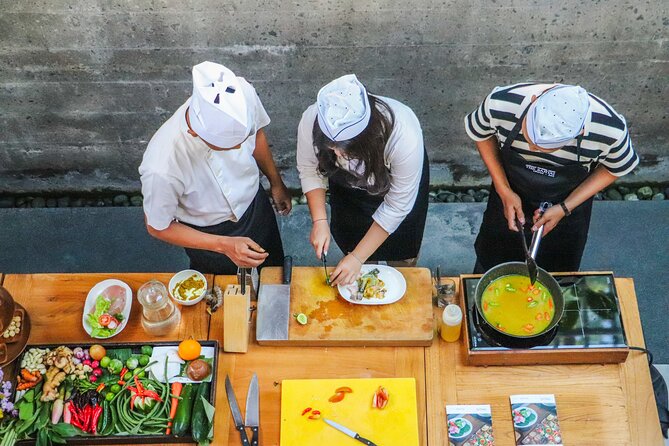
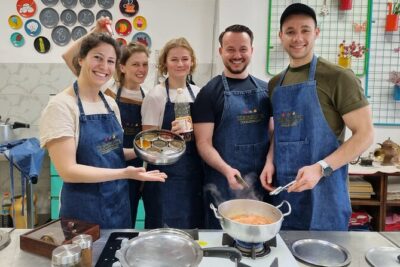
- Up-close chef help in a tiny group: no larger than 10, and this activity lists a maximum of 6.
- 3 courses you cook and eat: starter, main, and dessert, served as lunch or dinner depending on the class time.
- Door-to-door pickup around Seminyak, Kerobokan, and Canggu: easier logistics than you’d think in Bali traffic.
- A real Balinese process, not just recipes: you learn how spices and ingredients come together, then put technique to work.
- Villa setting that makes food feel like a treat: modern architecture, and many classes happen poolside.
- Take-home extras: aprons during class, recipe handouts, plus a digital cooking certificate.
Where The Santai’s cooking class fits in Seminyak life
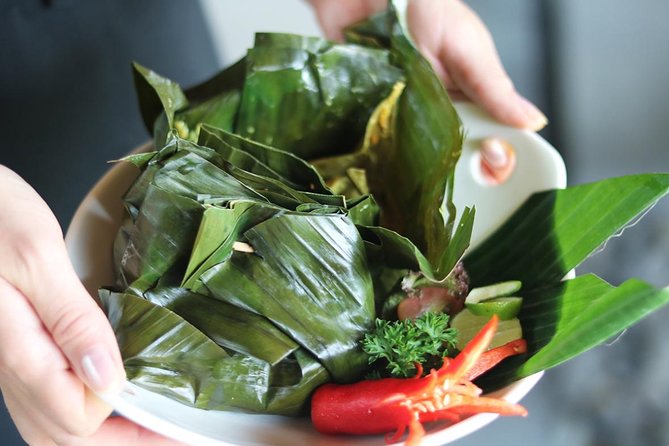
Seminyak has a lot going on: beach time, spas, shopping streets, and fancy dinners. This class gives you a different kind of Bali souvenir. You come away with a learned skill, a full meal, and a clear taste of what makes Balinese food different.
The setting helps. The Santai’s venue feels like a boutique villa experience, with modern, eye-catching architecture. In plain terms, it’s the kind of place where you’re not rushing to take pictures of your food. You’re focused on the process—cutting, mixing, tasting, adjusting—while the chef guides you.
And the group size really matters. When it stays small, you get quick answers to questions that matter in the kitchen: how thick should the sauce be, how intense should the spice be, and what to do if your flavors taste off. I like that the teaching style is practical, not formal. It’s about getting you to a plate you’re proud of.
You can also read our reviews of more tours and experiences in Seminyak.
What you’ll cook: starter, main, dessert (Balinese style)
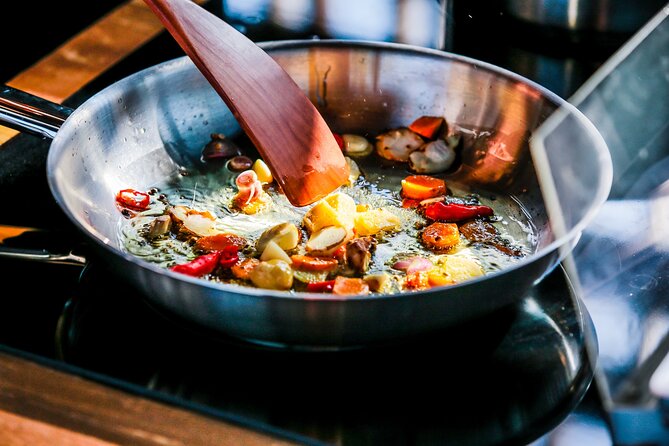
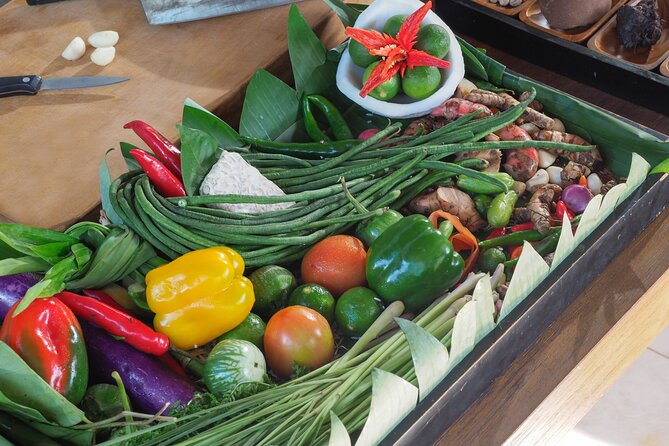
This is a 3-course cooking class, meaning you don’t just make one dish and call it a day. You’ll prepare a starter, a main course, and a dessert as part of the same session, then eat what you’ve cooked.
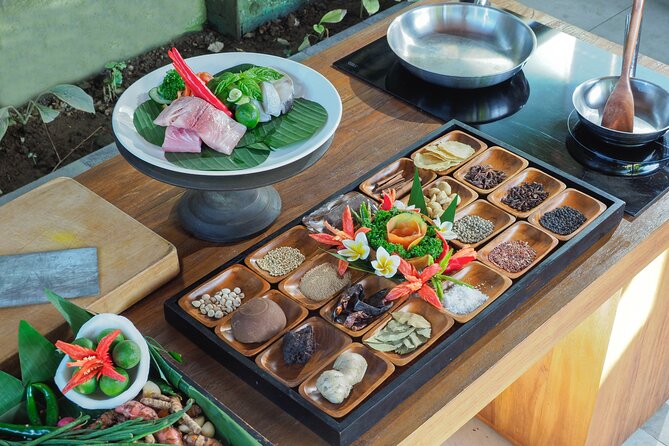
Balinese cooking has a distinct feel because of the mix of spices and the way they’re balanced with fresh ingredients. The class focuses on that real-world method: the use of varied spices, blending flavors, and working with the day-to-day ingredients that show up in Balinese kitchens. You’ll be guided through technique so you’re not stuck reading a recipe and hoping for the best.
Menus and dietary needs
The class offers three authentic menus to choose from. If you need a vegetarian option or you have allergies, you can request it during booking in the Special Requirements box (or by managing your booking and emailing them). That flexibility is especially helpful in Bali, where many dishes are built around shrimp paste, fish sauces, or other ingredients that can be easy to miss if no one knows what you need.
The 2-hour flow: how a cooking class actually runs
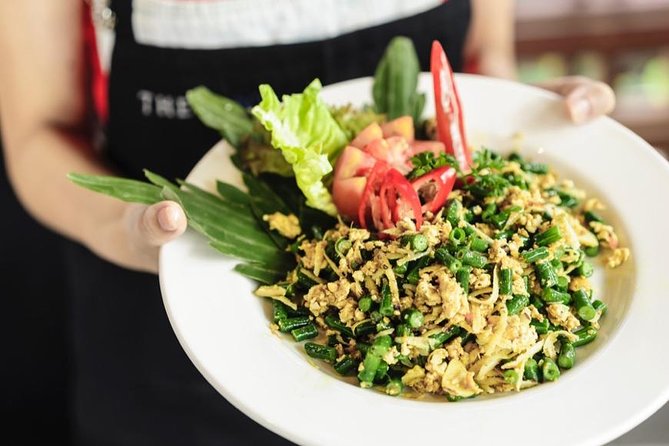
At about 2 hours, the pacing is quick and intentional. You arrive, get oriented, then jump into prep and cooking so you can eat what you made without the process dragging on.
Here’s the typical rhythm you should expect:
1) Arrival and welcome
You’ll be greeted with a complimentary welcome juice. You’ll also have bottled water during the class, which is a small detail but a big deal in Bali heat.
2) Kitchen coaching
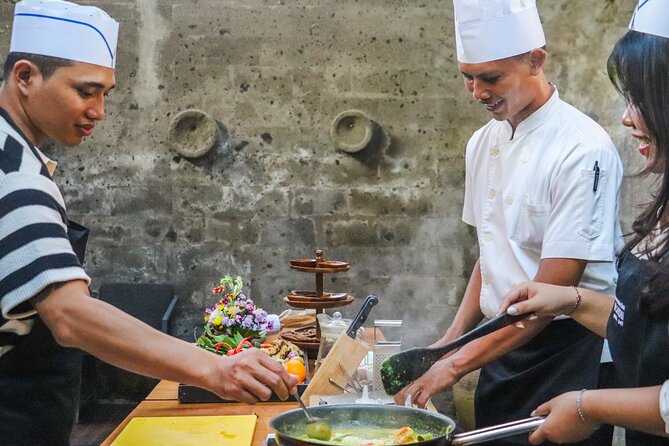
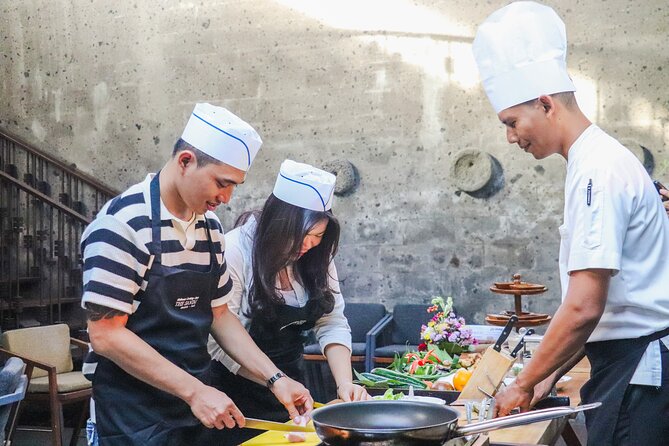
The chef explains ingredients and technique as you go. Names from the team you may hear include Surya and Gusde, and staff members like Oka have been part of the experience too. The key isn’t name-dropping—it’s that the instruction is hands-on, and you can ask questions while things are still in the workable stage.
3) Cooking your three courses
You’ll prepare your starter, then move into your main, and finish with dessert. Expect you’ll be tasting and adjusting as you cook, because getting flavors balanced is the whole point of learning this kind of cuisine.
4) Lunch or dinner
Your meal is served from the dishes you prepared. You’re not eating a buffet with random options; you’re eating your work, plated and served in the villa-style setting.
A practical upside: you learn by doing
If you’ve ever tried to recreate a dish later, you know the hard part isn’t finding ingredients—it’s knowing what the texture and flavor should feel like. This format helps because the chef can correct you while you’re cooking, not after.

Chef-to-student attention: what small group really means
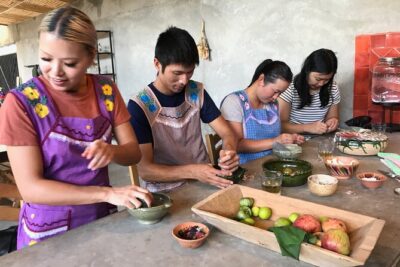
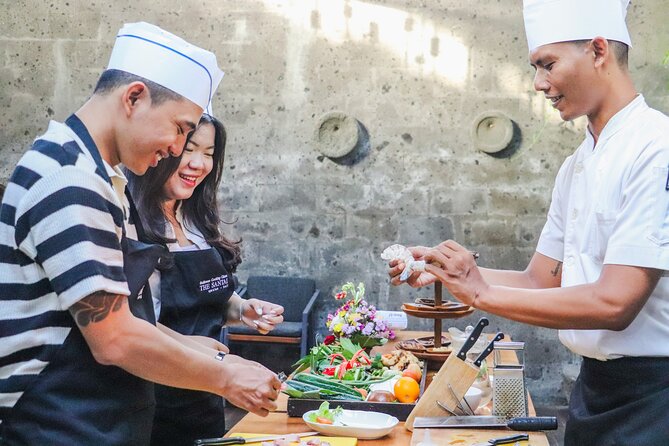
On paper, this class is described as small-group, with a cap of no larger than 10. In practice, the activity also lists a maximum of 6 travelers, and multiple experiences have reported situations where only two people joined—leading to a more private, assisted style.
That difference can be huge. With fewer people:
- you get faster help when your cutting, mixing, or spice balance is slightly off
- you can ask more specific questions
- the chef can guide you step-by-step instead of rushing around the table
It’s also why the class works well for first-timers. You don’t need to have cooked before. You do need to be willing to taste things as you go. If you like the idea of adjusting flavors like a cook instead of following a script, you’ll enjoy this.
Hotel pickup and drop-off: the Bali logistics that matter
One of the best parts for real-world travelers is that you don’t have to figure out transport on the day. Pickup and drop-off are included from the Seminyak, Canggu, and Kerobokan areas, and it’s door-to-door.
Pickup usually starts with you sharing your hotel location (as requested during booking or via managing your booking). This reduces the biggest risk of cooking classes in Bali: showing up late, too hot, or already stressed.
If you’re staying outside those areas, it may be possible with an extra cost, but the included service is targeted to these zones. For many visitors, that’s the difference between a smooth afternoon and a day that starts with traffic anxiety.
Timing reality
The meeting point listed starts at 12:00 pm, which fits an afternoon-style slot. The class also mentions you can choose morning or afternoon, so you’ll want to pick the slot that doesn’t clash with your beach plans.
The venue: boutique hotel feel, villa comfort
The Santai’s cooking class doesn’t happen in a plain kitchen room. It’s set in a villa environment with modern architecture, and many sessions are described as beautiful and calm. One class experience included a by-the-pool dining moment, which is exactly the kind of setting that makes lunch feel like an occasion.
That matters because food classes can feel like chores when the space is cramped or dull. Here, the surroundings make it easier to slow down and focus. Even if you’re not a foodie, you’ll likely appreciate the atmosphere.
Price and value: what $45 buys you in Bali
At $45 per person, this is priced like a serious experience, not like a casual street-food workshop. You’re paying for:
- chef instruction (real people teaching technique)
- all ingredients
- a 3-course meal from what you cook
- welcome juice, bottled water, and coffee and/or tea
- hotel pickup and drop-off within set areas
- recipe handouts and a digital cooking certificate
- apron usage during the class
The value really pops when you compare it to what you’d otherwise spend to do the same thing alone: getting ingredients, learning technique, and paying for transport. Here, the planning is done for you, and you get a chef-guided workflow.
Two minor “not included” items to notice:
- alcoholic drinks are available to purchase, not included
- an apron can be purchased separately for IDR 100,000 per person (apron use during the class is included)
If you’re the kind of traveler who likes to come home with practical skills, this price can feel fair. If you’re mostly shopping for entertainment and don’t care about cooking, you might question the cost for such a short session.
Who should book this class (and who might not)
This is a great fit if you:
- want an authentic Bali cooking experience without needing prior cooking skills
- like structured learning with real-time chef help
- prefer small groups where you can actually get answers
- want a meal that feels earned, because you made it
It might not be your best choice if:
- you need a very long, slow experience (this one is about 2 hours)
- you’re traveling with tight timing and hate the idea of weather affecting plans (the experience requires good weather)
- you’re hoping for a no-transport, DIY class without pickup (pickup is included only for certain areas)
Should you book Balinese Cooking at The Santai Umalas?
I’d book it if you want a Bali activity that’s both tasty and useful. The combo of small-group instruction, chef coaching, and a 3-course meal you cook makes it more memorable than most “watch and eat” experiences. Add in the included pickup from Seminyak, Kerobokan, and Canggu, and it’s one of those rare tours where the logistics don’t steal your energy.
If you’re on the fence, choose based on your goals:
- If you want a skill and lunch, you’ll like it.
- If you only want a casual taste with no hands-on cooking, look for something different.
FAQ
FAQ
How long is the Balinese cooking class at The Santai Umalas?
It lasts about 2 hours.
What’s the price per person?
The price is $45.00 per person.
Do you offer hotel pickup and drop-off?
Yes. Pickup and drop-off are included from the Seminyak, Canggu, and Kerobokan areas. Pick-ups from most hotels are offered, based on where you stay.
What’s the class group size?
The class is described as a group no larger than 10, and the activity also lists a maximum of 6 travelers.
What do we cook and eat during the class?
You prepare a 3-course menu: a starter, main course, and dessert. Your dishes are served for lunch or dinner depending on the class.
Can I choose a morning or afternoon class?
Yes. You can choose between morning and afternoon classes.
Is food included?
Yes. The tour includes all ingredients and a lunch or dinner made from the prepared dishes, plus welcome juice, bottled water, and coffee and/or tea.
Can the chef accommodate vegetarian diets or allergies?
Yes. Add dietary requirements in the Special Requirements box during checkout, or message them after booking using Manage my Booking.
Is alcohol included?
No. Alcoholic drinks are not included, but they may be available to purchase.
What time does the class start?
The start time listed is 12:00 pm. (Morning and afternoon options are available.)