REVIEW · SEMINYAK
Bali: Balinese Cooking Class and Market Tour
Book on GetYourGuide →Operated by Nia Balinese Cooking Class · Bookable on GetYourGuide
A market walk turns into dinner lessons in Seminyak. This Balinese cooking class pairs a guided market tour (with real-life haggling for ingredients) with hands-on instruction led by an on-site chef. I love how the day connects food to what you see in the market tour, and I love that you leave with a take-home cookbook and certificate.
One possible drawback: the market portion can feel shopping-heavy, so if you hate bargaining or buying, you’ll want to go in with a plan and clear boundaries.
In This Review
- Key Highlights You’ll Care About
- From Hotel Lobby to Balinese Flavors: How the 5 Hours Feel
- Market Tour in the Alleyways: What You’re Really Learning
- Cooking Class Setup: Chef Instruction, Group Work, and Real Steps
- Morning Tea and Lunch: Eating Is Part of the Teaching
- The Take-Home Cookbook and Certificate: Why It Matters
- Price and Logistics: Is $40 for 5 Hours a Good Deal?
- Who This Cooking Class Fits Best (and Who Should Skip)
- Group Dynamics and Quality Control: How to Get the Best Day
- Should You Book This Balinese Cooking Class in Seminyak?
- FAQ
- How long is the Bali Balinese Cooking Class and Market Tour?
- Is hotel pickup included?
- Is drop-off included?
- What’s included in the price?
- What languages are available during the class?
- Is the experience wheelchair accessible?
- Is there a cancellation option or pay-later plan?
Key Highlights You’ll Care About
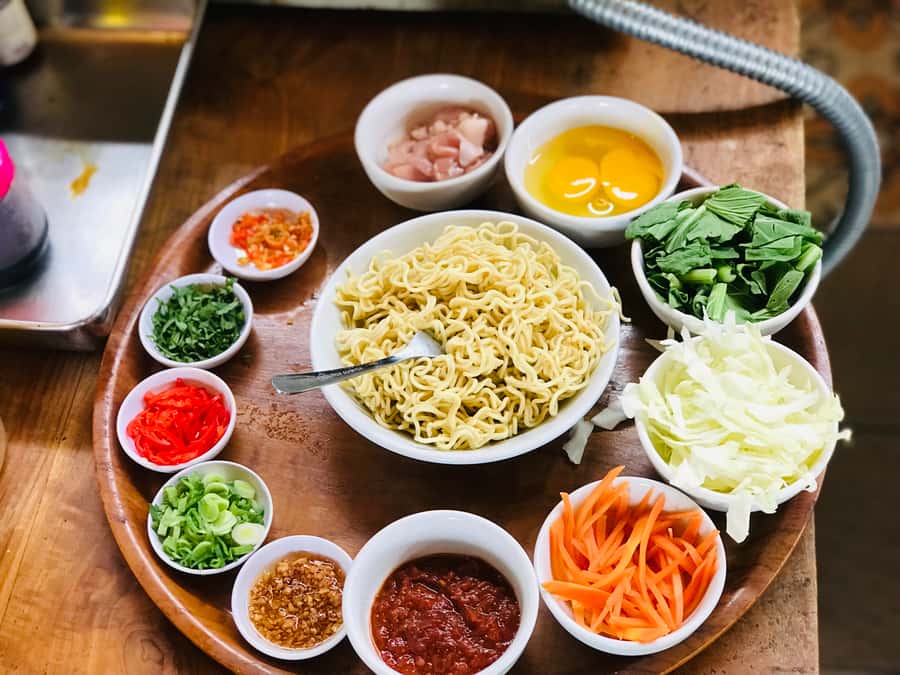
- Market tour + haggling practice: Get the ingredients you’ll cook with, not just theory.
- Chef-led cooking with hands-on roles: You’re not stuck watching the whole time.
- You eat your results: Morning tea, lunch, and tasting what you helped prepare.
- Take-home keepsakes: Cookbook plus a certificate to remember the dishes.
- English/Indonesian support: Instruction and audio help you follow the steps.
- Great value for 5 hours: Includes pickup, market tour, tea, lunch, and materials for one price.
From Hotel Lobby to Balinese Flavors: How the 5 Hours Feel
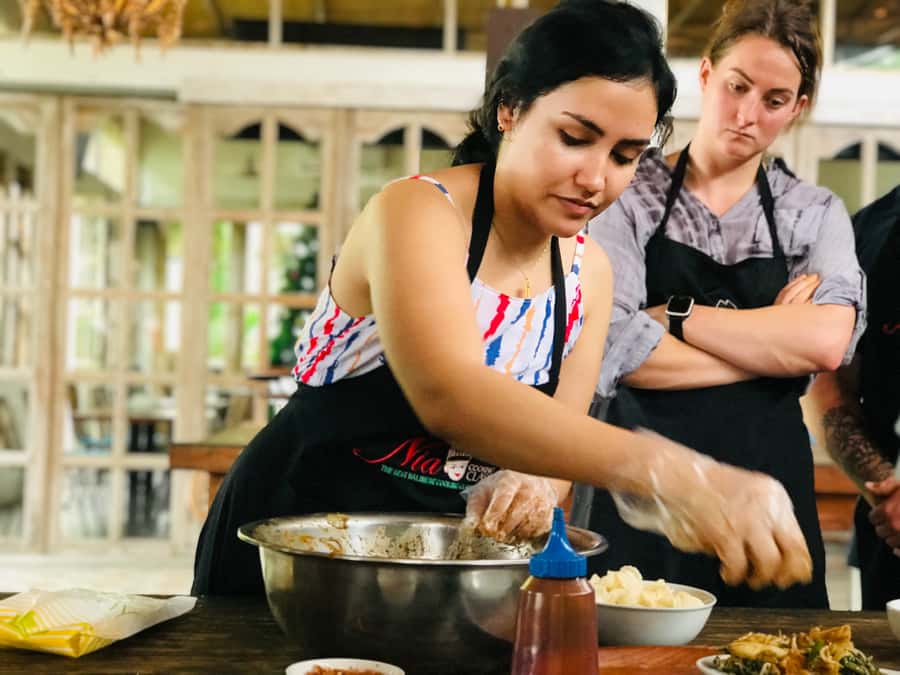
This is a half-day plan that starts with pickup and ends with you eating the food you helped make. With a total duration of about 5 hours, it’s the kind of activity that fits well if you want a meaningful cultural experience without losing your whole day to traffic and long transfers.
In Seminyak, you’ll begin with the market portion. That matters because Balinese cooking makes more sense when you’ve seen the ingredients up close—fresh produce, local fruits, and aromatic spices are part of the story, not an afterthought. Then you shift into the kitchen for the hands-on part, guided by an English/Indonesian chef.
You can also read our reviews of more tours and experiences in Seminyak.


Market Tour in the Alleyways: What You’re Really Learning
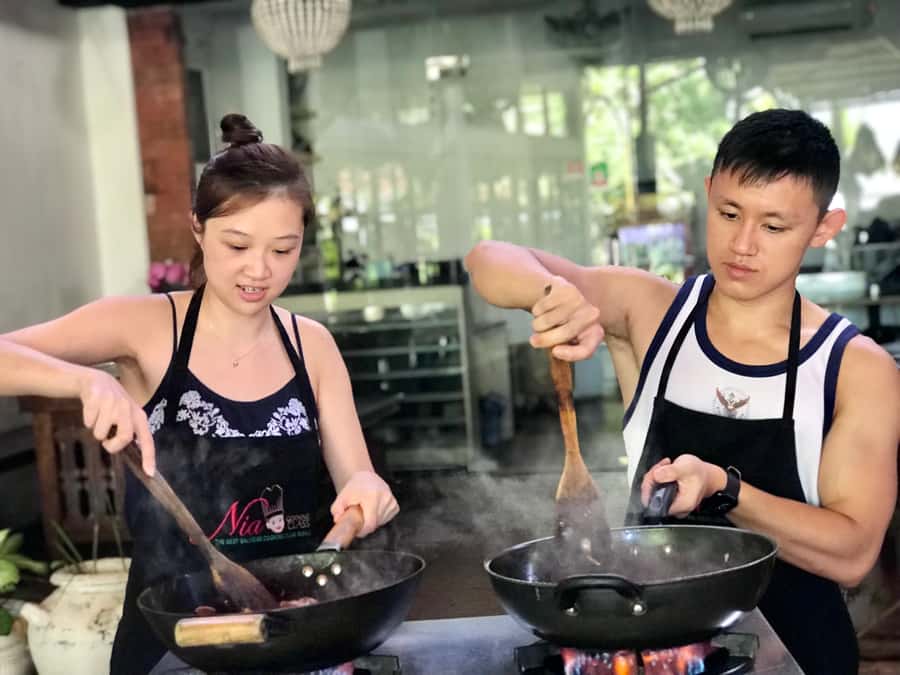
The market tour is more than a scenic walk. You’re scouting ingredients you’ll cook later, which turns the market into a live ingredient lesson. You’ll practice haggling as you move through the stalls and alleys, and you’ll get a feel for how vendors price day-to-day goods.
I like that the tour includes learning about local produce and spices, because that’s where most cooking classes stay vague. Here, you’re meant to connect what you buy to what you cook—so when you’re chopping and mixing later, you know what each ingredient is doing.
That said, go in aware of one consideration: a few people have reported that the market segment can veer into a sales-focused rhythm rather than a purely educational one. If you’re the type who gets annoyed by upselling, set expectations early and keep your spending simple—bring cash, decide what you want, and don’t over-commit just to avoid awkwardness.
Cooking Class Setup: Chef Instruction, Group Work, and Real Steps
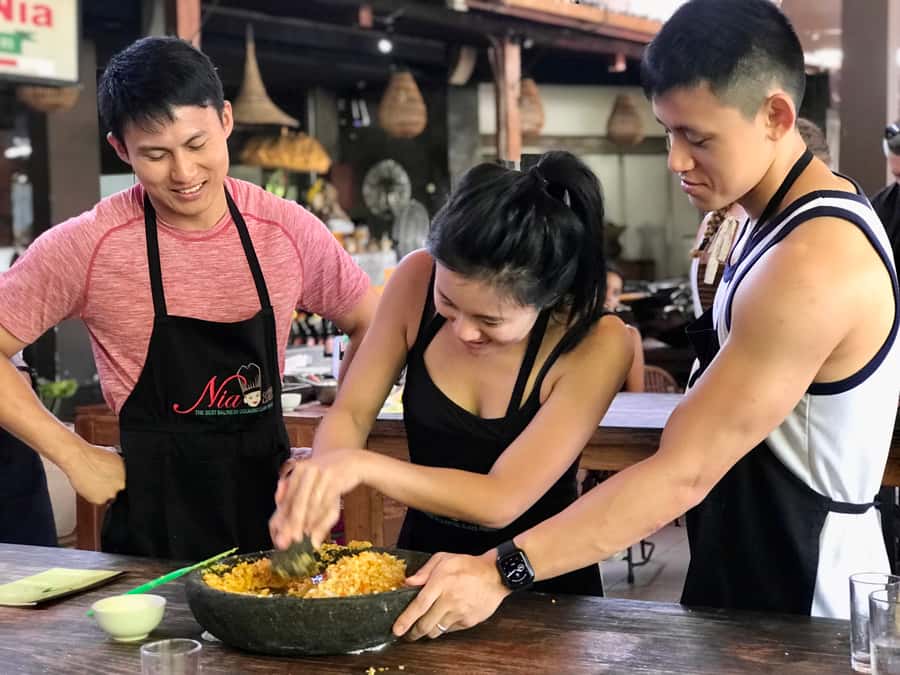
Once you’re back from the market, the cooking class becomes the main event. The chef on site gives instruction and techniques, and the format is designed so you get time to cook rather than stand by the side. Multiple comments highlight that the chef keeps things organized and makes sure everyone has a turn, which is a big deal when you’re paying for hands-on learning.
You’ll follow step-by-step guidance as you prepare popular Balinese dishes. The best part of this setup is that the chef’s role is practical: not just explaining, but demonstrating and checking that you’re doing the prep right. And since there’s an English/Indonesian instructor plus an audio guide in English and Indonesian, it’s easier to keep up even if your Indonesian is basic.
Still, it’s worth noting something: one booking feedback mentioned that for their group, certain assistants did a lot of the work and they felt less explained than expected. That’s not guaranteed to happen, but it’s a good reminder to speak up if you want more participation. Ask questions early and don’t be shy about stepping into the next task.
Morning Tea and Lunch: Eating Is Part of the Teaching
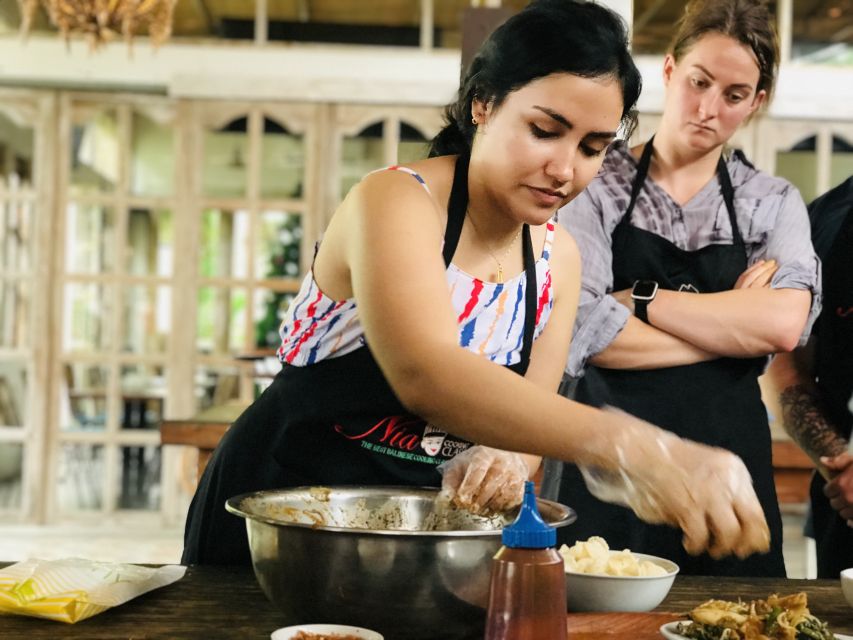
A lot of cooking classes are “cook, then maybe snack.” This one builds food into the schedule. You’ll have morning tea with Balinese cake before the day really heats up, which helps you start the class comfortable (and not hangry) while your stomach adjusts to the spices.
Lunch is included, and you also get to taste what you made with your group. That’s the payoff moment: you’ll see how the flavors come together, and you’ll understand what you were aiming for when you were chopping and mixing.
One balance point: a critical note from one group said the final meal felt like a large assortment and didn’t fully match what they prepared. That could be a one-off situation, but it’s smart to treat the “you will eat your specific dishes” part as a general promise rather than a perfectly matched tasting menu. If you’re picky about the exact foods you want to eat, consider it a class where tasting happens in multiple ways, not a strict one-to-one plating system.
The Take-Home Cookbook and Certificate: Why It Matters
The cookbook and certificate sound like souvenirs, but they’re actually part of the value. The cookbook gives you something to recreate later, which is how you turn a good day out into a skill you can use at home.
I also like that you get a certificate. It’s small, but it helps the day feel “official,” and it’s a nice way to remember the class when you’re back at your desk searching for what you learned.
If you’re thinking long-term, this is the part that justifies booking even when you know you’ll forget some details. Cooking lessons stick best when you have a written reference, not just memories.




Price and Logistics: Is $40 for 5 Hours a Good Deal?
At $40 per person for about 5 hours, the pricing makes sense because the cost covers a lot of real activities: pickup, the market tour, tea, lunch, and the materials (cookbook and certificate). You’re paying for both the cultural ingredient hunt and the structured cooking instruction, which can be hard to replicate on your own without spending more time and money getting everything figured out.
Logistics are also worth a close look. Pickup is included, but drop-off is not. That means you’ll want to plan how you get back—either on your own with a taxi/ride-hailing app or by arranging your next move near where you’ll be dropped (since you won’t necessarily return directly to your hotel).
Pickup timing matters, too. You’re asked to wait in the hotel lobby about 10 minutes before the pickup time, and drivers will wait no longer than 5 minutes after the scheduled pickup time. In Bali traffic, that tight window is typical, but it still means you should be ready early.
Who This Cooking Class Fits Best (and Who Should Skip)
This is best for people who want a guided food experience with structure. If you like food, want a cultural activity that doesn’t require deep planning, and enjoy learning by doing, you’ll likely be happy here.
It’s also a strong fit for language learners or anyone who worries about communication. Instruction is available in English and Indonesian, and the audio guide supports those same languages. That can be a big comfort if you want to understand the “why” behind techniques, not just follow motions.
On the other hand, there are clear limits. The experience is not suitable for children under 2, and it lists additional age cutoffs up through children under 4. It’s also not for people over 70 and not for those with altitude sickness. Bali isn’t a high-altitude destination, but the operator still flags it, so follow their guidance.
Wheelchair access is listed as available, which is a positive practical note. If you use a wheelchair or mobility device, I’d still plan to confirm any details with the provider ahead of time, since included accessibility can vary in how it’s handled on the ground.
Group Dynamics and Quality Control: How to Get the Best Day
Most people highlight organization, a friendly chef, and a good flow from market to cooking to eating what you made. You can see why: a structured plan reduces stress, and group cooking works best when the chef actively manages turns and tasks.
Still, the experience can depend on group size and how the class is run that day. One piece of feedback raised concerns about market pricing practices and uneven costs based on a customer’s appearance, which is obviously uncomfortable if that’s something you care deeply about. Another comment described assistants doing much of the work and even reported inappropriate behavior in their group. Those aren’t things you should ignore as “noise”—they’re flags about variance in how smoothly a day can go.
Here’s the practical way to protect your experience:
- At the start, set a personal goal like I want to actively cook each step.
- Ask the chef questions when you’re unsure, especially if the explanations feel rushed.
- If anything feels off in your group, address it calmly with the instructor rather than waiting.
That’s not about expecting problems. It’s about giving yourself tools so you stay in control.
Should You Book This Balinese Cooking Class in Seminyak?
If you want a 5-hour activity that combines a market ingredient hunt, chef-led hands-on cooking, and a meal you can actually eat as you learn, this class is a solid choice. The inclusion list is strong for the price, and the take-home cookbook plus certificate gives you something tangible afterward.
But book with eyes open if you dislike bargaining or vendor-driven shopping stops, or if you’re very sensitive to how attention and pricing are handled in markets. Also keep in mind the big logistical point: pickup is included, drop-off is not, so plan your return before you go.
If that all works for you, you’ll likely come away with more than just recipes—you’ll understand how Balinese flavors start at the market and end up on your plate. That connection is the real value of this day.
FAQ
How long is the Bali Balinese Cooking Class and Market Tour?
It runs for 5 hours.
Is hotel pickup included?
Yes, pickup is included. You should wait in the hotel lobby about 10 minutes before your scheduled pickup time. Drivers will wait no longer than 5 minutes after the scheduled pickup time.
Is drop-off included?
No. Drop-off is not included.
What’s included in the price?
You’ll get a market tour, morning tea with Balinese cake, lunch, and you’ll receive a certificate and cook book, plus pickup.
What languages are available during the class?
The instructor and audio guide are available in English and Indonesian.
Is the experience wheelchair accessible?
Yes, it’s listed as wheelchair accessible.
Is there a cancellation option or pay-later plan?
Yes. You can cancel up to 24 hours in advance for a full refund, and you can reserve now & pay later.