REVIEW · KUALA LUMPUR
Market Visit & Private Hands-on Cooking Class at Daun Senja
Book on Viator →Operated by Daun Senja Kitchen · Bookable on Viator
This is Malaysia in a morning. You start at a local wet market, pick ingredients up close, then cook a full Malaysian meal hands-on with hosts Patricia and Kingston—so you’re not just watching, you’re learning how the food comes together. I love the private, up-to-5 format that keeps the attention on you, and I love that the class connects the market ingredients to the final dishes on your plate. One thing to plan for: you’ll start early and you’ll head to Cheras, so it’s not a drop-in activity from central KL.
At Daun Senja Kitchen, the day feels more like cooking with a family friend than sitting in a studio. You’ll taste local breakfast at the market (except Mondays), then roll up your sleeves for dishes like roti jala, nasi lemak, chicken pong teh, ondėh-ondėh, and a sweet finish like sago gula melaka. If you’re staying far from Cheras or hate morning logistics, this may feel like extra effort—but it’s usually worth it.
In This Review
- Key highlights you’ll actually care about
- A private KL cooking morning that starts at a real market
- Cheras logistics: how to get there without stress
- The market stop and breakfast: where flavor starts
- Mondays: what changes when the market isn’t open
- Pick your cooking menu: three ways to build a Malaysian meal
- Option 1: Chicken Pong Teh + eggplant sambal + pulut inti
- Option 2: Nasi Lemak + pineapple/cucumber salad + sago gula melaka
- Option 3: Chicken Curry + roti jala + ondėh-ondėh
- Inside the kitchen: what hands-on cooking actually means here
- Roti jala: fun technique, real payoff
- Nasi lemak: the meal that teaches balance
- Chicken pong teh and curry: sauce skills you can reuse
- From cooking to eating: your 3-course meal plus a drink
- Price and value: what $130 is buying you in real terms
- Who should book this class (and who might not love it)
- Should you book Market Visit & Private Hands-on Cooking Class at Daun Senja?
- FAQ
- FAQ
- What time does the Market Visit & Private Hands-on Cooking Class start?
- How long is the experience?
- Is this a private tour or a group class?
- Where does the class start and end?
- Do you visit a wet market every day?
- What kinds of dishes will I cook?
- Is there food included after the cooking?
- How do I get my tickets and when will I know it’s confirmed?
- Is service animal access allowed?
Key highlights you’ll actually care about
- Private lesson for your party (up to 5), which means you can ask real questions while you cook
- Wet market stop with local breakfast (except Mondays), plus ingredient taste-testing
- Choose from 3 Malaysian meal menus, so you can match the day to your tastes
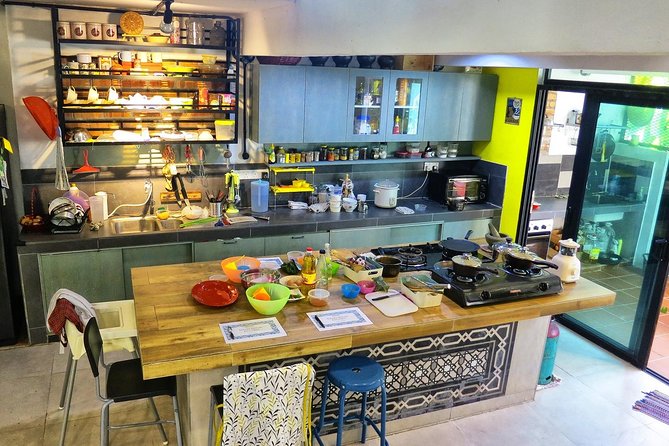
- Hands-on cooking with a home setup, not just a demo
- Finish with a 3-course meal plus a glass of wine or beer, so you don’t leave hungry
A private KL cooking morning that starts at a real market
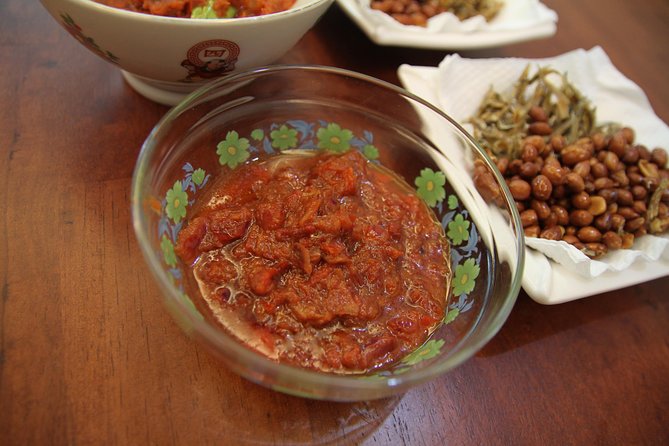
If your idea of a great cooking class is hands-on, smell-it, taste-it learning, this one fits. In Kuala Lumpur, most “cooking experiences” focus only on the kitchen. Here, you begin with the ingredient hunt—at a local wet market—and that changes how everything tastes once you start cooking.
I like how the market part is treated as part of the lesson, not a quick photo stop. You’ll select products, taste what’s being sold at the stalls, and learn what these ingredients do in Malaysian cooking. Then you carry that knowledge straight into the kitchen where Patricia and Kingston guide you step by step.
The private size matters more than you might think. When it’s just your group, the instructor can watch how you’re working, correct small technique issues, and answer questions without rushing you. That’s the difference between collecting recipes and actually understanding what you’re making.
You can also read our reviews of more tours and experiences in Kuala Lumpur.
Cheras logistics: how to get there without stress
The meeting point is in Taman Suntex, 43200 Cheras, Selangor, with the experience ending back at the meeting point. The start time is 8:00 am, and the total duration is about 4 hours 30 minutes.
Cheras is not central KL, so plan on commuting time. One practical clue from past participants: it’s usually about 20–30 minutes from the city center by Grab, and public transportation is also nearby. If you’re staying in a central area, leave yourself a little buffer so an early start doesn’t turn into a scramble.
Also note the day-to-day rhythm: the market visit is not scheduled for Mondays. If you’re traveling on a Monday, expect the morning to shift to a local restaurant breakfast first, then you’ll still go to the home kitchen after.
The market stop and breakfast: where flavor starts
Most of the value here shows up before the stove is even on. You’ll visit a local wet market (on days when it’s open), choose ingredients for your menu, and then have local breakfast at a food stall.
This is where you get practical context. Malaysian dishes rely on specific aromatics, textures, and balance—so seeing the ingredients in real life helps. You also get that extra layer of learning by taste-testing what’s served at the stalls, which makes the breakfast feel like part of the curriculum.
What I’d watch for as you go: bring a curious appetite and a comfortable attitude toward trying new flavors. You’re sampling real local food, not packaged “tourist bites.” The market atmosphere can feel calmer than central areas, and it’s a nice change of pace if Kuala Lumpur crowds usually overwhelm you.
Mondays: what changes when the market isn’t open
On Mondays, the wet market stop is replaced. Past participants describe starting with breakfast at a small local restaurant—think roti and dosa—before heading to Patricia’s home to cook. Same overall idea, just a different starting point so you don’t miss the local-food part of the experience.
Pick your cooking menu: three ways to build a Malaysian meal
You don’t just follow one fixed template. During the class, you cook from one of three menu options, which helps you customize the experience to your tastes. Each menu includes savory dishes plus dessert, so you leave with a complete Malaysian meal you can recreate.
Option 1: Chicken Pong Teh + eggplant sambal + pulut inti
- Chicken Pong Teh (served with rice)
- Eggplant Sambal
- Pulut Inti
This option gives you a mix of comfort and contrast: a rice-based main, a chili-forward side, and a sticky sweet dessert. If you like Malaysian flavors that aren’t all about coconut-sweetness every second, this menu feels balanced.
Option 2: Nasi Lemak + pineapple/cucumber salad + sago gula melaka
- Nasi Lemak
- Pineapple and Cucumber Salad
- Sago Gula Melaka Pudding
This is the “classic Malaysia” option. Nasi lemak alone is a meal identity. Then you add something fresh and crunchy in the salad, plus a comforting, caramel-like sweetness with the gula melaka dessert.
Option 3: Chicken Curry + roti jala + ondėh-ondėh
- Chicken Curry
- Roti Jala
- Ondėh-ondėh
This option leans into sauce-and-starch comfort. Roti jala brings a fun, lacy texture, and ondėh-ondėh is a playful sweet—usually tied to pandan aroma and chewy dessert style. If you want something that feels like Malaysia at its most recognizable and joyful, this is the one.
Inside the kitchen: what hands-on cooking actually means here
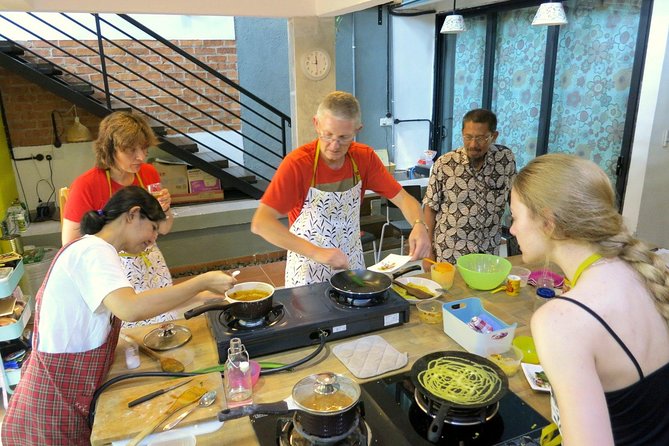
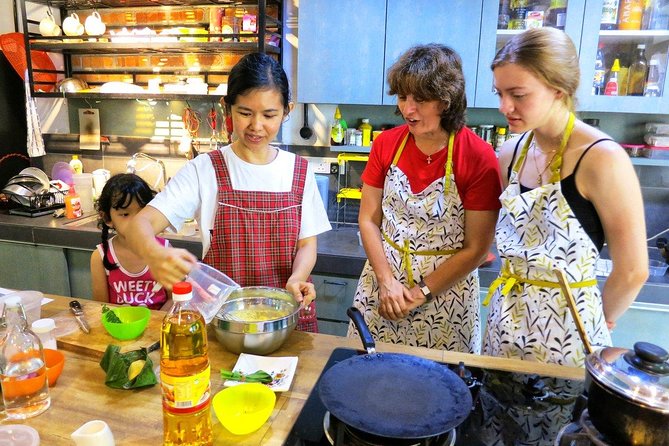
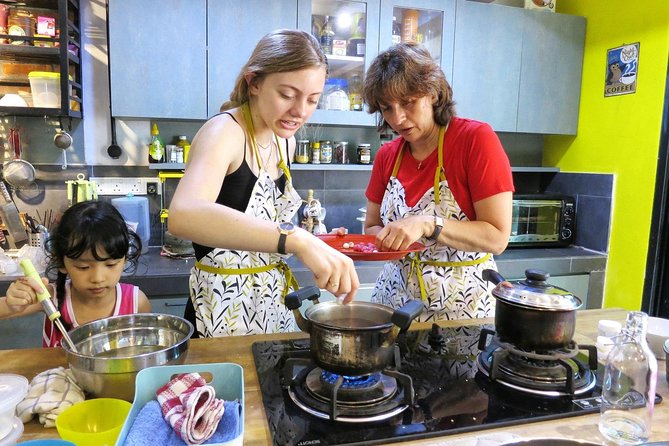
This is a true hands-on class. You cook side by side with the hosts at home, not from a distance behind glass. Step by step guidance is the core format, and because it’s private for your group (up to 5), the teaching stays focused.
What I’d expect you to gain by the end isn’t just a list of recipes. It’s a sense of how the dishes are built:
- how ingredients change flavor as they heat up,
- how sauces and spice mixtures behave,
- and how the final textures come together—especially in items like roti jala and ondėh-ondėh.
The host setup also encourages questions. People describe feeling welcome enough to ask anything, and that makes sense: when there’s no big class crowd, you can learn faster and cleaner.
Roti jala: fun technique, real payoff
Roti jala is famous for its web-like shape, and it’s the kind of dish where technique matters. Even if you’ve never made batter-style crepes before, you’ll get guided practice. The best part is that you’re making the item, not just learning about it.
Nasi lemak: the meal that teaches balance
Nasi lemak teaches balance—savory, fragrant, and slightly rich, often paired with sides that cut through. If you pick Option 2, you’ll likely get a clearer understanding of how the components work together on one plate.
Chicken pong teh and curry: sauce skills you can reuse
Chicken pong teh and chicken curry are both “sauce-forward” comfort dishes. The lesson is more than flavor—it’s also about building depth and getting the timing right. Once you understand that pattern, you’ll have a more reusable cooking skill than if you only learned one recipe.
From cooking to eating: your 3-course meal plus a drink
After cooking, you sit down to what the experience is really working toward: a full 3-course meal. You also get a glass of wine or beer with the meal, which turns it from a “class snack” into an actual dining experience.
That matters for value. Many cooking classes feed you a little bit and call it dinner. Here, the structure is closer to a home-style meal where everyone eats what you made. If you’re comparing this to a standard group cooking demo, this format is easier to justify because you’re fed properly at the end.
It’s also a nice way to settle in after the hands-on work. You can taste your own dishes while the flavors are still fresh in your mind from cooking. That makes it easier to remember what you did and how it affected the final outcome.
Price and value: what $130 is buying you in real terms
At $130 for a 4.5-hour private experience (up to 5 people), you’re paying for more than recipes. You’re paying for time with an instructor who focuses on your group, a market ingredient hunt, and a full meal experience with a drink included.
Here’s the practical value math I see:
- Private attention: less wasted time, more correction, more Q&A
- Market + cooking: you’re getting two parts of the food culture, not just one
- 3-course meal + wine or beer: food value is baked in, not an extra add-on
- Cultural context: the hosts share how ingredients connect to everyday cooking, which helps you replicate the results later
So if your goal is to come home with a few dishes you can genuinely repeat—not just “I cooked something once”—this price starts to make sense.
Who should book this class (and who might not love it)
This experience is best for:
- couples, families, and small groups who want a calm, personal morning in Kuala Lumpur
- food lovers who like learning through action—tasting, selecting, cooking
- people who want a break from central KL’s typical tourist circuit
You might want to think twice if:
- you hate early starts (8:00 am is non-negotiable here)
- you don’t want to commute outside central KL to Cheras
- you want a purely restaurant-style dinner, because this is a working kitchen experience first
That said, the home setting and the small group size are exactly what make the experience feel human and memorable.
Should you book Market Visit & Private Hands-on Cooking Class at Daun Senja?
Yes—book it if you want a real Malaysian food morning with private attention and a full meal at the end. I think it’s especially strong when you care about the connection between ingredients and technique, because the market step makes the cooking make sense.
Skip or reconsider if you’re short on time in the morning or you’re staying far from Cheras and don’t want to deal with commuting. Early logistics are the main trade-off here.
If you’re still deciding, choose the menu option that matches your mood:
- Option 2 for classic comfort (nasi lemak + sweet pudding)
- Option 3 for playful textures (roti jala + ondėh-ondėh)
- Option 1 for a savory mix with sambal and pulut inti
FAQ
FAQ
What time does the Market Visit & Private Hands-on Cooking Class start?
It starts at 8:00 am.
How long is the experience?
The duration is about 4 hours 30 minutes.
Is this a private tour or a group class?
It’s private for your party, with a maximum group size of up to 5.
Where does the class start and end?
It starts at Taman Suntex, 43200 Cheras, Selangor, Malaysia and ends back at the meeting point.
Do you visit a wet market every day?
The experience includes a local wet market visit except Mondays.
What kinds of dishes will I cook?
You cook dishes from one of the three menu options, including items like chicken pong teh, eggplant sambal, pulut inti, nasi lemak, chicken curry, roti jala, and ondėh-ondėh.
Is there food included after the cooking?
Yes. You enjoy a 3-course meal afterward, with a glass of wine or beer.
How do I get my tickets and when will I know it’s confirmed?
You receive a mobile ticket, and confirmation is received within 48 hours of booking, subject to availability.
Is service animal access allowed?
Yes, service animals are allowed.