REVIEW · MARRAKECH
Half-Day Cooking Class with Local Chef Laila in Marrakech
Book on Viator →Operated by Chef Laila cooking classes · Bookable on Viator
Marrakech can be noisy. This class is all warmth, smells, and skill. You’ll follow Chef Laila’s style of teaching: market-minded shopping, then hands-on cooking, and finally a sit-down 3-course meal you helped make.
What I really like is the focus on ingredients, not just recipes. You’ll learn how to judge produce quality, plus you’ll get to work with Moroccan spice staples like Ras el Hanout.
The only catch to plan around: the experience can shift a bit depending on who is leading that day. In some departures, Laila may be unavailable, and the schedule might change (including whether a market visit happens).
In This Review
- Quick highlights before you go
- Meeting Chef Laila in Marrakech: where to start and what to expect
- Market time for herbs and produce: the start that makes the food taste right
- Moroccan tea lesson: the short break that teaches a big cultural detail
- How the class handles allergies and vegan or vegetarian menus
- The main course: Ras el Hanout and the logic of Moroccan spice
- Appetizer and salads: getting flavor balance before the heavier dishes
- Dessert: the sweet finish that makes the whole day feel worth it
- Kitchen setup and family energy: the difference between learning and watching
- Time management in a 4.5-hour class: when you’ll actually cook
- Pricing and value: why $34.76 can be a bargain in Marrakech
- What you’ll take home: skills you can use, not just flavors you remember
- Who should book this Moroccan cooking class?
- Should you book Chef Laila’s half-day class?
- FAQ
- Is this cooking class in Marrakech?
- How long is the cooking class?
- What does the class include?
- Can the menu be adjusted for allergies and dietary needs?
- Do I need cooking experience?
- Is there a choice between lunch and dinner?
- How large are the groups?
- Do I need good weather?
- What is the price?
- What’s the cancellation policy?
- How do I receive my ticket?
Quick highlights before you go
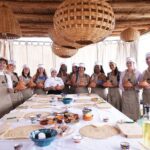
- Small group feel (max 20) with lots of attention while you cook
- Herb and spice buying with a real sense of what to look for
- Moroccan tea lesson as a warm-up to the kitchen work
- Ras el Hanout used in the main course, so you taste the heart of Moroccan flavor
- Allergy and dietary adaptation for vegetarians and vegans
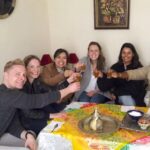
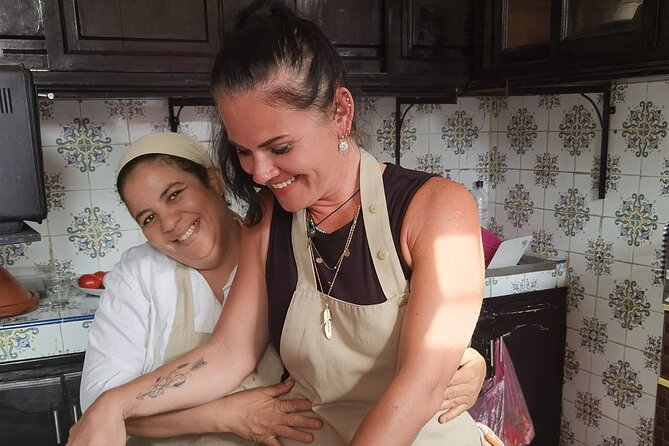
- Family-led energy that keeps the room laughing while you learn
Meeting Chef Laila in Marrakech: where to start and what to expect
Your meeting point is at 3 Rue Riad Zitoun el Jdid, Marrakesh 40000. The class ends back at the same spot, which is a relief in a city where navigating can feel like a sport.
This is a half-day experience, about 4 hours 30 minutes, and you can usually choose either a morning (lunch) or afternoon (dinner) session. Either way, the pace is practical: you’re not just watching. You’re actively cooking and eating within a tight time window.
It’s also designed for regular people, not pro cooks. No special skills are required. Still, you’ll get real instruction—how to think about flavors, how to work efficiently, and how to avoid the common “I cooked it but it tasted flat” problem.
You can also read our reviews of more tours and experiences in Marrakech.
Market time for herbs and produce: the start that makes the food taste right
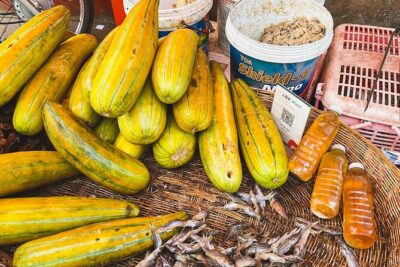
The plan calls for a stop where you choose fresh produce, herbs, and spices. That matters more than it sounds. Moroccan cooking depends on balance—fresh herbs, toasted spices, and the right kind of produce can turn a simple dish into something you’d order twice.
You’ll also learn how to tell if ingredients are high quality. That could mean checking aroma, color, texture, or simply learning what locals buy for a reason. Even if you’ve cooked before, this kind of guidance helps you shop better when you’re back home.
One practical consideration: not every departure may run exactly the same. I’ve seen reports where the market visit didn’t happen for a particular group. If you care a lot about that market stop, you can ask your provider before booking what will be included for your exact date and who will be leading.
Moroccan tea lesson: the short break that teaches a big cultural detail
Before the main cooking starts, you’ll head to a place to have tea and learn how to make Moroccan tea. This is more than a warm drink lesson. It gives you context for how the household rhythms work in Moroccan cooking culture—tea first, conversation flowing, then the kitchen becomes the focus.
If you’re the type who likes to learn the “why” behind traditions, this part is a good anchor. It also sets you up for the flavors you’ll taste later, because Moroccan tea and Moroccan spice work share a certain idea: balance, not one-note flavor.
How the class handles allergies and vegan or vegetarian menus
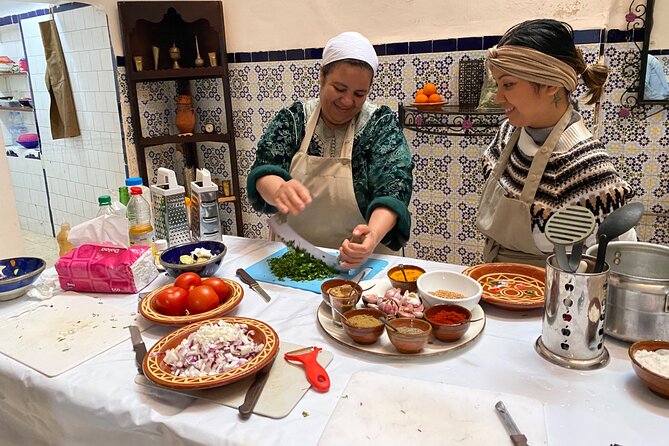
This is one of the most reassuring things about the experience: they check for food allergies first. Then they choose a suitable menu for everyone, including vegetarian and vegan options when needed.
That doesn’t just help with safety. It also means you’re not stuck doing one dish while others do something totally different. You’ll cook a menu aligned with your group’s needs, and you’ll still sit down to eat the results together.
If you have dietary restrictions, this is the kind of class you want. You don’t want to spend half a day in a kitchen watching a meal you can’t eat. Here, the structure is meant to avoid that.
The main course: Ras el Hanout and the logic of Moroccan spice
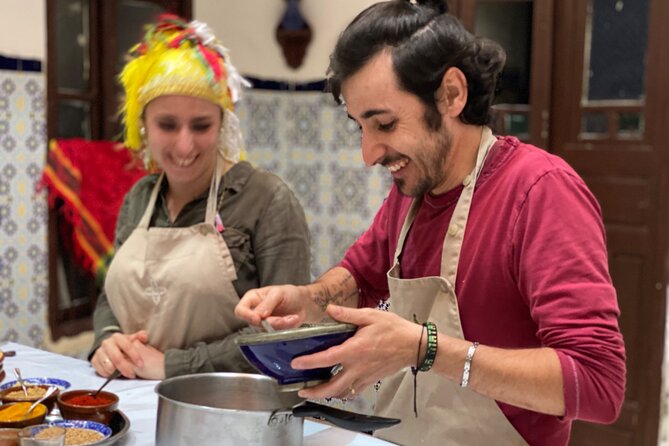
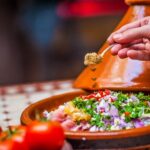
You start course work with a main dish guided through Moroccan spices—specifically Ras el Hanout. This is the signature move. Ras el Hanout isn’t one spice; it’s a blend. And that’s the lesson: Moroccan flavor comes from combinations, not single hits.
In practical terms, you’ll learn how the spice blend fits into the dish—when it’s added, how it’s handled, and what it should smell and taste like when it’s working properly. That kind of detail helps you later when you’re trying to recreate it without an instructor standing over your shoulder.
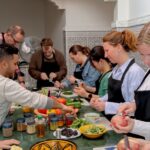
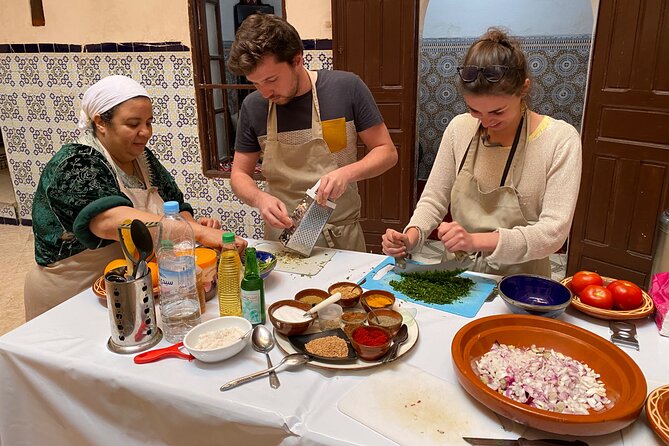
If you’re worried you’ll stand around because you lack cooking confidence, relax. The format is hands-on. You’ll chop, assemble, and work through steps with guidance, and you’ll have time to ask questions while the ingredients are still fresh in your mind.
Appetizer and salads: getting flavor balance before the heavier dishes
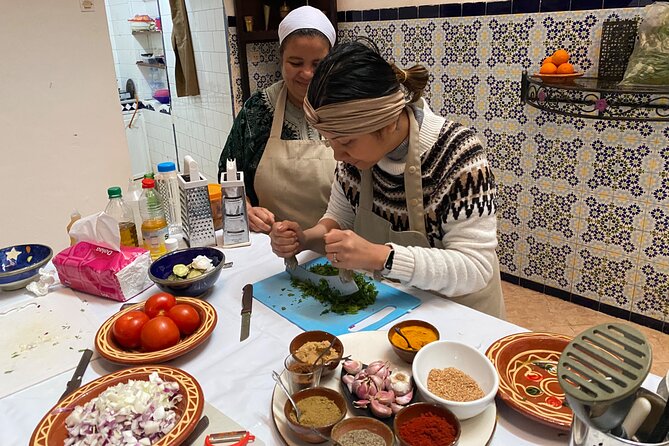
The exact appetizer or starter can vary by menu, but many groups work with salads and light starters alongside the main. This is a smart approach, because salads help you taste the ingredients clearly—herbs, acidity, crunch, and salt—before things become richer.
Even if you’re not sure what you’ll cook on your date, you can expect to practice the fundamentals: prep, seasoning, and thinking in layers. The payoff is that by the time you sit down for the main meal, your palate is tuned.
Dessert: the sweet finish that makes the whole day feel worth it
Dessert is part of the package, not an afterthought. After the main course spice work, you’ll move to sweets and learn how to finish the meal in true Moroccan style.
Different groups may make different desserts, but the key point is that you’ll be hands-on with the sweet course too. That matters because the most satisfying classes aren’t just about a single signature dish—they’re about building a complete menu.
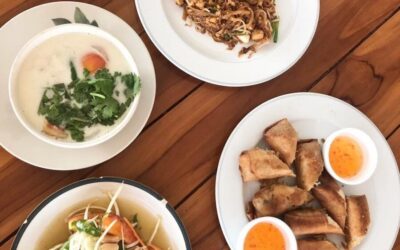
Also, you’ll likely eat a lot. This is real food, portioned like you’re feeding people, not “a tasting plate for Instagram.”
Kitchen setup and family energy: the difference between learning and watching
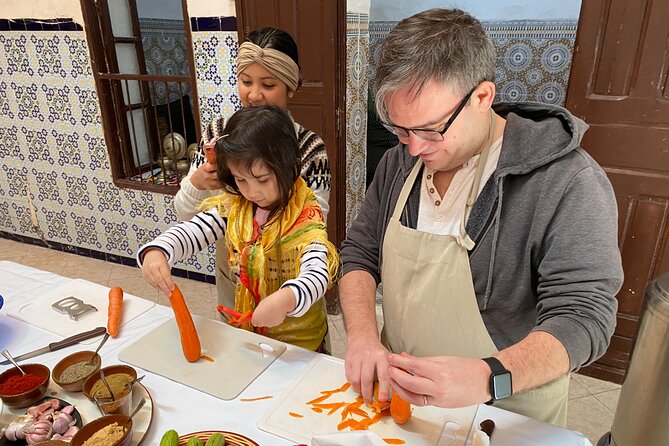
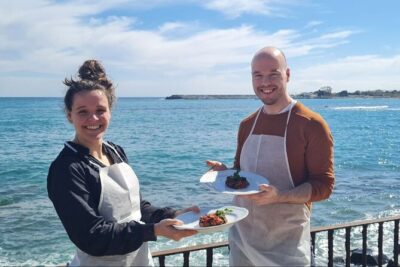
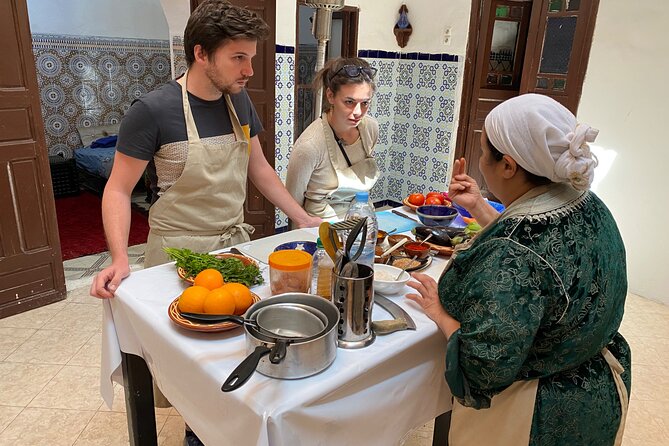
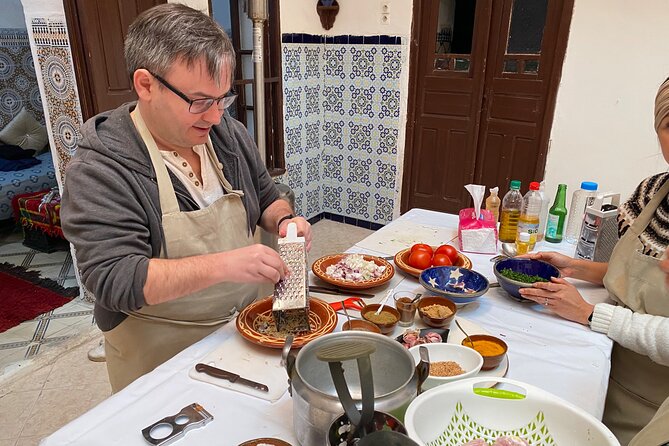
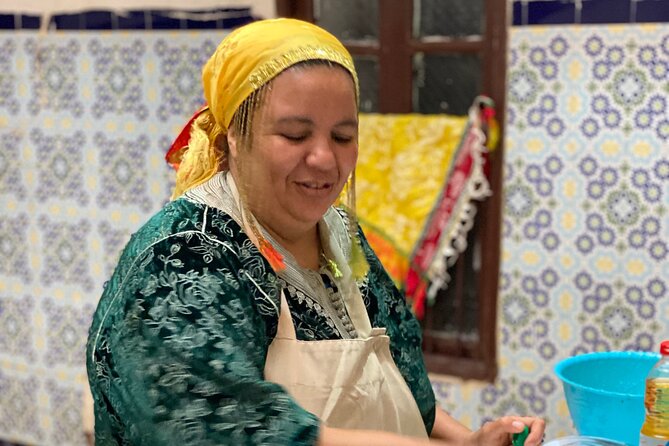
A big reason this class earns such high marks is the vibe in the kitchen. You’ll often see chefs leading with personality—good humor, patient instruction, and a family-style atmosphere that makes it easier to jump in without fear.
There are also reports of family members helping out and staying involved throughout the session, including moments like dishwashing after the meal. That kind of participation changes the feel. It stops being a performance and becomes a shared event.
In at least one class, instruction included English and French explanations, with the chef explaining ingredients and processes clearly. Even when the lead chef isn’t Chef Laila, the teaching style seems to stay consistent: clear steps, hands-on work, and lots of interaction.
Time management in a 4.5-hour class: when you’ll actually cook
With a 4 hours 30 minutes window, the trick is pacing. You’ll move from meeting and checks (like allergies) into ingredient selection and tea, then into cooking steps for multiple courses.
You’ll spend enough time chopping and assembling so you learn the rhythm, but it’s not a slow simmer of a class where you can take forever. This format is ideal if you want a productive, memorable food experience without losing half a day to kitchen logistics.
One small caution: depending on your menu and who’s leading, you may do more prep and less complex cooking in certain sections. Some groups report lots of chopping and preparation. The upside is that you still leave with practical skills you can repeat at home.
Pricing and value: why $34.76 can be a bargain in Marrakech
At $34.76 per person, the value here isn’t just the recipe sheet fantasy. You’re paying for a full meal—three courses—plus ingredient-focused instruction, plus a cultural lesson tied to cooking.
In Marrakech, restaurant meals can add up fast, especially if you’re eating well every day. This class effectively combines a restaurant-style experience with a lesson. You’re not only eating; you’re learning how the food comes together.
And because the class can be adapted for vegetarians and vegans, you’re getting value even if your dietary needs make restaurant options trickier. The group limit of 20 travelers also helps with quality—there’s enough space for interaction and enough time for the instructor to stay on you.
What you’ll take home: skills you can use, not just flavors you remember
A good cooking class teaches repeatable actions. Based on how this one runs, the best take-home skills usually fall into three buckets:
- Ingredient judgment: knowing what good produce and herb selections smell and look like
- Spice logic: understanding how Ras el Hanout functions and where it fits
- Menu flow: learning how starters, mains, and desserts connect as a full meal
If you cook at home, you’ll find this useful because it gives you a framework. If you rarely cook, you’ll still leave with a menu you can recreate because you’ll have built the steps with your hands.
Who should book this Moroccan cooking class?
This class is a strong fit if you:
- Want an authentic Moroccan food experience without guessing your way through spice markets on your own
- Prefer hands-on learning with a friendly, social atmosphere
- Travel with dietary needs and want a group meal that matches them
- Like cooking classes where you’re eating what you made, not sampling a bite and leaving hungry
It’s also a great choice for couples and small groups. The energy is social, but it’s not so loud that you can’t follow instructions.
If you’re the type who only wants “market plus cooking” with no changes under any circumstance, you may want to confirm your exact schedule before booking, especially if the market visit is your main priority.
Should you book Chef Laila’s half-day class?
If you want a half-day in Marrakech that’s genuinely about food—fresh ingredients, Moroccan spice thinking, and a real sit-down meal—I’d book this. The price is reasonable for what you get, the group size stays manageable, and the class is structured to include dietary needs.
Just go in with the right expectation: this is a family-style, interactive kitchen experience. You’ll be cooking, laughing, and eating a lot. And if your date runs with a different lead chef, it may slightly change the schedule. That said, the instruction and warm atmosphere are the core of what makes it work.
FAQ
Is this cooking class in Marrakech?
Yes. The class takes place in Marrakech, Morocco, and it starts at 3 Rue Riad Zitoun el Jdid, Marrakesh 40000.
How long is the cooking class?
It runs about 4 hours 30 minutes.
What does the class include?
You’ll select ingredients (including herbs and spices), learn about quality produce and Moroccan tea, then cook a 3-course meal: an appetizer, main course, and dessert.
Can the menu be adjusted for allergies and dietary needs?
Yes. The class includes checking for food allergies and selecting a suitable menu for the group, including vegetarian and vegan options.
Do I need cooking experience?
No. The class is designed so you can participate without prior cooking skills.
Is there a choice between lunch and dinner?
Yes. You can choose a morning (lunch) or afternoon (dinner) tour.
How large are the groups?
The maximum group size is 20 travelers.
Do I need good weather?
Yes. The experience requires good weather. If it’s canceled due to poor weather, you’ll be offered a different date or a full refund.
What is the price?
The price is $34.76 per person.
What’s the cancellation policy?
Free cancellation is available. You can cancel up to 24 hours in advance for a full refund. If you cancel less than 24 hours before the start time, it isn’t refunded.
How do I receive my ticket?
You’ll receive a mobile ticket. Confirmation is received at the time of booking.