REVIEW · CHENNAI
Traditional Vegetarian Cooking Class in Chennai with Gayathri
Book on Viator →Operated by Traveling Spoon · Bookable on Viator
Cooking on a real kitchen rhythm.
In Chennai, Gayathri’s traditional vegetarian class is a hands-on way to learn South Indian cooking where you cook in a local home, not a studio, and then share a meal the Tamil way with banana leaves and eating with your hands. Two things I really like: the class stays private, so you can ask questions as you go, and the food is grounded in the practical comfort of Tamil Brahmin home cooking. One thing to think about first: there’s no hotel pickup, so you’ll want to plan how you’ll reach Ramapuram on your own.
You’ll spend about 3 hours total, with roughly 1.5 hours actively cooking. You get taught how to use local ingredients and spices, and you’ll also work with traditional gear like a stone grinder for tomato-onion chutney and special vessels that match the dish.
The main downside is simple: you’re seated on the floor for the meal, and you’ll eat it by hand. If that’s not your style, you may find it a little harder to relax.
In This Review
- Key things you’ll notice in Gayathri’s Chennai class
- A Tamil Brahmin home-kitchen lesson in Ramapuram
- What you cook: one main dish and one side dish
- Traditional vessels that change the way food behaves
- Medicinal herbs in a Tamil Brahmin kitchen (and what that means for you)
- The tomato-onion chutney step you’ll remember
- From cooking to eating: banana leaves, floor seating, hands-on style
- Timing, meeting point, and how to plan your day
- Price and value: $48 for a private cooking lesson and meal
- Who should book Gayathri’s class, and who might want a different option
- Alternative if you prefer South Indian breakfast foods
- FAQ
- Where does the class start?
- How long is the experience?
- Is it a private class?
- Do I need hotel pickup?
- What will I cook and eat?
- Can I request South Indian breakfast instead?
- What if I have allergies or dietary restrictions?
- Should you book this Chennai vegetarian cooking class?
Key things you’ll notice in Gayathri’s Chennai class
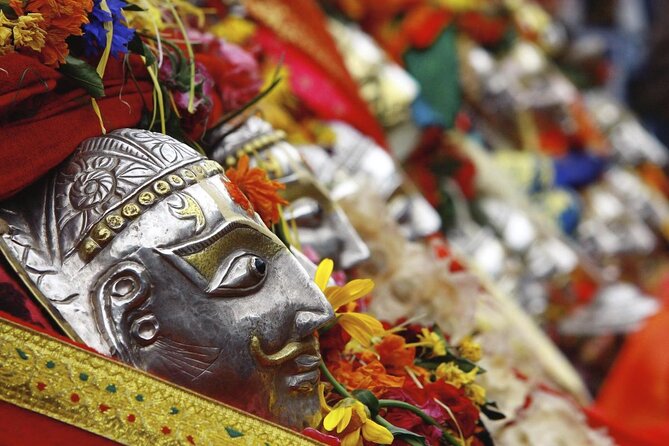
- 100% private, personalized cooking with Gayathri in her own home
- One main + one side plus tomato-onion chutney (menu can shift by season)
- Cooking in traditional vessels like kal chatti (soap stone), eeya chombu (tin alloy), or mann chatti (terracotta)
- Learning how Tamil Brahmin kitchens use medicinal herbs in everyday cooking
- Finishing with a vegetarian meal served on banana leaves, eaten with your hands
A Tamil Brahmin home-kitchen lesson in Ramapuram
This class is built around a simple idea: if you want to cook South Indian food, watch the rhythm first, then do it yourself. Gayathri learned from her grandmother, originally from Thanjavur, a place many Tamil families associate with proud food traditions. The payoff is that the cooking isn’t presented as a performance. It’s presented like home cooking—method, timing, and small choices that make food taste right.
Gayathri is from a Tamil Brahmin family, and the kitchen stays vegetarian. That matters because you’re not just learning technique for one dish. You’re learning how a Tamil Brahmin pantry works: what gets used, how flavors are balanced, and why certain steps matter even when the ingredients look basic.
The experience is also private, which is rare at this price. You don’t have to share your attention with a big group while your questions pile up. You can move at your pace and get clearer on what to do next—especially when you’re chopping, stirring, frying, and using traditional tools.
You can also read our reviews of more tours and experiences in Chennai.
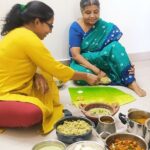
What you cook: one main dish and one side dish
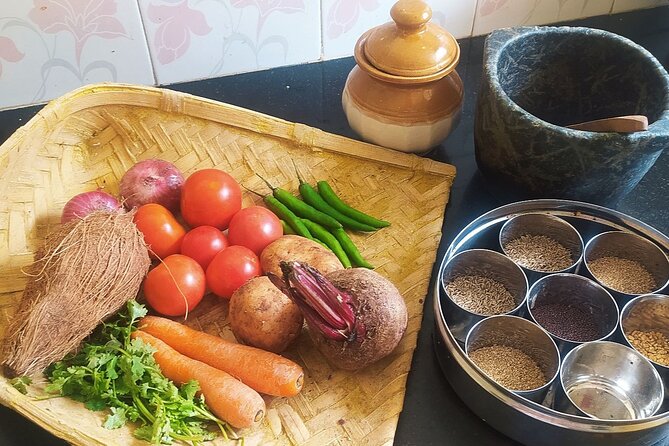
The core of the class is straightforward. You’ll learn to cook one main dish and one side dish during the hands-on session. The exact menu can vary by season, but the structure stays the same: you’ll work through steps that build layers of flavor rather than relying on complicated ingredients.
If you’re curious about what might show up, cooking styles you could encounter include dishes like kootu, sambar, and poriyal—all part of everyday South Indian vegetarian meals. You’ll also make tomato-onion chutney, which is where that traditional equipment comes in.
What I like for your planning: you don’t need to guess the whole course menu. You’ll cook two focused dishes, plus a chutney component, and you’ll eat the meal you helped make afterward.
Traditional vessels that change the way food behaves
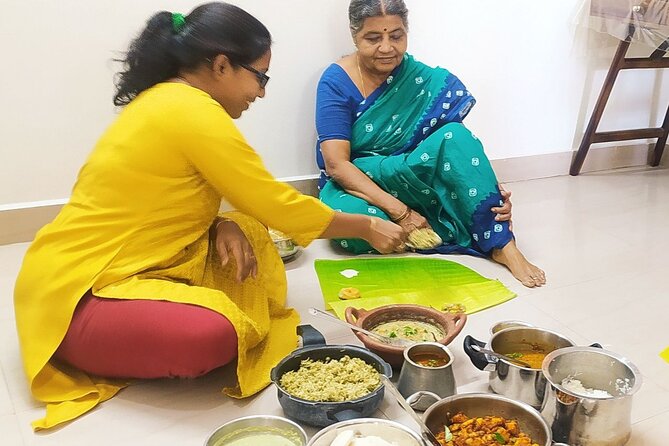
This is where the class feels more physical and more “real.” You’ll cook using traditional utensils, and Gayathri matches the vessel to the dish you’re making. Depending on the recipe, you might use:
- Kal chatti (soap stone vessel)
- Eeya chombu (tin alloy vessel)
- Mann chatti (terracotta)
You won’t be taught theory from a textbook. Instead, you’ll learn what different cooking vessels encourage in the process—how you stir, how you manage heat, and how timing affects the final texture. Even if you don’t have those exact pots at home, these lessons help you understand why certain South Indian dishes come out with that specific feel.
You’ll also use a traditional stone grinder to make tomato-onion chutney. That’s one of those small-but-important details. Grinding changes the texture, and texture changes how a chutney clings to food and how it tastes on the tongue. It also teaches you a technique you can recreate later with a blender if you have to.
Medicinal herbs in a Tamil Brahmin kitchen (and what that means for you)
Gayathri will explain medicinal herbs used in a traditional Tamil Brahmin kitchen. The practical value here is that you’ll see herbs not as a trendy add-on, but as part of everyday cooking logic—what gets used, how it’s used, and why it’s kept in the rotation.
Even if you don’t go home with the entire herb shelf, you’ll gain a framework. You’ll start noticing how herbs support digestion and balance flavors, which helps you understand why South Indian vegetarian meals often feel steady and satisfying rather than heavy.
Since the class is hands-on, this teaching isn’t separate from cooking. You’ll hear the herb explanation while you’re in the middle of prepping or cooking, so it actually lands.
The tomato-onion chutney step you’ll remember
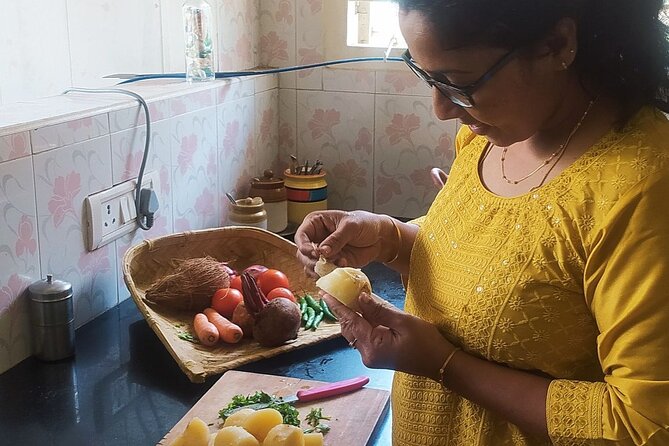
Tomato-onion chutney is part of the class flow, and it’s not just a side in name. It’s a taste-maker. You’ll use a stone grinder for it, then you’ll learn how to chop, stir, and cook the mix into a chutney with the right consistency.
This is a good moment for you to slow down and ask questions. When someone is making chutney the traditional way, small choices—how finely ingredients are ground, how long you let flavors cook, and how you finish—affect the result a lot. If you plan to cook later, this is one recipe you’ll likely feel comfortable repeating first.
From cooking to eating: banana leaves, floor seating, hands-on style
After you finish cooking, you sit down to share the meal. You’ll eat a traditional vegetarian meal served on banana leaves, and you’ll eat with your hands. That format is part of the culture—not a gimmick.
Why it’s worth trying: it forces you to eat like the food was designed to be eaten. Banana leaves affect aroma, and eating with your hands encourages smaller bites and better mixing of flavors on the plate. It’s also a great way to understand how the main dish, side dish, and chutney work together.
The only real caution is comfort. If you’re not used to floor seating, plan to wear comfortable clothes and treat this as a relaxed cultural meal rather than a quick photo stop. You’ll get the most out of it if you go in with the right mindset.
Timing, meeting point, and how to plan your day
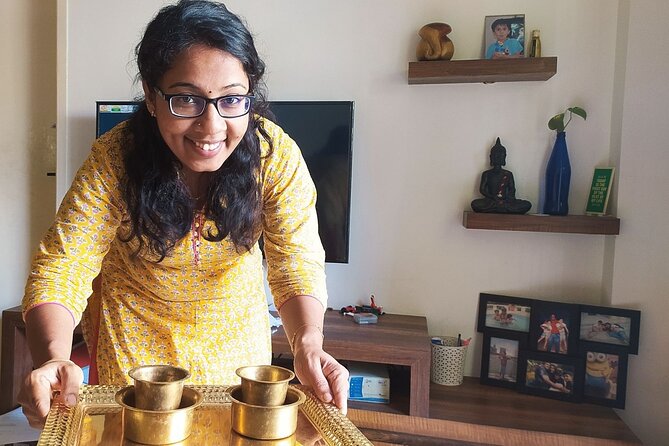
This experience runs about 3 hours total. The hands-on cooking component is about 1.5 hours, then you have time to share the meal afterward.
It starts and ends back at the meeting point in Ramapuram, Chennai. Hotel pickup and drop-off are not included, so you’ll need to arrange your own transport. The good news is that it’s near public transportation, so you likely won’t be stuck figuring out a private car for the full trip.
You’ll receive a mobile ticket, so save it on your phone and double-check the location details before you head out. Also, since it’s a private activity, make sure your group arrives together so you don’t lose cooking time.
A small practical note: the class is vegetarian only. If you have allergies or dietary restrictions, you should tell Gayathri at booking so she can plan what she prepares.
Price and value: $48 for a private cooking lesson and meal
At $48 per person, this is priced like a bargain when you look at what’s included. You’re paying for a private cooking session with a home host, hands-on instruction, and the full vegetarian meal you helped make.
Here’s what you’re really getting for the money:
- Private instruction while you chop, stir, fry, and learn steps in order
- A real home-cooked meal served in a traditional way
- Teaching beyond the recipe: medicinal herbs and traditional cooking vessels
- Traditional tools like the stone grinder for chutney, plus dish-specific vessel choices
If you’ve tried cooking classes that feel crowded or generic, the private format is usually what makes the price feel fair. And since the menu can vary by season, you’re not locked into one script—you’re experiencing how the kitchen cooks right now.
One more detail: this tends to book ahead (on average, about 25 days). If Chennai dates matter to you, don’t leave it to the last minute.
Who should book Gayathri’s class, and who might want a different option
Book this if you want:
- A real home cooking experience in Chennai, not a rushed restaurant demo
- Hands-on practice cooking South Indian vegetarian dishes
- Traditional methods—stone grinding, dish-specific vessels, and Tamil Brahmin kitchen habits
- A cultural meal on banana leaves, eaten with your hands
You might skip it if:
- Floor seating and hands-on eating are a dealbreaker for you
- You want hotel pickup convenience, since that’s not included
It’s also a good fit for first-time South Indian food fans who want practical recipes and for people who’ve cooked before and want the “why” behind technique.
Alternative if you prefer South Indian breakfast foods
Gayathri only offers vegetarian food. If you’d rather not do the traditional meal, she can offer South Indian breakfast foods instead. The options include dosa, sambar, and medu vada served with coconut chutney and filter coffee.
So if you like the idea of learning a chutney and cooking components but prefer breakfast flavors, tell her your preference at booking. That choice can make the experience feel more natural to your taste.
FAQ
Where does the class start?
The meeting point is in Ramapuram, Chennai, Tamil Nadu. The activity also ends back at the same meeting point.
How long is the experience?
It runs for about 3 hours total, with around 1.5 hours of hands-on cooking.
Is it a private class?
Yes. This is a private, 100% personalized experience. Only your group participates.
Do I need hotel pickup?
No. Hotel pick up and drop off are not included.
What will I cook and eat?
You’ll learn to cook one main dish and one side dish in a hands-on class. Afterward, you’ll eat a traditional vegetarian meal served on banana leaves and eaten with your hands. The specific menu can vary by season.
Can I request South Indian breakfast instead?
Yes. Instead of the traditional meal, Gayathri can offer South Indian breakfast foods like dosa, sambar, and medu vada, along with coconut chutney and filter coffee. Let her know your preference when booking.
What if I have allergies or dietary restrictions?
You should advise Gayathri at the time of booking if anyone in your group has allergies, dietary restrictions, or cooking preferences.
Should you book this Chennai vegetarian cooking class?
I think you should book it if you want a hands-on, private South Indian cooking lesson in a real Tamil home, with traditional tools and a meal format that actually belongs to the food. At $48, the value comes from the instruction plus the full vegetarian meal you prepare, not just from the dishes themselves.
Skip it only if floor seating and eating with your hands would ruin your comfort. If you can handle that cultural style, Gayathri’s class is one of the most direct ways to learn Tamil vegetarian cooking for real life.