REVIEW · ITALY
Valnerina/Pasta cooking class in a 12th century location
Book on GetYourGuide →Operated by Ludomar Travel · Bookable on GetYourGuide
Few places teach pasta with this kind of setting.
I really liked cooking in a 12th-century restaurant inside the Abbazia of San Pietro in Valle, with Valnerina scenery all around, and I loved that the class is genuinely hands-on: you make handmade pasta, a main course, and a dessert. One watch-out: the menu is set, so if you want lots of freestyle or extra dishes, this 3-hour format may feel tightly scheduled.
The class is pitched as a private-group experience in a calm, original space, not a high-volume factory. That’s great for questions and pacing, but it also means you’ll follow the day’s plan rather than build your own menu from scratch.
In This Review
- Key highlights you will actually care about
- A 12th-century Abbazia kitchen: where pasta lessons feel different
- What you make in 3 hours: the full arc from dough to dessert
- The Alloro Ristorante in Relais Abbazia San Pietro in Valle
- Hands-on learning that gives you skills for your own kitchen
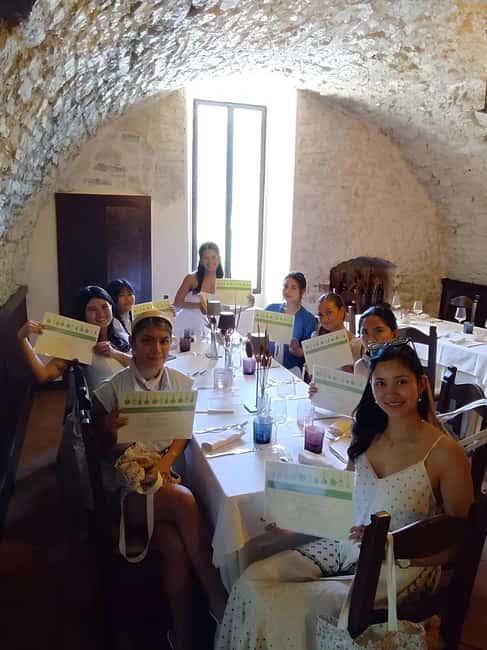
- The tasting moment, certificate, and take-home goodies
- Staff hospitality: friendly, professional, and family-friendly
- Private group feel: better questions, less waiting around
- Price and value: why $82 can make sense here
- Who this class is best for (and who should think twice)
- Simple planning tips so you get the most out of it
- Should you book this cooking class?
- FAQ
- How long is the cooking class?
- Where does the experience take place?
- What do I cook during the class?
- Do I get to eat and taste what I make?
- What do I receive at the end of the class?
- What languages are offered?
- Is this experience wheelchair accessible?
- Is there a cancellation policy?
- Can I pay later?
Key highlights you will actually care about
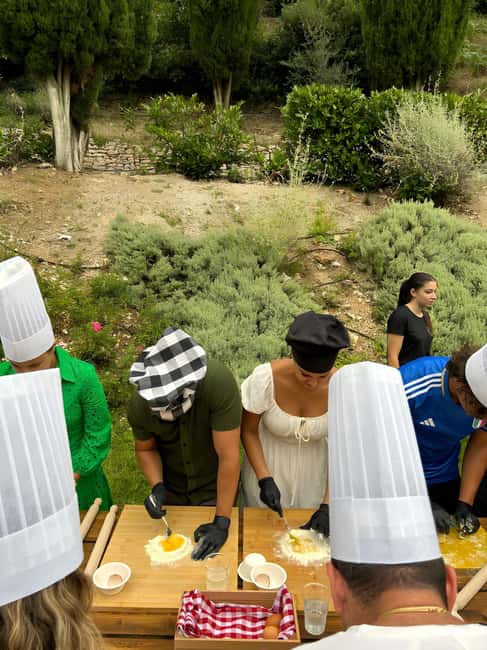
- 12th-century setting in the Abbazia of San Pietro in Valle area (Alloro Ristorante).
- Real handmade pasta practice, not just watching or assembling.
- A full meal cycle: pasta, main course, dessert, then you test what you made.
- You take something home: certificate, recipe booklet, and a small gadget.
- Small, private-group feel with instruction in English, German, and Italian.
A 12th-century Abbazia kitchen: where pasta lessons feel different
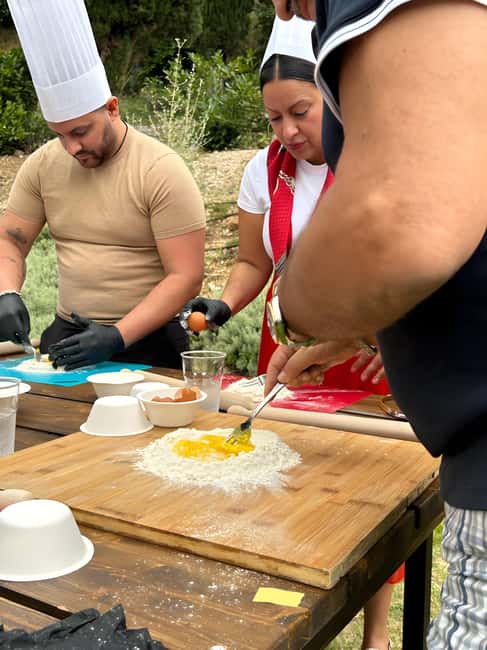
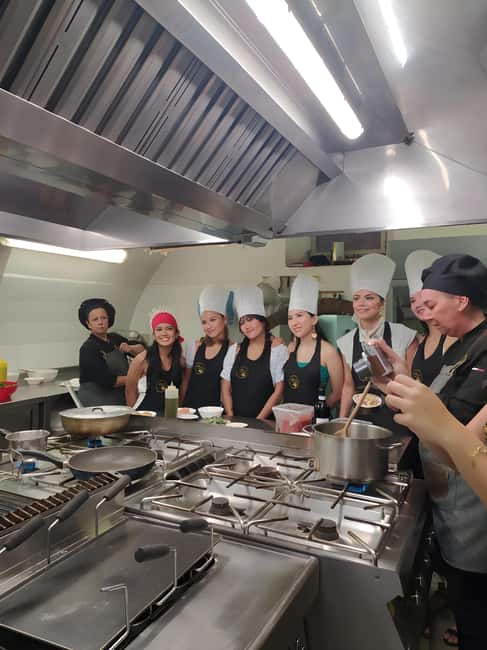
If you’ve ever done a cooking class that felt like a modern demo with a medieval photo backdrop, this one is the opposite. You start at the Alloro Ristorante, the on-site restaurant of the Abbazia of San Pietro in Valle, and the whole experience has that older, slower rhythm you expect from a centuries-old religious residence.
What I love about this kind of setting is how it changes your brain. You’re not just cooking. You’re learning in a place that carries routines from generations—exactly the spirit they describe with precious, handed-down recipes. Even if you’re not a history person, the environment helps you take the food seriously: you pay attention, you slow down, and you stop rushing the process.
And yes, the Valnerina area matters. This isn’t an industrial-looking kitchen tucked into a strip mall. It’s a serene backdrop for a meal you’ll actively build, taste, and share.
You can also read our reviews of more tours and experiences in Italy.
What you make in 3 hours: the full arc from dough to dessert
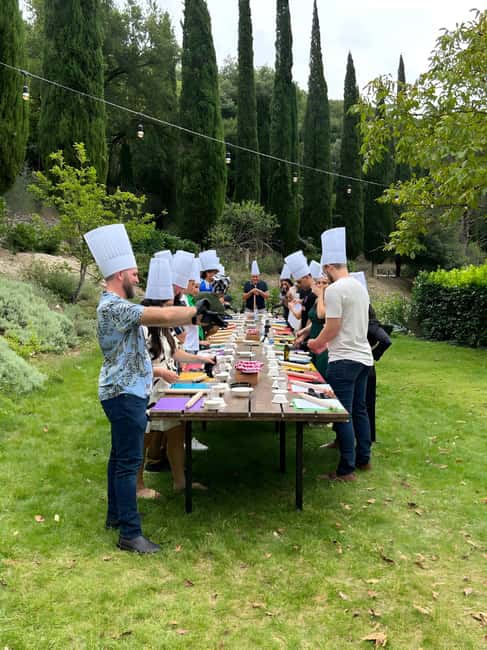
This class is structured around three core cooking blocks:
1) Handmade pasta
2) A main course
3) A dessert
That sounds straightforward, but the value is in the sequence. Homemade pasta is hands-on learning at its best: you learn how dough feels, how it behaves, and how small technique choices affect the result. Then you move to a main course, which typically forces you to think beyond one skill—timing, flavor balance, and finishing. Finally, dessert rounds it out so the day doesn’t end with just one win.
At the end, you test what you prepared. That “eat what you cooked” moment is important. Many classes stop at plating and then disappear into staff service. Here, you get to participate in the tasting process and see what your own work tastes like when it’s finished properly.
Because the menu categories are fixed, your dishes won’t be whatever you dreamed up on the drive over. But that’s also why this class works for most people. You aren’t managing a shopping list of random ingredients or trying to translate your own kitchen habits into an Italian recipe. You’re learning a complete workflow.
The Alloro Ristorante in Relais Abbazia San Pietro in Valle
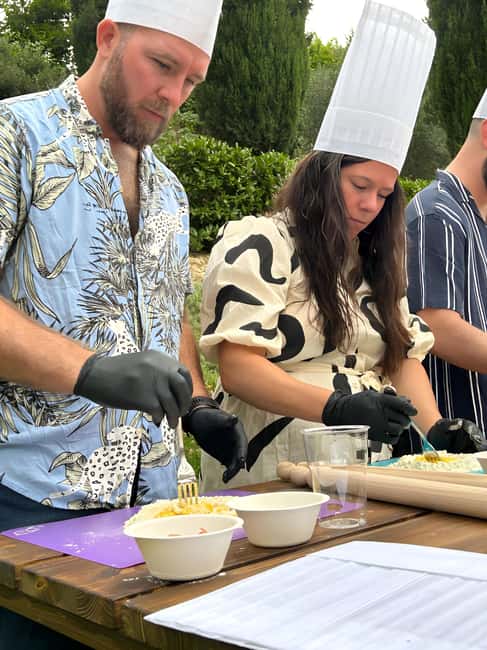
Your meeting point is Alloro Ristorante in the Abbazia of San Pietro in Valle. After that, you’ll have a short photo stop at Relais Abbazia San Pietro in Valle, a historic residence.
Here’s the practical angle: that brief “get your bearings” moment helps the cooking part land better. When you step into a historic place, it’s easy to feel like you’re just passing through. The photo stop gives you a clean mental reset—then you move into the kitchen focused and calm.
Also, this matters for pacing. In many tours, the day feels like constant motion. This one keeps movement light: you’re mostly doing one thing well—cook—while the surroundings quietly set the mood.
Hands-on learning that gives you skills for your own kitchen
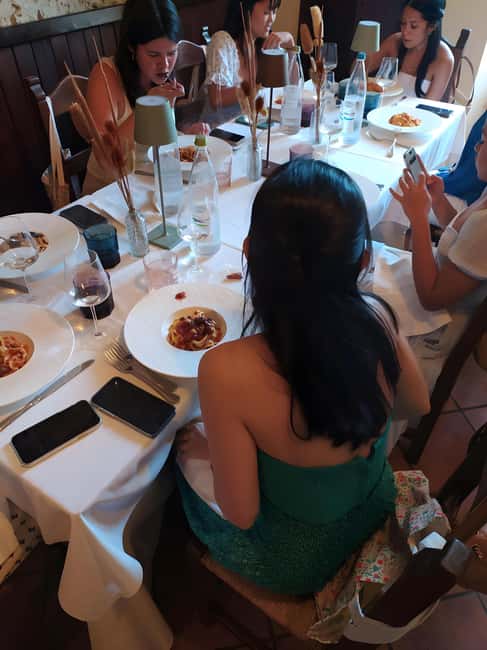
The big promise here is empowerment: hands-on practice designed so you can repeat it at home. What that usually means in a good cooking class is that you don’t just follow steps; you understand what to watch for.
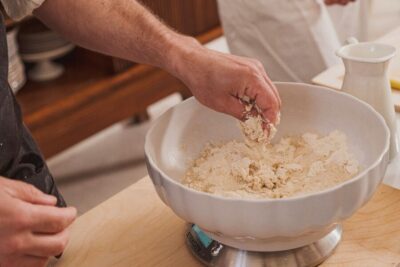
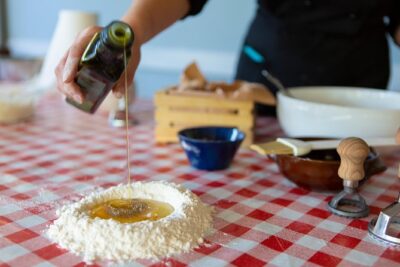
For handmade pasta, the key learning isn’t only shaping. It’s managing dough consistency, handling, and timing. Even if you don’t become an expert on the first try, you’ll leave with a better feel for the process. That’s what makes a pasta class more valuable than a simple meal.
Then, for the main and dessert components, the learning tends to reinforce technique and timing. You’ll see how the class manages a full meal without turning it into chaos. You’re in a structured 3-hour window, but the teaching approach is set up to help you stay confident.
And the class languages support that confidence. You can learn in English, German, or Italian, so you’re not stuck translating everything in your head. If you’re traveling with mixed-language friends, this kind of option is a quiet relief.
The tasting moment, certificate, and take-home goodies
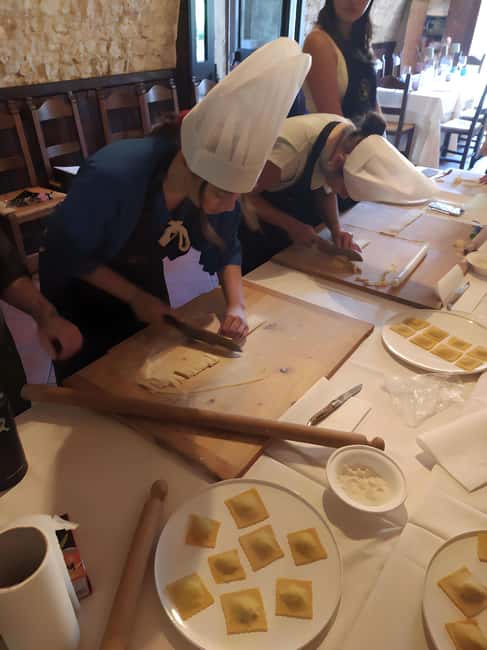
At the end of the class, you don’t just leave with memories—you leave with proof and materials.
You receive:
- a certificate of participation
- a small booklet with recipes
- a small gadget as a reminder of the day
That booklet is the practical part. A cooking class can be inspirational but useless later if you can’t reproduce the steps. Having recipes written down (even in a small booklet) gives you a reference the next time you’re craving that exact food.
The gadget is minor, but it’s a nice nudge. It keeps the day from becoming a vague blur of good smells and friendly staff.
And the tasting matters because it closes the loop. You get to evaluate what you made, which is the quickest way to learn. Next time you cook, you’ll know what you did right and what you’d adjust.
Staff hospitality: friendly, professional, and family-friendly
One of the strongest signals from past participants is the way the team shows up: welcoming, sympathetic, and ready to help. Multiple comments highlight friendly staff and a chef who makes the day enjoyable, not intimidating.
There’s also evidence the class works for families. A past participant specifically noted that staff took extra time to make the experience special for a 7-year-old. That tells me the teaching style isn’t just “line up and follow.” It’s more adaptive and patient, which is a big deal if you’re traveling with kids—or if you just want a relaxed pace.
If you value a warm atmosphere, that’s likely one of the best parts here.
Private group feel: better questions, less waiting around
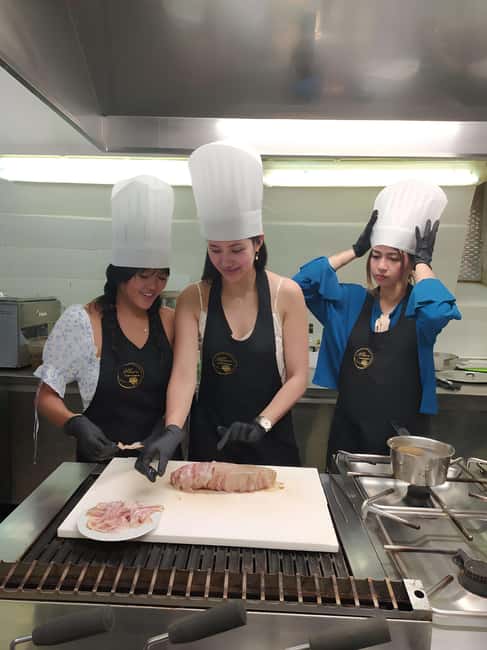
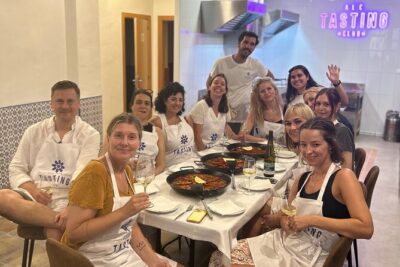
This experience is listed as a private group. You should think of that as reduced social friction. Instead of competing for attention or spending half your time waiting your turn, you can ask questions and move through the steps with more personal attention.
What I like about private-group cooking is that mistakes don’t turn stressful. If something goes sideways, the teaching team can steer you back. And because you’re making multiple parts of a meal, having time and guidance helps you stay on track.
One limitation: since it’s private, the class still follows its set plan (pasta, main, dessert). You won’t get to customize the entire menu the way you would in a fully personalized cooking session. But within that structure, you can usually get better support.
Price and value: why $82 can make sense here
The price is $82 per person for a 3-hour experience.
On paper, that might seem like a lot compared with casual cooking demos. But value here isn’t just “someone talks while you watch.” You’re doing real work—handmade pasta plus a main plus dessert—and then you taste the results. You also receive extras that many classes skip: certificate, recipe booklet, and a small gadget.
There’s also value in the setting: a 12th-century location tied to the Abbazia of San Pietro in Valle. That kind of venue isn’t free, and it isn’t common. You’re not just paying for instruction. You’re paying for the day’s atmosphere and the sense of place that helps you learn and remember.
So when I evaluate whether $82 is fair, I focus on three things:
- you’re actively making multiple dishes
- you’re getting materials to replicate the recipes later
- the setting is genuinely historic, not a staged set
Based on those criteria, the pricing feels aligned with the experience you’re getting.
Who this class is best for (and who should think twice)
This works especially well if you:
- want a classic Italian cooking experience in Umbria, with authentic recipes
- like hands-on learning more than watching demos
- enjoy historic settings and want your food day to feel like a real day trip, not a quick stop
- are traveling in a private setting and want a calmer pace
You might think twice if you:
- want a super flexible menu or lots of additional dishes beyond pasta, main, dessert
- prefer long, slow cooking sessions with lots of downtime
- expect the experience to feel like a full-day event. At 3 hours, it’s efficient.
Simple planning tips so you get the most out of it
You’ll likely have the smoothest time if you go in with the right expectations:
- Plan to arrive ready to cook and learn. This class is hands-on, so come comfortable and prepared to work.
- Bring curiosity. The recipes are described as precious and passed down, which usually means you’ll learn technique and tradition, not shortcuts.
- If you’re with kids, this class appears to handle that well. Still, keep in mind it’s a structured 3-hour schedule.
- If you care about photos, note there’s a short dedicated photo moment. After that, your time is primarily cooking.
One last thing: this is the kind of experience where you’ll enjoy it most when you stay present during the steps. When you treat pasta-making like a small craft project, the results—and the satisfaction—tend to be better.
Should you book this cooking class?
I’d book it if you want a hands-on pasta day that feels anchored in Umbria rather than imported into it. The combination of handmade pasta, a complete meal (main and dessert), and take-home materials makes it practical. Add the historic Abbazia setting and the warm, supportive staff vibe, and you have an experience that hits both head and heart.
I wouldn’t book it if you’re chasing a heavily customizable menu or a long, wandering food tour. This is a focused course, and that focus is exactly why it works.
FAQ
How long is the cooking class?
The duration is 3 hours.
Where does the experience take place?
It starts at Alloro Ristorante in the Abbazia of San Pietro in Valle, in the Valnerina area. There is also a short photo stop at Relais Abbazia San Pietro in Valle.
What do I cook during the class?
You prepare handmade pasta, a main course, and a dessert.
Do I get to eat and taste what I make?
Yes. At the end of the class, participants test their preparations.
What do I receive at the end of the class?
You receive a certificate of participation, a small booklet with recipes, and a small gadget.
What languages are offered?
The instructor speaks English, German, and Italian.
Is this experience wheelchair accessible?
Yes, it is wheelchair accessible.
Is there a cancellation policy?
There is free cancellation up to 24 hours in advance for a full refund.
Can I pay later?
Yes. You can reserve now and pay later.