REVIEW · CHIANG MAI
Half-Day Thai Cooking Class and Market Tour From Chiang Mai
Book on Viator →Operated by Oh-Hoo · Bookable on Viator
Thai cooking starts at the market. I like that this class puts you in front of real ingredients first, and that you get hands-on guidance in a private open-air kitchen with your own station. The main consideration: the market stop is a big part of the draw, so if it doesn’t run as expected, you’ll miss the whole point of the visit.
You’ll also be able to choose what you cook from a clear menu set, and everything can be made spicy or mild. With a small group size (up to 8) and a recipe book at the end, it’s a practical way to go home with more than a photo. Just note that children ages 4–11 can’t cook, and adults who don’t want to cook need a visitor ticket.
In This Review
- Key things to know before you go
- Market Shopping First: Picking Thai Flavors Before You Cook
- What’s special (and what to watch)
- From Tha Phae Gate to Kitchen Prep: The Logistics That Affect Your Day
- Open-Air Home Kitchen: Five Dishes and Your Own Station
- Group size: why 8 matters
- What You Can Cook: Your 5-Dish Menu Choices
- Stir-fry category
- Appetizer category
- Soup category
- Curry category
- Dessert category
- Spicy or mild: control the heat
- Eating What You Make: Lunch or Dinner With Real Thai Comfort
- Vegan and Vegetarian-Friendly Cooking (and How to Use That in Real Life)
- Price and Value for a Half-Day Thai Cooking Class
- Watch-Outs: Weather, Scheduling, and Getting the Most From the Lesson
- Who This Cooking and Market Tour Fits Best
- Should You Book This Half-Day Thai Cooking Class From Chiang Mai?
- FAQ
- FAQ
- How long is the Chiang Mai half-day Thai cooking class?
- Do they pick you up in Chiang Mai?
- Where is the meeting point?
- Can I choose what I cook?
- What dishes are available?
- Can the food be made spicy or mild?
- Is the class vegetarian or vegan friendly?
- What if the weather is bad?
- What is the cancellation window for a refund?
Key things to know before you go
- Market-first format so you learn what Thai ingredients are and why they matter
- Private open-air kitchen with a full setup and an individual cooking station
- Choose 5 dishes from stir-fry, curry, soup, appetizer, and dessert categories
- Small group limit of 8 for more back-and-forth with the teacher
- Spice adjust on request plus vegan and vegetarian options
- Recipe book included so you can recreate the dishes back home
Market Shopping First: Picking Thai Flavors Before You Cook
This is a half-day Thai cooking experience built around one smart idea: learn the ingredients before you touch the stove. You start with a quick pickup (for many people, that means within about 3 kilometers of Chiang Mai’s downtown) and then head to a local Thai market for roughly 20–30 minutes.
That market time is where the tour earns its keep. Thai cooking can look simple, but it’s the small ingredients that do the heavy lifting—herbs, spices, and produce you might not recognize from a supermarket shelf back home. In this format, you get a guided look at what to buy and how Thai cooks think about flavor. You also get a head start on substitution tips, which is hugely helpful if you’re trying to re-create dishes later in a different country.
You can also read our reviews of more tours and experiences in Chiang Mai.
What’s special (and what to watch)
What’s special is that you’re not just strolling—you’re learning what each ingredient does in the dish. Still, the market stop is also the part most likely to disappoint if the schedule shifts. If market shopping is your top reason for booking, it’s worth being flexible and keeping your plan grounded in the fact that class timing depends on the day’s flow.
From Tha Phae Gate to Kitchen Prep: The Logistics That Affect Your Day
The meeting point is Tha Phae Gate on Tha Phae Road, in the Chang Khlan area of Chiang Mai. The tour ends back at the meeting point, which is convenient if you like having your day neatly wrapped up.
If you’re staying near the center, the pickup offer can save time and energy. The tour notes pickup within 3 kilometers of Chiangmai downtown, so if you’re farther out, you may want to plan to arrive at Tha Phae Gate on your own.
This matters because you want to arrive with a relaxed pace. A cooking class already has enough moving parts—shopping, prep, cooking, eating, and cleanup. The better your start, the more you’ll enjoy the actual cooking.
Also, the class runs in two possible periods (morning or dinner). That means you can match it to your vacation rhythm, whether you want a daytime meal or a cooking-heavy dinner plan.
Open-Air Home Kitchen: Five Dishes and Your Own Station
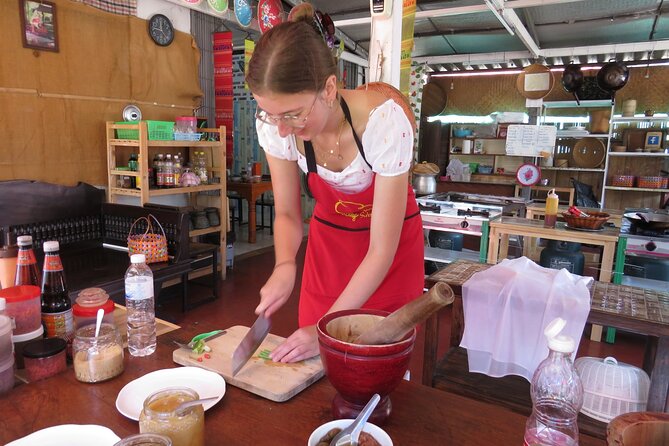
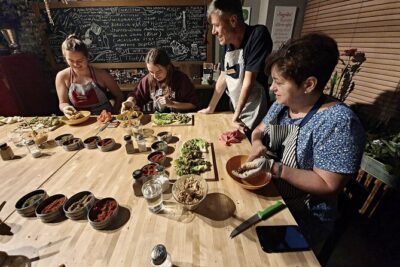
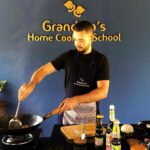
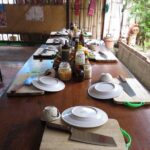
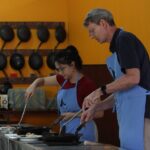
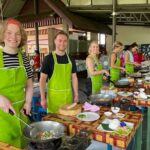
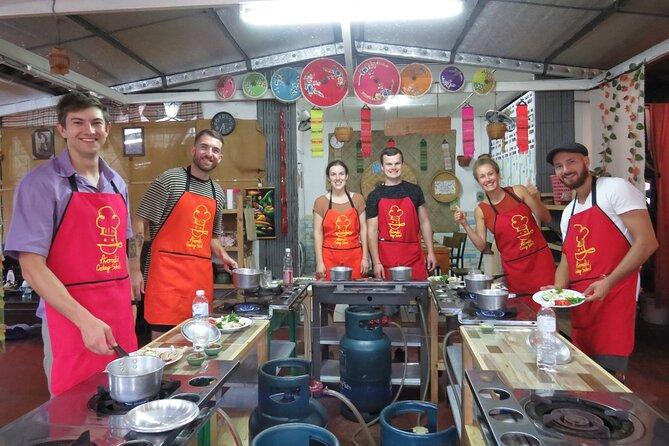
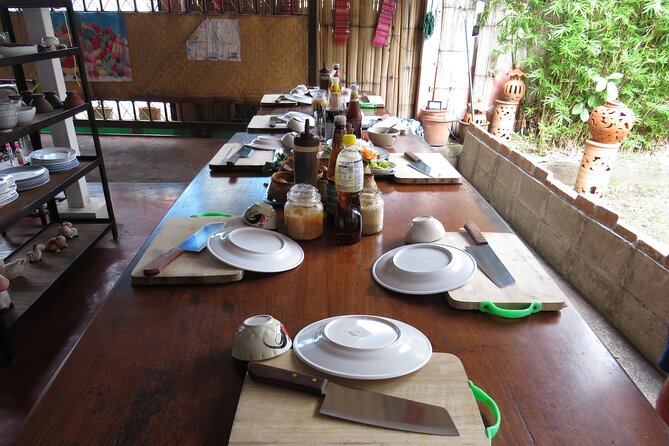
After the market, you head to a private house with an open-air kitchen. This setup is a big part of the appeal. You’re not cooking in a cramped classroom with one pot passed around the group; you’re cooking in a real kitchen environment.
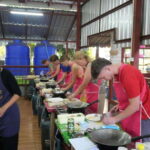
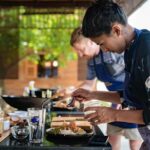
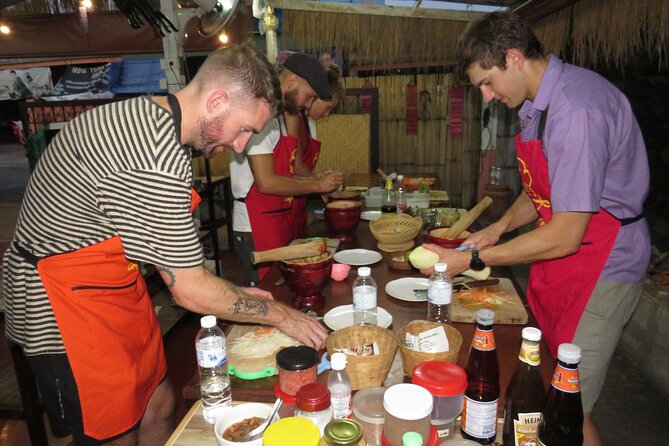
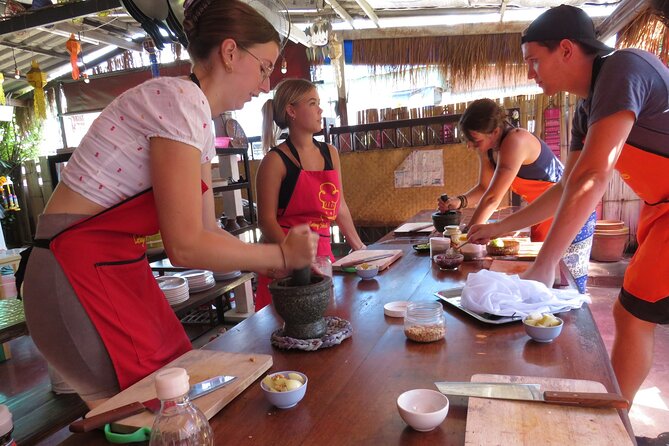
You cook 5 dishes together, and you’ll have your own cooking station. That’s a practical detail—when each person has space and tools, you learn faster. You’re also more likely to actually taste and adjust as you go, instead of only watching.
The chef/teacher provides simple instructions dish by dish. If you’ve ever felt overwhelmed trying to follow a recipe, this is the right style: clear steps, guided technique, and the chance to ask for help while the dish is happening.
And yes, the teacher matters. One instructor named Apple (Mr. Chang) is highlighted for dish-by-dish, individual instructions, with each person getting real choice in what to make and eat. That’s the difference between a demo and a class.
Group size: why 8 matters
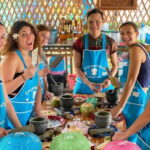
The tour caps the group at 8 travelers. In a class like this, that small number is everything. You’ll get more attention when your pad see ew sticks, when your curry paste needs more stirring, or when you’re unsure about how to balance sweet, salty, sour, and heat.



What You Can Cook: Your 5-Dish Menu Choices
You choose 5 dishes from a set list across categories. The categories are clear, and the dishes cover the Thai comfort-food spread—street-food style stir-fries, classic curries, soups, and dessert.
Stir-fry category
- Pad Thai
- Fried cashew nuts
- Pad see ew
- Fried rice
If you’re thinking about what you’ll repeat at home, these are usually the easiest wins. They also teach core technique: wok heat (or skillet heat), timing, and how Thai sauces change the final flavor.
Appetizer category
- Papaya salad
- Fresh spring rolls
- Fried spring rolls
Papaya salad is a great lesson in balance—sour, salty, and a little sweetness pulling together. Spring rolls teach wrapping and texture. Fried spring rolls can be a bit more hands-on, so expect this to be where your group gets lively.
Soup category
- Hot & Sour soup prawns
- Hot & Spicy soup chicken
- Chicken coconut soup
Soups are useful because they show how Thai cooking builds flavor in layers. Coconut-based soup also gives you a different flavor profile than the brighter tamarind-lime style sauces.
Curry category
- Khao soi
- Green curry
- Red curry
- Massaman curry
Curries are where Thai cooking often feels magical—paste, aromatics, and the way heat behaves once coconut milk or other bases come in. Khao soi is a memorable choice if you want something that feels distinctly northern Thai compared to the most common curry styles.
Dessert category
- Deep-fried bananas
- Mango sticky rice
Desserts are often the easiest way to impress friends at home—if you can nail the sauce and texture once, you can repeat it. Mango sticky rice is especially tied to seasonal ingredients and correct sweetness, and fried bananas teach crispness and timing.
Spicy or mild: control the heat
The tour notes that all dishes can be adapted to be spicy or mild. For many people, this is the difference between a fun class and an unhappy one. Thai food often has heat, but you don’t have to suffer to learn the method. You’ll still get the flavor logic, just with a heat level that fits you.
Eating What You Make: Lunch or Dinner With Real Thai Comfort
One of the best parts of a cooking class is also the simplest: you eat what you make. Here, you’ll enjoy a Thai lunch or dinner made by you, depending on which course period you attend.
This matters because you get instant feedback. If your pad thai tastes flat, you can adjust next time with a better sense of what salt, sugar, acid, and spice are doing. If your curry is too thick, you learn how Thai cooks think about texture and dilution.
You’ll also leave with a recipe book, which is practical if you’re cooking for family and want repeatable results without searching through notes or trying to recreate from memory.
Vegan and Vegetarian-Friendly Cooking (and How to Use That in Real Life)
The class welcomes vegans and vegetarians. That’s not just a label—it changes what you’ll be cooking and how you’ll interpret Thai ingredients.
In Thai cooking, flavor often comes from combinations of aromatics and sauces. Even when you remove meat or seafood, you can still build the same overall taste through herbs, vegetables, and sauce adjustments. In a hands-on class, you get to see the logic and then repeat it later.
If you have dietary needs, it’s smart to decide early what you want most—stir-fries, a curry, papaya salad, or dessert—then pick 5 dishes that fit your plan. That way you’re not stuck making compromises at the market.
Price and Value for a Half-Day Thai Cooking Class
At $34.47 per person for about 4 hours, this type of class often earns its value in two ways: you get instruction, and you get a meal included in the experience.
You’re paying for:
- guided shopping at a local market for fresh ingredients
- cooking instruction and use of a fully equipped kitchen
- making 5 dishes at your own station
- the meal you create (lunch or dinner)
- a recipe book to take home
When I look at value like this, the price isn’t just about cooking. It’s about learning a repeatable method. If you go home and actually cook two or three of these dishes, the class becomes cheap fast.
The only time it doesn’t feel like a bargain is when a key part of the schedule fails or you end up not cooking much. Since this class centers on market shopping plus hands-on cooking, it’s worth ensuring you’re choosing the format that matches what you want most.
Watch-Outs: Weather, Scheduling, and Getting the Most From the Lesson
This experience requires good weather. If it’s canceled due to poor weather, you’ll be offered a different date or a full refund. Because it’s an open-air kitchen setup, weather can impact the comfort level of the cooking space.
There’s also a minimum number of travelers. If the minimum isn’t met, you’ll be offered a different experience/date or a full refund.
Finally, pay attention to the age and participation rules:
- children between 4–11 years old are not allowed to cook
- adults who do not wish to cook should book a child ticket as a visitor
- if your booking details don’t match reality (age, number of people, etc.), you’re responsible for any additional charge at the time of the tour
These rules aren’t meant to be annoying. They keep the class from being overloaded and help staff plan for the right number of cooking stations.
Who This Cooking and Market Tour Fits Best
This is a great fit if:
- you want an actual Thai meal experience, not just watching a chef cook
- you’re curious about ingredients and want a market-guided start
- you like practical instructions you can use at home
- you want to try both common Thai staples and more distinctive options like khao soi
It may be less ideal if:
- you’re hoping for a long, leisurely market wander
- your day schedule is extremely tight and you can’t handle minor timing changes
- you’re only interested in one dish type and don’t want to commit to the 5-dish structure
Should You Book This Half-Day Thai Cooking Class From Chiang Mai?
I’d book it if you want a full mini-course in Thai home-style and street-food favorites, with a built-in meal and a recipe book. The format—market shopping first, then an open-air private kitchen with your own station—makes it more than a souvenir stop.
If you’re very sensitive to schedule changes, treat the market portion as essential and consider confirming the day’s flow. And if you’re traveling with kids, remember that children 4–11 can’t cook, so plan for a visitor ticket or choose another activity.
FAQ
FAQ
How long is the Chiang Mai half-day Thai cooking class?
It runs for about 4 hours.
Do they pick you up in Chiang Mai?
Pickup is offered, and it’s listed as within 3 kilometers of Chiangmai downtown.
Where is the meeting point?
The start (and end) is Tha Phae Gate on Tha Phae Road, Chang Khlan, Amphoe Mueang Chiang Mai, Chiang Wat Chiang Mai 50200, Thailand.
Can I choose what I cook?
Yes. You choose 5 dishes from categories like stir-fry, appetizer, soup, curry, and dessert.
What dishes are available?
The listed options include items such as Pad Thai, papaya salad, hot & sour soup prawns, chicken coconut soup, green curry, red curry, Massaman curry, Khao soi, deep-fried bananas, and mango sticky rice.
Can the food be made spicy or mild?
Yes. All dishes can be adapted to be spicy or mild.
Is the class vegetarian or vegan friendly?
Yes. The tour welcomes vegans and vegetarians.
What if the weather is bad?
The experience requires good weather. If canceled due to poor weather, you’ll be offered a different date or a full refund.
What is the cancellation window for a refund?
Free cancellation is available. You can cancel up to 24 hours in advance for a full refund; within 24 hours, the amount paid is not refunded.