REVIEW · CHIANG MAI
Half Day Chiang Mai Cooking Class and Market Taste Tour
Book on Viator →Operated by Oh-Hoo · Bookable on Viator
A market-first cooking class can be surprisingly fun. You start at the local market tasting Thai street foods, then move into a chef-led, hands-on lesson where you’ll cook five classic dishes. If you get Lek (the owner/instructor at Coconut Shell Thai Food), she’s known for strong guidance and quick explanations; families have also enjoyed sessions led by Lily and Jessica. The one thing I love most: the class feels practical, not just show-and-tell.
I also like that you’re not locked into one type of eater or cook. You can choose a morning or afternoon session, and there are vegetarian options plus help for other dietary needs. One possible drawback: English skill can vary a bit by session, so if you have picky questions, bring them up early while you’re shopping.
In This Review
- Key things to know before you go
- Market First: tasting Thai ingredients at Coconut Shell
- Cooking Class Time: five dishes you can repeat at home
- The menu you’ll learn: salads, stir-fries, soups, curry, noodles, dessert
- Salads (fresh, sour, spicy)
- Stir-fried dishes (heat, wok-style flavors)
- Soups (Thai comfort with big flavor)
- Curry and curry paste (Thailand’s core flavor system)
- Noodles and fried rice (the comfort section)
- Dessert (sweet finish without overthinking it)
- How the market taste tour supports the cooking lesson
- Value math: $33.81 for ingredients, instruction, recipes, and food
- Timing in Chiang Mai: morning vs afternoon sessions
- Getting there: meeting point and the free pickup radius
- Who should book this (and who might skip it)
- After the class: recipes you can use, not just a souvenir
- Quick FAQ
- FAQ
- How long is the Chiang Mai cooking class and market tour?
- Where does the tour start and end?
- Do you get pickup in Chiang Mai?
- What will I cook during the class?
- Is there a vegetarian option?
- What if I don’t want to cook?
- When do I receive the recipes and pictures?
- What’s the cancellation policy?
- Should you book this half-day cooking class?
Key things to know before you go
- Market taste tour first: you shop and sample Thai ingredients before you cook.
- Five-dish cooking class: you’ll chop, stir, and season, not just watch.
- Vegetarian options included: the menu includes vegetarian-friendly choices.
- Small group size: cooking classes are capped at 10 guests per session.
- Recipes after class: you get recipes and pictures by email or WhatsApp.
- Non-cooking guests cost extra: cooking isn’t included for everyone at no charge.
Market First: tasting Thai ingredients at Coconut Shell
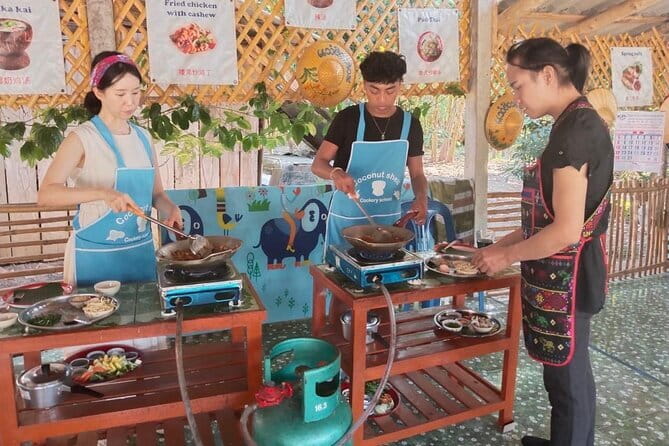
This experience starts in a very Chiang Mai way: you arrive, you look around, and you start eating before the apron goes on. The meeting point is at Coconut Shell Thai Food on Ratchamanka Road, and the tour ends back there.
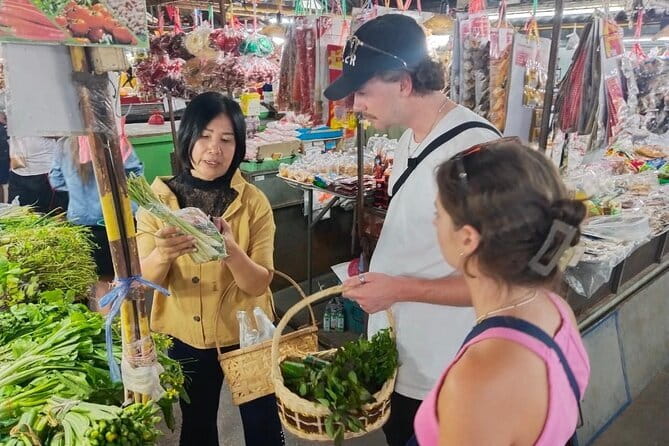
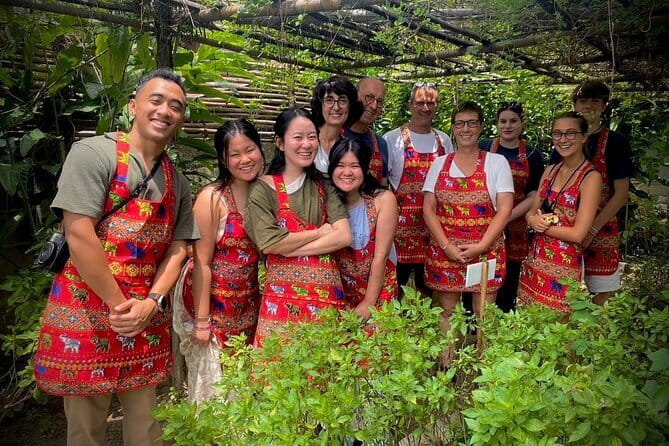
What makes the market portion valuable is that it’s not just browsing. You’re guided through what matters for Thai cooking—herbs, vegetables, and key ingredients you’ll actually use later. And you’ll get to taste street-food style bites as you go, which helps you understand what each dish is aiming for (spice, sour, sweet, savory) before you cook your version.
If you tend to wander markets on your own and end up buying things you never use, this part fixes that. You get context fast: what an ingredient does, when it’s used, and why Thai flavors balance the way they do.
You can also read our reviews of more tours and experiences in Chiang Mai.
Cooking Class Time: five dishes you can repeat at home
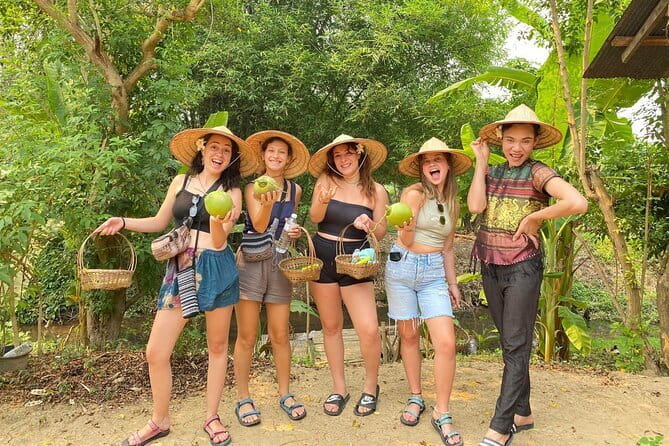
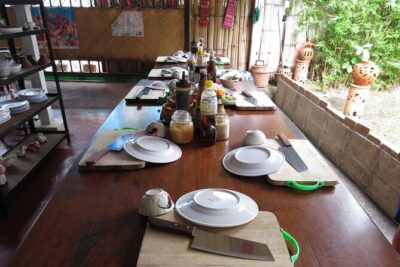
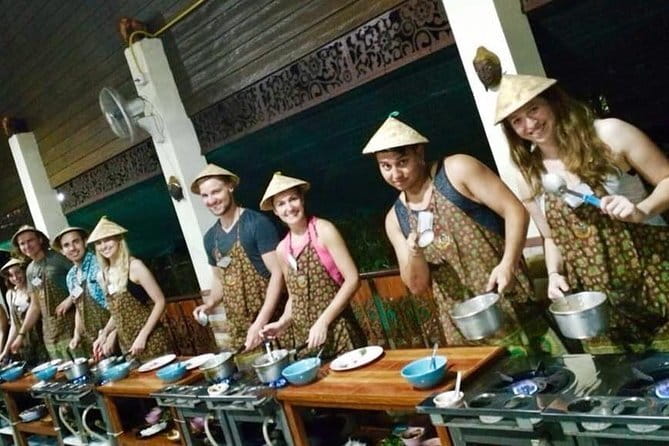
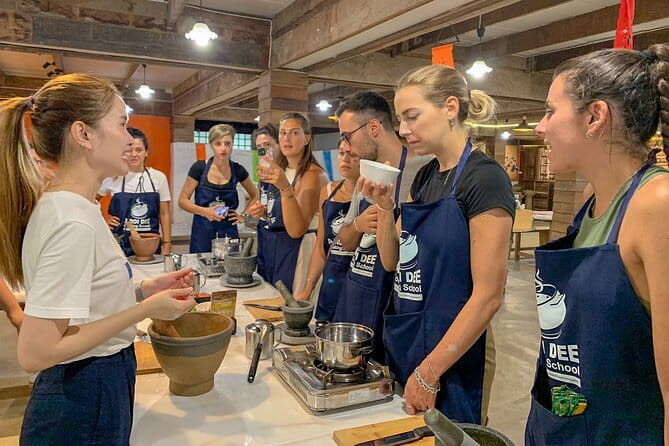
Once the shopping part finishes, the day shifts into real cooking. You’ll cook with guidance from an English-speaking instructor, and the pace is designed for learning while still getting plenty of food on the table.
The core format is simple:
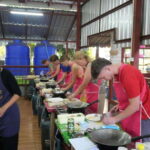
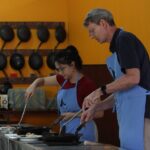
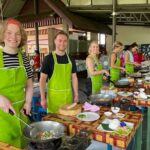
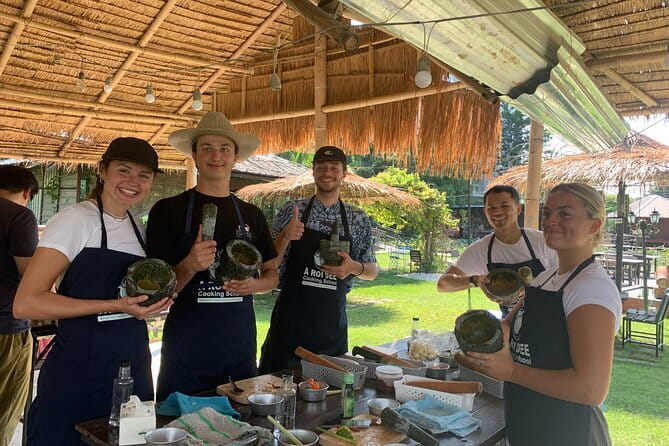
You chop, stir, and season your way through five traditional Thai dishes. Even if you’re a beginner, you’re not stuck doing the least interesting jobs. The lesson is set up so you participate, then you eat what you made—usually the fastest way to remember what you did right (and what you want to redo).
The class size matters here. With a maximum of 10 guests per session, you’re less likely to feel lost at a crowded station. And because it’s hands-on, you can ask questions while the ingredients are still right in front of you.
One more smart detail: they recommend a light breakfast. This tells you the class includes a sizeable meal built from your cooking and tasting, so you don’t want to arrive stuffed.
The menu you’ll learn: salads, stir-fries, soups, curry, noodles, dessert
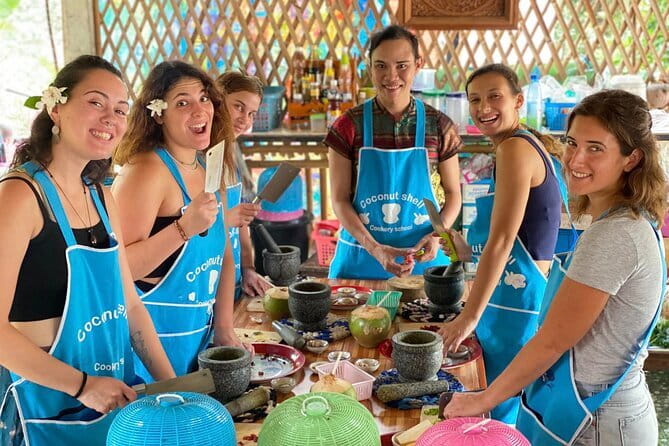
Here’s what the cooking menu includes. It’s built to cover a lot of Thai flavor types in a short half day, so you leave with variety—not just one sauce you can’t use again.
Salads (fresh, sour, spicy)
You’ll make dishes from this group:
- Papaya Salad
- Vermicelli Salad
- Spicy Minced Pork Salad
- Sliced Grilled Chicken Salad
Stir-fried dishes (heat, wok-style flavors)
You’ll also learn stir-fry basics through:
- Fried chicken with cashew
- Sweet and Sour
- Stir-Fried Mixed Vegetables
- Stir-Fried Basil and Fried Morning Glory


Soups (Thai comfort with big flavor)
Soup options include:
- Tom Yum Goong
- Tom Kha Khai
- Hot and Spicy Soup
Curry and curry paste (Thailand’s core flavor system)
You’ll get curry skills from:
- Green curry
- Red curry
- Panang curry
- Khao Soi Noodle
Noodles and fried rice (the comfort section)
Noodle and rice choices include:
- Pad Thai
- Stir Fried Noodle
- Pad Ki Mao
- Fried Rice
Dessert (sweet finish without overthinking it)
Dessert is included via:
- Mango Sticky Rice
- Banana in Coconut Milk
- Fried Banana
This menu structure is a big part of the value. Many cooking classes in Thailand focus on one style—usually curry or one noodle dish. Here, you get the full Thai spectrum: salads, wok-style stir-fry, hot soups, curry pastes, and noodles, plus dessert.
Vegetarians aren’t an afterthought. The class includes five menus with vegetarian option, and the operator says vegetarian and other dietary restrictions can be accommodated. If you have a specific restriction, confirm it when you book.
How the market taste tour supports the cooking lesson
The market isn’t decoration for the photos. It’s the lesson in advance.
As you shop, you’ll find herbs and vegetables that don’t always look familiar, especially if you’re used to Western grocery stores. You’ll also see how Thai cooking uses different ingredient types in different ways—fresh aromatics for aroma, chilies for heat, and sauces for depth. Then, when you start cooking, you already know what the ingredients are supposed to smell like and how they’re commonly used.
This is also where you learn smarter snacking. You’ll taste street-food style bites as you walk, so you can decide what you want to chase later in Chiang Mai’s markets. One practical bonus: after a class like this, it’s easier to shop confidently on your own because you recognize ingredients and flavor goals.
Value math: $33.81 for ingredients, instruction, recipes, and food
At $33.81 per person for a half-day, this is priced like a budget-friendly food education. And the important part is what’s included:
- Free round-trip transfer within a 5 km radius of Coconut Shell Restaurant
- Drinking water and a snack
- Ingredients for the dishes
- The five-dish menu with vegetarian option
- Recipes and pictures sent after the session (email and/or WhatsApp)
- Free Wi-Fi
- English-speaking instructor
You also get food. Not a “tiny tasting” situation. You’ll eat what you cook and what’s part of the market taste portion, plus there’s a note that a large meal is provided for cooking and tasting.
So what’s the trade-off?
If you bring a non-cooking participant, there’s an extra 600 THB per person fee that isn’t included. The tour does say non-cooking participants and children can join the market tour, but they’re not treated as fully included in the cooking portion.
If you’re traveling as a couple or family and everyone wants to cook, the value is very strong. If one person is mostly there for the vibe, that extra cost is worth factoring early.
Timing in Chiang Mai: morning vs afternoon sessions
You can choose a morning or afternoon session. That matters because Chiang Mai’s heat and crowds can shift by time of day.
If you go in the morning, the market energy often feels easier to handle before the afternoon ramps up. If you go later, it can be a good way to break up the day with food and a clear finish time.
Either way, do this with a basic schedule rule: keep the rest of your day open for a little extra eating. You’ll leave fed, and you may want to follow up on ingredients you tasted.
Getting there: meeting point and the free pickup radius
The official start point is Coconut Shell Thai Food (42/4 Ratchamanka Rd, Tambon Phra Sing, Amphoe Mueang Chiang Mai). The tour ends back at the same place.
Pickup is offered as a free round-trip transfer, but only within a 5 km radius of the Coconut Shell Restaurant area. If your hotel is farther out, you’ll likely need to arrange your own way to the meeting point, so double-check distance when you book.
The tour also uses a mobile ticket, and it’s noted that it’s near public transportation—useful if you’re optimizing your day.
Who should book this (and who might skip it)
This is a great fit if:
- You want a hands-on cooking lesson, not a lecture
- You like markets and want guidance on what to buy and taste
- You cook at home and want recipes you can actually follow again
- You’re traveling with kids aged 5+ or a mixed group where not everyone knows Thai food yet
It may be less ideal if:
- Your group needs heavy flexibility for picky timing (it’s about a set 3-hour block)
- You’re extremely sensitive to language barriers and expect perfect, detailed answers at all times
Also, if you’re the kind of person who hates chopping and measuring, this may still work because the lesson is built around active cooking. But be honest with yourself: you’ll be doing the work.
After the class: recipes you can use, not just a souvenir
The best part about getting recipes is that they arrive after the learning by doing session. You’ll receive recipes and pictures via email or WhatsApp once everything’s finished.
That matters because Thai dishes can look easy in photos but need the right flavor balance when you cook later. Having the written recipe plus pictures helps you replay what you did in class—especially for curry and noodles where timing and seasoning are everything.
Quick FAQ
FAQ
How long is the Chiang Mai cooking class and market tour?
It runs for about 3 hours.
Where does the tour start and end?
It starts at Coconut Shell Thai Food and ends back at the meeting point.
Do you get pickup in Chiang Mai?
Yes, free round-trip transfer is offered within a 5 km radius of the Coconut Shell Restaurant area.
What will I cook during the class?
You’ll prepare five traditional Thai dishes, including salads, stir-fried dishes, soups, curry/curry paste items, noodles/fried rice, and dessert.
Is there a vegetarian option?
Yes. The menus include vegetarian options, and the operator says vegetarian and other dietary restrictions can be accommodated.
What if I don’t want to cook?
Non-cooking participants and children can join the market tour, but non-cooking guests pay 600 THB per person (not included).
When do I receive the recipes and pictures?
The recipes and pictures are delivered via email or WhatsApp after the learning by doing session is finished.
What’s the cancellation policy?
You can cancel for a full refund up to 24 hours in advance of the experience’s start time. Free cancellation is available, with local-time cutoffs, and weather or minimum group requirements may trigger date changes or a refund.
Should you book this half-day cooking class?
Yes, if your goal is a practical Thai food lesson you can recreate. The market-first approach makes the cooking make sense, and the five-dish menu covers the major styles: salads, stir-fries, soups, curry/curry paste, noodles, and dessert. Add in vegetarian support, small group size (max 10), and recipes delivered after class, and the value looks solid.
I’d book it especially if you’re short on time but want more than one Thai dish. If you’re traveling with kids, it’s recommended for age 5 and up, and the format is active enough to keep everyone moving. Just plan for a light breakfast, and factor in the extra cost if someone in your group won’t cook.