REVIEW · MARRAKECH
Marrakech Tour: Tajine Cookery Class Experience
Book on Viator →Operated by Intrepid Urban Adventures - Morocco · Bookable on Viator
You can taste Morocco before you even cook. This Marrakech tajine cookery class starts at Djemaa el-Fna, then takes you shopping in the souq with a local guide before you cook (and eat) in a traditional riad courtyard.
What I really liked was how practical it feels: you learn a few Arabic words to help you bargain, then you put those skills to work buying spices, vegetables, and meat. You’ll also enjoy lunch in a peaceful riad setting, sitting with your group after cooking your own tagine and sides.
One thing to consider: it’s a 9:00am start with no hotel pickup. If you’re staying far from the center, you’ll want a solid plan for getting to the meeting point on time, and the experience requires good weather.
In This Review
- Key highlights worth getting excited about
- Morning in Djemaa el-Fna: the start that sets the tone
- Souq shopping with Arabic phrases: buying saffron, mint, and citrus
- Walking back to the riad: where cooking becomes calm
- Cooking the tajine properly: what you learn beyond the recipe
- Mint tea and lunch in the riad courtyard: the payoff you remember
- Price and value: why $57 feels fair here
- Who this Marrakech tajine class is best for
- Should you book this tajine cookery class?
- FAQ
- What time does the Marrakech tajine class start?
- Where do I meet for the tour?
- How long is the cooking class experience?
- How much does the Tajine cookery class cost?
- Is there a maximum group size?
- Does the class include lunch and tea?
- Can the class accommodate dietary restrictions?
- Is hotel pickup included?
- What if the weather is bad or I need to cancel?
Key highlights worth getting excited about

- Market shopping with Arabic phrases so you can actually talk to vendors in the souq
- Classic tajine cooking with a hands-on guide (you’re not watching someone else cook)
- Mint tea you learn to make, not just sip
- Lunch in a riad courtyard where your food lands right where it should
- Small group size (max 12) for more attention and a calmer experience
- Eco-certified carbon neutral tour run by Intrepid Urban Adventures – Morocco
Morning in Djemaa el-Fna: the start that sets the tone
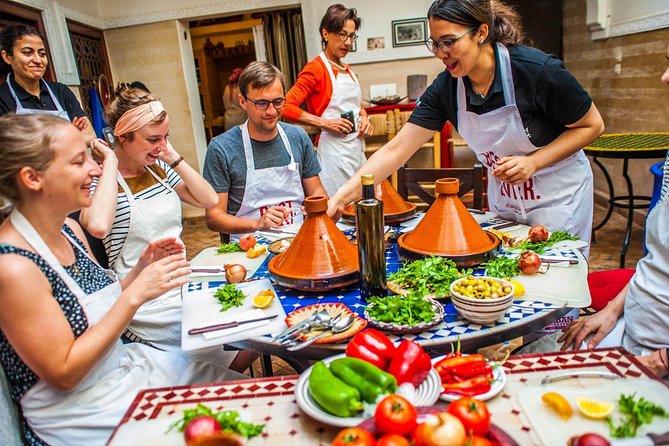
The experience begins at 9:00am in the heart of Marrakech, at the square area of Djemaa el-Fna, with the meeting point listed at Hôtel Restaurant Café de France. The timing matters. Early morning is when the streets feel busy enough to be exciting but calm enough to shop without constant jostling.
I like that you’re not dropped into a kitchen with a menu already decided. Instead, your day starts outside, where you get your bearings and learn how Moroccan cooking begins: with ingredients and the people who sell them. You’ll walk away from the meeting point and head through Marrakech’s winding lanes to reach a riad for the cooking part.
A practical note: there’s no hotel pickup. The good news is the meeting area is near public transport, so you can usually get there without a long taxi debate. Still, show up with buffer time. In the Medina, a few wrong turns can turn a smooth morning into a sprint.
Also, bring weather-friendly basics. The tour requires good weather, and the day includes time outdoors around the souq.
You can also read our reviews of more tours and experiences in Marrakech.



Souq shopping with Arabic phrases: buying saffron, mint, and citrus
The market segment is the part that turns a cooking class into a real Marrakech morning. Your guide helps you shop at the souq with simple Arabic phrases so you can ask about ingredients as you go. That means you’re not just buying things; you’re learning how locals talk about food, flavors, and quantities.
You’re also not shopping randomly. You’ll look for classic Moroccan staples, including:
- Mint and olives from the Meknes area
- Saffron from Taliouine
- Citrus from Fez
If you’ve ever wondered why Moroccan dishes taste like Moroccan dishes, it’s often down to these ingredient choices. Mint tea is one of the clearest examples, and tagine flavor depends heavily on spices, not just salt and heat.
In a good class, the guide keeps it moving, but also explains what you’re seeing. Many hosts build rapport with stallholders. In past sessions, guides like Karima have been the kind of person vendors recognize, and that makes the shopping feel less like a tourist errand and more like you’re being introduced into the food world.
One consideration: Morocco’s market rhythm can vary by day. For example, if your visit lines up with a Friday, you might notice some stalls closing earlier than usual. The class still goes on, but the exact spice stops may look a little different.
Walking back to the riad: where cooking becomes calm
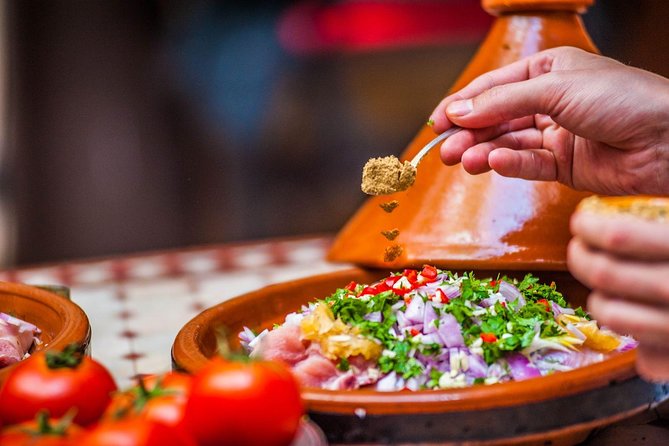
After the souq, you head back to the riad for the hands-on cooking session. This transition is more than a route change. It’s a mood change.
In the riad, you’re in a traditional Moroccan courtyard setup, and that matters for the experience. The courtyard space makes the lunch feel like a reward, not just a break in the middle of an activity. It’s also where you slow down enough to take in what you cooked.
The riad kitchen setup is part of why people love this class. You’re not crowded around a single stove, and you can actually follow along with steps. Your guide directs the process as you prep and cook.
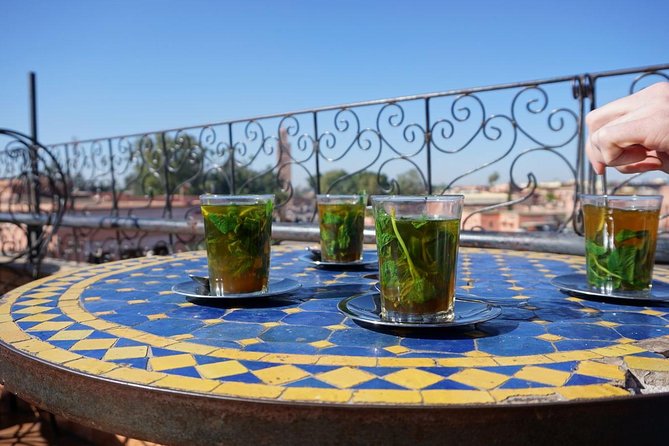
You’ll also get a chance to take in the riad’s rooftop view while food cooks. That small pause is surprisingly helpful. Tagines take time, and instead of feeling stuck, you get a moment to enjoy Marrakech from above with mint tea or quick snack moments while you wait.
This section of the day is where you start thinking like a cook: timing, heat control, and how vegetables and meat behave when they slow-cook in a covered pot.
Cooking the tajine properly: what you learn beyond the recipe
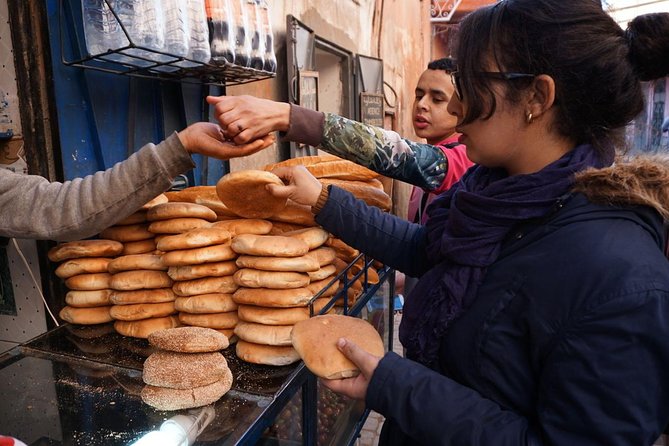
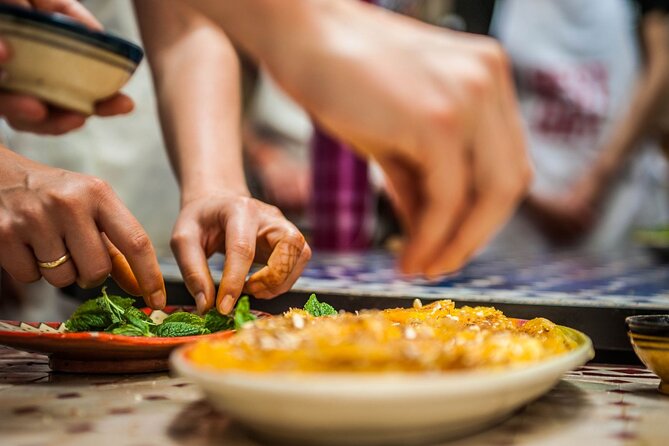
The main event is a traditional tagine—a slow-cooked meat and vegetable dish named after the pot used to cook it. The class style is hands-on, meaning you prep and build the dish with guidance, step by step.
You’ll likely start with the basics that make tagine taste deep and balanced: spice blending, layering ingredients, and managing cooking time so everything ends up tender. Moroccan tagines often include preserved elements and aromatics, and your guide should help you understand which flavors do what.
From the information you’ll receive, you’ll cook a session built around a chicken tajine lunch, plus sides like salads and bread. Some classes also include additional items depending on the group and the day, but chicken tagine and the tea are consistent anchors.
The best part is that your guide teaches methods, not just outcomes. For instance, once you understand how the pot creates steam and how ingredients soften while keeping their character, recreating it at home becomes much less intimidating.
Also, the class is designed for small groups, with a maximum of 12. That size makes a difference. You can ask questions without waiting your turn for a response.
Diet flexibility is supported too. You can request vegetarian, vegan, gluten-free, and other dietary restrictions. If you have to avoid specific ingredients, tell the operator ahead so they can plan your shopping and cooking accordingly.
Mint tea and lunch in the riad courtyard: the payoff you remember
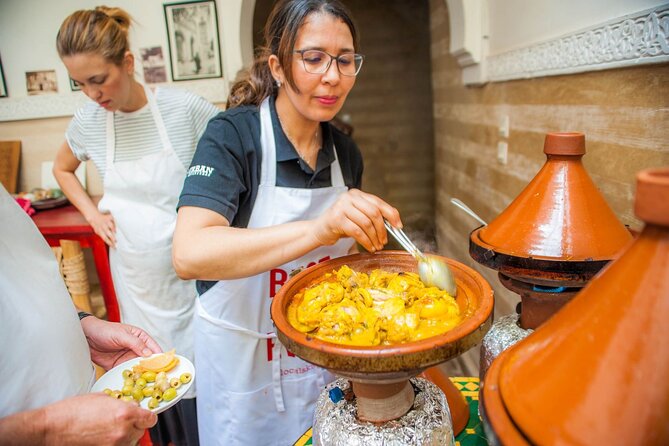
After cooking comes the best part: eating what you made. Lunch is served in the riad courtyard, often in bright, sunny comfort. You’ll sit with your group and enjoy the chicken tajine and other items prepared during the class.
Mint tea is a major highlight in this tour. You learn how to make Traditional Moroccan Mint Tea, which is the kind of skill that feels useful right away at home. Even if you don’t cook tagine again soon, you can still impress people with tea. It’s also a good lesson in Moroccan hospitality—small details, big flavor payoff.
If your class includes salads and bread, you’ll get a fuller picture of how Moroccan meals are built. Tagine is the star, but the sides help balance sweetness, acidity, herbs, and spice.
One more practical detail I like: you leave with a recipe sheet. That doesn’t replace technique, but it helps you remember ingredient lists and key steps once you’re back from Marrakech and your kitchen smells less like spices and more like normal life.
And if you’re the type who cares about food safety or hands-on prep, just know this is not a passive demonstration. You’re working with fresh ingredients as part of the process, so it’s good to be comfortable with that style of cooking.

Price and value: why $57 feels fair here
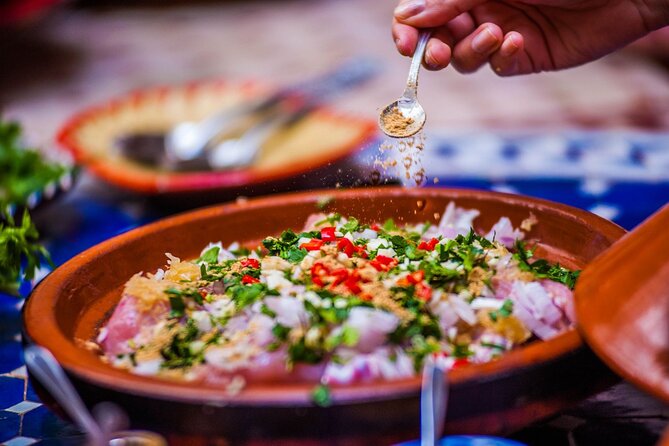
At about $57.14 per person for roughly 4 hours, this class stacks up well if you value more than a meal. Here, you’re paying for a guided market walk, ingredient shopping time, hands-on cooking instruction, lunch, and a recipe sheet.
Many cooking classes hand you the ingredients already prepared. This one starts in the souq, so you see the ingredient logic behind the flavors. That extra time is also why it feels more like culture plus cooking rather than a quick eat-and-learn setup.
You also get added value from the small group size (max 12). In practice, that means more attention during cooking, and less confusion when you’re trying to follow steps in a busy Medina-to-riad day.
If you care about sustainability, you’ll also be joining a carbon neutral tour organized and led by an eco-certified operator. It’s not the kind of thing you taste, but it can matter to you when choosing activities in places where tourism impacts daily life.
And yes, there’s mobile ticketing and group discounts mentioned. Those are small logistics wins that make planning easier.
Who this Marrakech tajine class is best for
This is a great fit if you want a Marrakech activity that’s grounded in real food habits. It suits food lovers, couples, and solo travelers who like structured learning with enough freedom to ask questions.
It’s also a strong choice for families. The tour is child-friendly, and children under 6 can join free of charge.
If you’re traveling with dietary needs—vegetarian, vegan, gluten-free, or other restrictions—you can request accommodations. That’s important because many cooking experiences struggle with anything outside the standard meat-and-spice approach.
On the other hand, if you’re looking for a totally laid-back, no-walking experience, this might feel like more movement than you want. You’ll meet in the central square, walk through the Medina, shop in the souq, then return to the riad. It’s still manageable for most people, but it’s not a chair-and-sample setup.
Should you book this tajine cookery class?
If you want a Marrakech memory you can recreate, I’d book it. The combination of souq shopping, hands-on tajine cooking, and lunch in a riad courtyard is the kind of package that turns a half day into a real skill.
Choose it if:
- You like markets and want to learn how to shop for spices and produce.
- You want cooking instruction you can repeat at home using the recipe sheet.
- You prefer a small group where the guide can help you step by step.
Think twice if:
- You don’t want to start at 9:00am or you’ll struggle to reach the meeting area without hotel pickup.
- You’re traveling in weather that might be unreliable, since good weather is required.
FAQ
What time does the Marrakech tajine class start?
The class starts at 9:00am at the meeting point in the Djemaa el-Fna area.
Where do I meet for the tour?
You meet at Hôtel Restaurant Café de France in the Djemaa el-Fna area (Rue des Banques, Marrakech 40000, Morocco). The activity ends back at the meeting point.
How long is the cooking class experience?
The experience lasts about 4 hours.
How much does the Tajine cookery class cost?
The price is $57.14 per person.
Is there a maximum group size?
Yes. The group is capped at a maximum of 12 travelers.
Does the class include lunch and tea?
Yes. You enjoy a delicious lunch (chicken tajine) and learn to make Traditional Moroccan Mint Tea.
Can the class accommodate dietary restrictions?
Yes. Vegetarians, vegans, gluten-free guests, and other dietary restrictions can be accommodated.
Is hotel pickup included?
No. Hotel pickup and drop-off are not included.
What if the weather is bad or I need to cancel?
The experience requires good weather. If it’s canceled due to poor weather, you’ll be offered a different date or a full refund. For changes, you can cancel up to 24 hours in advance for a full refund.