REVIEW · MARRAKECH
Moroccan Cooking Class with Market Visit and Meal
Book on Viator →Operated by Flavors Of Marrakech · Bookable on Viator
Spices have stories. This Marrakech class pairs a market visit with a hands-on cooking session so you understand the ingredients and the techniques behind the flavor.
What I like most is the small-group kitchen time (max 10) and the hands-on help from the hosts and chef, not a sit-and-watch setup. You’re also served what you make, which keeps things fun and satisfying.
One consideration: if you choose the 5:30 pm dinner slot, you won’t do the market shopping part, since the market visit is only for the 10:30 am session.
Quick hits before you go
- Market visit (morning only) to pick out vegetables and spices with your guide
- Max 10 people in a home-style kitchen with lots of room to cook
- Hands-on tagine and appetizers with step-by-step coaching from the kitchen team
- 3-course meal with tea and coffee included after you finish cooking
- Take-home recipes so you can repeat the dishes later at home
- Warm hosts in the kitchen with a social, friendly vibe throughout
In This Review
- Why Marrakech Cooking Works Best When You Buy the Spices
- Morning at 10:30 vs Evening at 5:30: Choose the Slot for Your Real Priorities
- The Home Kitchen Setup: Comfortable, Clean, and Built for You to Participate
- What You Cook: From Moroccan Salad to Tagine and Dessert
- Tagine Lessons You Can Actually Recreate at Home
- The Meal: Tea, Coffee, and Eating What You Made
- The Value Math: Why $52.34 Can Make Sense in Marrakech
- Who This Experience Suits Best (and Who Might Prefer Something Else)
- Small Group Energy: Why the “Max 10” Detail Really Matters
- Tips to Get the Most Out of Your 4 Hours
- Should You Book This Moroccan Cooking Class?
- FAQ
- What is the duration of the Moroccan cooking class?
- How big is the group?
- Do I visit a market in Marrakech?
- What time options are available?
- What kinds of dishes do we cook?
- Do we eat during the class?
- Are recipes included?
- Is there a vegetarian option?
- Where do we meet?
- What if I need to cancel?
Why Marrakech Cooking Works Best When You Buy the Spices
Food in Morocco isn’t just about taste. It’s about balance: sweet with savory, warm spices with cooling herbs, and slow-cooked depth that comes from technique, not magic. That’s why this experience starts where flavor begins: the ingredients.
In the morning session, you head to a local market with your guide to choose fresh produce and aromatic spices. The point isn’t to turn you into a spice expert in one hour. It’s to show you what cooks look for on a real shopping trip, so you can recreate it later without guessing.
Even if you’re not a foodie, the market part is the easiest way to get oriented fast. You’ll recognize ingredients you’ve seen on menus and in recipes, and suddenly they stop feeling abstract. When you get back to the kitchen, your choices make sense.
Morning at 10:30 vs Evening at 5:30: Choose the Slot for Your Real Priorities

This class runs about 4 hours, with two time options: 10:30 am (for lunch) or 5:30 pm (for dinner). The kitchen session is the same idea both ways—hands-on cooking with guidance and a meal at the end—but one key difference matters.
If you want the full Morocco experience, book the 10:30 am option. That’s when you can join the market visit and pick ingredients together before cooking. Many people end up loving this part because it turns shopping into a guided lesson instead of a free-for-all.
If you’re short on time, the 5:30 pm dinner slot is still a strong choice. You’ll still cook multiple Moroccan dishes and eat a 3-course meal with tea and coffee. Just know you’ll be starting straight in the kitchen without the market shopping component.
You can also read our reviews of more tours and experiences in Marrakech.


The Home Kitchen Setup: Comfortable, Clean, and Built for You to Participate

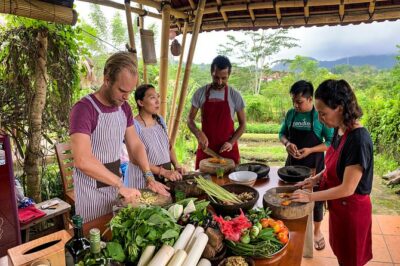
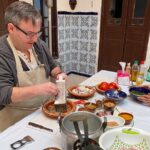
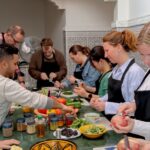
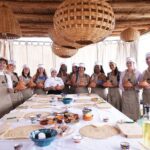
The kitchen here is set up for real cooking. You’re not squeezed into a tiny corner or hovering around hot pans while someone explains from across the room. Expect a spacious, cozy setup that makes it easy to chop, stir, and taste as you go.
One of the most repeated “this is great” details from the experience is how much help you get during prep. The kitchen team works with you step-by-step, and you’re encouraged to participate rather than watch others handle everything. That matters because Moroccan cooking is very technique-based—spice timing, layering, and getting the texture right.
You’ll also get breaks baked into the flow. After the cooking and tasting, there’s a comfortable salon/dining setup where you can settle in before the meal. It keeps the day from feeling like nonstop work.
What You Cook: From Moroccan Salad to Tagine and Dessert
This class isn’t about one dish. It’s about learning how Moroccan cooking patterns repeat across dishes—chopping methods, spice blends, and how to build flavor step by step.
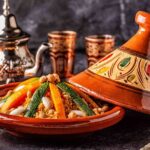
You’ll make multiple dishes that add up to a full 3-course meal. Appetizers are part of the lineup, and then comes the star: tagine, the iconic slow-cooked Moroccan dish. The experience also includes dessert, with many people highlighting that you make it from scratch, not from a box.
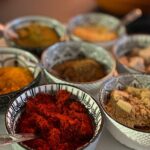
You’ll work with fragrant spices such as Ras El Hanout and paprika, and you’ll use other seasonings commonly found in Moroccan kitchens (including cumin, listed as Cuim in the class description). The class approach is practical: you learn what each spice is doing, then apply it while cooking.
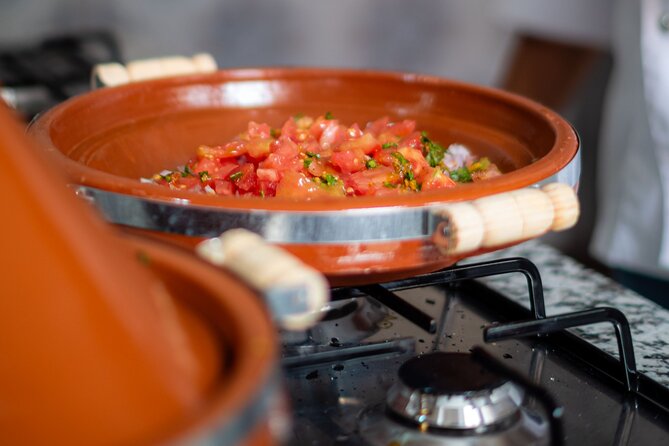
A common combination taught in these sessions includes a Moroccan salad alongside a tagine—often a chicken and vegetable version—then finishing with a Moroccan dessert. Exact menus can vary by class, but the structure stays the same: salad-style freshness, tagine comfort, and a sweet ending.
Tagine Lessons You Can Actually Recreate at Home

Tagine isn’t hard because it’s fancy. It’s hard because timing and layering matter. The good news: this class teaches you the method so you can stop relying on “instructions from a screen.”
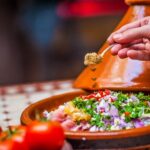
In the cooking session, you’ll learn how to prepare and build the tagine. You’ll chop and season, then follow the guided steps to get the flavor balanced and the texture right. The instructors don’t just name techniques; they walk you through what to do while you’re doing it.
This is also where the market visit payoff shows up. When you picked ingredients earlier (morning slot), your tagine starts to feel like a story you can retell at home: here’s why these herbs and spices belong together, and here’s how the dish develops as it cooks.
If you’ve ever made tagine at home and wondered why it didn’t taste like the restaurant version, this is the part that helps. You’re learning the rhythm, not just a recipe list.
The Meal: Tea, Coffee, and Eating What You Made

The best part of cooking classes is when the payoff arrives. Here, you don’t just taste bits during prep. You finish cooking and then you eat your creations as a full 3-course meal, with tea and coffee included.
That meal structure keeps everything grounded. Appetizers help you learn seasoning and texture. Salad-style dishes give you contrast. Then tagine delivers that warm, slow-cooked comfort, followed by dessert.
You’ll also get to taste everything you make in a relaxed setting. That matters because Moroccan cuisine isn’t only about “right answers.” It’s about flavor balance, and tasting is the fastest way to understand what you’re aiming for while cooking.
The Value Math: Why $52.34 Can Make Sense in Marrakech
Price isn’t only a number. It’s what you get for your time, your ingredients, and your guidance.
At about $52.34 per person for roughly 4 hours, you’re paying for:
- a guided market visit (morning session only)
- a chef-led, hands-on cooking class with plenty of help
- cooking time in a well-equipped, spacious kitchen
- a 3-course meal plus tea and coffee
- recipes to take home
For Marrakech, that’s a lot of “included value” compared with options that are just a single-dish workshop. And because the group is kept small (max 10), you spend more of your time actually doing the cooking.
If your budget is tight, you can treat this as one “big cultural meal” you pay for upfront. Instead of hunting down multiple food experiences across town, you’re learning, cooking, and eating in one organized block.
Who This Experience Suits Best (and Who Might Prefer Something Else)
This class is a great fit if you:
- want real Moroccan cooking skills you can use again
- enjoy interactive lessons where you’re not stuck watching
- like cultural context tied directly to food
- travel with friends or family and want an easy shared activity
- prefer small groups and more personal guidance (max 10)
You might want to think twice if you’re looking for a very short activity. It’s about 4 hours, and the meal is part of the experience, so it’s not a quick stop. Also, if your schedule is tightly packed and you really want the market, your best bet is the 10:30 am slot.
Small Group Energy: Why the “Max 10” Detail Really Matters
A maximum of 10 travelers is a big deal in cooking. It keeps the kitchen team from juggling too many people at once. You’re more likely to get direct help with chopping, seasoning, and timing.
A lot of the best moments here come from the social side: people talking while chopping, comparing ingredient choices, and sharing the same kitchen setup. The vibe is warm and friendly, with hosts and kitchen staff leading the way.
In practice, that means you can ask questions and get answers that apply to your exact dish. Cooking improves when you’re not guessing alone.
Tips to Get the Most Out of Your 4 Hours
Here are a few practical moves that make this kind of class go smoother:
- Book the morning slot if you care about market ingredients. That’s the only time the market visit happens.
- Arrive a few minutes early at the meeting point on Rue Fatima Zahra, near public transportation.
- Plan on eating what you cook. Even if you’re not super hungry at the start, you’ll finish satisfied.
- Go in ready to taste and adjust. Moroccan dishes can have strong spice notes; tasting helps you learn balance quickly.
- Ask about your spice combos. If you want to recreate results later, learning how the spice blend works is key.
If you keep expectations realistic—this is a hands-on lesson with a meal at the end—you’ll have a great time.
Should You Book This Moroccan Cooking Class?
I think you should book this if you want a Morocco food experience that’s practical, social, and repeatable at home. The combination of a small group, hands-on teaching, a tagine focus, and a real 3-course meal with tea and coffee makes it strong value for time in Marrakech. Add in market shopping for the morning session, and you get a full ingredient-to-plate story.
If you only care about watching or you’re trying to do the cheapest possible activity, this might feel like more structure than you want. But for most people who like good food and want skills they can use later, it’s an excellent bet.
If you can, choose the 10:30 am slot for the market experience. If your schedule doesn’t allow it, the 5:30 pm dinner version still delivers the cooking, the meal, and the recipes.
FAQ
What is the duration of the Moroccan cooking class?
It runs about 4 hours.
How big is the group?
The class has a maximum of 10 travelers.
Do I visit a market in Marrakech?
Yes, but only for the 10:30 am morning session.
What time options are available?
There are two sessions: 10:30 am (for lunch) and 5:30 pm (for dinner).
What kinds of dishes do we cook?
You’ll make multiple Moroccan dishes, including appetizers, and the popular dish tagine, plus dessert.
Do we eat during the class?
Yes. You dine on the dishes you prepare as a 3-course meal, with tea and coffee provided.
Are recipes included?
Yes. You take home recipes after the class.
Is there a vegetarian option?
A vegetarian option is mentioned in the available feedback.
Where do we meet?
The meeting point is Flavors of Marrakech on Rue Fatima Zahra, Marrakech 40000, Morocco.
What if I need to cancel?
Free cancellation is available up to 24 hours in advance for a full refund. If the minimum number of travelers isn’t met, you’ll be offered a different date or a full refund.