REVIEW · ROME
Rome: Pasta Cooking Class, Dinner & Wine in Authentic Restaurant
Book on Viator →Operated by GOURMETALY FOOD TOURS OF ROME · Bookable on Viator
Cooking pasta in Rome feels like time travel. This hands-on class in the Jewish Ghetto gives you personal attention in a group of just 10, plus you’ll learn two classic Roman sauces and eat what you make with wine and water flowing. One thing to weigh first: the meal is not kosher, and there are common allergens (including gluten), so it’s not a fit for everyone.
You’ll meet at Via del Portico d’Ottavia, right by the old Jewish district, and your host helps translate the chef’s instructions while sharing food history and legends tied to the neighborhood. The setting is part of what makes this memorable: you cook in an ancient eatery inside a 12th-century building that’s been featured in Searching for Italy.
In This Review
- Key takeaways before you go
- Piazza Mattei and the Jewish Ghetto start point
- A 12th-century kitchen where you cook, not just watch
- Meet your chef and translator: how the instruction actually works
- The pasta lesson: making homemade dough and shaping it
- Fried Roman starters: zucchini flowers in summer, artichokes in winter
- Two sauces you’ll actually remember: cacio e pepe and amatriciana
- Your dinner table: tasting what you cooked plus ricotta cheesecake
- Wine and water included: when that helps, when it matters
- Kids, vegans, and vegetarians: what’s covered and what to double-check
- Price and value: what $104.25 buys you in real terms
- Where this fits best: who should book it
- Should you book this Roman pasta class in the Jewish Ghetto?
- FAQ
- How long is the Rome pasta cooking class?
- What’s the group size?
- What language is the class offered in?
- Where do I meet, and does it end nearby?
- What do I learn to cook?
- What food is included in the dinner?
- Is wine included?
- Can kids join?
- Can vegetarians and vegans participate?
- Is the food kosher, and are there allergen warnings?
Key takeaways before you go
- Small group (10 people): more time for questions while you’re rolling and cooking
- Hands-on pasta from scratch: you learn the steps, not just watch them
- Roman classics plus seasonal fried bites: cacio e pepe, amatriciana, and either zucchini flowers or artichokes
- Wine and water included: the dinner portion feels like a full evening meal
- Food guide talk with Jewish Ghetto context: history and food traditions at the same table
- Not kosher, with allergen notes: plan ahead if you’re sensitive to dairy, gluten, eggs, or more
Piazza Mattei and the Jewish Ghetto start point
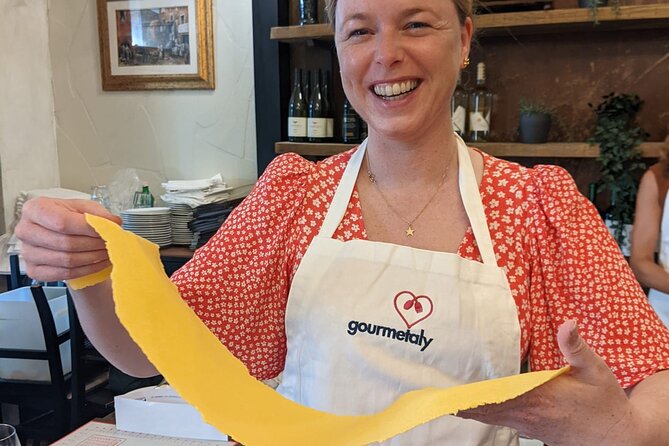
I like when a food experience begins in the right neighborhood, not in a blank meeting room. Here, your meeting point is Via del Portico d’Ottavia, 8, which puts you in the heart of Rome’s Jewish Ghetto area. You’ll connect with your host on-site, and the whole evening builds from there.
This isn’t only about cooking. Your host guides you through background on the district and its food traditions, with history and legends that make the menu click. If you’ve ever wondered why certain Roman-Jewish flavors show up in specific ways, this is the kind of dinner that answers that question while you’re still hungry.
One practical note: the tour starts and ends at the same meeting point, so you don’t have to think about transport after you eat. It’s also designed to run in all weather, so bring layers and shoes you can stand in.
You can also read our reviews of more tours and experiences in Rome.

A 12th-century kitchen where you cook, not just watch
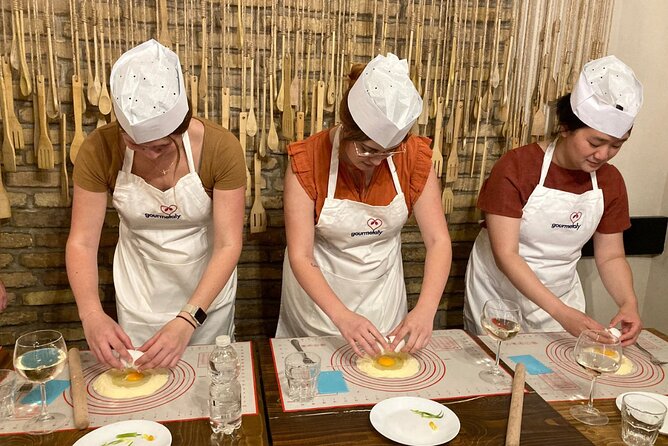
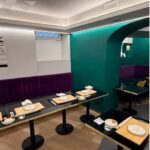
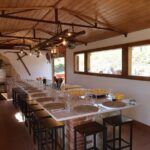
The kitchen setting matters more than you’d think. This class takes place in an ancient eatery inside a 12th-century building, the kind of place you remember because it feels real, not staged. It’s also been featured on TV in Searching for Italy, which is a fun bonus if you’ve seen the show.
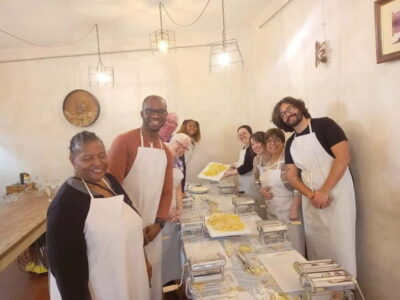
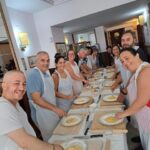
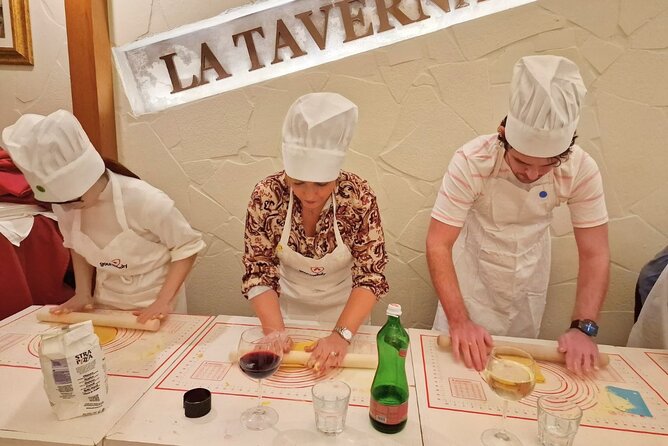
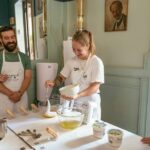
Inside, you’ll get into the workflow quickly. You’re not stuck listening for two hours. You’ll learn how to make Roman-style pasta from scratch, then roll up your sleeves for prep and cooking—under the chef’s supervision. The “small group” piece here is key: in a class of 10, the chef can correct your technique while you’re doing it.
You’ll also get all the equipment and ingredients included. That’s one of the hidden value spots with cooking classes: when everything is supplied, you spend your energy learning instead of hunting for utensils, specialty ingredients, or a place to buy them.
Meet your chef and translator: how the instruction actually works
This is described as a class led by a professional chef whose cooking story traces back to his Grandma. In practice, that translates to a warm, technique-first approach. The chef is teaching you Roman methods, then letting you try them while he’s watching.
Since the class is offered in English, you’ll also have a host who helps translate. Guides I’ve seen associated with this experience—like Benedetta, Lisa, and Anastasia—are praised for moving smoothly between the chef and the group. That translation layer matters because pasta mistakes can be subtle. Timing, salt level, and how you handle dough can change the whole outcome.
Expect the host to add tips and context too. They’ll help you understand not only what you’re making, but why those Roman recipes are built the way they are—especially the sauces, which depend on a few key choices.
The pasta lesson: making homemade dough and shaping it
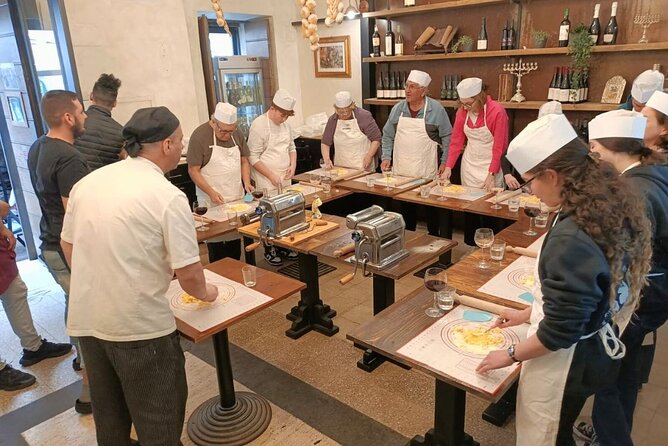
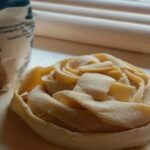
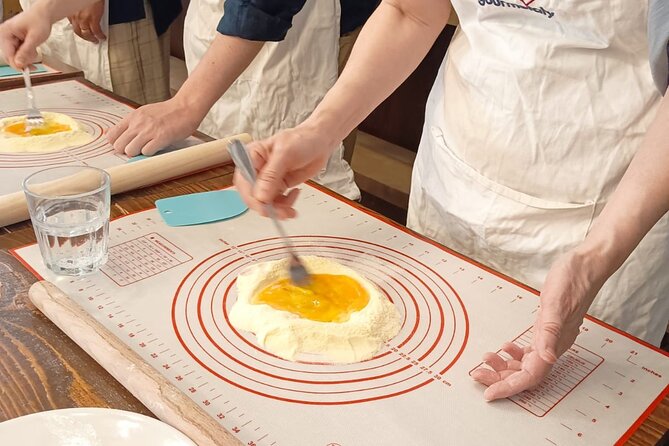
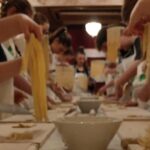
The core of the experience is homemade pasta from scratch. You’ll learn the steps to create your own pasta, which is the best kind of souvenir—because you can repeat it later. And you’re doing it in a real kitchen setting, not a demo theater.
You’ll also get practice around the moments that usually trip up home cooks: getting the dough to the right feel, handling it without overworking, and cooking it so it’s ready for the sauce. Once you’ve done the prep, you’ll sit at your table and taste what you helped make, including the dessert.
The class timing is about 2 hours 30 minutes, which is enough to learn a solid base without dragging into a late-night slog. If you like cooking classes that still feel like a dinner, this one fits that sweet spot.
Fried Roman starters: zucchini flowers in summer, artichokes in winter
One of the smartest touches here is the seasonal fried specialty. Depending on the time of year, you’ll munch on either stuffed zucchini flowers (summer) or fried artichoke (winter). The dishes included are called Fritto Romano, with summer described as a stuffed zucchini flower with mozzarella and anchovie, and winter as fried artichoke.
This matters for value because it’s more than a token starter. You’re getting a real Roman-style street-food feeling—crispy, savory, and designed to be eaten right there at the table. It also helps you understand Roman cooking rhythms: vegetables are treated as stars, not side characters.
If you’re vegetarian, the experience notes that workshops can accommodate vegetarians and vegans. Still, check the allergen list and ingredient specifics when booking, because the sample menu includes items like mozzarella and anchovies in the summer option. Allergens such as milk and gluten are also stated as possible in tastings.

Two sauces you’ll actually remember: cacio e pepe and amatriciana
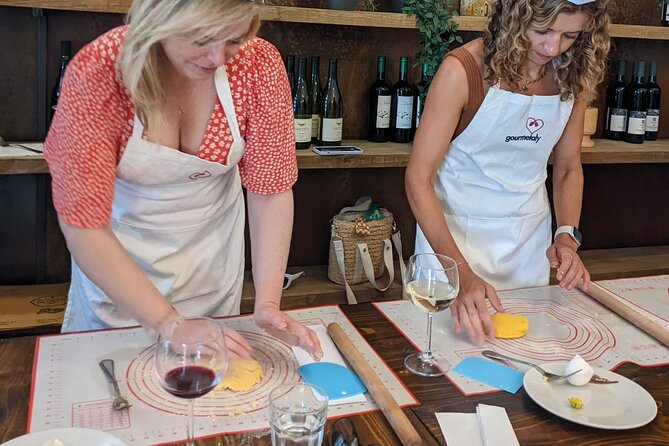
The signature sauces are cacio e pepe and amatriciana, and they’re the heart of traditional Roman pasta. These aren’t “generic cheese pepper pasta” ideas. They’re technique-driven recipes built around Roman ingredients and methods.
You’ll learn to prepare two sauces from fresh ingredients. For cacio e pepe, the cheese is pecorino romano with black pepper. For amatriciana, the sauce includes pecorino romano, guanciale, and tomato sauce. The chef’s guidance is what helps you get the sauce to behave, so the pasta doesn’t just sit in it.
A third pasta dish shows up in the dinner sequence as well: Tonnarelli all’arrabbiata, described as a pasta with tomato, chili, and parsley. For no-pork eaters, the vegetarian sauce option is specifically mentioned in the sample menu.
This combo is a strong way to learn Roman cooking. You taste and compare: one sauce is creamy and sharp, one is rich and tomato-forward, and one brings chili heat. Even if you never make pasta again, you’ll leave with a clearer sense of what Roman flavors are trying to do.
Your dinner table: tasting what you cooked plus ricotta cheesecake
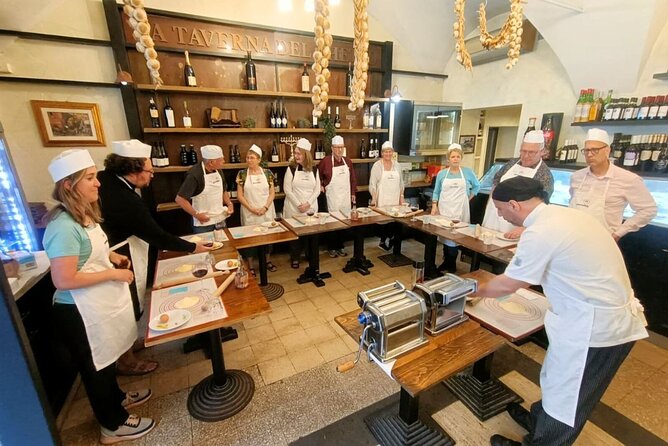
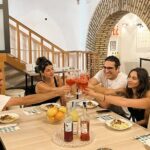
After the kitchen work, you get to eat. Your meal includes the pasta you helped make, plus the seasonal fried starter and dessert. Wine and water are served throughout the class, so the dinner portion feels like a full evening meal, not just a snack after class.
Dessert is the chef’s ricotta cheesecake with visciole, described as ricotta cheese cake with black sour cherry jam. You’ll taste it as part of the experience, and it’s a classic Roman-Jewish-style sweet noted as the most famous Jewish ghetto cake prepared with ricotta and that sour cherry jam.
This is also where the experience becomes social in the best way. You sit together in the same space you cooked in, share bites, and compare notes on what worked. In some classes, the vibe even includes singing—because the atmosphere is part of the hospitality here.
Wine and water included: when that helps, when it matters
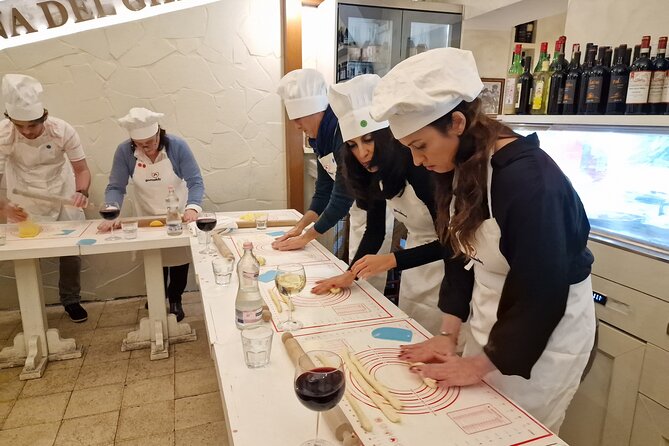
You’ll receive Italian wine and water all along the cooking class. For many people, that’s what turns a class into an evening you’ll remember: you’re learning, cooking, tasting, and sipping in the same flow.
If you’re traveling as a family, the class does say kids are welcome. Just remember the experience includes wine as part of the program, and specific drinking alternatives for children aren’t spelled out. If that matters to your planning, ask before booking.
Also keep in mind you’ll be standing and cooking while you taste. Pace yourself. It’s easy to get swept up when the whole room smells like Roman comfort food.
Kids, vegans, and vegetarians: what’s covered and what to double-check
This experience is suitable for everyone, and it explicitly welcomes kids. It also says workshops can accommodate vegans and vegetarians. That’s a big plus, because many pasta classes get limited once ingredients become specific.
At the same time, you should treat accommodations as “request and verify.” The notes say you’re responsible for your health conditions and they can’t guarantee special food requirements. Allergens that may be present in tastings include milk, eggs, soya, mustard, nuts, and gluten.
So what’s the practical strategy? If you’re vegan or vegetarian, confirm what gets swapped and what sauces stay pork-free. If you’re gluten-sensitive, note that it’s not recommended for allergic to gluten. If you have dairy or egg issues, take extra care because milk and eggs are listed as possible allergens.
Price and value: what $104.25 buys you in real terms
At $104.25 per person, this isn’t a budget class. But it also doesn’t feel like a barebones cooking demo.
Here’s what’s included that pushes the value in your favor:
- Homemade pasta work plus Roman sauces and dinner components
- A seasonal fried starter (zucchini flowers or artichoke)
- Dessert: ricotta cheesecake with visciole
- Free-flowing Italian wine and water
- All equipment, ingredients, and a 100% cotton apron
- A free cookbook and restaurant guides
For comparison, many Rome food experiences charge extra for the meal itself, and they often leave you buying your own drinks. Here, the structure is dinner-first, learning-focused. Also, being limited to 10 people helps keep the class personalized, which is one reason this type of evening can feel worth the price even if you’ve taken other cooking classes.
Where this fits best: who should book it
I think this class is a great match for people who:
- Want a hands-on Roman dinner, not a food lecture
- Like small-group settings where the chef can correct you
- Are excited by cacio e pepe and amatriciana as more than just names
- Want some history without making it a full museum day
It’s especially good if your travel schedule is tight. The class is about 2.5 hours, and you’re eating as part of the experience. You also get a useful “bring home” element: the skills and the cookbook.
If you hate waiting around, this likely works well. The group size and the kitchen workflow keep you busy.
If you need strict dietary control, you’ll want to read the allergen details carefully and ask targeted questions before booking. The program notes also say the restaurant and food provided is not kosher.
Should you book this Roman pasta class in the Jewish Ghetto?
If you want a small, flavorful evening with real technique and a full meal, I’d say yes. The combination of hands-on pasta, Roman sauce fundamentals, seasonal fried starters, and dessert makes this feel like a complete experience rather than a short appetizer lesson. And the setting in a 12th-century space adds atmosphere without needing extra effort from you.
Before booking, do two quick checks:
- Confirm whether your dietary needs fit the allergen and accommodation notes. Gluten allergies are called out as a problem spot.
- Remember it’s not kosher.
If those points work for you, this is the kind of Rome meal that sticks. You’ll leave with food on your plate, recipes you can try again, and a better sense of why Roman-Jewish flavors belong on the same table as classic Roman pasta.
FAQ
How long is the Rome pasta cooking class?
It runs for about 2 hours 30 minutes.
What’s the group size?
It has a maximum of 10 travelers.
What language is the class offered in?
The class is offered in English.
Where do I meet, and does it end nearby?
You meet at Via del Portico d’Ottavia, 8, 00186 Roma RM, Italy, and the activity ends back at the meeting point.
What do I learn to cook?
You make homemade Roman-style pasta and prepare two sauces from fresh ingredients, with the menu including cacio e pepe and amatriciana. You’ll also sit down to eat tonnarelli all’arrabbiata as part of the meal.
What food is included in the dinner?
You’ll get a seasonal fried starter (zucchini flower in summer or fried artichoke in winter), the Roman pasta dishes, and dessert: ricotta cheesecake with visciole.
Is wine included?
Yes. Italian wine and water are served all along the class, and the wine is described as free-flowing.
Can kids join?
Yes, kids are welcome.
Can vegetarians and vegans participate?
The workshop can accommodate vegans and vegetarians, but special food requirements can’t be guaranteed.
Is the food kosher, and are there allergen warnings?
No, it is not a kosher cooking class, and the restaurant and food provided are not kosher. Allergen notes mention milk, eggs, soya, mustard, nuts, and gluten may be present. It is not recommended for allergic to gluten.