REVIEW · SIEM REAP
City Tour & Cooking Class
Book on Viator →Operated by Easy Angkor Trip · Bookable on Viator
A market tour and cooking, with real history. This Siem Reap city loop pairs Wat Thmey’s Khmer Rouge past with Psar Chaa and a hands-on Khmer meal, led by guides like Kosorl or Mr. K. I love the small-group feel during the cooking class and the market-to-menu ingredient hunt that keeps everything practical, not staged. One drawback: two major stops (the National Museum and Wat Thmey) have extra entrance fees that add up fast.
Pickup and drop-off make the day feel low-effort, and an English-speaking guide helps you connect the dots between religion, politics, and food. You also get cold drinking water, and the whole experience is built around a smooth 3 to 5 hours, depending on the pace of the group.
In This Review
- Key highlights worth your attention
- A half-day plan that mixes Siem Reap’s past, people, and plates
- Wat Thmey (Killing Fields): important context, no sugarcoating
- Psar Chaa Old Market: a smart bridge from sightseeing to real life
- Angkor National Museum: the background lesson that makes Angkor click
- Wat Preah Prom Rath: a calm temple stop with Buddha stories
- The Khmer cooking class in Siem Reap: from market ingredients to fish amok
- The market ingredient hunt (and why it matters)
- What you’ll cook and eat
- If the class is hosted in a family setting
- Price and logistics: what the $40 gets you, and what costs extra
- Guide quality: why people talk about Kosorl and Mr. K
- Who this tour fits best (and who should think twice)
- Should you book this city tour and cooking class?
- FAQ
- FAQ
- How much does the tour cost?
- How long is the experience?
- Do I get pickup and drop-off?
- Is there an English-speaking guide?
- What is included with the price?
- What entrance fees are not included?
- Is a market visit part of the cooking class?
- Is the cooking class small group?
- Is this tour private or shared?
- Can I cancel for a full refund?
Key highlights worth your attention
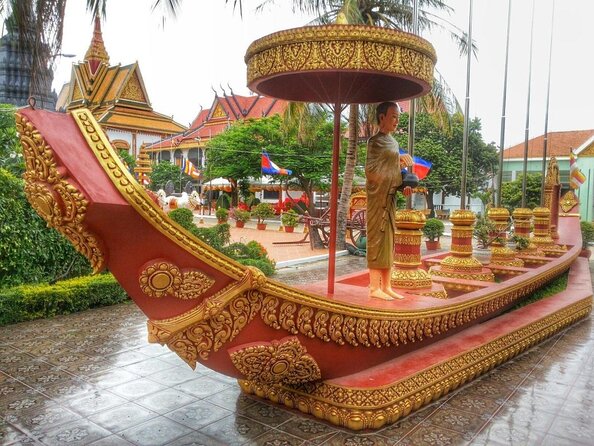
- Wat Thmey (Killing Fields): a serious stop with clear historical context, not just a quick photo stop
- Psar Chaa (Old Market): a real local market stop with fruit, vegetables, flowers, and Khmer sweets
- Angkor National Museum: practical background on periods before, during, and after the Khmer Empire
- Wat Preah Prom Rath: a city temple visit with Buddha wall stories explained by your guide
- Cooking class + meal: hands-on Khmer cooking (including dishes like fish amok), guided step by step
- Pickup and drop-off: you spend less time figuring out transport and more time doing the experience
A half-day plan that mixes Siem Reap’s past, people, and plates
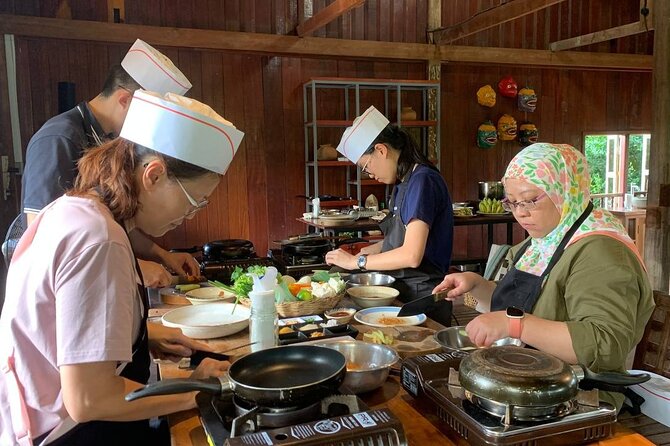
This is the kind of Siem Reap tour that makes you feel like you got more than the headline. You start with history that Cambodia can’t afford to forget, then you move into everyday life at Psar Chaa Old Market, and finally you end with the best kind of cultural souvenir: a meal you helped cook.
What I like for you is the balance. You get context at temples and museum-level history, but you also get hands-on food training that turns curiosity into something you can actually taste. For a practical half-day, it’s a strong value because the cooking class includes your meal and the guide handles the flow.
You can also read our reviews of more tours and experiences in Siem Reap.
Wat Thmey (Killing Fields): important context, no sugarcoating
Wat Thmey, known as one of Siem Reap’s Killing Fields, is tied to the Khmer Rouge / Pol Pot regime from 1975 to 1979. It’s a difficult visit, and the point isn’t comfort—it’s understanding what happened and why it still matters.
Timing-wise, you’ll typically spend about an hour here. Admission is not included, so you’ll pay an extra $4 per person for the Killing Fields ticket. If you’re the type who wants a calm pace and time to process, aim to arrive ready to slow down—this stop isn’t meant to be rushed.
A practical tip: dress respectfully (shoulders and knees covered is a safe choice) and keep your expectations realistic. You can still have a good day, but this is the kind of place that changes your mood.
Psar Chaa Old Market: a smart bridge from sightseeing to real life
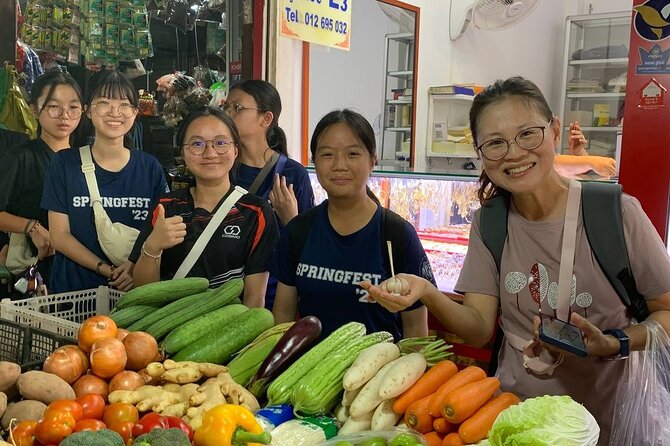
Psar Chaa, the Old Market, is the largest local market area and it feels like daily Cambodia. In an hour, you can get a quick but solid sense of what locals buy and what they snack on—fruit, vegetables, flowers, and Khmer sweet treats.
This stop is easy to enjoy because it’s not just a shopping detour. It’s a warm-up for the cooking class later, even if the cooking-ingredients market happens again. Seeing the ingredients in their everyday form helps when you get to the kitchen portion of the day.
Entry is free here, and it’s a good place to ask your guide questions. If you pay attention, you’ll start learning what flavors matter in Khmer cooking—aromatics, herbs, and spices that show up in many dishes.
Angkor National Museum: the background lesson that makes Angkor click
Right along the route toward Angkor Wat, the Angkor National Museum helps you understand what came before and after the Khmer Empire. The museum covers periods before the Khmer Empire, during it, and after, so it’s useful when you’re trying to connect the bigger story rather than only seeing stone temples.
You’ll likely spend about an hour here. Admission is not included, and the museum ticket is $12 per person, so this is one of the two costs you’ll want to plan for ahead of time. If you’re only doing a few paid add-ons in Siem Reap, this museum is one of the better ones because it helps your later visits feel less random.
The drawback is simple: museums can feel heavy if your day starts with hard history. If you’re sensitive to intense topics, ask your guide to keep the museum explanations focused and skip the parts that aren’t speaking to you.
Wat Preah Prom Rath: a calm temple stop with Buddha stories
Wat Preah Prom Rath is centrally located, just north of the Old Market and Pub Street. This is a lighter, more local-feeling temple stop compared with Wat Thmey, and it’s easier to handle emotionally.
In about an hour, you’ll see Buddha-related artwork in the Buddha Hall, and your guide can explain the story painted on the walls. The value here is the storytelling. Temples can blur together if you don’t know what you’re looking at, and a guide’s context turns those walls into something you can actually read.
Since the temple admission is listed as free, it’s also a low-cost way to add depth to your day.
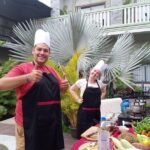
The Khmer cooking class in Siem Reap: from market ingredients to fish amok
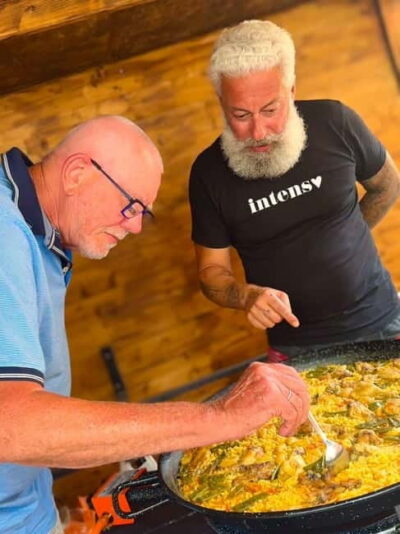
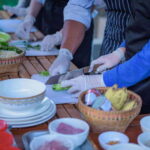
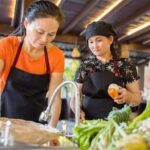
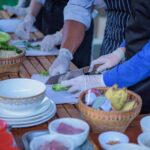
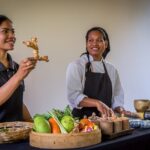
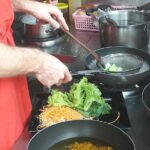
The cooking part is the reason most people book this tour, and it delivers in a very direct way. You’ll learn Khmer cooking with a chef in Siem Reap, and the experience is hands-on rather than watching from the sidelines.
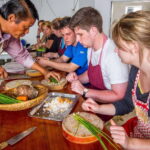
A big theme of Khmer cooking classes is learning in a small-group setting. These classes are often kept intimate (often around six people), which matters because you get real feedback instead of being a passenger. Based on the experience style you’ll encounter here, the chef guides you step by step so you understand what to do, not just what to copy.
The market ingredient hunt (and why it matters)
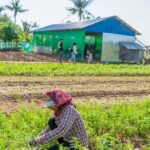
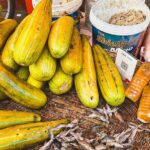
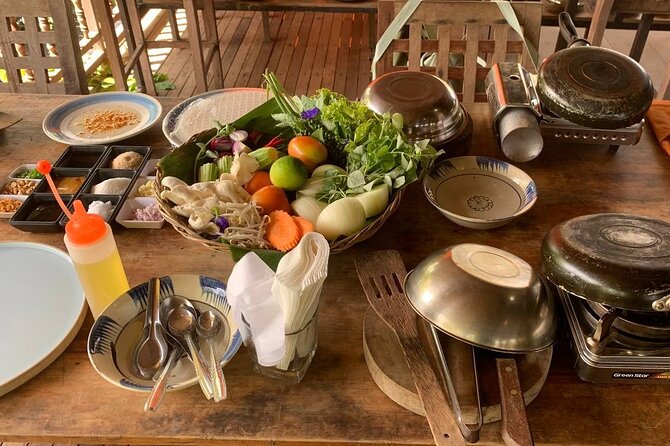
Before the class, you visit a local market with the chef to select ingredients for your meal. This is more than sightseeing. It’s where you learn how ingredients are chosen for aroma and flavor—especially the herbs and spices that show up in Khmer dishes.
Even if you saw markets earlier in the day at Psar Chaa, this market stop is more food-focused. It helps you go into the kitchen with ingredient confidence rather than confusion.
What you’ll cook and eat
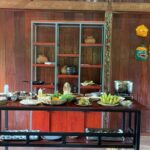
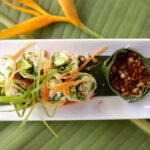
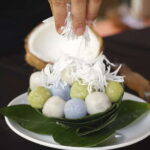
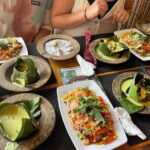
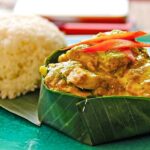
Your meal is included, and you eat what you cook. One dish that comes up clearly is fish amok, a classic Khmer favorite. That alone is a reason to book, because it’s hard to get the same results on your own without guidance.
The best part is the feedback loop: you select ingredients, you cook with guidance, then you eat your work. That makes the class memorable in a way that temple photos don’t always do.
If the class is hosted in a family setting
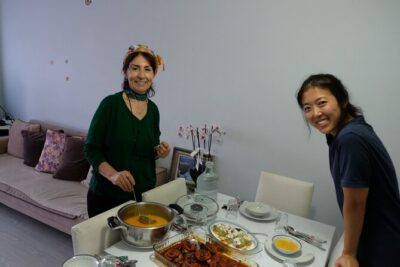
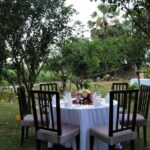
Many Khmer cooking classes are held in a local home, which gives you a more personal picture of daily life. That can be a great part of the experience, but it also means you should expect everyday-style facilities rather than hotel standards. If you’re picky about bathrooms, go in with patience and flexibility.
Price and logistics: what the $40 gets you, and what costs extra
At $40 per person, this is built around two paid experiences that feel like they belong together: a city culture loop plus a cooking class and meal.
Here’s what you get included:
- English-speaking tour guide
- Pick up and drop off
- Cooking class and meal
- Cold drinking water
Here’s what costs extra:
- Angkor National Museum: $12 per person
- Wat Thmey (Killing Fields): $4 per person
So your total day cost depends on which paid stops you want fully covered as part of the plan. If you’re doing both museum and Killing Fields, it’s more like a mid-range day trip once you add tickets. Still, for a guided museum visit plus a real cooking class you can actually eat, the value is strong.
Duration is listed as approximately 3 to 5 hours. That time range matters. In Siem Reap, traffic and heat can change the pace, so being flexible helps you enjoy everything instead of rushing through it.
Guide quality: why people talk about Kosorl and Mr. K
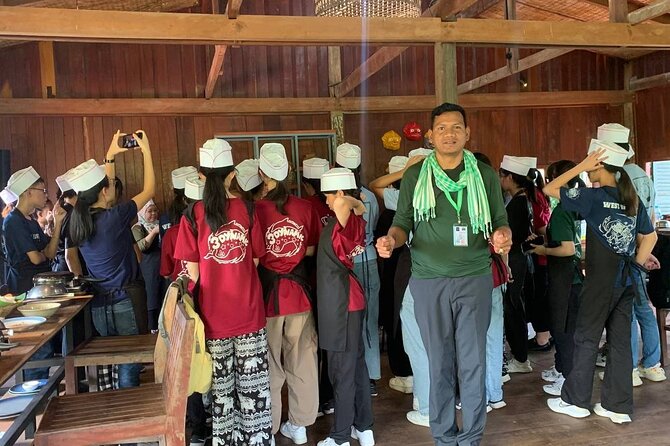
A huge part of the experience is the way your guide connects details across stops. In this tour format, good guidance means you don’t just walk past places—you understand them.
In particular, Kosorl and Mr. K are highlighted for being friendly and engaging, and for having a real connection to the places they show you. One of the best signs of a strong guide is the range of conversation: food and daily life are easy topics, but history and even politics come up too, with an approachable tone.
You’ll feel the difference during the cooking class as well. When the chef and guide are attentive, you don’t guess. You follow along, ask questions, and adjust while you cook.
Who this tour fits best (and who should think twice)
This experience is ideal for:
- You want a short Siem Reap day with both culture stops and a practical cooking skill
- You like small-group, hands-on learning instead of passive sightseeing
- You want an English-speaking guide who can explain what you’re seeing, not just move you along
It might not be ideal if:
- You dislike emotionally heavy places. Wat Thmey / Killing Fields is serious by design.
- You strongly prefer to keep costs strictly at a set price. Museum and Killing Fields tickets are extra.
- You’re only interested in Angkor-area sights and want fewer city stops.
If you’re traveling with kids or groups, the format can work well because it keeps moving and ends with a meal. Still, given the nature of Wat Thmey, it’s worth thinking about the age and sensitivity of everyone in your group.
Should you book this city tour and cooking class?
I think you should book if you want one compact day that does three jobs well: gives historical context, shows you everyday Cambodia at Psar Chaa, and ends with an actual meal you help make. The included cooking class and meal make the price feel more justified than tours that only show up at a market and then go back to the hotel.
Don’t book if you’re trying to avoid heavy historical topics or if you’re shopping for a purely scenic photo day. This route is purposeful, not just pretty.
If you’re on the fence, here’s the decision shortcut: if food and understanding Cambodia matter to you, go for it. If you want only light sightseeing, you may prefer a route with fewer solemn stops.
FAQ
FAQ
How much does the tour cost?
The price is listed as $40.00 per person.
How long is the experience?
It runs about 3 to 5 hours.
Do I get pickup and drop-off?
Yes. Pick up and drop off are included.
Is there an English-speaking guide?
Yes, the tour includes an English speaking tour guide.
What is included with the price?
Included items are the English speaking guide, pickup and drop-off, the cooking class and meal, and cold drinking water.
What entrance fees are not included?
The Angkor National Museum costs $12.00 per person, and the Wat Thmey Killing Fields costs $4.00 per person.
Is a market visit part of the cooking class?
Yes. Before the cooking class, you visit a local market to select ingredients with the chef.
Is the cooking class small group?
Cooking classes are often kept intimate, commonly limited to around six people, which supports personalized instruction.
Is this tour private or shared?
It is private. Only your group will participate.
Can I cancel for a full refund?
Yes. Free cancellation is available. You can cancel up to 24 hours in advance for a full refund.